
Lower Limb Anatomy Lab
Explore the structure and function of the lower limb through detailed anatomy modules.
What's Covered in the Upper Limb Anatomy PDF
Welcome to the Saturn Medic lower limb anatomy section — a free, structured set of study notes covering the hip, thigh, leg, ankle, and foot. Each part of lower limb anatomy is previewable directly on the site, with a full downloadable PDF available for offline study before labs, practicals, or exams. This resource was built to give medical students a clear, consistent reference for one of the most heavily tested regions in early anatomy courses.
What’s Covered in Lower Limb Anatomy
Our lower limb anatomy content is organized to match how the region is typically taught, moving through the major structural categories:
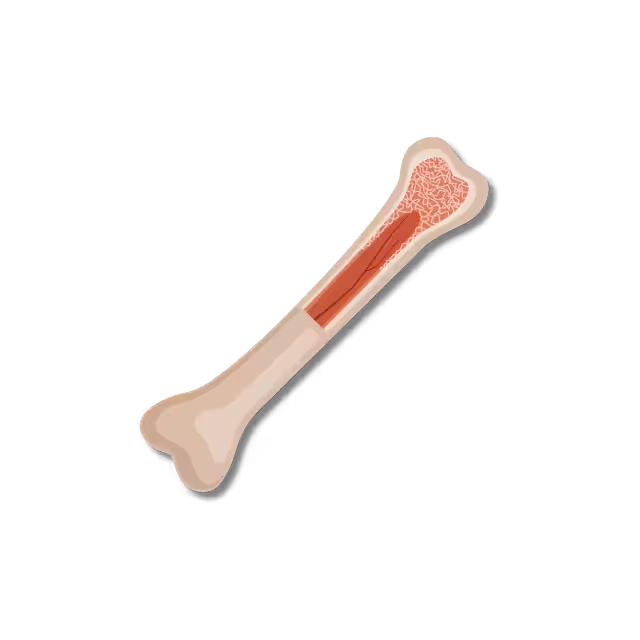
Osteology — the bones of the region, from the pelvic girdle and femur through the tibia, fibula, and the tarsal, metatarsal, and phalangeal bones of the foot, with the landmarks and articulation points most often referenced in exams.
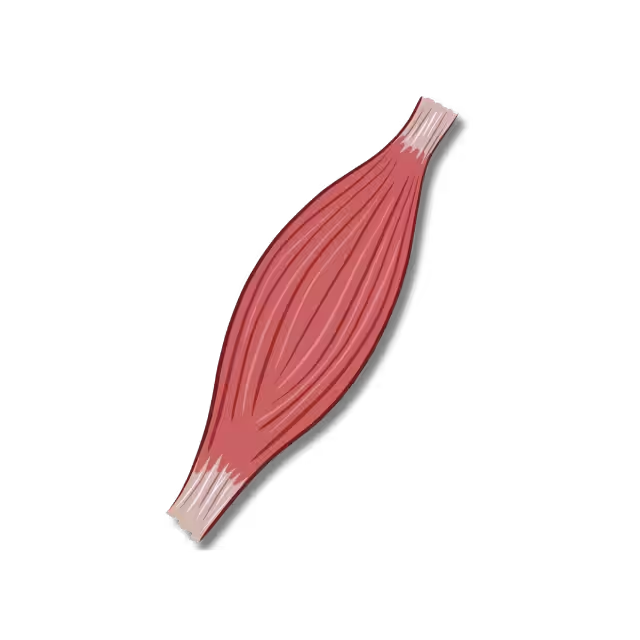
Myology — the muscles of the hip, thigh, leg, and foot, grouped by compartment and function, covering origin, insertion, action, and innervation for each muscle group.
Arthrology — the joints of the region, including the hip, knee, ankle, and foot joints, along with their supporting ligaments and the ranges of motion most relevant to clinical assessment.
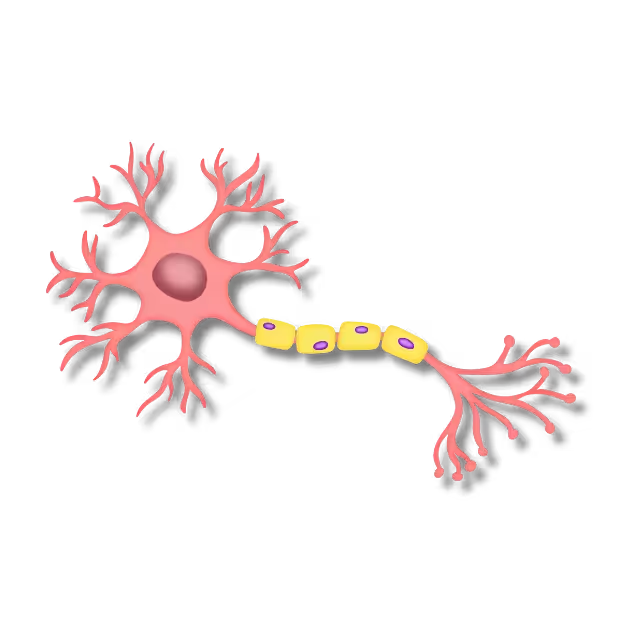
Neurovascular Structures — the nerves and vessels running through this area, including the femoral triangle contents, the course of the sciatic nerve and its terminal branches, and the arterial supply from the femoral artery down to the foot — consistently one of the highest-yield and most clinically relevant topics in lower limb anatomy.
Each section follows the same consistent format, so once you’re comfortable with how one structural category is presented, the rest feels immediately familiar rather than starting from scratch with every new topic.
Why This Lower Limb Anatomy Resource Helps
The lower limb is packed with structures that show up constantly in both anatomy exams and clinical scenarios — femoral hernias, sciatic nerve injury, common peroneal nerve compression at the fibular neck, and the biomechanics of hip, knee, and ankle movement all come directly from the material covered here. Having a single, well-organized lower limb anatomy reference makes it far easier to hold all of that detail together instead of piecing it back from scattered lecture slides or a dense textbook chapter.
This content is styled after standard clinical anatomy references such as Snell’s Clinical Anatomy and Netter’s Atlas of Human Anatomy, with structural details cross-checked against interactive 3D tools like Anatomy 3D Atlas for accuracy. This keeps the terminology and structural relationships in our lower limb anatomy notes consistent with what students already encounter in their coursework, rather than presenting a simplified or inconsistent version of the material.
These notes are built to complement hands-on lab work, not replace it. Reviewing the material before a cadaveric dissection or model-based lab session means you walk in already familiar with the major landmarks you’ll be asked to identify, making that lab time far more productive than trying to learn the structures for the first time under pressure.
How to Use This Lower Limb Anatomy Resource
Start with the structural category most relevant to what you’re currently studying — Osteology, Myology, Arthrology, or Neurovascular Structures — and preview it directly on the site, or download the full lower limb anatomy PDF for offline study or printing. Many students pair these notes with the Lower Limb category in our anatomy question bank, using them to build understanding first and the MCQs to test recall afterward under exam-style time pressure — the combination tends to stick better than either resource used alone.
New content continues to be added to our lower limb anatomy library as the broader anatomy lab section expands across all 8 body regions.