

Clinical Subject Page
Takotsubo Cardiomyopathy
Also called
ICD-10
Specialty
Onset
Chronic
Reviewed
-
OverviewOverview
-
Etiology & Risk FactorsEtiology & Risk Factors
-
PathophysiologyPathophysiology
-
Clinical PresentationClinical Presentation
-
History TakingHistory Taking
-
InvestigationsInvestigations
-
DiagnosisDiagnosis
-
ManagementManagement
-
ComplicationsComplications
-
PrognosisPrognosis
-
Key Points / Clinical PearlsKey Points / Clinical Pearls
Overview
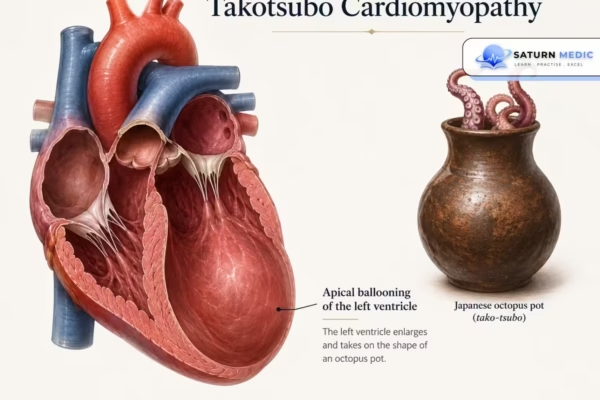
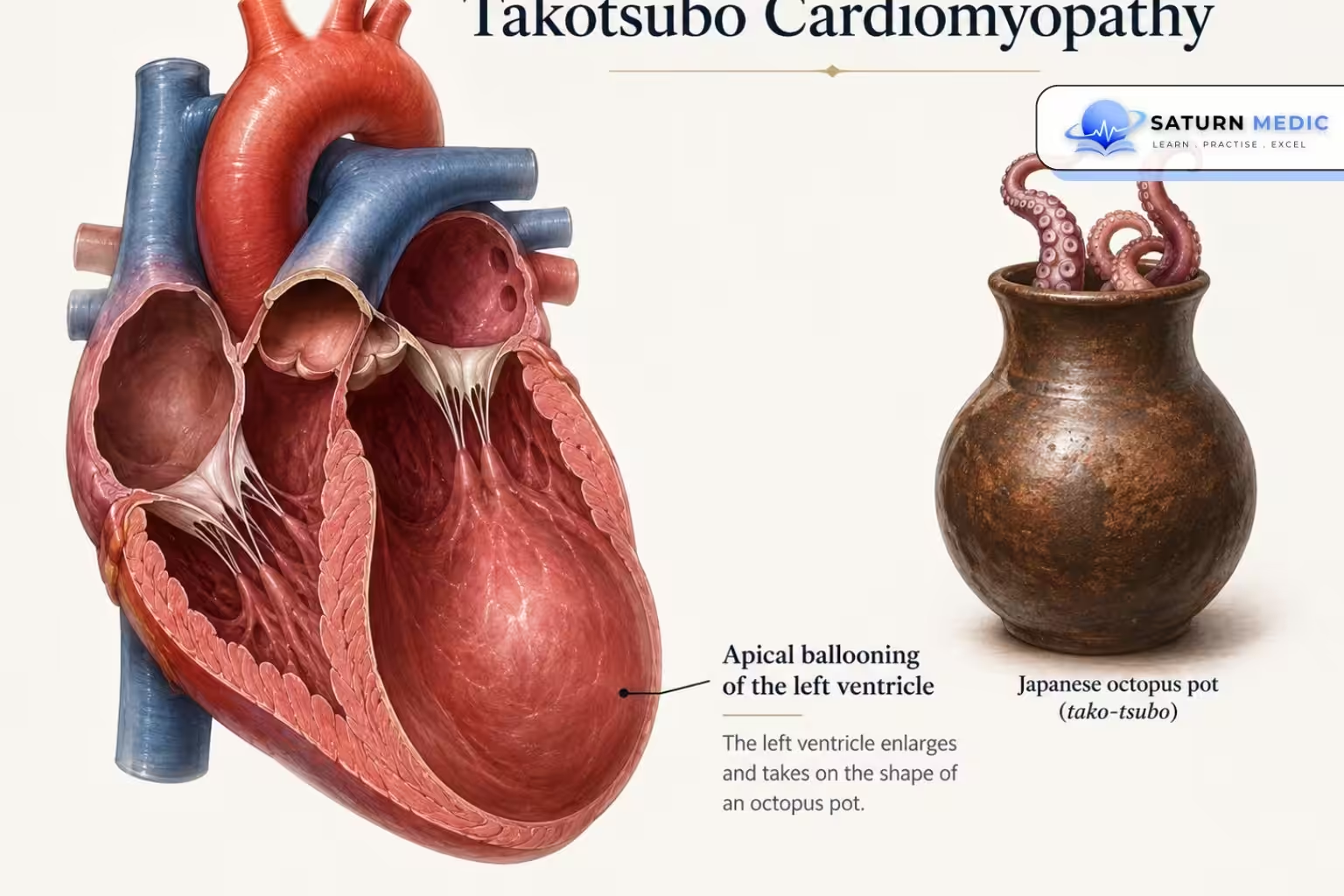
Takotsubo cardiomyopathy (also called stress-induced cardiomyopathy or broken heart syndrome) is an acute, reversible dysfunction of the left ventricle that is usually triggered by severe emotional or physical stress. It often mimics acute coronary syndrome (ACS) with chest pain and dyspnea but typically recovers within a few weeks.
Etiology & Risk Factors
Common triggers for Takotsubo Cardiomyopathy :
- Emotional stress
- Usually negative (“broken heart syndrome”)
- Occasionally positive (“happy heart syndrome”)
- Severe physical illness
- Stroke
- Subarachnoid hemorrhage
- Seizures
- Sepsis
- Pheochromocytoma
- Certain drugs
In approximately one-third of patients, no trigger is identified.
Risk factors
- Postmenopausal women (≈90% of cases)
- Preexisting mental illness
Pathophysiology
Stress leads to:
Emotional/physical stress
→ Sympathetic nervous system activation
→ Massive catecholamine release
→
- Cardiotoxicity
- Multivessel coronary spasm
- Left ventricular dysfunction
→ Myocardial stunning
Myocardial stunning refers to temporary abnormal regional left ventricular wall motion that persists for hours to weeks after transient ischemia.
Clinical Presentation
Patients often present similarly to acute coronary syndrome, including:
- Chest pain
- Symptoms of heart failure
Severe disease may result in:
- Left ventricular outflow tract (LVOT) obstruction
- Cardiogenic shock
Because symptoms overlap with ACS, ACS must be excluded.
History Taking
Important questions include:
- Recent emotional stress
- Recent major physical illness
- Neurological events
- Drug exposure
- Symptoms suggestive of heart failure
- Previous psychiatric illness
Investigations
Because Takotsubo cardiomyopathy resembles ACS, patients require investigations to exclude acute coronary syndrome.
Patients should also be assessed for:
- Left ventricular dysfunction
- Presence of LVOT obstruction
- Complications such as:
- Arrhythmias
- Heart failure
- Left ventricular thrombus
Diagnosis
Diagnosis requires:
- Recognition of the characteristic clinical presentation
- Exclusion of acute coronary syndrome
- Assessment for left ventricular dysfunction and LVOT obstruction
Management
General principles
- Treat supportively
- Manage complications
- Treat comorbidities
- Consider empiric ACS treatment until ACS is ruled out
- Admit all patients for at least 48 hours of continuous telemetry
Hemodynamically unstable patients
Without LVOT obstruction
- Inotropes may be used cautiously
- Dobutamine
- Dopamine
- Levosimendan
- Milrinone
- Vasopressors if needed
- Phenylephrine
- Vasopressin
- Consider advanced support:
- LV assist device
- ECMO
- Intra-aortic balloon pump (IABP)
- Inotropes may be used cautiously
Hemodynamically stable patients
Treat similarly to systolic heart failure:
- ACE inhibitor (e.g., lisinopril)
- Low-dose beta blocker (e.g., metoprolol)
With LVOT obstruction
Avoid:
- Inotropes
- Vasodilators
- Nitroglycerin
- Diuretics
- IABP
Treatment includes:
- IV fluids
- Short-acting low-dose beta blockers (if tolerated)
- Esmolol
- Metoprolol
- Propranolol
- Vasopressors
- Phenylephrine
- Vasopressin
- ECMO or LV assist device if refractory
Additional management
- Continuous cardiac monitoring
- Consider VTE prophylaxis (LV thrombus develops in ~10%)
- Consider chronic ACE inhibitor/ARB
- Consider chronic beta blocker
- Treat the underlying trigger (e.g., depression)
Complications
Potential complications of Takotsubo Cardiomyopathy include:
- Acute heart failure
- Arrhythmias
- Left ventricular outflow tract obstruction
- Cardiogenic shock
- Left ventricular thrombus
- Mitral regurgitation associated with LVOT obstruction
Prognosis
Overall prognosis is favorable.
- Recovery: usually within 1–2 weeks
- Recurrence: 2–4% per year
- In-hospital mortality: up to 5%, particularly in patients with cardiogenic shock or other complications
Key Points / Clinical Pearls
- Reversible stress-induced cardiomyopathy.
- Usually affects postmenopausal women.
- Often follows major emotional or physical stress, although no trigger is identified in about one-third of cases.
- Closely mimics acute coronary syndrome and should be evaluated accordingly.
- Always assess for LVOT obstruction, as it changes management.
- Avoid inotropes in patients with LVOT obstruction, as they can worsen obstruction and precipitate cardiogenic shock.
- Most patients recover completely within days to weeks.
- National Center for Biotechnology Information (NIH). Takotsubo Cardiomyopathy, StatPearls.
- Ghadri JR, Wittstein IS, Prasad A, et al. International Expert Consensus Document on Takotsubo Syndrome (Part II): Diagnostic Workup, Outcome, and Management. Eur Heart J. 2018;39:2047-2062. doi: 10.1093/eurheartj/ehy077.
- Validation of the InterTAK Diagnostic Score for Differentiating Takotsubo Syndrome from Acute Coronary Syndrome in a Middle Eastern Population. PMC12608723.
- MedlinePlus, National Library of Medicine (NIH). Broken Heart Syndrome: Medical Encyclopedia.
- National Center for Biotechnology Information (NIH). Mid-Ventricular Takotsubo Cardiomyopathy, StatPearls.