

Clinical Subject Page
Thromboangiitis Obliterans (TAO)
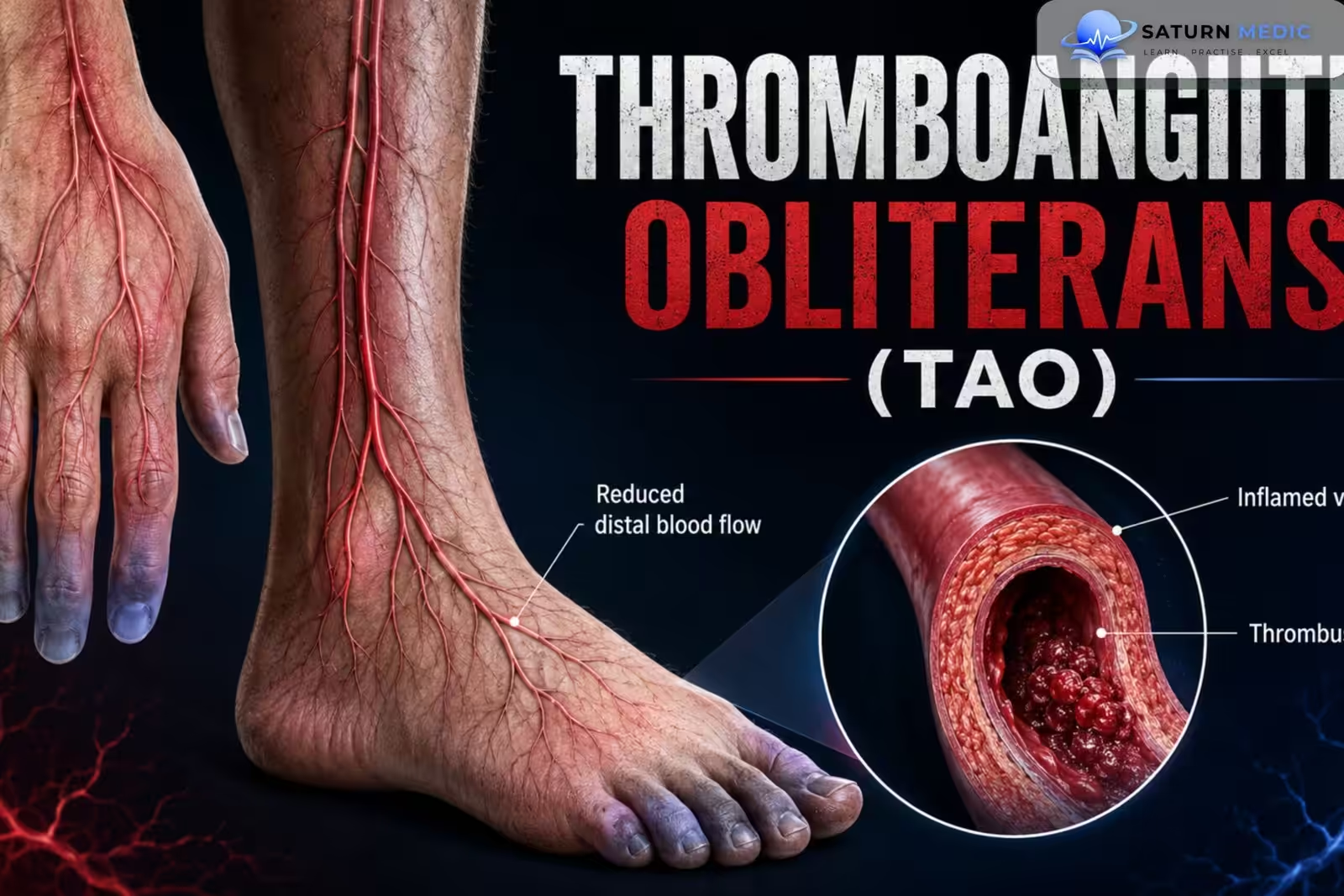
Thromboangiitis Obliterans (TAO), also known as Buerger disease, is a non-atherosclerotic inflammatory and thrombotic disease affecting small- and medium-sized arteries and veins, predominantly in the extremities
Also called
ICD-10
Specialty
Onset
Reviewed
-
OverviewOverview
-
Etiology & Risk FactorsEtiology & Risk Factors
-
PathophysiologyPathophysiology
-
Clinical PresentationClinical Presentation
-
History TakingHistory Taking
-
Physical ExaminationPhysical Examination
-
InvestigationsInvestigations
-
DiagnosisDiagnosis
-
ManagementManagement
-
ComplicationsComplications
-
PrognosisPrognosis
-
Key Points / Clinical PearlsKey Points / Clinical Pearls
Overview
Thromboangiitis Obliterans (TAO) , also called Buerger disease, is a disease that causes inflammation and blockage of small and medium-sized blood vessels, mainly in the hands and feet. It is strongly linked to tobacco use (smoking, chewing tobacco, or vaping).
Etiology & Risk Factors
-Etiology
- The exact cause is unknown.
- Tobacco use triggers inflammation and blockage of blood vessels in susceptible people.
Risk Factors
- Tobacco use (most important risk factor):
- Smoking
- Chewing tobacco
- Vaping
- Male sex (more common in men)
- Age younger than 45 years
Pathophysiology
Tobacco use (smoking/chewing/vaping) → Inflammation of small & medium blood vessels → Inflammatory thrombus (blood clot) forms → Blood vessel blockage (vaso-occlusion) → Reduced blood flow (ischemia) → Pain, ulcers, gangrene → Possible amputation
Clinical Presentation
-
- Pain while walking (intermittent claudication)
- Cold, pale fingers or toes (Raynaud phenomenon)
- Pain at rest (late stage)
- Weak or absent pulses
- Painful, red superficial veins (migratory superficial thrombophlebitis)
- Finger or toe ulcers
- Gangrene (severe cases)
- Usually affects both hands and/or feet
History Taking
- How long have you used tobacco?
- Do you have pain in your legs or feet while walking?
- Do you have pain in your fingers or toes at rest?
- Do your fingers or toes become cold or change color?
- Have you noticed any sores or ulcers on your fingers or toes?
- Have you had blackening (gangrene) of any finger or toe?
- Have you had painful, red, swollen veins?
- Are both hands or feet affected?
- When did your symptoms start?
Physical Examination
- Cool hands or feet
- Pale or bluish fingers/toes
- Weak or absent distal pulses
- Finger or toe ulcers
- Gangrene of fingers or toes
- Tender, red superficial veins (superficial thrombophlebitis)
- Signs of Raynaud phenomenon (color changes in fingers/toes)
Investigations
-
- CBC
- ESR and CRP (usually normal)
- Coagulation studies
- Autoantibody tests (e.g., ANA, RF) to exclude other diseases
- Ankle–Brachial Index (ABI) (may be decreased)
- Angiography (best imaging test) – shows distal vessel blockage and corkscrew collateral vessels
- Echocardiography (if an embolic source is suspected)
- Biopsy (only if the presentation is atypical)
Diagnosis
- History of tobacco use
- Typical signs of distal limb ischemia
- Exclude other causes (e.g., peripheral artery disease, diabetes, vasculitis)
- Angiography supports the diagnosis (shows distal vessel occlusion with corkscrew collateral vessels)
Management
1. Stop tobacco completely (Most important)
- Stop smoking, chewing tobacco, and vaping.
- Avoid nicotine products (e.g., nicotine patches or gum).
- 2. Supportive care
- Protect hands and feet from cold and injury.
- Keep ulcers clean and perform regular wound care.
- Treat infections with antibiotics if needed.
- 3. Medications
- Iloprost to reduce pain and improve ulcer healing.
- Calcium channel blockers (e.g., nifedipine, amlodipine) may be used.
- 4. Surgery
- Debridement for infected ulcers.
- Amputation if gangrene develops.
- Revascularization is rarely possible.
Complications
- Chronic limb ischemia
- Digital ulcers (fingers or toes)
- Gangrene
- Autoamputation of digits
- Surgical amputation
- Wound infection (infected ulcers)
Prognosis
- prognosis of Thromboangiitis Obliterans (TAO) Good if the patient completely stops all tobacco use.
- Symptoms may improve, and the risk of amputation decreases with early tobacco cessation.
- Poor if tobacco use continues.
- Ongoing tobacco use can lead to progressive ischemia, ulcers, gangrene, and amputation.
Key Points / Clinical Pearls
- Thromboangiitis Obliterans (TAO) Inflammatory, nonatherosclerotic disease of small and medium-sized blood vessels.
- Tobacco use is the major risk factor.
- Usually affects adults younger than 45 years.
- Common symptoms: claudication, Raynaud phenomenon, rest pain, ulcers, and gangrene.
- Physical signs: cool limbs, weak/absent pulses, ulcers, gangrene.
- Diagnosis is mainly clinical and supported by angiography.
- Complete tobacco cessation is the most important treatment.
- Qaja E, Muco E, Hashmi MF. National Center for Biotechnology Information (NIH). Buerger Disease, StatPearls.
- Olin JW, Shih A. Thromboangiitis Obliterans (Buerger's Disease). Curr Opin Rheumatol. 2006;18:18-24. PMC1523324.
- Rivera-Chavarria IJ, Brenes-Gutierrez JV. Thromboangiitis Obliterans (Buerger's Disease). Ann Med Surg. 2016;7:79-82. PMC4633979.
- Vijayakumar A, Tiwari R, Kumar Prabhuswamy V. Thromboangiitis Obliterans (Buerger's Disease): Current Practices. Int J Inflam. 2013;2013:156905. PMC3676975.
- MedlinePlus, National Library of Medicine (NIH). Buerger Disease: Medical Encyclopedia.