

Clinical Subject Page
Goodpasture Syndrome
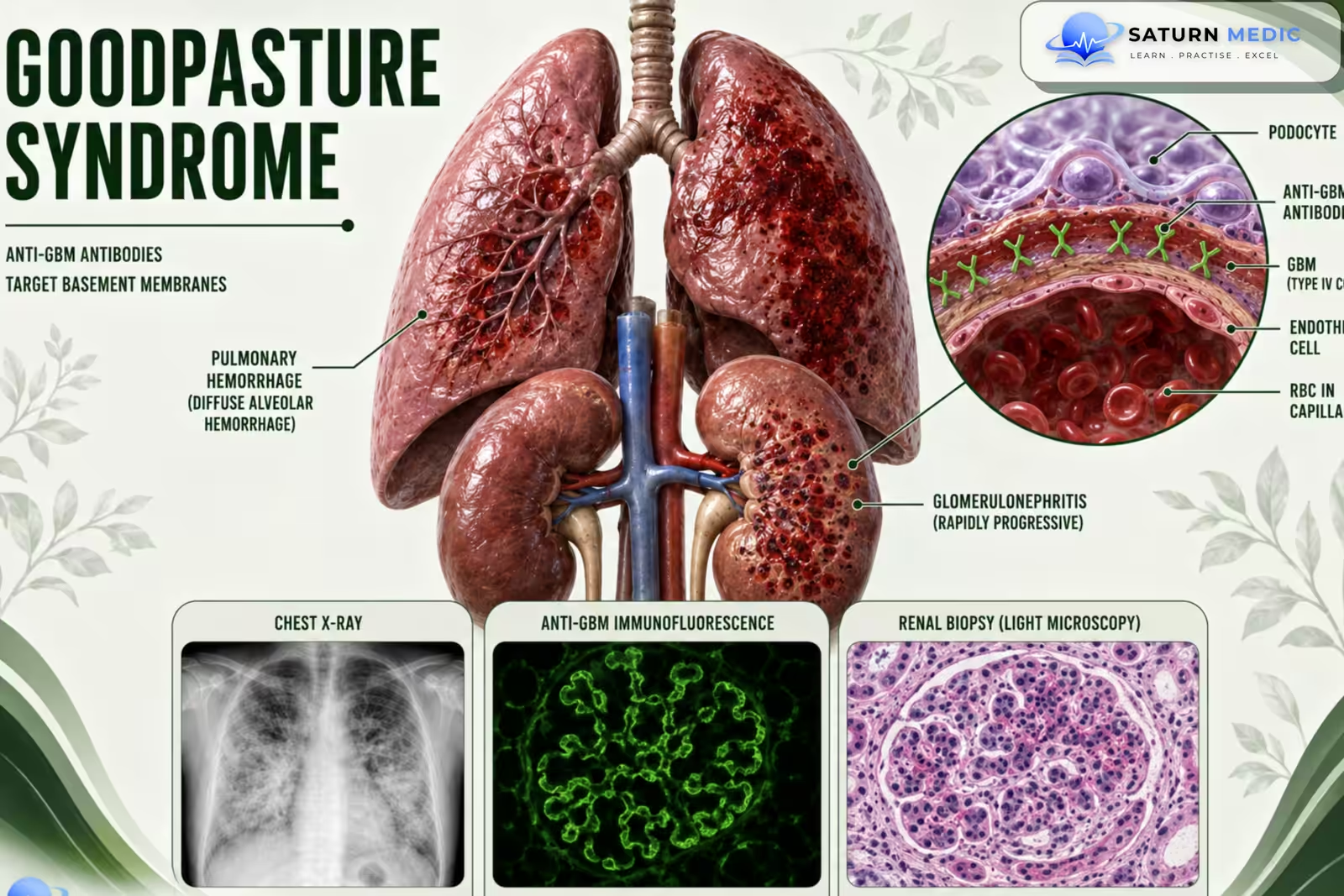
Goodpasture Syndrome (also called anti-GBM disease) is a rare autoimmune disease in which the body’s immune system produces antibodies that attack the basement membranes in the kidneys and lungs. This can cause rapidly progressive kidney damage and bleeding in the lungs.
Also called
ICD-10
Specialty
Onset
Reviewed
-
OverviewOverview
-
Etiology & Risk FactorsEtiology & Risk Factors
-
PathophysiologyPathophysiology
-
Clinical PresentationClinical Presentation
-
History TakingHistory Taking
-
Physical ExaminationPhysical Examination
-
InvestigationsInvestigations
-
DiagnosisDiagnosis
-
ManagementManagement
-
ComplicationsComplications
-
PrognosisPrognosis
-
Key Points / Clinical PearlsKey Points / Clinical Pearls
Overview
Cause: Autoantibodies against type IV collagen in the kidney and lung basement membranes.
Type of hypersensitivity: Type II hypersensitivity reaction.
Main organs affected: Kidneys and lungs.
Etiology & Risk Factors
- It is an autoimmune disease in which the body produces anti-glomerular basement membrane (anti-GBM) antibodies. These antibodies attack type IV collagen in the basement membranes of the :
- Kidneys (glomerular basement membrane)
- Lungs (alveolar basement membrane)
- This is a Type II hypersensitivity reaction, leading to inflammation and damage of the kidneys and lungs.
-Risk Factors :
- Age (Mainly ) : Peaks in
-
20–30 years (more common in males)
-
60–70 years (more common in females)
Pathophysiology
Anti-GBM antibodies → Attack type IV collagen in kidney and lung basement membranes → Type II hypersensitivity reaction → Inflammation and tissue damage → Kidney failure (RPGN) + Pulmonary hemorrhage (hemoptysis)
Clinical Presentation
- Patients typically present with both lung and kidney involvement :
- Lung symptoms
- Cough
- Shortness of breath (dyspnea)
- Coughing up blood (hemoptysis) due to pulmonary hemorrhage Pulmonary infiltrates on chest X-ray
- Kidney symptoms
- Rapidly progressive glomerulonephritis (RPGN), causing rapidly worsening kidney function
History Taking
-
When did your symptoms begin?
-
Have you been coughing?
-
Have you coughed up blood?
-
Are you short of breath?
-
Have you noticed blood in your urine?
-
Has your urine become dark or tea-colored?
-
Have you noticed a decrease in the amount of urine you pass?
-
Have you had swelling in your legs, feet, or face?
-
Have you been feeling unusually tired or weak?
-
Have you been told you have anemia?
Physical Examination
-General Examination :
- Pale appearance (iron deficiency anemia)
- Fatigue
Signs of respiratory distress in severe cases
-Vital signs :
- Tachypnea (rapid breathing)
- Hypertension (from nephritic syndrome)
- Low oxygen saturation if pulmonary hemorrhage is severe
-Respiratory examination :
- Cough
- Hemoptysis (coughing up blood)
- Dyspnea (shortness of breath)
- Pulmonary infiltrates on chest X-ray
-Renal examination :
- Peripheral pitting edema (usually mild)
- Oliguria (reduced urine output)
- Signs of rapidly progressive glomerulonephritis (RPGN)
Investigations
- Anti-GBM antibody – diagnostic test
- CBC – iron deficiency anemia
- Renal function tests – serum creatinine, BUN, GFR
- Urinalysis – hematuria, proteinuria
- Chest X-ray – pulmonary infiltrates
- Sputum examination – hemosiderin-filled macrophages
- Kidney biopsy (gold standard) – linear IgG deposition along the glomerular basement membrane
-Additional autoimmune tests :
- ANCA
- ANA
- Anti-dsDNA
- Complement levels
Diagnosis
- Diagnosis is based on :
- Clinical features: Hemoptysis + rapidly progressive glomerulonephritis (RPGN)
- Positive anti-GBM antibodies (most important blood test)
- Urinalysis: Hematuria, proteinuria
- Renal function tests: Elevated creatinine
- Chest X-ray: Pulmonary infiltrates
- Kidney biopsy (gold standard): Linear IgG deposition along the glomerular basement membrane
Related Topics
Management of Goodpasture Syndrome
-Medical treatment :
- High-dose glucocorticoids (IV methylprednisolone, then oral prednisone)
- Cyclophosphamide to suppress antibody production
- Plasmapheresis to remove circulating anti-GBM antibodies
-Supportive management :
- Monitor renal function and urine output
- Treat pulmonary hemorrhage and provide oxygen if needed
- Manage complications of acute kidney injury
- Monitor for adverse effects of steroids and immunosuppressants
Complications of Goodpasture Syndrome
- Rapidly progressive glomerulonephritis (RPGN) → rapid loss of kidney function
- Pulmonary hemorrhage → severe hemoptysis and respiratory failure
- Iron deficiency anemia (due to recurrent lung bleeding)
- Acute kidney injury, which may progress to kidney failure
Prognosis of Goodpasture Syndrome
- Good with early diagnosis and prompt treatment. Delayed or untreated disease can lead to:
- Rapid progression to kidney failure (ESRD) Life-threatening pulmonary hemorrhage
- High mortality
- Early treatment improves the chance of preserving kidney function.
Key Points / Clinical Pearls of Goodpasture Syndrome
- Lungs + kidneys = Think Goodpasture syndrome.
- Anti-GBM antibodies = Diagnostic blood test.
- Linear IgG deposition = Classic biopsy finding.
- Triple therapy = Steroids + Cyclophosphamide + Plasmapheresis.
- Rout P, DeVrieze BW. National Center for Biotechnology Information (NIH). Goodpasture Syndrome, StatPearls.
- MedlinePlus, National Library of Medicine (NIH). Goodpasture Syndrome: Genetics Home Reference.
- McAdoo SP, Pusey CD. Anti-Glomerular Basement Membrane Disease. Clin J Am Soc Nephrol. 2017. PMID: 28642330.
- Nasr SH, Collins AB, Alexander MP, et al. The Clinicopathologic Characteristics of Anti-GBM Disease. Kidney Int. 2016. PMID: 27189907.
- Greco A, Rizzo MI, De Virgilio A, et al. Goodpasture's Syndrome: A Clinical Update. Autoimmun Rev. 2015. PMID: 25554500.