

Clinical Subject Page
Pulmonary Function Tests (PFTs)
Also called
ICD-10
Specialty
Onset
Reviewed
-
OverviewOverview
-
IndicationsIndications
-
ContraindicationsContraindications
-
Types of Pulmonary Function TestsTypes of Pulmonary Function Tests
-
Normal Spirometry ValuesNormal Spirometry Values
-
InterpretationInterpretation
-
Bronchodilator Reversibility TestingBronchodilator Reversibility Testing
-
ComplicationsComplications
-
PrognosisPrognosis
-
Key Points / Clinical PearlsKey Points / Clinical Pearls
Overview
Pulmonary Function Tests (PFTs) assess how well the lungs:
- Move air in and out
- Exchange oxygen and carbon dioxide
- Transfer gases across the alveolar-capillary membrane
They are used to:
- Diagnose lung diseases
- Assess disease severity
- Monitor disease progression
- Evaluate response to treatment
Indications
-Diagnostic
- Asthma
- COPD
- Interstitial lung disease (ILD)
- Bronchiectasis
- Occupational lung disease
- Unexplained dyspnea
- Chronic cough
–Monitoring
-
- Disease progression
- Response to treatment
- Preoperative assessment
- Occupational health screening
Contraindications
-
-
Do not perform Pulmonary Function Tests (PFTs) in patients with:
- Recent myocardial infarction (within the previous month)
- Unstable angina
- Untreated pneumothorax
- Massive hemoptysis of unknown cause
- Recent thoracic, abdominal, or intracranial surgery
- Recent eye surgery (e.g., cataract or retinal surgery)
- Thoracic, abdominal, or cerebral aneurysm
- Active respiratory infection (relative contraindication)
- Severe respiratory distress or inability to perform the test
- Inability to cooperate or follow instructions
-
Types of Pulmonary Function Tests
-
-
Spirometry
Measures:
-
FEV₁
-
FVC
-
FEV₁/FVC ratio
Mainly assesses airflow limitation.
Lung Volumes
Measures:
-
Total lung capacity (TLC)
-
Residual volume (RV)
-
Functional residual capacity (FRC)
Assesses restrictive lung disease and hyperinflation.
Diffusing Capacity (DLCO)
Measures:
-
Gas transfer across the alveolar-capillary membrane
Reduced in:
-
ILD
-
Emphysema
-
Pulmonary vascular disease
Peak Expiratory Flow (PEF)
Measures:
-
Maximum expiratory flow
Commonly used for:
-
Asthma monitoring
-
-
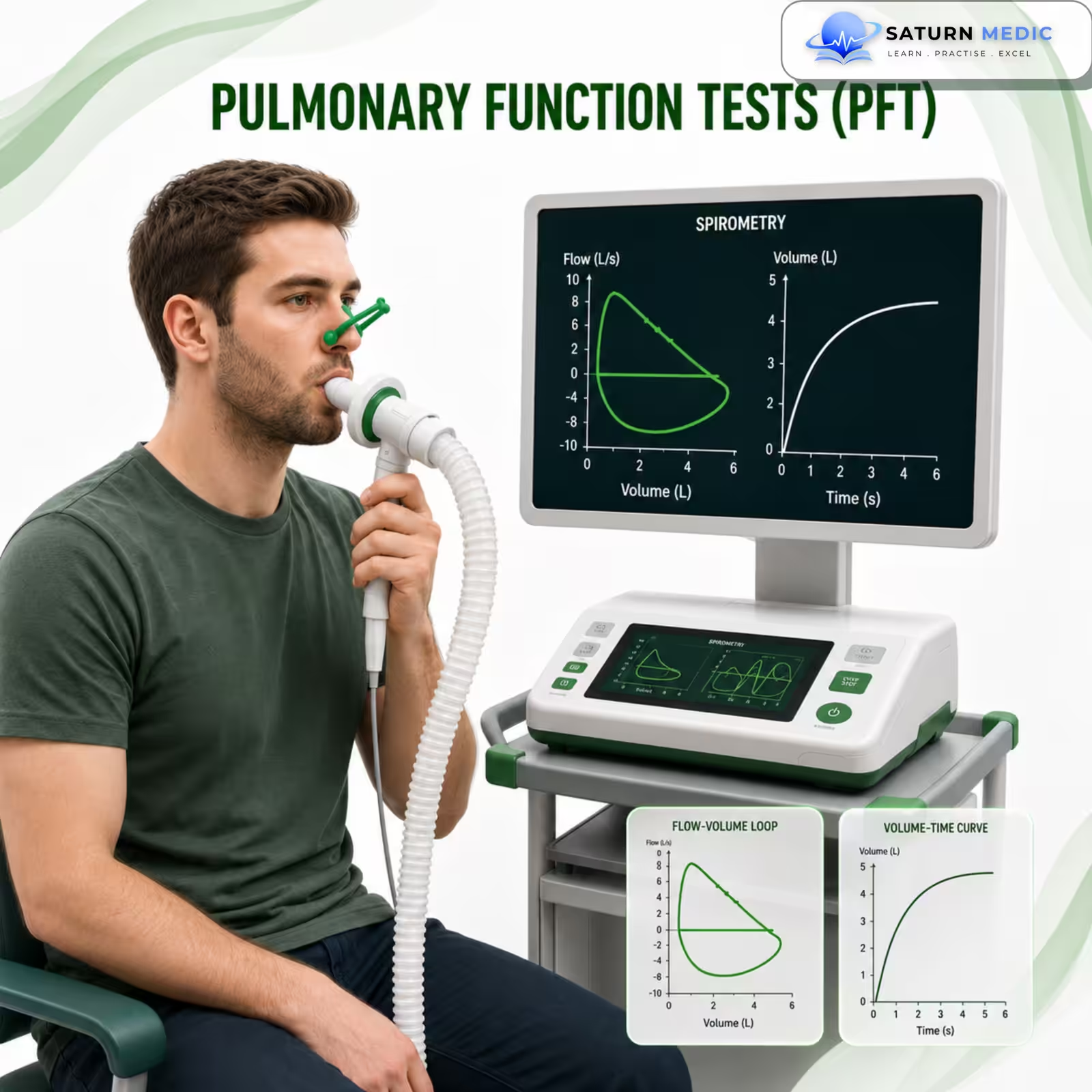
Normal Spirometry Values
FEV₁
- Forced expiratory volume in the first second
FVC
- Forced vital capacity
FEV₁/FVC Ratio
-
- Normal: ≥0.70 (or above the lower limit of normal)
Interpretation
-Obstructive Pattern
Features:
-
↓ FEV₁
-
↓ FEV₁/FVC ratio (<0.70)
-
Normal or increased TLC
Common causes:
-
Asthma
-
COPD
-
Bronchiectasis
-Restrictive Pattern
Features:
-
↓ FVC
-
↓ TLC
-
Normal or increased FEV₁/FVC ratio
Common causes:
-
Interstitial lung disease
-
Chest wall disorders
-
Neuromuscular disease
-
Obesity
-Mixed Pattern
Features:
-
↓ FEV₁/FVC ratio
-
↓ TLC
Seen in patients with both obstructive and restrictive disease.
Important Note
Spirometry alone cannot confirm restriction—measurement of total lung capacity (TLC) is required.
Bronchodilator Reversibility Testing
-
-
Performed by:
- Spirometry before bronchodilator
- Administration of a short-acting bronchodilator
- Repeat spirometry after 10–15 minutes
Significant Bronchodilator Response
- Increase in FEV₁ or FVC ≥12% and ≥200 mL from baseline
Suggests:
- Reversible airflow obstruction (e.g., asthma)
Important Note
A positive bronchodilator response supports asthma but does not exclude COPD.
-
Related Topics
Complications of Pulmonary Function Tests (PFTs)
-
-
Pulmonary Function Tests (PFTs) are generally safe.
Rare complications include:
- Dizziness
- Cough
- Bronchospasm
- Syncope
- Chest discomfort
- Pneumothorax (very rare)
-
Prognosis of Pulmonary Function Tests (PFTs)
-
-
Pulmonary Function Tests (PFTs) do not determine prognosis directly but provide valuable information about:
- Disease severity
- Functional impairment
- Response to therapy
- Disease progression
Serial PFTs help monitor long-term outcomes in chronic respiratory diseases.
-
Key Points / Clinical Pearls of Pulmonary Function Tests (PFTs)
-
- PFTs are noninvasive tests used to assess lung function.
- Spirometry is the most commonly performed pulmonary function test.
- FEV₁/FVC ratio is reduced in obstructive lung disease.
- Restriction requires confirmation with a reduced TLC.
- DLCO assesses gas transfer across the alveolar-capillary membrane.
- Bronchodilator reversibility testing helps identify reversible airflow obstruction.
- Peak expiratory flow is commonly used to monitor asthma.
- PFTs should not be performed during acute severe respiratory illness.
- Ponce MC, Sankari A, Sharma S. National Center for Biotechnology Information (NIH). Pulmonary Function Tests, StatPearls.
- Lamb K, Theodore D, Bhutta BS. National Center for Biotechnology Information (NIH). Spirometry, StatPearls.
- Stanojevic S, Kaminsky DA, Miller MR, et al. ERS/ATS Technical Standard on Interpretive Strategies for Routine Lung Function Tests. Eur Respir J. 2022. PMID: 34949706.
- National Center for Biotechnology Information (NIH). Forced Expiratory Volume, StatPearls.
- National Center for Biotechnology Information (NIH). Vital Capacity, StatPearls.