

Clinical Subject Page
Hypothyroidism
Hypothyroidism is a clinical condition caused by insufficient production of thyroid hormones, leading to reduced metabolic activity throughout the body. It may result from thyroid gland failure, pituitary disease, or hypothalamic dysfunction
Also called
Thyroid hormone deficiency
ICD-10
E03.9
Specialty
Endocrine
Onset
Chronic
Reviewed
August 2026
On This Page
-
OverviewOverview
-
Etiology & Risk FactorsEtiology & Risk Factors
-
PathophysiologyPathophysiology
-
Clinical PresentationClinical Presentation
-
History TakingHistory Taking
-
Physical ExaminationPhysical Examination
-
InvestigationsInvestigations
-
DiagnosisDiagnosis
-
ManagementManagement
-
ComplicationsComplications
-
PrognosisPrognosis
-
Key Points / Clinical PearlsKey Points / Clinical Pearls
Overview
–Hypothyroidism occurs when the body does not produce enough thyroid hormones (T3 and T4).
-These hormones regulate metabolism, growth, and energy use.
–The most common cause is Hashimoto’s Thyroiditis, an autoimmune destruction of the thyroid gland.
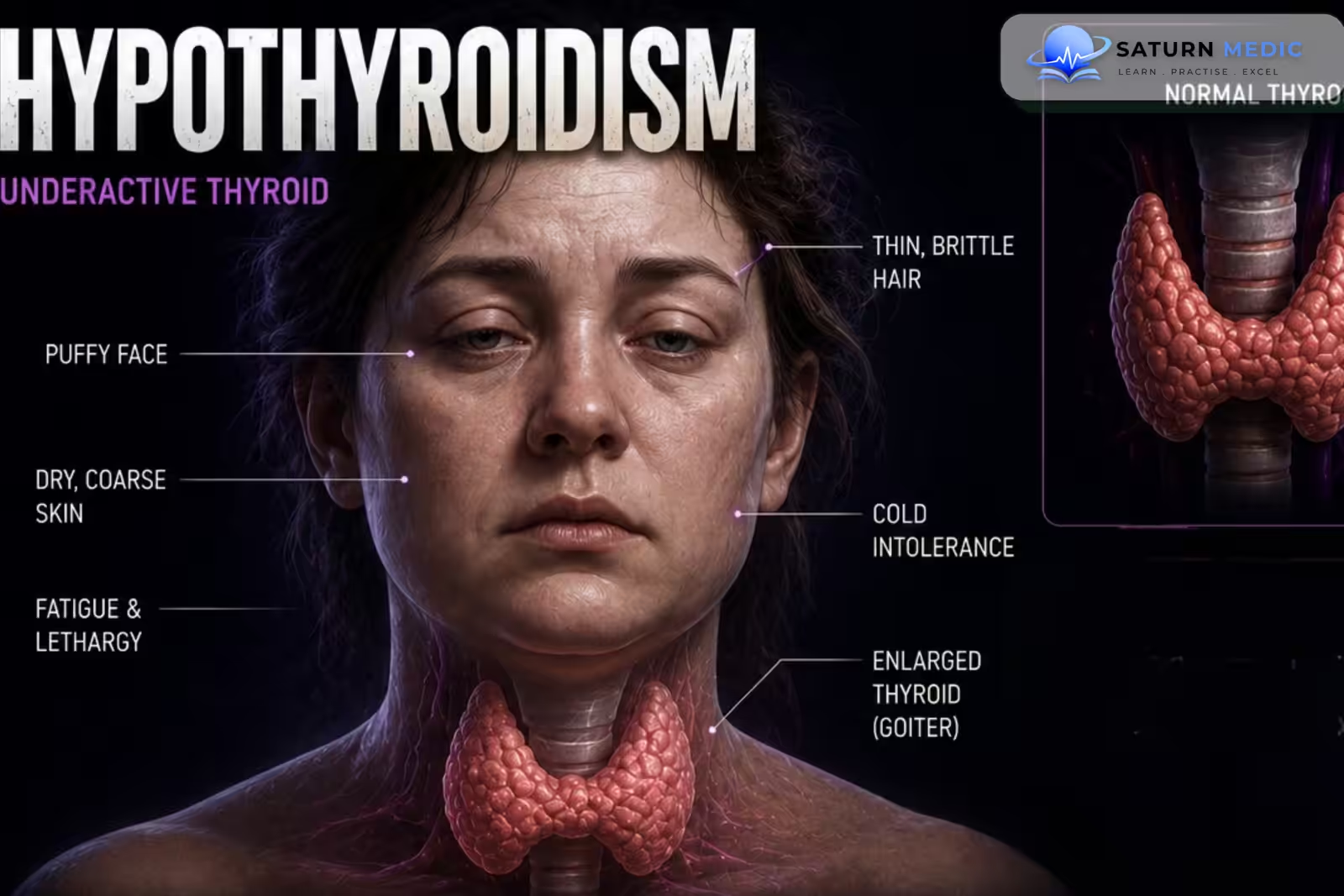
-Patients commonly present with fatigue, weight gain, cold intolerance, constipation, and slowed body functions.
Etiology & Risk Factors
-Hypothyroidism can occur due to problems at different levels of the hypothalamic-pituitary-thyroid axis.
-Primary Hypothyroidism (most common):
Caused by thyroid gland failure:
• Hashimoto’s Thyroiditis
• Iodine deficiency
• Thyroid surgery
• Radioactive iodine therapy
• Thyroid gland destruction from autoimmune disease
-Secondary Hypothyroidism:
Caused by pituitary gland failure:
• Pituitary surgery
• Radiation therapy
• Sheehan syndrome
–
Tertiary Hypothyroidism:
Caused by hypothalamic dysfunction:
• Hypothalamic tumors
• Inflammatory or infiltrative disorders
-Risk Factors
• Female sex
• Increasing age
• Family history of thyroid disease
• Autoimmune diseases
• Previous thyroid surgery
• Previous radioactive iodine treatment
• Neck radiation exposure
• Iodine deficiency or excess
Pathophysiology
Thyroid gland dysfunction or reduced thyroid stimulation → ↓ Thyroid hormone synthesis (↓ T3 and ↓ T4) → Reduced negative feedback to pituitary gland
→ ↑ TSH secretion (in primary hypothyroidism)
→ Reduced metabolic activity in tissues
→ ↓ Oxygen consumption and energy production
→ Slowed physiological processes → Fatigue + weight gain + cold intolerance + constipation + bradycardia
-Severe untreated hypothyroidism
→ Progressive metabolic slowing
→ Multisystem dysfunction
→ Myxedema coma
Clinical Presentation
-Symptoms:
• Fatigue
• Weight gain
• Cold intolerance
• Constipation
• Dry skin
• Hair loss
• Muscle aches
• Muscle weakness
-Signs:
• Bradycardia
• Dry, coarse skin
• Brittle hair
• Facial puffiness
• Periorbital edema
• Non-pitting edema
• Delayed relaxation of deep tendon reflexes
• Slow speech
History Taking
-Ask about:
• Fatigue and reduced energy
• Weight gain
• Cold intolerance
• Constipation
• Dry skin
• Hair loss
• Voice changes
• Menstrual changes
• Fertility problems
• Mood changes
• Memory problems
Physical Examination
-General Examination
• Assess weight and BMI
• Measure heart rate and blood pressure
• Measure temperature
• Assess mental status
• Look for facial puffiness
• Assess skin and hair changes
• Check for peripheral edema
-System-Specific Examination:
-Thyroid Examination:
• Inspect for goiter
• Palpate thyroid gland
• Assess thyroid size and consistency
• Look for nodules
Investigations
-Biochemistry / Specific Tests
-Thyroid Stimulating Hormone (TSH):
Most important initial test.
-Findings:
• ↑ TSH in primary hypothyroidism
• Normal or low TSH in central hypothyroidism
-Free Thyroxine (Free T4)
Findings:
• ↓ Free T4 in overt hypothyroidism
-Thyroid Antibodies
Used when autoimmune thyroid disease is suspected:
• Thyroid peroxidase antibodies (TPO antibodies)
• Thyroglobulin antibodies
-Lipid Profile
May show:
• Increased LDL cholesterol
• Increased total cholesterol
-Electrolytes
Possible findings:
• Hyponatremia in severe hypothyroidism
-Imaging
Thyroid Ultrasound:
Not routinely required for diagnosis.
Diagnosis
-Hypothyroidism is diagnosed by demonstrating reduced thyroid hormone activity:
-Primary Hypothyroidism:
• Increased TSH
• Decreased free T4
-Subclinical Hypothyroidism:
• Increased TSH
• Normal free T4
-Central Hypothyroidism:
• Low free T4
• Low or inappropriately normal TSH
Management
1. First-Line / Emergency Management
Stable Hypothyroidism
-
Confirm diagnosis.
-
Start levothyroxine when indicated.
Myxedema Coma
-
Intravenous thyroid hormone
-
Intravenous corticosteroids until adrenal insufficiency is excluded
-
Supportive care and careful warming
-
Correct metabolic abnormalities
-
Treat the precipitating cause
2. Definitive Treatment
-
Levothyroxine (T4) replacement: definitive treatment for hypothyroidism.
3. Medical Treatment
-
Levothyroxine: first-line treatment, usually once daily.
-
Adjust dose according to TSH and clinical response.
-
Use lower starting doses in elderly patients or those with cardiovascular disease.
-
Increase dose requirements during pregnancy.
4. Surgical / Procedural Treatment
Not routinely required.
-
Treat the underlying cause when appropriate, such as pituitary disease in central hypothyroidism.
5. Supportive Management
-
Regular TSH monitoring
-
Patient education regarding lifelong treatme
Complications
• Myxedema coma
• Severe hypothermia
• Respiratory failure
• Cardiovascular instability
• Hyperlipidemia
• Atherosclerotic cardiovascular disease
• Heart failure
• Infertility
• Menstrual abnormalities
• Peripheral neuropathy
Prognosis
-The prognosis of hypothyroidism is excellent with appropriate treatment.
–Most patients achieve normal thyroid function with correct levothyroxine dosing.
-Outcome depends on:
• Early diagnosis
• Treatment adherence
• Regular monitoring
Key Points / Clinical Pearls
• Hypothyroidism is caused by insufficient thyroid hormone production.
• The most common cause is Hashimoto’s Thyroiditis.
• Primary hypothyroidism causes ↑ TSH and ↓ free T4.
• Symptoms develop gradually and may be nonspecific.
• Common symptoms include fatigue, weight gain, cold intolerance, and constipation.
• Bradycardia and delayed reflex relaxation are classic signs.
• Thyroid antibodies help identify autoimmune causes.
• Levothyroxine is the standard treatment.
• Treatment is usually lifelong in permanent thyroid failure.
• TSH is used to monitor treatment in primary hypothyroidism.
• Severe untreated disease can cause myxedema coma.
• Pregnancy increases thyroid hormone requirements.
- Jonklaas J, Bianco AC, Bauer AJ, et al. Guidelines for the Treatment of Hypothyroidism: Prepared by the American Thyroid Association Task Force on Thyroid Hormone Replacement. Thyroid. 2014;24(12):1670-1751. Thyroid .
- Garber JR, Cobin RH, Gharib H, et al. Clinical Practice Guidelines for Hypothyroidism in Adults: Cosponsored by the American Association of Clinical Endocrinologists and the American Thyroid Association. Endocr Pract. 2012;18(6):988-1028. Endocrine Practice .
- Chaker L, Bianco AC, Jonklaas J, Peeters RP. Hypothyroidism. Lancet. 2017;390(10101):1550-1562. The Lancet .
- Taylor PN, Albrecht D, Scholz A, et al. Global Epidemiology of Hyperthyroidism and Hypothyroidism. Nat Rev Endocrinol. 2018;14(5):301-316. Nature Reviews Endocrinology .
- National Institute of Diabetes and Digestive and Kidney Diseases (NIDDK). Hypothyroidism . National Institutes of Health.
- National Library of Medicine (NIH). Hypothyroidism . StatPearls.