
Thoracic Anatomy Lab
Explore the structure and function of the thorax region through detailed anatomy modules.
What's Covered in the Thoracic Anatomy Lab
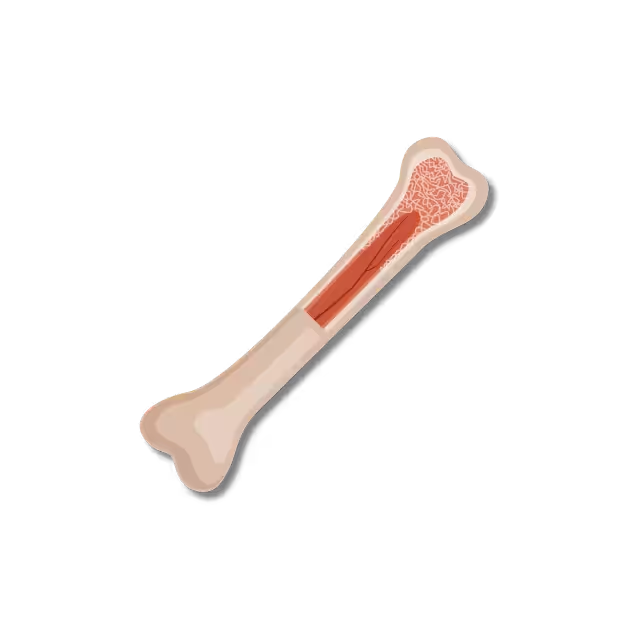
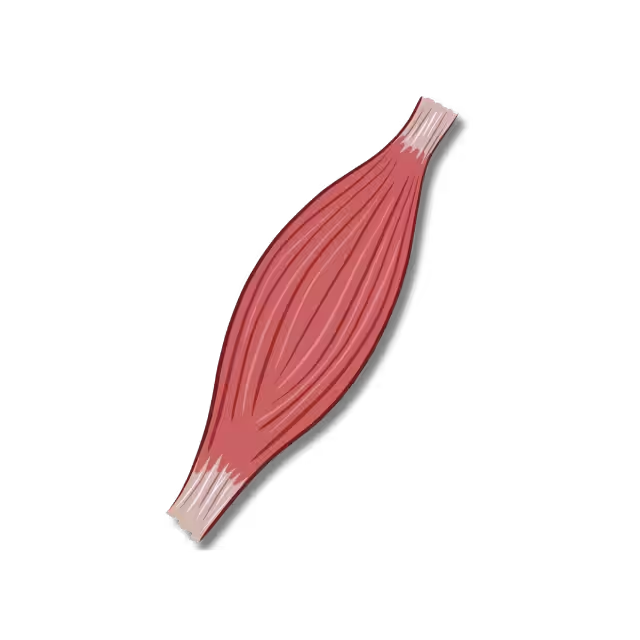
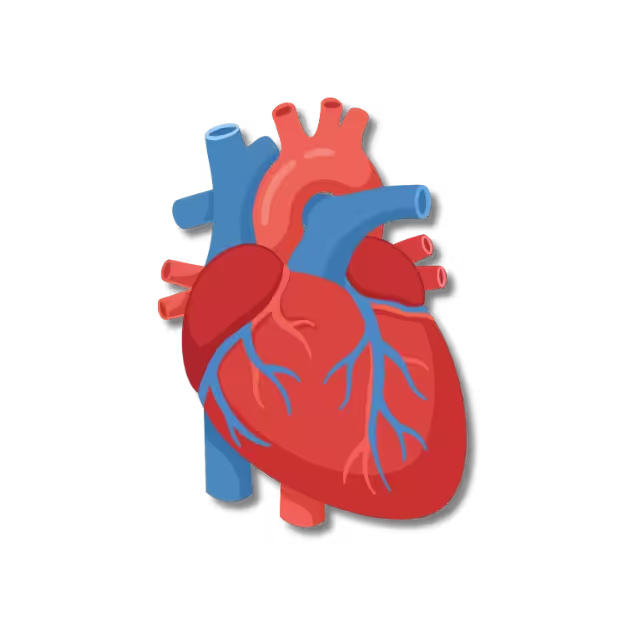
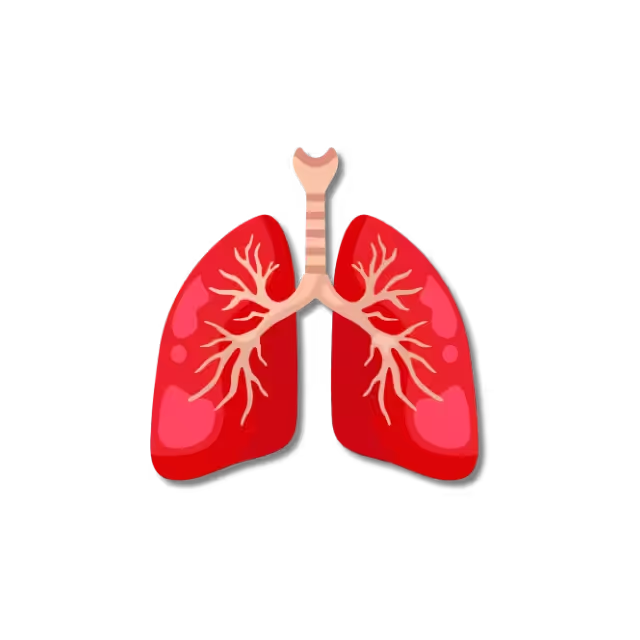
Welcome to the Saturn Medic thoracic anatomy lab — a free, structured set of study notes covering the bones, muscles, and major organs of the chest. Each topic is previewable directly on the site, with downloadable content available for offline study before labs, practicals, or exams. This thoracic anatomy lab was built to give medical students a clear, consistent reference for one of the most clinically dense regions in the body.
What’s Covered in Our Thoracic Anatomy Lab
Our thoracic anatomy lab is organized into 5 core topics, matching how the region is typically taught:
Osteology — the bony framework of the chest, including the ribs, sternum, and thoracic vertebrae, along with the landmarks most frequently referenced in exams, such as the sternal angle and the surface markers used for rib counting during clinical examination.
Muscles — the intercostal muscles, diaphragm, and the accessory muscles of respiration, covering how each contributes to the mechanics of breathing and how muscle-layer relationships are typically tested.
The Heart — cardiac chambers, valves, coronary vessels, and surface anatomy, one of the highest-yield topics in this entire lab given how frequently cardiac structures appear across both anatomy and clinical exams.
The Lungs — lobes, fissures, pleura, and bronchopulmonary segments, including the pleural recesses that are commonly missed in exam questions but come up repeatedly in clinical imaging and procedures.
Lymphatics — thoracic duct anatomy, mediastinal and pulmonary lymph node groups, and drainage pathways, a topic that’s often underrepresented elsewhere but directly relevant to clinical staging, such as lymphatic spread in breast and lung malignancies.
Each topic in our thoracic anatomy lab follows a consistent structure, so moving between Osteology, Muscles, The Heart, The Lungs, and Lymphatics feels familiar rather than starting over with every new section.
Why This Thoracic Anatomy Lab Helps
The thorax packs an unusual amount of clinically relevant detail into a compact space. Cardiac auscultation points, lung field mapping, the surface anatomy used to count ribs and locate the heart’s borders, and lymphatic drainage routes relevant to cancer staging all come directly from the material covered here — which is exactly why this region shows up so consistently in both written exams and clinical assessments.
This content is styled after standard clinical anatomy references such as Snell’s Clinical Anatomy and Netter’s Atlas of Human Anatomy, with structural details cross-checked against interactive 3D tools like Anatomy 3D Atlas for accuracy. That keeps the terminology and structural relationships in this thoracic anatomy lab consistent with what students already encounter in their coursework, rather than presenting a simplified or inconsistent version of the material.
These notes are built to complement hands-on lab work, not replace it. Reviewing the material before a cadaveric dissection or model-based lab session means you walk in already familiar with the major landmarks you’ll be asked to identify — whether that’s locating the sternal angle, tracing a coronary vessel, or identifying a bronchopulmonary segment — which makes that lab time far more productive than trying to learn the structures for the first time under pressure.
How to Use This Thoracic Anatomy Lab
Start with whichever topic is most relevant to what you’re currently studying — Osteology, Muscles, The Heart, The Lungs, or Lymphatics — and preview it directly on the site, or download it for offline study or printing. Many students pair this thoracic anatomy lab with the Thorax category in our anatomy question bank, using the notes to build understanding first and the MCQs to test recall afterward under exam-style time pressure — the combination tends to stick better than either resource used alone.
New content continues to be added to this thoracic anatomy lab as the broader anatomy lab section expands across all body regions.