

Clinical Subject Page
Rheumatic Heart Disesae
Also called
ICD-10
Specialty
Onset
Reviewed
-
OverviewOverview
-
Etiology & Risk FactorsEtiology & Risk Factors
-
PathophysiologyPathophysiology
-
Clinical PresentationClinical Presentation
-
History TakingHistory Taking
-
Physical ExaminationPhysical Examination
-
InvestigationsInvestigations
-
DiagnosisDiagnosis
-
ManagementManagement
-
ComplicationsComplications
-
PrognosisPrognosis
-
Key Points / Clinical PearlsKey Points / Clinical Pearls
Overview
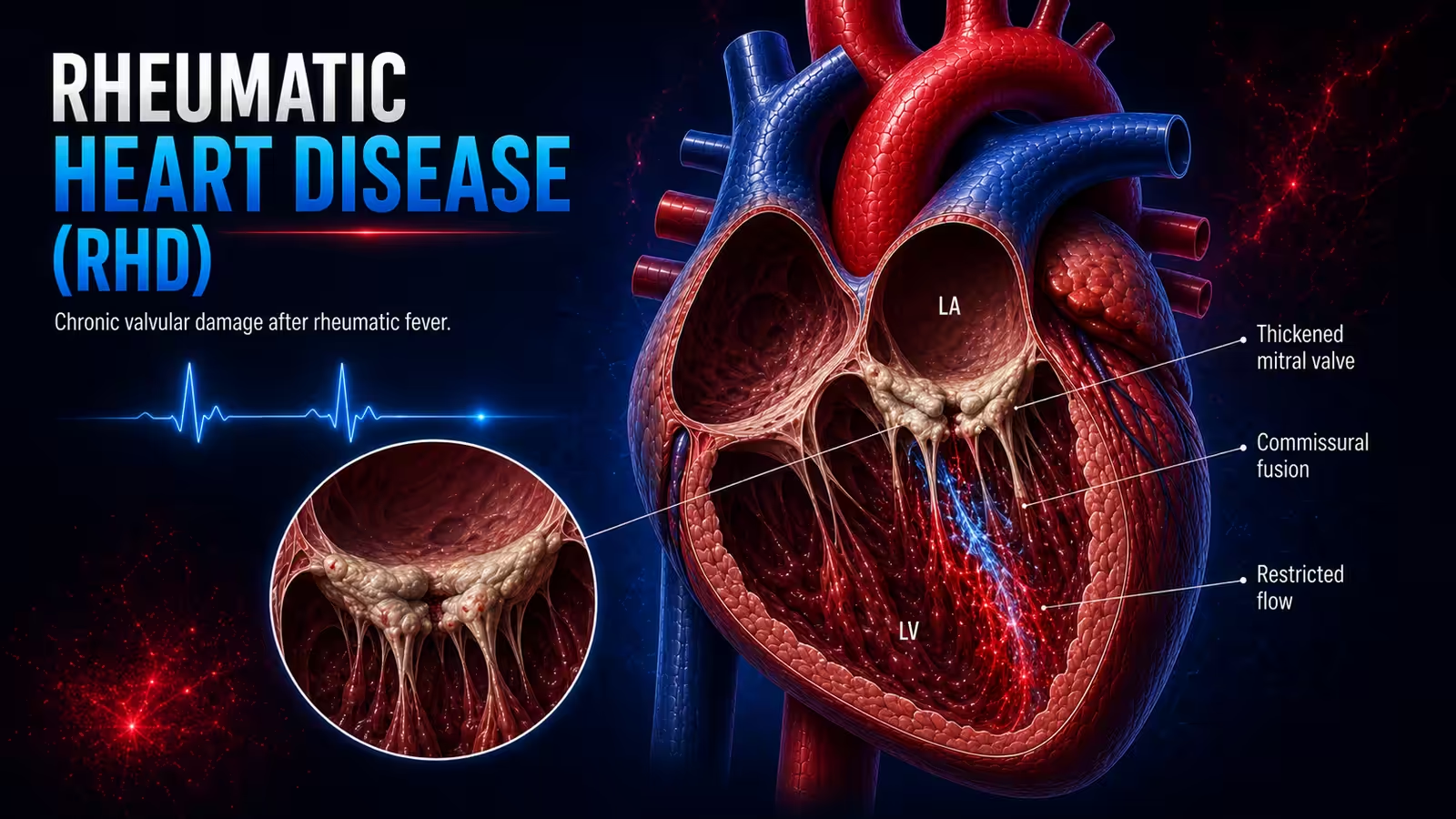
Rheumatic heart disease (RHD) is a chronic heart condition caused by permanent damage to the heart valves following acute rheumatic fever, which occurs after an untreated group A β-hemolytic streptococcal (strep throat) infection.
Etiology & Risk Factors
- Untreated or inadequately treated group A β-hemolytic Streptococcus (Streptococcus pyogenes) infection
- Most commonly strep throat (acute tonsillitis/pharyngitis)
- Less commonly after group A streptococcal skin infections
- Acute rheumatic fever usually develops 2–4 weeks after the infection.
- The resulting inflammation can permanently damage the heart valves, especially the mitral valve, leading to rheumatic heart disease.
Risk Factors
- Untreated or recurrent group A streptococcal throat infections
- Previous episode of acute rheumatic fever
- Age 5–15 years (highest risk for acute rheumatic fever)
- Living in resource-limited or overcrowded settings, where streptococcal infections are more common
- Limited access to prompt antibiotic treatment for streptococcal infections
Pathophysiology
- Untreated group A β-hemolytic streptococcal (GAS) throat infection occurs.
- The body produces antibodies against the streptococcal M protein.
- Due to molecular mimicry, these antibodies cross-react with cardiac proteins (especially myosin).
- This causes a type II hypersensitivity reaction, leading to acute rheumatic fever (ARF) and inflammation of the heart (carditis/valvulitis).
- Recurrent or severe inflammation causes permanent scarring and fibrosis of the heart valves, resulting in rheumatic heart disease (RHD).
- The mitral valve is most commonly affected, followed by the aortic valve, leading to valve stenosis, regurgitation, or both.
Simple Flow
Untreated strep throat → Antibodies against streptococcal M protein → Molecular mimicry → Autoimmune attack on heart valves → Carditis/valvulitis → Valve scarring and fibrosis → Chronic rheumatic heart disease
Clinical Presentation
General Symptoms
Fever
Malaise
Fatigue
Cardiac Manifestations
Carditis (pancarditis) – inflammation of the endocardium, myocardium, and pericardium
Heart murmur due to valve disease
Symptoms of heart failure in severe disease
Joint Manifestations
Migratory polyarthritis (pain and swelling that moves from one large joint to another)
Neurologic Manifestations
Sydenham chorea (involuntary, irregular movements)
Skin Manifestations
Subcutaneous nodules
Erythema marginatum (nonpruritic rash with central clearing)
Valve Involvement
Mitral valve (most common)
Early: Mitral regurgitation
Late: Mitral stenosis
Aortic valve
Aortic regurgitation
Late aortic stenosis
High-Yield Mnemonic: JONES
J – Joints (migratory polyarthritis)
O – (Carditis/Pancarditis)
N – Nodules (subcutaneous)
E – Erythema marginatum
S – Sydenham chorea
History Taking
- “Have you had a sore throat or strep throat in the past few weeks?”
- “Was it treated with antibiotics?”
- “Have you had a fever recently?”
- “Do you have pain or swelling that moves from one joint to another?”
- “Do you get short of breath during activity or when lying flat?”
- “Do you have chest pain or palpitations?”
- “Do you feel unusually tired or weak?”
- “Have you noticed any skin rash or painless lumps under your skin?”
- “Have you had any unusual jerky or involuntary movements?”
- “Have you ever been told you have a heart murmur, rheumatic fever, or a heart valve problem?”
- “Have you had rheumatic fever or repeated throat infections in the past?”
Physical Examination
General
- Fever
- Appears tired or unwell (malaise)
Cardiovascular
- Heart murmur due to valvular disease
- Signs of carditis (pancarditis)
- Signs of heart failure in severe cases
Joints
- Migratory arthritis involving the large joints (e.g., knees, ankles, elbows, wrists)
- Swollen and tender joints
Skin
- Erythema marginatum (nonpruritic rash with central clearing)
- Subcutaneous nodules over extensor surfaces
Neurological
- Sydenham chorea (involuntary, irregular movements)
Cardiac Examination Findings
- Murmur of mitral regurgitation (acute rheumatic valvulitis)
- Murmur of aortic regurgitation
- In chronic RHD, findings of mitral stenosis may be present
Investigations
Laboratory Tests
- Complete blood count (CBC) – may show leukocytosis or anemia
- ESR and CRP – elevated inflammatory markers
- Antistreptolysin O (ASO) titer – elevated
- Anti-DNase B titer – elevated
- Throat swab/culture or rapid streptococcal antigen test to identify recent GAS infection
Cardiac Investigations
- Echocardiography (Gold standard) – detects valvular damage (e.g., mitral regurgitation, aortic regurgitation, or chronic mitral stenosis)
- ECG – commonly shows prolonged PR interval (first-degree AV block); may also show other conduction abnormalities
- Chest X-ray – may show enlarged left atrium, enlarged left ventricle, or pulmonary edema
Diagnosis
Acute Rheumatic Fever · Jones Criteria (2015 AHA Revision)
Subclinical Echocardiographic mitral or aortic regurgitation meeting Doppler criteria without auscultatory findings — counts as major in high-risk populations
High-risk Monoarthritis or polyarthralgia may count as major (see population note)
Joints: knees, ankles, wrists, elbows — migratory, swollen, hot, painful. Responds dramatically to aspirin.
High-risk ≥38.0°C
Documented at time of presentation
High-risk ESR ≥30 mm/h and/or CRP ≥3.0 mg/dL
- Stricter thresholds apply (higher fever cutoff, higher ESR)
- Monoarthritis/monoarthralgia do not count as major criteria
- Subclinical carditis on echo counts as major only in high-risk
- Lower fever and ESR thresholds apply
- Monoarthritis counts as major; monoarthralgia counts as minor
- Subclinical carditis on echo counts as major criterion
Management
1. Eradicate Streptococcal Infection
Treat the group A streptococcal (GAS) infection with antibiotics.
2. Long-Term Antibiotic Prophylaxis
Essential for all patients with ARF or RHD to prevent recurrence.
First-line: Intramuscular benzathine penicillin G every 4 weeks.
Alternatives:
Oral penicillin V
Sulfadiazine or a macrolide for patients with a confirmed penicillin allergy
3. Manage Cardiac Complications
Refer patients with carditis or RHD to cardiology.
Treat heart failure according to guideline recommendations.
Anticoagulation if atrial fibrillation develops.
Consider endocarditis prophylaxis in high-risk patients and treat endocarditis promptly if it occurs.
4. Valve Disease Management
Valvuloplasty or heart valve replacement may be required for severe valvular disease.
5. Follow-Up
Regular echocardiography for long-term monitoring.
Educate patients about:
Adhering to antibiotic prophylaxis
Seeking prompt treatment for sore throats
Maintaining good dental hygiene
Complications
- Permanent valvular heart disease (especially mitral valve, followed by the aortic valve)
- Heart failure
- Atrial fibrillation
- Infective endocarditis
- Progressive worsening of valve disease, which may require valvuloplasty or heart valve replacement
- Recurrent acute rheumatic fever, leading to further valve damage if long-term antibiotic prophylaxis is not maintained
Prognosis
- Cardiac involvement is the most important prognostic factor.
- Patients with carditis are at high risk of developing permanent valvular heart disease (rheumatic heart disease), especially with recurrent episodes of acute rheumatic fever.
- Early death from acute rheumatic fever is usually due to myocarditis, rather than valvular disease.
- Long-term antibiotic prophylaxis helps prevent recurrent acute rheumatic fever and slows progression of rheumatic heart disease.
Key Points / Clinical Pearls
- RHD is a chronic complication of acute rheumatic fever.
- Caused by untreated group A streptococcal (strep throat) infection.
- Mitral valve is most commonly affected; aortic valve is second.
- Jones criteria are used to diagnose acute rheumatic fever.
- Gold standard for assessing valve damage: Echocardiography.
- Main treatment: Eradicate streptococcal infection, long-term penicillin prophylaxis, manage complications, and perform valve repair/replacement if severe.
- Preventing recurrent acute rheumatic fever is essential to reduce progression of rheumatic heart disease.
- National Center for Biotechnology Information (NIH). Rheumatic Heart Disease, StatPearls.
- World Health Organization. Rheumatic Heart Disease: Fact Sheet.
- World Health Organization. WHO Guideline on the Prevention and Diagnosis of Rheumatic Fever and Rheumatic Heart Disease. Geneva: WHO; 2024.
- Gewitz MH, Baltimore RS, Tani LY, et al; American Heart Association Committee on Rheumatic Fever, Endocarditis, and Kawasaki Disease. Revision of the Jones Criteria for the Diagnosis of Acute Rheumatic Fever in the Era of Doppler Echocardiography. Circulation. 2015;131:1806-1818. PMID: 25908771.
- MedlinePlus, National Library of Medicine (NIH). Rheumatic Heart Disease: Medical Encyclopedia.