

Clinical Subject Page
Infective Endocarditis
Also called
ICD-10
Specialty
Onset
Reviewed
-
OverviewOverview
-
Etiology & Risk FactorsEtiology & Risk Factors
-
PathophysiologyPathophysiology
-
Clinical PresentationClinical Presentation
-
History TakingHistory Taking
-
InvestigationsInvestigations
-
DiagnosisDiagnosis
-
ManagementManagement
-
ComplicationsComplications
-
PrognosisPrognosis
-
Key Points / Clinical PearlsKey Points / Clinical Pearls
Overview
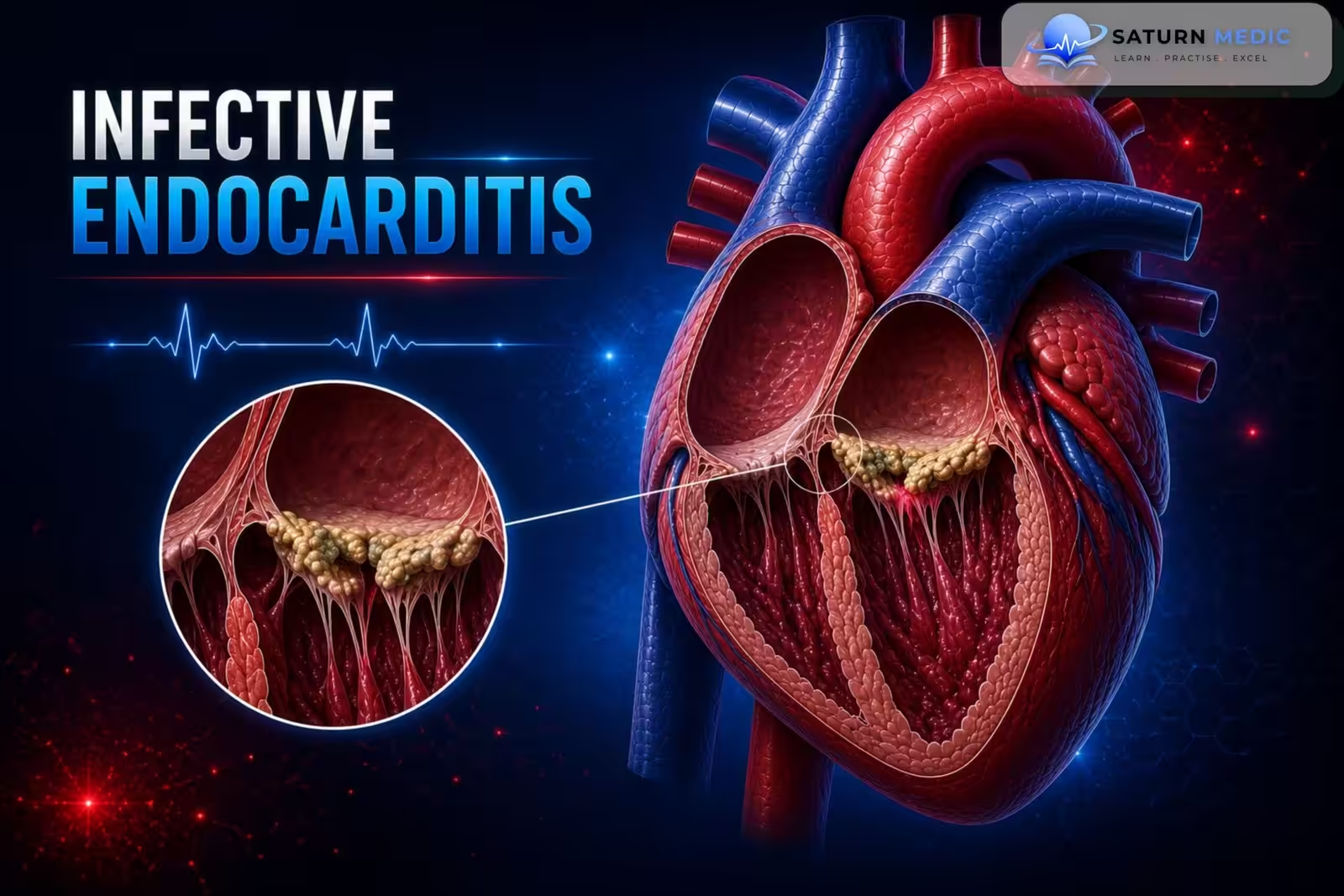
Infective endocarditis (IE) is an infection of the endocardium that most commonly involves one or more heart valves. It usually develops following bacteremia. IE may be acute (hours to days) or subacute (weeks to months). Without treatment, it is typically fatal.
Etiology & Risk Factors
-Common causes
- Staphylococcus aureus (most common cause of acute IE)
- Viridans streptococci (common cause of subacute IE)
- Enterococci
- HACEK organisms
-Risk factors
- Dental procedures
- Surgery
- Distant primary infections
- Nonsterile injections/intravenous drug use
- Prosthetic heart valves
- Congenital heart disease
- Previous valve damage
- Invasive procedures
Pathophysiology
-Disease mechanism
- Valvular endothelial injury occurs.
- Platelets and fibrin form a sterile vegetation.
- Bacteremia allows microorganisms to colonize the vegetation.
- Vegetations enlarge and destroy the valve, causing regurgitation.
- Vegetations may embolize to distant organs.
-Valve involvement
- Mitral valve (most common)
- Aortic valve
- Tricuspid valve
- Pulmonary valve
In people who inject drugs, the tricuspid valve is most commonly affected.
Clinical Presentation
Constitutional symptoms
Fever
Chills
Fatigue
Malaise
Cardiac findings
New or changing heart murmur
Signs of heart failure
Organ involvement
Glomerulonephritis
Septic embolic stroke
Other embolic manifestations
History Taking
Important questions include:
- Recent dental procedures
- Recent surgery
- History of intravenous drug use
- Previous infective endocarditis
- Prosthetic heart valve
- Congenital heart disease
- Recent bloodstream infection
- Duration of fever and constitutional symptoms
Investigations
Diagnosis is based on:
- Blood cultures
- Echocardiography
- Histopathology (when available)
- Imaging studies
- Assessment using the 2023 Duke-ISCVID criteria
Diagnosis
Diagnosis is confirmed using:
- Positive microbiological cultures
- Histopathology
- Imaging findings
- Duke-ISCVID diagnostic criteria:
Category Criteria Key Findings Pathological Criteria Definitive pathological evidence Identification of pathogens or characteristic histological features of active infective endocarditis in tissue or implanted cardiac material. Major Clinical Criteria Microbiological evidence Typical IE pathogens from ≥2 blood culture sets, or specific microbiological evidence (e.g., Coxiella burnetii, Bartonella spp., Tropheryma whipplei). Imaging evidence Echocardiography or cardiac CT showing characteristic IE findings (e.g., vegetations, abscess, new valvular regurgitation); FDG-PET/CT suggestive of IE in selected patients; direct surgical evidence. Minor Clinical Criteria Predisposing conditions Predisposing heart disease, previous IE, cardiac implantable electronic device (CIED), or injection drug use. Fever Temperature >38°C (100.4°F). Vascular phenomena Evidence of embolic or vascular complications. Immunologic phenomena Immunologic manifestations consistent with IE. Microbiological evidence Positive blood cultures or molecular tests that do not fulfill major criteria but are consistent with IE. Additional imaging/clinical findings Abnormal FDG-PET/CT after recent prosthetic implantation or new valvular regurgitation on auscultation when echocardiography is unavailable.
Management
1. Antimicrobial therapy
Start high-dose intravenous bactericidal antibiotics after obtaining appropriate blood cultures.
Treatment should be guided by the causative organism and antimicrobial susceptibility.
Therapy is generally prolonged, usually 4–6 weeks.
Native-valve streptococcal endocarditis: typically 4 weeks, with gentamicin sometimes used during the initial period in selected cases.
Prosthetic-valve endocarditis: generally requires at least 6 weeks of antimicrobial treatment.
Treatment should be modified once the organism and sensitivities are available.
Monitor:
Clinical response
Blood cultures
Renal function
Drug toxicity where relevant
2. Cardiac surgery
Surgery is required in a substantial proportion of patients, particularly when complications cannot be controlled with antibiotics alone.
Major indications:
Heart failure due to valve destruction
Persistent/uncontrolled infection despite antibiotics
Large left-sided vegetations with systemic embolisation or high embolic risk
Perivalvular/intracardiac abscess
Prosthetic-valve endocarditis, particularly complicated infection
Fungal endocarditis
Significant valve obstruction or severe valve dysfunction
Surgery involves debridement of infected tissue with valve repair or replacement when necessary. Antimicrobial therapy should be started before surgery.
3. Management of complications
Heart failure: treat heart failure while addressing the underlying valve destruction; severe valve damage may require urgent surgery.
Embolic complications: assess for cerebral, splenic, renal and other systemic embolisation.
Perivalvular abscess/conduction abnormalities: require urgent assessment for surgical treatment.
Persistent fever/bacteraemia: reassess antimicrobial sensitivity, search for uncontrolled infection or another source, and consider surgery.
Complications
Cardiac
Valvular regurgitation
Heart failure
Prosthetic valve dehiscence
Perivalvular abscess
Myocarditis
Conduction abnormalities (e.g., AV block)
Embolic
Stroke
Renal infarction
Splenic infarction
Pulmonary embolism (right-sided IE)
Septic emboli
Mycotic aneurysm
Other
Lung abscess
Brain abscess
Meningitis
Acute kidney injury
Splenic abscess
Prognosis
- IE is a serious disease.
- Without treatment, it is typically fatal.
- Early diagnosis, prolonged IV antibiotics, and surgery when indicated improve outcomes.
Key Points / Clinical Pearls
- IE is an infection of the endocardium, usually involving heart valves.
- S. aureus commonly causes acute IE.
- Viridans streptococci commonly cause subacute IE.
- Obtain blood cultures before starting antibiotics whenever possible.
- Echocardiography is central to diagnosis.
- Treatment requires prolonged IV antibiotics.
- Selected high-risk patients require antibiotic prophylaxis before certain dental and other high-risk procedures.
- Heart failure is the most common cause of death in IE.
- Yallowitz AW, Decker LC. National Center for Biotechnology Information (NIH). Infectious Endocarditis, StatPearls.
- Delgado V, Marsan NA, De Waha S, et al. 2023 ESC Guidelines for the Management of Endocarditis. Eur Heart J. 2023;44:3948-4042. PMID: 37622656.
- Fowler VG, Durack DT, Selton-Suty C, et al. The 2023 Duke-ISCVID Criteria for Infective Endocarditis: Updating the Modified Duke Criteria. Clin Infect Dis. 2023;77:518-526. doi: 10.1093/cid/ciad271.
- MedlinePlus, National Library of Medicine (NIH). Infective Endocarditis: Medical Encyclopedia.
- National Center for Biotechnology Information (NIH). Prosthetic Valve Endocarditis, StatPearls.