

Clinical Subject Page
Hypertrophic Cardiomyopathy (HOCM)
ICD-10
Specialty
Onset
Reviewed
-
OverviewOverview
-
Etiology & Risk FactorsEtiology & Risk Factors
-
PathophysiologyPathophysiology
-
Clinical PresentationClinical Presentation
-
History TakingHistory Taking
-
InvestigationsInvestigations
-
DiagnosisDiagnosis
-
ManagementManagement
-
ComplicationsComplications
-
PrognosisPrognosis
-
Key Points / Clinical PearlsKey Points / Clinical Pearls
Overview
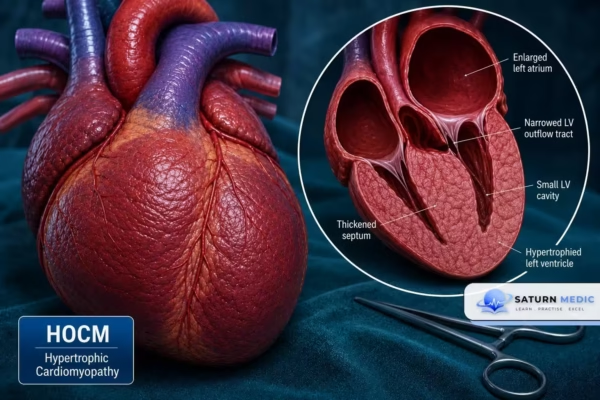
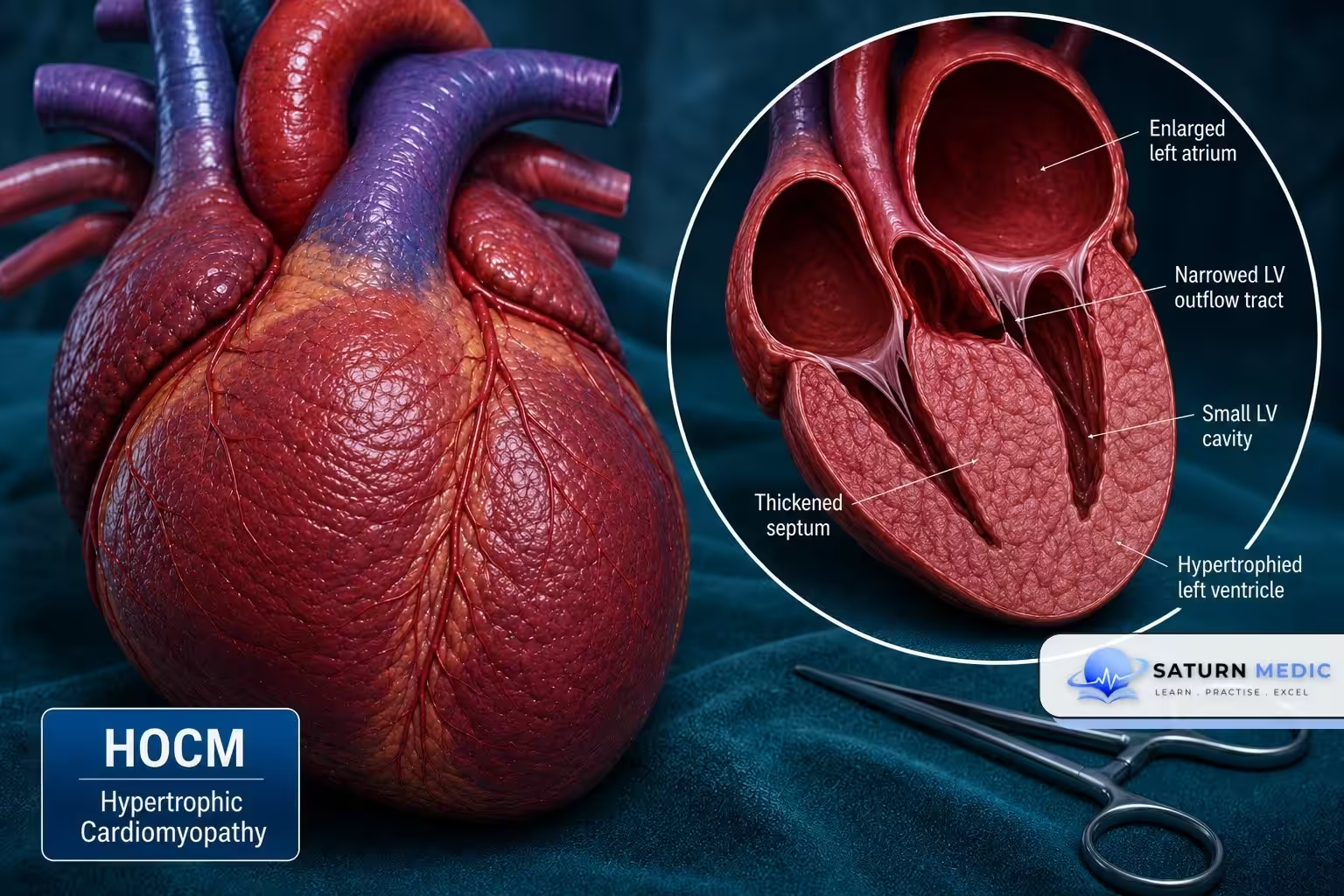
Hypertrophic obstructive cardiomyopathy (HOCM) is a form of hypertrophic cardiomyopathy (HCM) characterized by dynamic left ventricular outflow tract (LVOT) obstruction. HCM is the most common hereditary heart disease and is characterized by unexplained left ventricular (LV) hypertrophy, resulting in diastolic dysfunction. HOCM is a leading cause of sudden cardiac death (SCD) in young athletes. Although many patients remain asymptomatic, symptomatic individuals commonly present with exertional dyspnea or syncope, often exacerbated by exercise.
Etiology & Risk Factors
Etiology
- Primarily caused by genetic mutations leading to myocardial hypertrophy.
- HCM is a hereditary condition.
Risk Factors
- Family history of HCM.
- First-degree relatives of affected patients should undergo screening.
- Young athletes are at increased risk for sudden cardiac death if affected.
Pathophysiology
General HCM
- Asymmetric (most commonly septal) left ventricular hypertrophy.
- Diastolic dysfunction due to impaired LV relaxation and filling.
- Reduced cardiac output and impaired myocardial perfusion.
- Increased risk of arrhythmias, heart failure, and sudden cardiac death.
-HOCM
- Dynamic LVOT obstruction increases LV systolic pressure and worsens diastolic dysfunction.
- Main mechanism:
- Systolic anterior motion (SAM) of the mitral valve causing mitral-septal contact.
- Additional mechanisms:
- Hypertrophied interventricular septum narrowing the LVOT.
- Papillary muscle abnormalities.
- LVOT obstruction becomes worse with:
- Increased contractility
- Reduced preload
- Reduced afterload
-Clinical factors that worsen obstruction
- Exercise or emotional stress
- Dehydration
- Valsalva maneuver
- Drugs that reduce preload or afterload (e.g., diuretics, ACE inhibitors/ARBs, digoxin, hydralazine)
Clinical Presentation
Symptoms
- Exertional dyspnea
- Syncope (often exercise-induced)
- Many patients remain asymptomatic
Physical Examination
- Systolic ejection murmur
- Increases with maneuvers that decrease preload (e.g., Valsalva maneuver)
- S4 gallop
History Taking
Important points include:
- Exertional shortness of breath
- Episodes of syncope or presyncope
- Symptoms triggered or worsened by exercise
- Family history of hypertrophic cardiomyopathy
- Family history of sudden cardiac death
Investigations
Echocardiography (Diagnostic test of choice)
Typical findings:
- Asymmetrical LV hypertrophy
- Septal predominance
- Dynamic LVOT obstruction
Diagnosis
Diagnosis is confirmed by:
- Echocardiography demonstrating:
- Unexplained asymmetric LV hypertrophy
- Septal thickening
- Features of LVOT obstruction in obstructive disease
Management
-Medical Therapy
For symptomatic patients:
- Beta blockers
- Nondihydropyridine calcium channel blockers
-Invasive Therapy
For refractory obstructive HCM:
- Septal reduction therapy
-Sudden Cardiac Death Prevention
- Identify and manage high-risk individuals for SCD prevention.
-Medications to Avoid in Obstructive HCM
Avoid drugs that reduce preload or afterload because they may worsen LVOT obstruction:
- Nitrates
- ACE inhibitors
Complications
- Sudden cardiac death
- Cardiac arrhythmias
- Heart failure
- Secondary mitral regurgitation due to systolic anterior motion (SAM)
- Apical ventricular aneurysm (in some patients)
Prognosis
- Prognosis varies with symptom severity and risk of sudden cardiac death.
- Prevention of SCD is a major management goal.
- Appropriate treatment and risk stratification improve outcomes.
Key Points / Clinical Pearls
- HOCM accounts for approximately 70% of HCM cases.
- LVOT obstruction is dynamic, not fixed.
- Obstruction worsens with:
- ↓ Preload
- ↓ Afterload
- ↑ Contractility
- Murmur becomes louder during Valsalva maneuver.
- Avoid medications that reduce preload or afterload in obstructive HCM.
- Screen first-degree relatives of patients with HCM.
- Consider HOCM in young patients with exertional syncope or unexplained systolic murmur.
- Basit H, Alahmadi MH, Rout P, Sharma S. National Center for Biotechnology Information (NIH). Hypertrophic Cardiomyopathy, StatPearls.
- Ommen SR, Ho CY, Asif IM, et al. 2024 AHA/ACC/AMSSM/HRS/PACES/SCMR Guideline for the Management of Hypertrophic Cardiomyopathy. Circulation. 2024;149:e1239-e1311. doi: 10.1161/CIR.0000000000001250.
- National Center for Biotechnology Information (NIH). Mavacamten, StatPearls.
- Cirino AL, Channaoui N, Ho C. National Center for Biotechnology Information (NIH). Nonsyndromic Hypertrophic Cardiomyopathy Overview, GeneReviews.
- MedlinePlus, National Library of Medicine (NIH). Nonsyndromic Hypertrophic Cardiomyopathy: Genetics Home Reference.