

Clinical Subject Page
Percutaneous Coronary Intervention (PCI)
Also called
ICD-10
Specialty
Onset
Reviewed
-
OverviewOverview
-
IndicationsIndications
-
ContraindicationsContraindications
-
Pre-Procedure AssessmentPre-Procedure Assessment
-
PCI Procedure (Step-by-step)PCI Procedure (Step-by-step)
-
Types of Stents & DevicesTypes of Stents & Devices
-
Post-PCI CarePost-PCI Care
-
ComplicationsComplications
-
PrognosisPrognosis
-
Key Points / Clinical PearlsKey Points / Clinical Pearls
Overview
Percutaneous coronary intervention (PCI) is a minimally invasive catheter-based procedure used to restore coronary blood flow by balloon angioplasty with or without stent implantation.
Indications
- Acute STEMI (primary Percutaneous Coronary Intervention PCI)
- High-risk NSTEMI/Unstable angina
- Symptomatic chronic coronary syndrome despite optimal medical therapy
- Significant coronary artery stenosis causing ischemia
- Cardiogenic shock due to acute MI
- In-stent restenosis
- Selected patients with multivessel coronary artery disease
Contraindications
Absolute
No absolute contraindications in life-saving primary Percutaneous Coronary Intervention
Relative
Severe contrast allergy
Advanced renal failure
Uncontrolled bleeding disorder
Inability to receive dual antiplatelet therapy
Severe uncontrolled hypertension
Active infection (selected cases)
Pre-Procedure Assessment
Clinical Assessment
History and physical examination
Hemodynamic stability
ECG
Cardiac biomarkers
Laboratory
CBC
Renal function
Electrolytes
Coagulation profile
Blood glucose
Imaging
Coronary angiography
Echocardiography (if indicated)
Preparation
Informed consent
Aspirin loading
P2Y12 inhibitor loading
Anticoagulation
Assess contrast allergy and kidney function
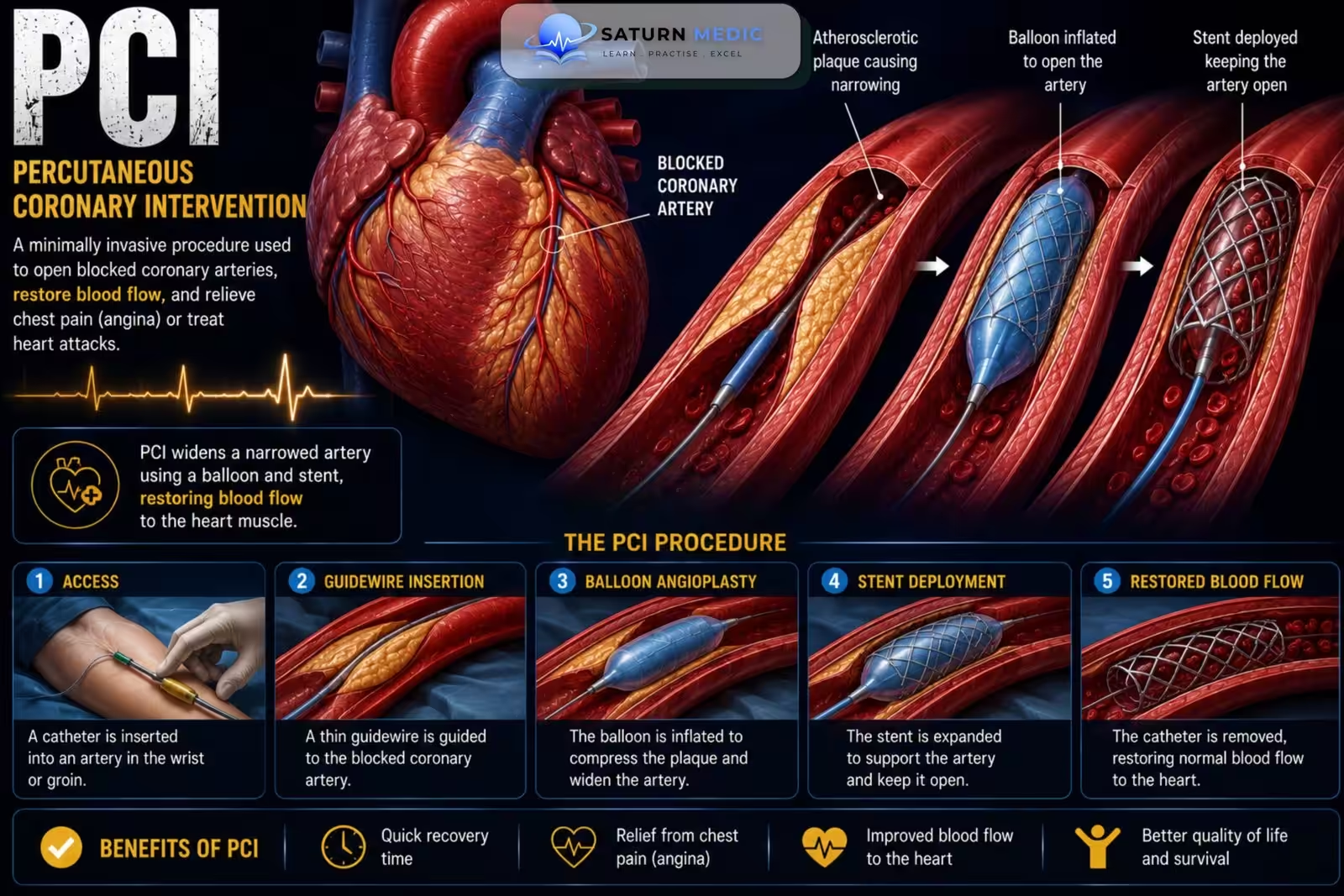
Percutaneous Coronary Intervention (PCI) Procedure (Step-by-Step)
- Obtain vascular access (radial preferred; femoral if required)
- Advance catheter to the coronary arteries
- Perform coronary angiography
- Cross the lesion with a guidewire
- Balloon angioplasty (predilation if needed)
- Deploy coronary stent
- Post-dilation (if necessary)
- Confirm adequate coronary flow (TIMI 3 flow)
- Remove catheter and achieve hemostasis
Types of Stents & Devices
Stents
Drug-eluting stent (DES) (preferred)
Bare-metal stent (BMS) (rarely used)
Other Devices
Balloon catheter
Guidewire
Guiding catheter
Intravascular ultrasound (IVUS)
Optical coherence tomography (OCT)
Rotational atherectomy
Intravascular lithotripsy (selected calcified lesions)
Post-Percutaneous Coronary Intervention (PCI) Care
-
- Continuous ECG monitoring
- Monitor vascular access site
- Dual antiplatelet therapy (Aspirin + P2Y12 inhibitor)
- High-intensity statin
- Risk-factor modification
- Cardiac rehabilitation
- Early ambulation (radial access)
- Follow-up for recurrent symptoms
Complications of Percutaneous Coronary Intervention (PCI)
-
- Coronary artery dissection
- Coronary perforation
- Acute stent thrombosis
- Restenosis
- Bleeding or hematoma
- Contrast-induced nephropathy
- Stroke
- Arrhythmias
- Myocardial infarction
- Death (rare)
Prognosis of Percutaneous Coronary Intervention (PCI)
- Excellent procedural success (>95% in experienced centers)
- Primary Percutaneous Coronary Intervention (PCI) significantly reduces mortality in STEMI.
- Drug-eluting stents have lower restenosis rates than bare-metal stents.
- Long-term outcomes depend on adherence to medical therapy and risk-factor control.
Key Points / Clinical Pearls of Percutaneous Coronary Intervention (PCI)
- Primary Percutaneous Coronary Intervention is the treatment of choice for STEMI.
- Radial artery access is preferred because it reduces bleeding complications.
- Drug-eluting stents are the standard of care.
- Dual antiplatelet therapy is essential after stent implantation.
- TIMI grade 3 flow indicates successful reperfusion.
- Secondary prevention (statins, BP control, smoking cessation, cardiac rehabilitation) is crucial for long-term success.
- National Center for Biotechnology Information (NIH). Percutaneous Coronary Intervention, StatPearls.
- Lawton JS, Tamis-Holland JE, Bangalore S, et al. 2021 ACC/AHA/SCAI Guideline for Coronary Artery Revascularization. Circulation. 2022;145:e18-e114. doi: 10.1161/CIR.0000000000001038.
- MedlinePlus, National Library of Medicine (NIH). Angioplasty and Stent Placement - Heart: Medical Encyclopedia.
- Rao SV, O'Donoghue ML, Ruel M, et al. 2025 ACC/AHA/ACEP/NAEMSP/SCAI Guideline for the Management of Patients With Acute Coronary Syndromes. Circulation. 2025;151:e771-e862. doi: 10.1161/CIR.0000000000001309.
- National Center for Biotechnology Information (NIH).