

Clinical Subject Page
Ventricular Fibrillation (VF)
Also called
Cardiac fibrillation (less specific)
ICD-10
I49.01
Specialty
Cardiology
Onset
Acute
Reviewed
June 2026
On This Page
-
OverviewOverview
-
Etiology & Risk FactorsEtiology & Risk Factors
-
PathophysiologyPathophysiology
-
Clinical PresentationClinical Presentation
-
History TakingHistory Taking
-
InvestigationsInvestigations
-
DiagnosisDiagnosis
-
ManagementManagement
-
ComplicationsComplications
-
PrognosisPrognosis
-
Key Points / Clinical PearlsKey Points / Clinical Pearls
Overview
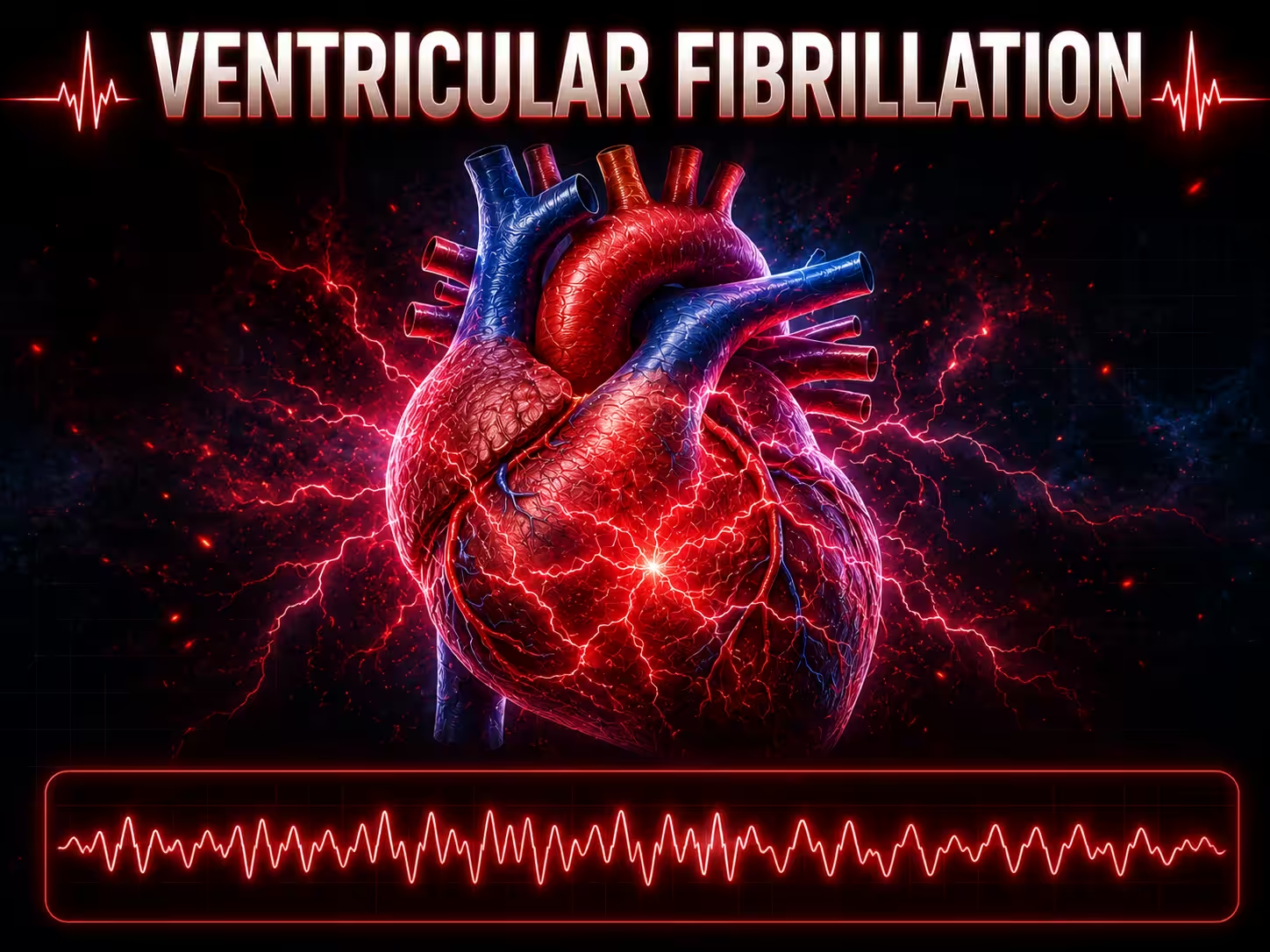
Ventricular Fibrillation (VF) is a life-threatening cardiac arrhythmia characterized by rapid, chaotic, and disorganized ventricular electrical activity, resulting in no effective cardiac output.
In ventricular fibrillation, the ventricles quiver instead of contracting effectively, causing an immediate loss of cardiac output.
Without immediate treatment, VF rapidly leads to:
- Cardiac arrest
- Cerebral hypoxia
- Death
Etiology & Risk Factors
Common Causes
Cardiac Causes
- Acute myocardial infarction (most common)
- Ischemic heart disease
- Heart failure
- Cardiomyopathy
- Myocarditis
- Valvular heart disease
Electrolyte & Metabolic Disorders
- Hypokalemia
- Hyperkalemia
- Hypomagnesemia
- Acidosis
- Hypoxia
Drugs & Toxins
- Antiarrhythmic drugs
- QT-prolonging medications
- Digoxin toxicity
- Cocaine
- Amphetamines
Inherited Arrhythmia Syndromes
- Long QT syndrome
- Brugada syndrome
- Catecholaminergic polymorphic ventricular tachycardia (CPVT)
Risk Factors
- Previous myocardial infarction
- Reduced left ventricular ejection fraction
- Heart failure
- Structural heart disease
- Previous ventricular arrhythmia
- Electrolyte abnormalities
- Family history of sudden cardiac death
Pathophysiology
Trigger (ischemia, electrolyte abnormality, or structural heart disease)
⬇
Chaotic ventricular electrical activity
⬇
Loss of coordinated ventricular contraction
⬇
No effective cardiac output
⬇
Severe hypotension
⬇
Cardiac arrest
⬇
Cerebral hypoxia
⬇
Death if untreated
Key Concept
Ventricular Fibrillation (VF) produces no effective pulse because the ventricles do not contract in a coordinated manner.
Clinical Presentation
Symptoms (Before Collapse)
If preceded by another arrhythmia:
- Palpitations
- Chest pain
- Dizziness
- Dyspnea
Cardiac Arrest
- Sudden collapse
- Loss of consciousness
- No pulse
- No normal breathing (or only gasping)
Signs
- Pulseless
- Unresponsive
- Apnea or agonal breathing
- Dilated pupils (late finding)
History Taking
If the patient survives, ask about:
- Chest pain before collapse?
- Palpitations?
- Syncope?
- Previous myocardial infarction?
- Heart failure?
- Cardiomyopathy?
- Family history of sudden cardiac death?
- Previous ventricular arrhythmias?
- Current medications?
- Drug or stimulant use?
Investigations
ECG
Shows:
- Chaotic, irregular waveform
- No identifiable P waves
- No QRS complexes
- No organized rhythm
After Return of Spontaneous Circulation (ROSC)
Investigate the cause:
- 12-lead ECG
- Cardiac biomarkers
- Electrolytes
- Arterial blood gas
- Echocardiography
- Coronary angiography when indicated
Diagnosis
Diagnosis is based on:
1. Clinical Findings
- Cardiac arrest
- No pulse
- Unconsciousness
2. ECG Confirmation
- Ventricular fibrillation pattern
Management of Ventricular Fibrillation (VF)
Immediate Management
- Call for help
- Activate emergency response
- Start high-quality CPR
- Attach a defibrillator/AED immediately
Defibrillation
- Immediate unsynchronized defibrillation (treatment of choice)
Advanced Cardiac Life Support (ACLS)
Continue:
- CPR
- Defibrillation
- Epinephrine
- Amiodarone or lidocaine (when indicated)
- Treat reversible causes (Hs and Ts)
After ROSC
- Identify and treat the underlying cause
- Coronary reperfusion when indicated
- Targeted temperature management in selected patients
- Intensive care monitoring
Important Note
Early defibrillation is the single most important intervention for ventricular fibrillation.
Complications of Ventricular Fibrillation (VF)
- Sudden cardiac death
- Hypoxic brain injury
- Cardiogenic shock
- Recurrent ventricular arrhythmias
- Multiple organ failure
- Death
Prognosis of Ventricular Fibrillation (VF)
- Prognosis depends mainly on:
- Time to CPR
- Time to defibrillation
- Cause of VF
- Duration of cardiac arrest
- Early CPR and rapid defibrillation significantly improve survival.
- Delayed treatment is associated with poor neurological outcomes and death.
Key Points / Clinical Pearls of Ventricular Fibrillation (VF)
Ventricular Fibrillation (VF) is a life-threatening ventricular arrhythmia causing cardiac arrest.
Acute myocardial infarction is the most common cause in adults.
VF produces no pulse or effective cardiac output.
ECG shows chaotic ventricular electrical activity without organized QRS complexes.
VF is a shockable rhythm.
Immediate defibrillation and high-quality CPR are lifesaving.
Do not delay defibrillation while obtaining IV access or medications.
Always search for reversible causes (Hs and Ts).
Survivors require evaluation for the underlying cause and prevention of recurrence.
- National Center for Biotechnology Information (NIH). Ventricular Fibrillation, StatPearls.
- Goyal A, Chhabra L, Singh B, Cooper JS. National Center for Biotechnology Information (NIH). Defibrillation, StatPearls.
- National Center for Biotechnology Information (NIH). Advanced Cardiac Life Support (ACLS), StatPearls.
- Al-Khatib SM, Stevenson WG, Ackerman MJ, et al. 2017 AHA/ACC/HRS Guideline for Management of Patients With Ventricular Arrhythmias and the Prevention of Sudden Cardiac Death. J Am Coll Cardiol. 2018;72:e91-e220. PMID: 29097296.
- Yow AG, Rajasurya V, Ahmed I, et al. National Center for Biotechnology Information (NIH). Sudden Cardiac Death, StatPearls.