

Clinical Subject Page
Zollinger Ellison Syndrome
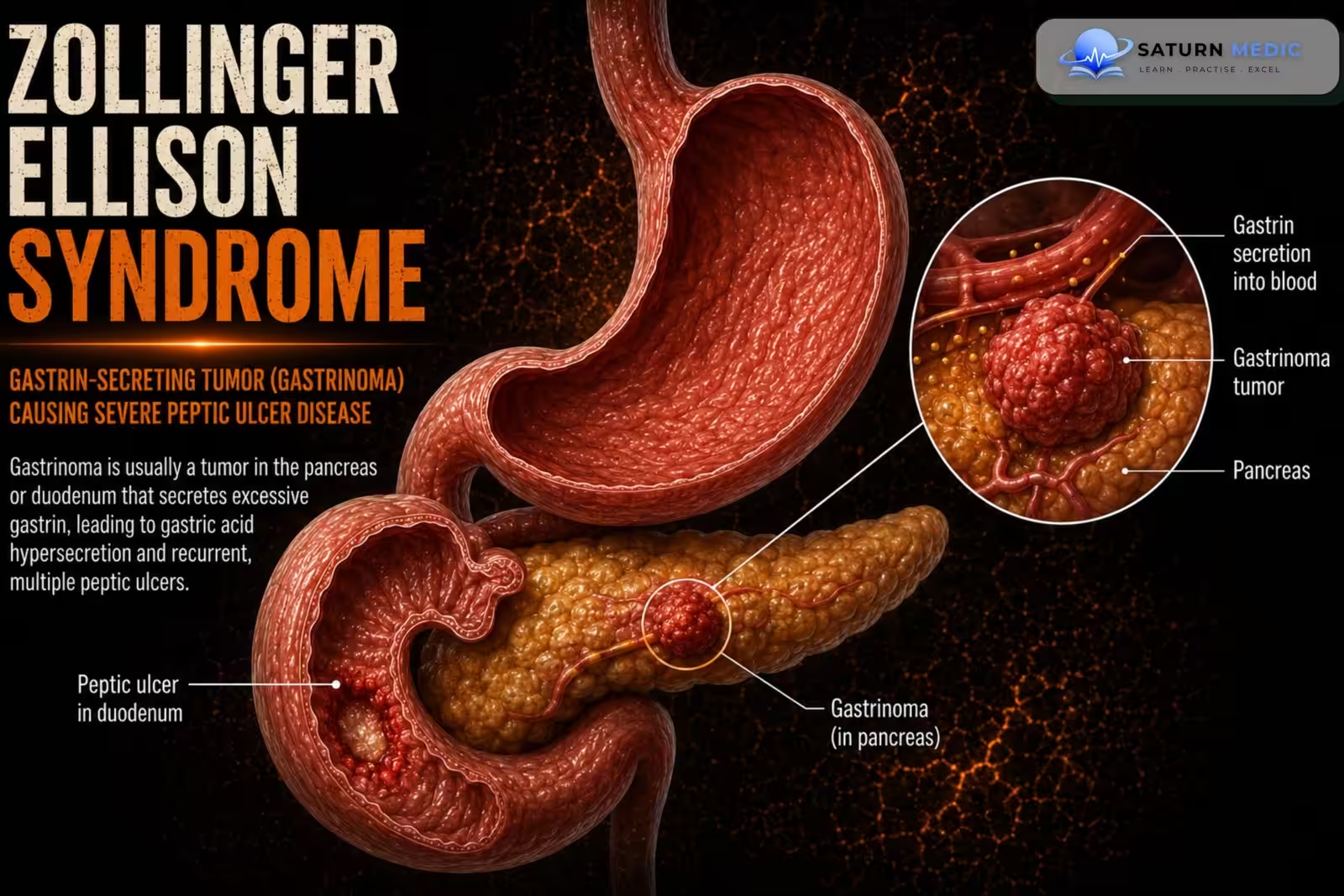
Zollinger-Ellison syndrome is a gastrin-secreting neuroendocrine tumor (gastrinoma), most
commonly located in the duodenum or pancreas, causing excessive gastric acid secretion.
Also called
ICD-10
Specialty
Onset
Reviewed
-
OverviewOverview
-
Etiology & Risk FactorsEtiology & Risk Factors
-
PathophysiologyPathophysiology
-
Clinical PresentationClinical Presentation
-
History TakingHistory Taking
-
Physical ExaminationPhysical Examination
-
InvestigationsInvestigations
-
DiagnosisDiagnosis
-
ManagementManagement
-
ComplicationsComplications
-
PrognosisPrognosis
-
Key Points / Clinical PearlsKey Points / Clinical Pearls
Overview
Zollinger Ellison Syndrome produce excessive amounts of gastrin, leading to marked gastric acid hypersecretion.
Patients typically present with recurrent, therapy-resistant peptic ulcer disease and diarrhea. More
than half of gastrinomas are malignant. Diagnosis is confirmed by fasting gastric pH ≤2 and fasting
serum gastrin (FSG) >1000 pg/mL. Treatment focuses on acid suppression with proton pump
inhibitors (PPIs) and surgical resection of localized tumors
Etiology & Risk Factors
Main Causes of Zollinger Ellison Syndrome
-
Sporadic gastrinoma — most cases
-
Multiple endocrine neoplasia type 1 (MEN1)
-
Accounts for approximately 20–25% of cases
-
May be associated with parathyroid, pituitary, and other pancreatic neuroendocrine tumors
-
Risk Factors for Zollinger Ellison Syndrome
-
Personal history of MEN1
-
Family history of MEN1
-
Hyperparathyroidism
-
Multiple pancreatic or duodenal neuroendocrine tumors
-
Family history of endocrine tumors
-
Younger age at presentation may suggest MEN1-associated disease
Pathophysiology
1. A gastrinoma secretes excessive gastrin.
2. Gastrin stimulates marked gastric acid production.
3. Gastric acid hypersecretion leads to recurrent peptic ulcer disease.
4. Excess acid contributes to diarrhea.
5. More than half of gastrinomas are malignant and may metastasize
Clinical Presentation
• Recurrent peptic ulcer disease
• Therapy-resistant peptic ulcers
• Diarrhea
History Taking
-
Ask about:
• Recurrent or persistent peptic ulcer symptoms
• Previous ulcer treatments and response
• Diarrhea
• History of recurrent ulcers despite therapy
• Personal or family history of endocrine tumors
Physical Examination
Physical examination findings in Zollinger Ellison Syndrome Patients are variable.
Assess for complications related to peptic ulcer disease and chronic diarrhea
Investigations
-
Initial Laboratory Tests
-
Complete blood count
-
Electrolytes and renal function
-
Liver function tests
-
Serum calcium
-
Parathyroid hormone level if MEN1 is suspected
1. Fasting Serum Gastrin
-
Main initial biochemical test
-
Should be interpreted together with gastric acidity
-
Marked hypergastrinemia alone is not diagnostic because PPIs, atrophic gastritis, and other conditions can also increase gastrin levels
A fasting gastrin concentration more than 10 times the upper limit of normal, together with a gastric pH below 2, strongly supports the diagnosis.
2. Gastric pH or Acid Secretion
-
Confirms that hypergastrinemia is associated with excessive gastric acid production
-
A gastric pH <2 supports Zollinger–Ellison syndrome
3. Secretin Stimulation Test
Used when fasting gastrin is elevated but not diagnostic.
-
Measure baseline serum gastrin
-
Administer intravenous secretin
-
A paradoxical rise in gastrin supports the diagnosis of gastrinoma
4. Upper Gastrointestinal Endoscopy
May demonstrate:
-
Multiple or recurrent peptic ulcers
-
Ulcers distal to the duodenal bulb
-
Severe reflux esophagitis
-
Enlarged gastric folds
5. Tumor Localization and Staging
-
Multiphasic contrast-enhanced CT of the abdomen
-
MRI of the abdomen
-
Endoscopic ultrasound, especially for pancreatic lesions
-
Somatostatin receptor imaging, preferably Ga-68 DOTATATE PET/CT
-
Additional imaging to assess liver or lymph-node metastases
6. Assessment for MEN1
-
Serum calcium and parathyroid hormone
-
Prolactin and other pituitary testing when indicated
-
MEN1 genetic testing after appropriate counselling, particularly with:
-
Family history
-
Hyperparathyroidism
-
Multiple tumors
-
Young age at diagnosis
-
-
Diagnosis
-Diagnosis is established by:
• Fasting gastric pH ≤2
• Fasting serum gastrin >1000 pg/mL
If uncertainty remains:
• Secretin stimulation test
Related Topics
Management
-
1. Control of Gastric Acid
Proton Pump Inhibitors — First-Line
High-dose PPIs are the main medical treatment.
Examples:
-
Omeprazole
-
Pantoprazole
-
Esomeprazole
-
Lansoprazole
The dose is adjusted according to symptom control, ulcer healing, and acid suppression. Long-term treatment is often required.
H2-Receptor Antagonists
-
Less effective than PPIs
-
May be used when PPIs cannot be given
-
Usually require high and frequent dosing
2. Surgical Treatment
Sporadic, Localized Gastrinoma
-
Surgical exploration and complete tumor resection offer the best chance of cure
-
Regional lymph nodes are assessed and removed when indicated
-
The operation depends on tumor location and extent
Surgery is generally considered for patients with resectable sporadic disease and no contraindication to an operation.
MEN1-Associated Gastrinoma
-
Often multiple and mainly duodenal
-
Management is individualized
-
Routine surgery for very small tumors remains controversial
-
Larger, growing, localized, or potentially aggressive tumors may require surgery
3. Advanced or Metastatic Disease
Treatment options may include:
-
Somatostatin analogues
-
Octreotide
-
Lanreotide
-
-
Peptide receptor radionuclide therapy in somatostatin-receptor-positive disease
-
Targeted therapies for progressive neuroendocrine tumors
-
Systemic chemotherapy in selected aggressive tumors
-
Liver-directed treatment for liver-dominant metastases
-
Surgical debulking in carefully selected patients
4. Management of Complications
-
Treat peptic ulcer bleeding
-
Manage perforation or gastric outlet obstruction urgently
-
Treat severe reflux esophagitis
-
Correct dehydration and electrolyte abnormalities caused by diarrhea
-
Provide nutritional support when required
5. Follow-Up
-
Monitor symptoms and PPI requirements
-
Repeat fasting gastrin when clinically appropriate
-
Periodic CT, MRI, or somatostatin-receptor imaging
-
Monitor for tumor growth or metastasis
-
MEN1 patients require lifelong endocrine surveillance
-
Complications
• Dysphagia
• Aspiration risk
• Association with esophageal squamous cell carcinoma
Prognosis
- Prognosis of Zollinger Ellison Syndrome depends on tumor stage and the presence of malignancy.
- Acid hypersecretion is usually
effectively controlled with PPIs - localized disease may be treated surgically.
- Advanced malignant disease may require chemotherapy or radiation therapy
Key Points / Clinical Pearls
• Zollinger-Ellison syndrome is caused by a gastrin-secreting neuroendocrine tumor (gastrinoma).
• Gastrinomas are usually located in the duodenum or pancreas.
• Excess gastrin causes marked gastric acid hypersecretion.
• Hallmark features are recurrent, treatment-resistant peptic ulcers and diarrhea.
• More than 50% of gastrinomas are malignant.
• Diagnosis of Zollinger Ellison Syndrome is confirmed by fasting gastric pH ≤2 and fasting serum gastrin >1000 pg/mL.
• A secretin stimulation test is used when the diagnosis is uncertain.
• PPIs are the first-line treatment for acid suppression.
• Surgical resection is indicated for localized disease.
- National Center for Biotechnology Information (NIH). Gastrinoma, StatPearls.
- Massironi S, Rossi RE, Laffusa A, et al. Sporadic and MEN1-Related Gastrinoma and Zollinger-Ellison Syndrome: Differences in Clinical Characteristics and Survival Outcomes. J Endocrinol Invest. 2023;46:957-967. PMC10105668.
- Gibril F, Schumann M, Pace A, Jensen RT. Multiple Endocrine Neoplasia Type 1 and Zollinger-Ellison Syndrome: A Prospective Study of 107 Cases and Comparison With 1009 Cases From the Literature. Medicine (Baltimore). 2004;83:43-83. PMID: 14747767.
- MedlinePlus, National Library of Medicine (NIH). Zollinger-Ellison Syndrome: Medical Encyclopedia.
- National Center for Biotechnology Information (NIH). Gastric Neuroendocrine Tumors, StatPearls.