

Clinical Subject Page
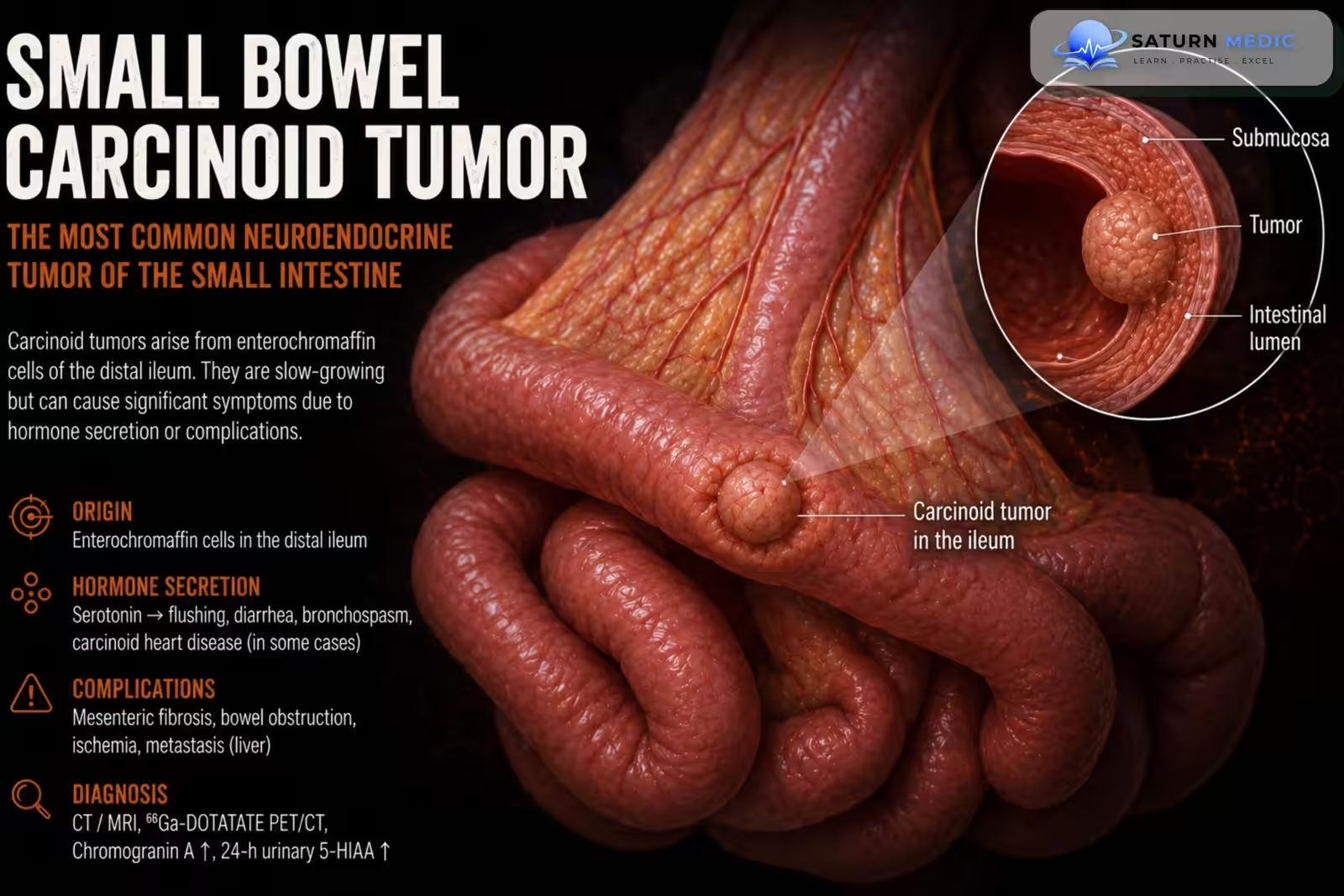
Small Bowel Carcinoid Tumor
Esophageal carcinoma is a malignant tumor of the esophagus. The two major histological types are
esophageal adenocarcinoma and esophageal squamous cell carcinoma (SCC).
Also called
ICD-10
Specialty
Onset
Reviewed
-
OverviewOverview
-
Etiology & Risk FactorsEtiology & Risk Factors
-
PathophysiologyPathophysiology
-
Clinical PresentationClinical Presentation
-
History TakingHistory Taking
-
Physical ExaminationPhysical Examination
-
InvestigationsInvestigations
-
DiagnosisDiagnosis
-
ManagementManagement
-
ComplicationsComplications
-
PrognosisPrognosis
-
Key Points / Clinical PearlsKey Points / Clinical Pearls
Overview
- Belongs to the group of neuroendocrine neoplasms (NENs).
- May be functioning (secretes hormones causing symptoms) or nonfunctioning.
- Small bowel neuroendocrine tumors account for a significant proportion of malignant small bowel tumors.
- Carcinoid syndrome is mainly associated with metastatic gastrointestinal neuroendocrine tumors and can present with episodic flushing, diarrhea, abdominal pain, and wheezing.
Etiology & Risk Factors
-Etiology
- Exact cause is unknown.
- Most small bowel neuroendocrine tumors (carcinoid tumors) occur sporadically.
-Risk Factors
- Positive family history of neuroendocrine neoplasms.
- Genetic syndromes, especially:
- Multiple endocrine neoplasia type 1 (MEN 1) (increases the risk of neuroendocrine neoplasms).
Pathophysiology
Neuroendocrine cells of the small bowel → Well-differentiated neuroendocrine tumor (carcinoid tumor) → Serotonin and other vasoactive substances produced → Liver metastasis → Hormones bypass liver metabolism → Enter systemic circulation → Carcinoid syndrome → Diarrhea (↑ intestinal motility and secretion) + Flushing (vasodilation) + Fibrosis (mesenteric fibrosis and carcinoid heart disease)
Clinical Presentation
-
- Often asymptomatic in early stages.
- Abdominal pain
- Change in bowel habits or bowel obstruction (less common)
- Carcinoid syndrome (usually with metastatic disease):
- Episodic flushing
- Secretory diarrhea
- Wheezing/dyspnea
- Diaphoresis
- Hypotension
- Advanced disease:
- Carcinoid heart disease (right-sided valvular disease/right-sided heart failure)
- Mesenteric fibrosis
History Taking
-
Ask about:
- When did your abdominal pain start?
- Where is the pain? Is it constant or intermittent?
- Have you had diarrhea? How often?
- Have you noticed episodes of facial flushing?
- Do you have wheezing or shortness of breath?
- Have you had unexplained weight loss?
- Have you noticed nausea, vomiting, or signs of bowel obstruction?
- Have you been told you have heart valve disease or symptoms of heart failure?
- Is there a family history of neuroendocrine tumors or MEN 1?
Physical Examination
Assess for:
- General: Weight loss, signs of malnutrition (advanced disease)
- Vital signs: Hypotension (during flushing episodes)
- Skin: Episodic flushing of the face, neck, and chest; diaphoresis
- Abdomen: Abdominal tenderness or palpable abdominal mass (occasionally)
- Respiratory: Wheezing
- Cardiovascular (advanced disease):
- Tricuspid regurgitation murmur
- Signs of right-sided heart failure (e.g., peripheral edema, raised jugular venous pressure)
Investigations
-
Laboratory tests
- 24-hour urinary 5-HIAA (for carcinoid syndrome)
- Serum chromogranin A
- Serotonin (when indicated)
Imaging
- Contrast-enhanced CT or MRI (localize tumor and assess metastases)
- Somatostatin receptor PET/CT (preferred for staging and detecting small tumors/metastases)
Histopathology
- Biopsy to confirm diagnosis
- Immunohistochemistry: Chromogranin A and Synaptophysin
- Ki-67 index for tumor grading
Diagnosis
-
Diagnosis is confirmed by a combination of:
- Clinical suspicion (e.g., flushing, diarrhea, abdominal pain)
- Laboratory tests:
- 24-hour urinary 5-HIAA (for carcinoid syndrome)
- Serum chromogranin A
- Imaging:
- Contrast-enhanced CT or MRI
- Somatostatin receptor PET/CT (preferred for staging)
- Biopsy (gold standard):
- Histopathology confirms the diagnosis
- Immunohistochemistry: Chromogranin A and Synaptophysin
- Ki-67 index for tumor grading
Related Topics
Management
-
- Multidisciplinary care (oncology, gastroenterology, surgery)
- Observation for selected patients with small, indolent tumors and no carcinoid syndrome
- Surgical resection for localized disease (treatment of choice)
- Surgical debulking (cytoreduction) for selected metastatic disease to reduce symptoms and hormone production
- Somatostatin analogues (e.g., octreotide) for carcinoid syndrome and to slow progression of metastatic tumors with somatostatin receptors
- Radiolabeled somatostatin analogues for somatostatin receptor–positive tumors
- Palliative chemotherapy for advanced disease
- Liver-directed therapies (selected patients with liver metastases):
- Hepatic arterial embolization
- Radiofrequency ablation
- Hepatic resection (when appropriate)
Surgical resection is the main treatment for localized small bowel carcinoid tumors, while octreotide is the cornerstone of symptom control in carcinoid syndrome.
Complications
- Carcinoid syndrome
- Carcinoid heart disease (right-sided valvular heart disease)
- Mesenteric fibrosis
- Intestinal obstruction (ileus)
- Intra-abdominal vessel ischemia
- Ureteral obstruction
- Metastatic spread (especially to the liver)
- Carcinoid crisis (life-threatening; may be triggered by surgery, biopsy, or anesthesia)
- The major complications are liver metastases, carcinoid syndrome, carcinoid heart disease, mesenteric fibrosis, and the potentially life-threatening carcinoid crisis.
Prognosis
- Generally favorable if diagnosed early and completely resected.
- Depends on:
- Tumor stage
- Presence of metastases
- Tumor grade
- 5-year survival: approximately 68% for malignant small bowel tumors overall.
- If metastatic disease is present, 5-year survival decreases to approximately 40%.
Key Points / Clinical Pearls
- A small bowel carcinoid tumor is a slow-growing, well-differentiated neuroendocrine tumor (NET) that arises from neuroendocrine cells of the small intestine.
- Most tumors are sporadic and remain asymptomatic until advanced. Some produce serotonin, causing carcinoid syndrome (flushing, diarrhea, wheezing), which usually occurs after liver metastasis.
- Diagnosis is based on 24-hour urinary 5-HIAA, serum chromogranin A, CT/MRI, somatostatin receptor PET/CT, and biopsy with Ki-67 grading.
- Surgical resection is the treatment of choice for localized disease
- while octreotide (somatostatin analogue) is the main treatment for carcinoid syndrome and unresectable metastatic disease.
- Prognosis is generally favorable with early diagnosis but worsens in the presence of metastatic disease.
- National Center for Biotechnology Information (NIH). Small Bowel Neoplasms, StatPearls.
- Boudreaux JP, Klimstra DS, Hassan MM, et al; North American Neuroendocrine Tumor Society (NANETS). The NANETS Consensus Guideline for the Diagnosis and Management of Neuroendocrine Tumors: Well-Differentiated Neuroendocrine Tumors of the Jejunum, Ileum, Appendix, and Cecum. Pancreas. 2010;39:753-766. PMID: 20664473.
- Howe JR, Cardona K, Fraker DL, et al. The Surgical Management of Small Bowel Neuroendocrine Tumors: Consensus Guidelines of the North American Neuroendocrine Tumor Society (NANETS). Pancreas. 2017;46:715-731. PMC5502737.
- Diagnosis and Management of Small Bowel Neuroendocrine Tumors: A State-of-the-Art Review. PMC9516545.
- MedlinePlus, National Library of Medicine (NIH). Carcinoid Syndrome: Medical Encyclopedia.