

Clinical Subject Page
Small Bowel Obstruction (SBO)
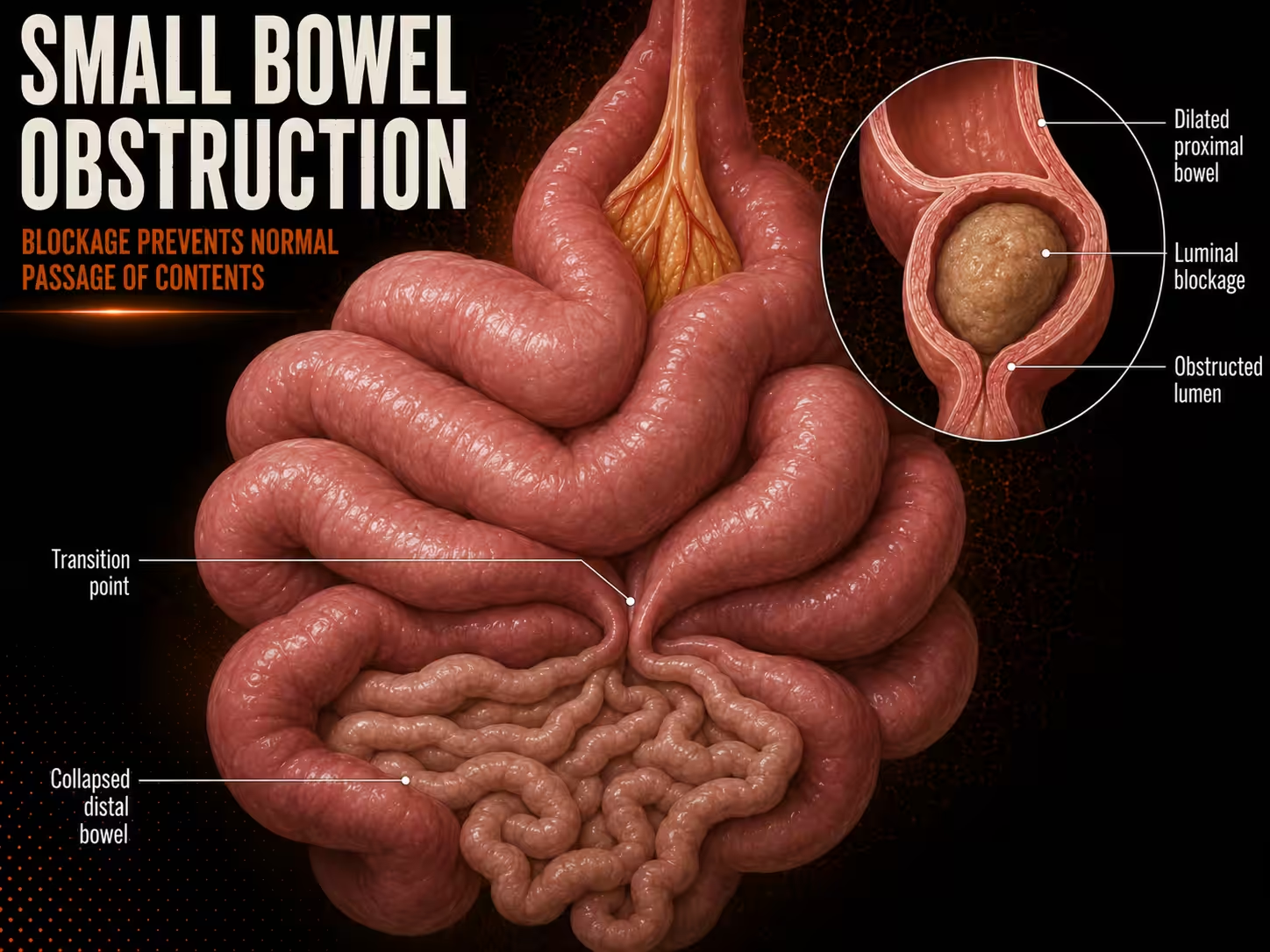
Small bowel obstruction (SBO) is a blockage of the small intestine that prevents the normal passage of food, fluids, and gas through the bowel. It is a common surgical emergency that requires prompt diagnosis and treatment to prevent complications.
Also called
ICD-10
Specialty
Onset
Reviewed
-
OverviewOverview
-
Etiology & Risk FactorsEtiology & Risk Factors
-
PathophysiologyPathophysiology
-
Clinical PresentationClinical Presentation
-
History TakingHistory Taking
-
Physical ExaminationPhysical Examination
-
InvestigationsInvestigations
-
DiagnosisDiagnosis
-
ManagementManagement
-
ComplicationsComplications
-
PrognosisPrognosis
-
Key Points / Clinical PearlsKey Points / Clinical Pearls
Overview
- Small bowel obstruction (SBO) is a type of mechanical bowel obstruction affecting the duodenum, jejunum, or ileum.
- It may be partial (some bowel contents can pass) or complete (no passage of air or fluid).
Etiology & Risk Factors
-Etiology of Small Bowel Obstruction (SBO)
- Postoperative adhesions – most common cause
- Incarcerated hernias – second most common cause
- Crohn disease (intestinal strictures)
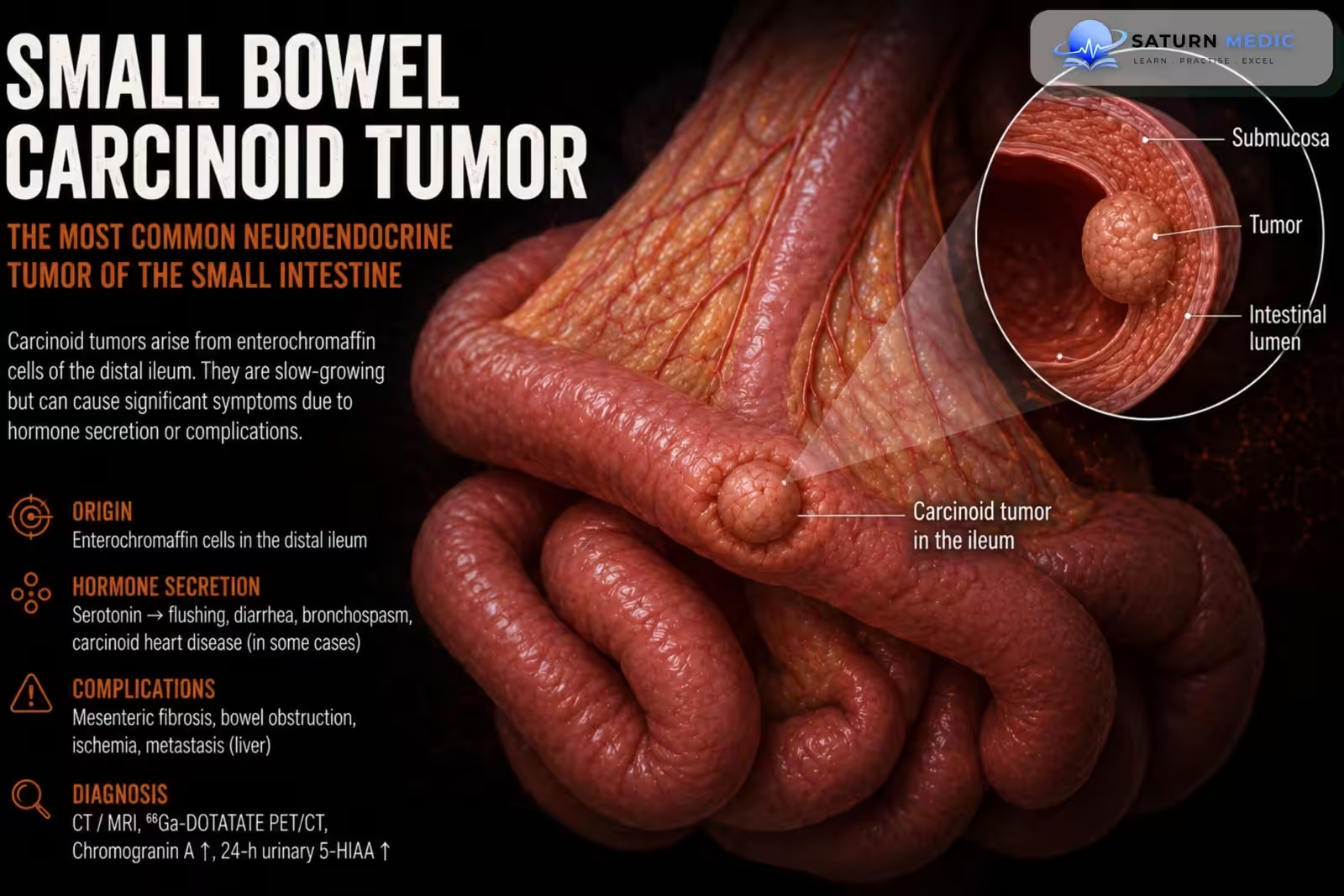
- Tumors (primary or metastatic)
- Volvulus (twisting of the bowel)
- Intussusception
- Gallstone ileus
- Foreign body or bezoar
-Risk Factors for Small Bowel Obstruction (SBO)
- Previous abdominal surgery (adhesion formation)
- History of abdominal tuberculosis (can lead to adhesions)
- Abdominal or groin hernia
- Crohn disease
- Abdominal malignancy
- Sudden, extreme weight loss (risk for superior mesenteric artery syndrome)
Pathophysiology
Obstruction → Stasis of intestinal contents & gas → ↑ Intraluminal pressure → Bowel distention → Third spacing of fluid → Dehydration & hypovolemia
↑ Intraluminal pressure → Vomiting → Loss of Na⁺, K⁺, H⁺, Cl⁻ → Hypokalemia + Metabolic alkalosis
↑ Intraluminal pressure → Compression of veins & lymphatics → Bowel wall edema → Reduced blood flow → Bowel ischemia → Necrosis & perforation → Peritonitis Bowel ischemia → Bacterial translocation → Sepsis
Clinical Presentation
- Colicky, periumbilical abdominal pain
- Nausea and early bilious vomiting
- Abdominal distention (usually less severe than in large bowel obstruction)
- Constipation or obstipation (complete inability to pass stool or gas in complete obstruction)
- Red Flags (Suggest Complicated SBO)
- Pain out of proportion to examination
- Peritoneal signs (guarding, rebound tenderness)
- Hemodynamic instability
- Signs of systemic toxicity
- Leukocytosis, metabolic acidosis, or elevated lactate
History Taking
Ask about:
- When did the abdominal pain start?
- Where is the pain? Is it colicky (comes and goes) or constant?
- Have you had nausea or vomiting? Is the vomit green (bilious)?
- Have you passed stool or gas today?
- Is your abdomen swollen (distended)?
- Have you had previous abdominal surgery?
- Do you have a history of hernia?
- Do you have Crohn disease or bowel cancer?
- Have you had similar episodes before?
- Do you have fever, severe continuous pain, or blood in the stool?
Physical Examination
- Assess vital signs: Fever, tachycardia, hypotension
- Inspect: Abdominal distention, previous surgical scars, hernias
- Auscultate: High-pitched bowel sounds (early) → absent bowel sounds (late)
- Percuss: Tympanic (drum-like) abdomen
- Palpate: Diffuse abdominal tenderness, guarding or rebound tenderness (suggests peritonitis)
- Digital rectal examination: Empty collapsed rectum (complete obstruction) or impacted stool
- Assess hydration: Dry mucous membranes and signs of hypovolemia
Investigations
-
Laboratory Tests
- CBC – leukocytosis (infection/ischemia)
- BMP (electrolytes, urea, creatinine) – dehydration and electrolyte imbalance
- Serum lactate – elevated suggests bowel ischemia
- CRP – inflammation
Imaging
- CT abdomen and pelvis with IV contrast – gold standard (confirms SBO, site, cause, and complications)
- Abdominal X-ray – dilated small bowel loops, multiple air-fluid levels, stepladder sign
- Ultrasound – may show dilated fluid-filled bowel loops (especially if CT is not immediately available)
Diagnosis
-
Diagnosis of Small Bowel Obstruction (SBO) is based on :
- Clinical suspicion: Colicky abdominal pain + vomiting + abdominal distention + constipation/obstipation
- Confirm with imaging: CT abdomen and pelvis with IV contrast (gold standard)
- Supportive tests: CBC, electrolytes (BMP), CRP, serum lactate
- Diagnosis is based on: Clinical findings + imaging + laboratory results
Related Topics
Management
Initial Management
- NPO (nothing by mouth)
- IV fluids and electrolyte replacement
- Nasogastric (NG) tube if persistent vomiting or significant abdominal distention
- Pain relief and antiemetics
- Early surgical consultation
- Admit to the surgical service
Definitive Management
- Conservative (nonoperative): Simple/partial SBO without signs of complications
- Surgery: If there is:
- Bowel ischemia or strangulation
- Perforation or peritonitis
- Closed-loop obstruction
- Hemodynamic instability
- Failure of conservative treatment (typically after up to 72 hours)
Complications
- Bowel ischemia
- Bowel perforation
- Peritonitis
- Sepsis (may occur if ischemia/perforation develope
- A change from colicky pain to continuous pain, rebound tenderness, or signs of sepsis suggests complications and requires emergency surgery.
Prognosis
- Good prognosis with early diagnosis and prompt treatment.
- Delayed treatment increases the risk of bowel ischemia, perforation, sepsis, and death.
- High risk of recurrence, especially in patients with adhesions or Crohn disease.
- Untreated intestinal strangulation has a very high mortality rate.
Key Points / Clinical Pearls
- Most common cause of Small bowel obstruction (SBO) : Postoperative adhesions.
- Main symptoms: Colicky abdominal pain, vomiting, abdominal distention, constipation/obstipation.
- Best diagnostic test: CT abdomen and pelvis with IV contrast.
- Initial management: NPO + IV fluids + electrolyte correction + NG tube (if needed) + early surgical consultation.
- Simple SBO: No bowel ischemia, strangulation, or perforation → may be treated conservatively.
- Complicated SBO: Ischemia, strangulation, perforation, or closed-loop obstruction → emergency surgery.
- Red flags: Continuous severe pain, rebound tenderness, fever, hypotension, elevated lactate, or signs of sepsis.
- Major complications: Bowel ischemia → perforation → peritonitis → sepsis.
- Schick MA, Kashyap S, Collier SA, Meseeha M. National Center for Biotechnology Information (NIH). Small Bowel Obstruction, StatPearls.
- ten Broek RPG, Krielen P, Di Saverio S, et al. Bologna Guidelines for Diagnosis and Management of Adhesive Small Bowel Obstruction (ASBO): 2017 Update of the Evidence-Based Guidelines from the World Society of Emergency Surgery ASBO Working Group. World J Emerg Surg. 2018;13:24. PMID: 29946347.
- Kaplan LJ, Martinez-Casas I, Mohseni S, et al; SnapSBO Collaborators. Small Bowel Obstruction Outcomes According to Compliance With the World Society of Emergency Surgery Bologna Guidelines. Br J Surg. 2025;112:znaf080. PMID: 40246692.
- MedlinePlus, National Library of Medicine (NIH). Intestinal Obstruction: Medical Encyclopedia.
- National Center for Biotechnology Information (NIH). Bowel Obstruction, StatPearls.