

Clinical Subject Page
Hypersplenism
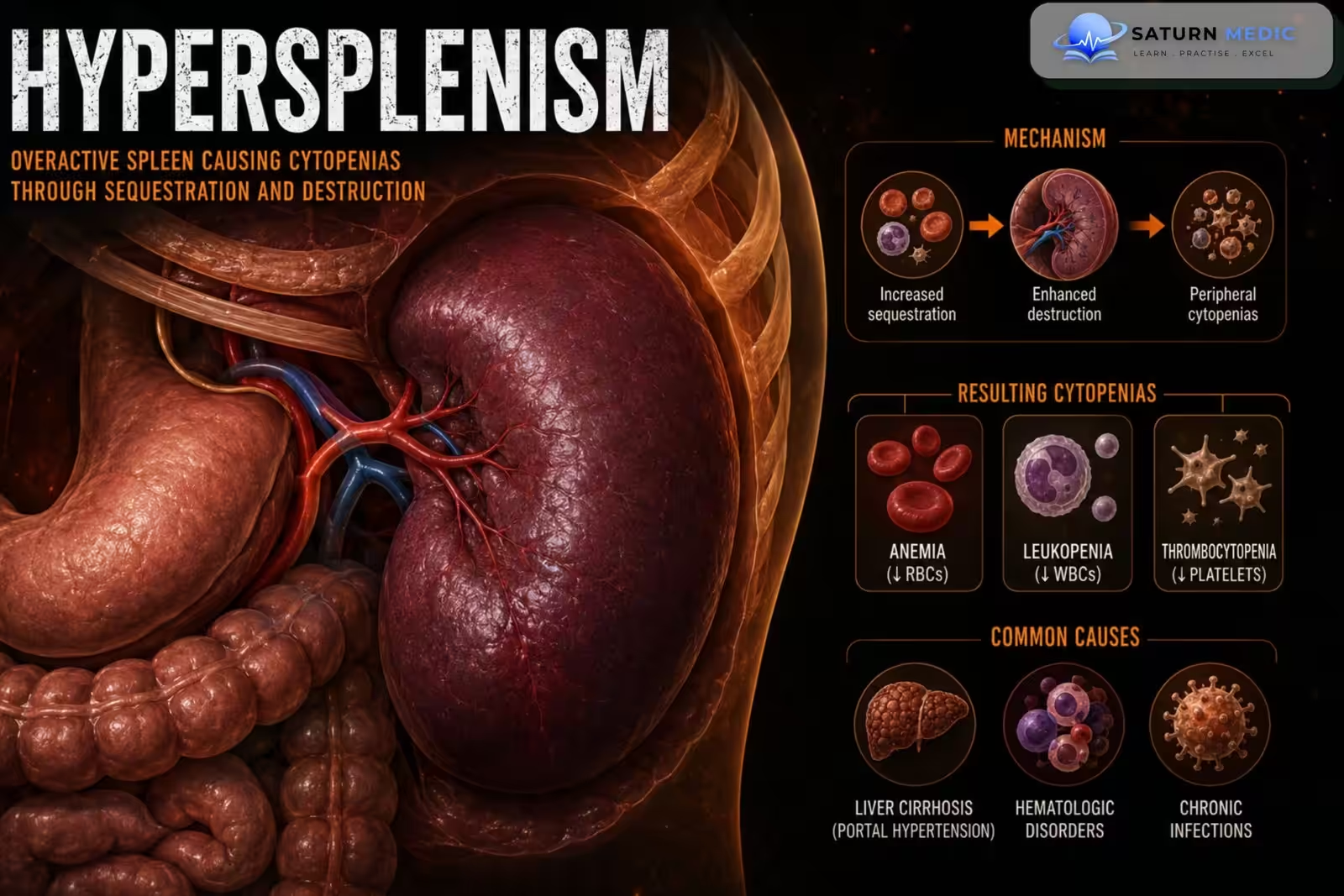
Hypersplenism is a condition in which an overactive spleen excessively sequesters and destroys blood cells, leading to one or more cytopenias (anemia, leukopenia, and/or thrombocytopenia). It is usually secondary to splenomegaly or another underlying disorder.
Also called
ICD-10
Specialty
Onset
Reviewed
-
OverviewOverview
-
Etiology & Risk FactorsEtiology & Risk Factors
-
PathophysiologyPathophysiology
-
Clinical PresentationClinical Presentation
-
History TakingHistory Taking
-
Physical ExaminationPhysical Examination
-
InvestigationsInvestigations
-
DiagnosisDiagnosis
-
ManagementManagement
-
ComplicationsComplications
-
PrognosisPrognosis
-
Key Points / Clinical PearlsKey Points / Clinical Pearls
Overview
- Hypersplenism occurs when the spleen becomes enlarged or overactive and traps excessive numbers of red blood cells, white blood cells, and platelets. This results in cytopenias despite normal or increased bone marrow production. Patients may present with fatigue, recurrent infections, easy bruising, or bleeding. Diagnosis is based on cytopenias, splenomegaly, and exclusion of other causes. Treatment focuses on the underlying condition, while splenectomy is reserved for selected cases.
Etiology & Risk Factors
Common Causes
Portal Hypertension
Liver cirrhosis (most common)
Portal vein thrombosis
Splenic vein thrombosis
Hematological Disorders
Hemolytic anemia
Thalassemia
Sickle cell disease
Hereditary spherocytosis
Myelofibrosis
Polycythemia vera
Infections
Infectious mononucleosis
Malaria
Tuberculosis
HIV
Visceral leishmaniasis
Malignancies
Leukemia
Lymphoma
Myeloproliferative neoplasms
Autoimmune and Inflammatory Diseases
Systemic lupus erythematosus
Rheumatoid arthritis (Felty syndrome)
Sarcoidosis
Storage Diseases
Gaucher disease
Niemann-Pick disease
Risk Factors
Chronic liver disease
Portal hypertension
Splenomegaly
Chronic infections
Hematological disorders
Hematological malignancies
Autoimmune diseases
Pathophysiology
Underlying disease causes splenic enlargement or hyperactivity, leading to increased pooling and destruction of blood cells within the spleen. Although the bone marrow usually maintains normal or increased production, excessive sequestration shortens the lifespan of red blood cells, white blood cells, and platelets, resulting in anemia, leukopenia, thrombocytopenia, or pancytopenia.
Clinical Presentation
Symptoms
Fatigue
Weakness
Easy bruising
Easy bleeding
Recurrent infections
Left upper-quadrant discomfort
Early satiety
Abdominal fullness
Signs
Splenomegaly
Pallor
Petechiae
Ecchymosis
Hepatomegaly (if portal hypertension)
Signs of chronic liver disease
History Taking
Ask about:
- Fatigue or weakness
- Easy bruising or bleeding
- Recurrent infections
- Left upper-quadrant pain or fullness
- Early satiety
- History of liver disease
- Alcohol use
- Viral hepatitis
- Previous blood disorders
- Autoimmune disease
Physical Examination
General Examination
Look for:
Pallor
Petechiae
Ecchymosis
Fever
Lymphadenopathy
Jaundice
Abdominal Examination
Assess for:
Splenomegaly
Hepatomegaly
Ascites
Abdominal tenderness
Signs of portal hypertension
Other Examination
Look for:
Stigmata of chronic liver disease
Lymph node enlargement
Features of hematological malignancy
Autoimmune manifestations
Investigations
Laboratory Tests
Complete blood count
Peripheral blood smear
Reticulocyte count
Liver function tests
Renal function
Coagulation profile
Lactate dehydrogenase
Bilirubin
Haptoglobin
Viral serology
Autoimmune screen
Bone Marrow Examination
Usually shows normal or hypercellular marrow, confirming that cytopenias result from peripheral sequestration rather than bone marrow failure.
Imaging
Abdominal Ultrasound
Confirms splenomegaly
Assesses liver disease
Detects portal hypertension
CT Abdomen
Evaluates splenic size
Identifies underlying malignancy
Detects focal splenic lesions
Additional Tests
Bone marrow biopsy (when indicated)
JAK2 mutation testing
Flow cytometry
Hemoglobin electrophoresis
Diagnosis
Diagnosis is based on:
- Splenomegaly
- One or more peripheral cytopenias
- Normal or hypercellular bone marrow
- Improvement after treatment of the underlying cause or splenectomy
- Exclusion of primary bone marrow disorders
Related Topics
Management
Treat the Underlying Cause
Manage liver cirrhosis or portal hypertension
Treat infections
Treat autoimmune diseases
Manage hematological disorders
Treat malignancy
Supportive Treatment
Blood transfusion if required
Platelet transfusion for severe thrombocytopenia
Infection management
Nutritional support
Splenectomy
Consider only in selected patients with:
Severe symptomatic hypersplenism
Recurrent transfusion requirement
Severe thrombocytopenia or neutropenia
Failure of medical treatment
Selected hematological disorders
Splenic Artery Embolization
May be considered in patients who are poor surgical candidates.
Complications
- Severe anemia
- Recurrent infections
- Severe thrombocytopenia
- Spontaneous bleeding
- Pancytopenia
- Splenic rupture (rare)
- Complications of the underlying disease
Prognosis
- The prognosis depends on the underlying cause. Cytopenias often improve after successful treatment of the primary disease or splenectomy. Patients with advanced cirrhosis or hematological malignancies generally have a poorer prognosis.
Key Points / Clinical Pearls
- Hypersplenism is an overactive spleen causing excessive destruction of blood cells.
- It usually occurs secondary to splenomegaly.
- Portal hypertension due to liver cirrhosis is the most common cause.
- Patients develop anemia, leukopenia, thrombocytopenia, or pancytopenia.
- Bone marrow is usually normal or hypercellular.
- Treatment focuses on the underlying disease.
- Splenectomy is reserved for selected symptomatic patients.
- Vaccination is essential before elective splenectomy.
- Chapman J, Goyal A, Azevedo AM. National Center for Biotechnology Information (NIH). Splenomegaly, StatPearls.
- Merck Manual Professional Edition. Hypersplenism.
- Zhang M, Wang Y, Zhang X, et al. Impact of Total Splenectomy on Peripheral Lymphocytes and Their Subsets in Patients With Hypersplenism Associated With Cirrhotic Portal Hypertension. PMC8553769.
- Dameshek W. Hypersplenism. Bull N Y Acad Med. 1955;31:113-136.
- National Center for Biotechnology Information (NIH). Splenectomy for Hematological Disorders, Surgical Treatment.