

Clinical Subject Page
Ulcerative Colitis
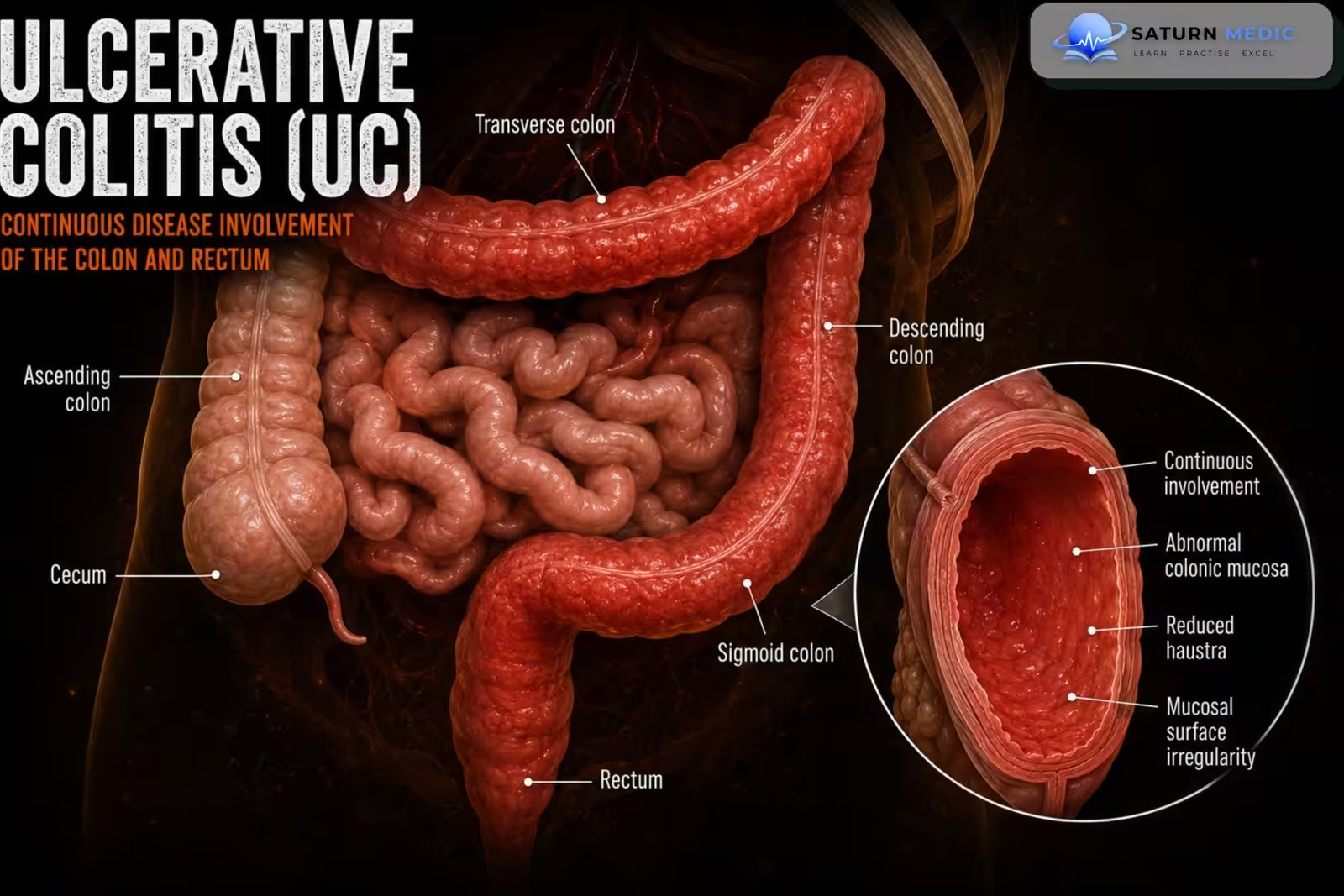
Ulcerative colitis is a chronic inflammatory bowel disease that causes continuous inflammation and ulceration of the colonic mucosa, usually beginning in the rectum and extending proximally through the colon. It commonly presents with bloody diarrhea, urgency, tenesmus, and abdominal pain
Also called
ICD-10
Specialty
Onset
Reviewed
-
OverviewOverview
-
Etiology & Risk FactorsEtiology & Risk Factors
-
PathophysiologyPathophysiology
-
Clinical PresentationClinical Presentation
-
History TakingHistory Taking
-
Physical ExaminationPhysical Examination
-
InvestigationsInvestigations
-
DiagnosisDiagnosis
-
ManagementManagement
-
ComplicationsComplications
-
PrognosisPrognosis
-
Key Points / Clinical PearlsKey Points / Clinical Pearls
Overview
Ulcerative colitis causes relapsing and remitting inflammation limited primarily to the inner lining of the colon. The disease typically starts in the rectum and spreads proximally in a continuous pattern. Patients may experience periods of active symptoms followed by remission. Diagnosis is based on clinical findings, stool testing, colonoscopy, and biopsy. Treatment aims to induce and maintain remission, heal the mucosa, prevent complications, and improve quality of life
Etiology & Risk Factors
The exact cause is unknown. Ulcerative colitis is thought to result from an abnormal immune response in genetically susceptible individuals, influenced by the intestinal microbiome and environmental factors.
Risk Factors
- Family history of inflammatory bowel disease
- Genetic susceptibility
- Previous gastrointestinal infection
- Altered intestinal microbiome
- Environmental triggers
- Younger age, although it can occur at any age
- Certain ethnic or familial backgrounds
- Primary sclerosing cholangitis
Smoking cessation may occasionally precede disease onset or worsening, but smoking should never be recommended as treatment because of its major health risks.
Pathophysiology
Genetic susceptibility and environmental triggers cause an abnormal mucosal immune response against intestinal microorganisms. This produces chronic inflammation beginning in the rectum and extending proximally in a continuous pattern. Inflammation is mainly limited to the mucosa and superficial submucosa, causing erythema, friability, crypt abscesses, ulceration, bleeding, and loss of normal colonic function
Clinical Presentation
-
Gastrointestinal Symptoms
-
Bloody diarrhea
-
Rectal bleeding
-
Mucus or pus in the stool
-
Abdominal cramps
-
Urgency
-
Tenesmus
-
Increased stool frequency
-
Nocturnal bowel movements
-
Rectal pain
-
Fecal incontinence in severe disease
These are characteristic symptoms described in major patient and clinical references.
Systemic Symptoms
-
Fatigue
-
Fever
-
Weight loss
-
Loss of appetite
-
Dehydration
-
Anemia
-
Growth failure in children
Extraintestinal Manifestations
-
Peripheral arthritis
-
Sacroiliitis
-
Ankylosing spondylitis
-
Uveitis
-
Episcleritis
-
Erythema nodosum
-
Pyoderma gangrenosum
-
Primary sclerosing cholangitis
-
Venous thromboembolism
-
History Taking
-
Ask about:
- Duration and frequency of diarrhea
- Presence of blood, mucus, or pus
- Urgency or tenesmus
- Nocturnal bowel movements
- Abdominal pain
- Fever or weight loss
- Recent antibiotic use
- Recent travel or infectious exposure
- Previous similar episodes
- Family history of inflammatory bowel disease
- Joint pain or swelling
- Eye pain or redness
- Skin lesions
- Liver disease symptoms
- Smoking history
Physical Examination
General Examination
Look for:
-
Pallor
-
Fever
-
Tachycardia
-
Dehydration
-
Weight loss
-
Malnutrition
-
Signs of systemic toxicity
Abdominal Examination
Assess for:
-
Lower abdominal tenderness
-
Abdominal distension
-
Guarding or rebound tenderness
-
Reduced bowel sounds
-
Palpable tenderness along the colon
Perianal and Rectal Examination
Assess for:
-
Rectal bleeding
-
Mucus
-
Perianal irritation
Complex perianal fistulas and abscesses are unusual in ulcerative colitis and should raise suspicion for Crohn’s disease or another diagnosis.
Extraintestinal Examination
Look for:
-
Joint swelling
-
Sacroiliac tenderness
-
Eye inflammation
-
Erythema nodosum
-
Pyoderma gangrenosum
-
Jaundice or signs of hepatobiliary disease
Investigations
Initial Laboratory Tests
-
Complete blood count
-
C-reactive protein
-
ESR
-
Renal function and electrolytes
-
Liver function tests
-
Serum albumin
-
Iron studies
-
Vitamin B12 and folate when indicated
-
Coagulation profile in severe disease
Common findings include anemia, raised inflammatory markers, thrombocytosis, hypoalbuminemia, and electrolyte disturbances.
Stool Tests
-
Stool culture
-
Clostridioides difficile testing
-
Testing for ova and parasites when indicated
-
Fecal calprotectin
Stool infection should be excluded before diagnosing a flare, particularly when symptoms suddenly worsen.
Colonoscopy and Biopsy
Colonoscopy with multiple biopsies is the main investigation used to confirm the diagnosis and determine disease extent. Typical findings include continuous mucosal inflammation beginning in the rectum, erythema, loss of vascular pattern, friability, spontaneous bleeding, and ulceration. Histology may show crypt distortion, cryptitis, and crypt abscesses.
Flexible Sigmoidoscopy
Flexible sigmoidoscopy may be preferred during acute severe colitis because it provides diagnostic information with less bowel preparation and a lower procedural burden than full colonoscopy.
Imaging
-
-
Abdominal radiograph in severe disease to assess colonic dilatation
-
CT abdomen and pelvis if perforation, abscess, obstruction, or alternative pathology is suspected
-
MR cholangiopancreatography if primary sclerosing cholangitis is suspected
-
Diagnosis
-
Diagnosis is based on:
- Typical symptoms
- Exclusion of infectious colitis
- Continuous inflammation beginning in the rectum on endoscopy
- Compatible histological findings
- Assessment of disease extent and severity
Management
-General Measures
- Patient education
- Nutritional assessment
- Correct dehydration and electrolyte abnormalities
- Treat iron-deficiency anemia
- Avoid unnecessary NSAIDs
- Test for and treat infections
- Update vaccinations before immunosuppressive therapy
- Assess venous thromboembolism risk
- Provide psychological support when needed
-Mild Ulcerative Proctitis
- Rectal mesalamine is usually preferred
- Rectal corticosteroids may be used when mesalamine is ineffective or not tolerated
- Oral mesalamine may be added if response is incomplete
-Mild-to-Moderate Left-Sided or Extensive Disease
- Oral mesalamine
- Rectal mesalamine, especially for left-sided disease
- Combined oral and rectal mesalamine when needed
- Budesonide MMX or systemic corticosteroids if mesalamine is insufficient
-Moderate-to-Severe Disease
Treatment options may include:
- Systemic corticosteroids for induction
- Anti-TNF agents
- Vedolizumab
- Ustekinumab
- IL-23–targeted therapies
- JAK inhibitors
- Sphingosine-1-phosphate receptor modulators
- Thiopurines in selected maintenance settings
-Maintenance of Remission
- Continue mesalamine after response in mild disease
- Continue the effective biologic or small-molecule therapy in moderate-to-severe disease
- Thiopurines may be used in selected patients
- Corticosteroids should not be used for long-term maintenance
-Surgery
Surgery may be required for:
- Colonic perforation
- Toxic megacolon
- Uncontrolled severe bleeding
- Medically refractory disease
- Dysplasia or colorectal cancer
- Severe medication-related complications
- Persistent major impairment of quality of life
Complications
- Severe gastrointestinal bleeding
- Toxic megacolon
- Colonic perforation
- Dehydration
- Electrolyte imbalance
- Iron-deficiency anemia
- Venous thromboembolism
- Colorectal dysplasia and cancer
- Primary sclerosing cholangitis
Prognosis
- Ulcerative colitis is a chronic relapsing condition, but many patients achieve long periods of remission with appropriate treatment. Prognosis depends on disease extent, severity, response to therapy, medication adherence, and complications. Extensive and longstanding colitis increases the importance of colorectal cancer surveillance.
Key Points / Clinical Pearls
- Ulcerative colitis causes continuous mucosal inflammation of the colon.
- It usually begins in the rectum and extends proximally.
- Bloody diarrhea, urgency, and tenesmus are typical symptoms.
- Stool infection should be excluded before diagnosing a flare.
- Colonoscopy with biopsy confirms the diagnosis.
- Mesalamine is commonly used for mild disease.
- Corticosteroids induce remission but should not be used for long-term maintenance.
- Biologic and targeted therapies are used for moderate-to-severe disease.
- Acute severe ulcerative colitis requires hospitalization.
- Lynch WD, Hsu R. National Center for Biotechnology Information (NIH). Ulcerative Colitis, StatPearls.
- Rubin DT, Feuerstein JD, Regueiro M, et al. ACG Clinical Guideline Update: Ulcerative Colitis in Adults. Am J Gastroenterol. 2025;120:1187-1224. DOI: 10.14309/ajg.0000000000003463.
- MedlinePlus, National Library of Medicine (NIH). Ulcerative Colitis: Health Topic.
- National Center for Biotechnology Information (NIH). Inflammatory Bowel Disease, StatPearls.
- National Center for Biotechnology Information (NIH). Toxic Megacolon, StatPearls.