

Clinical Subject Page
Anal Fistula
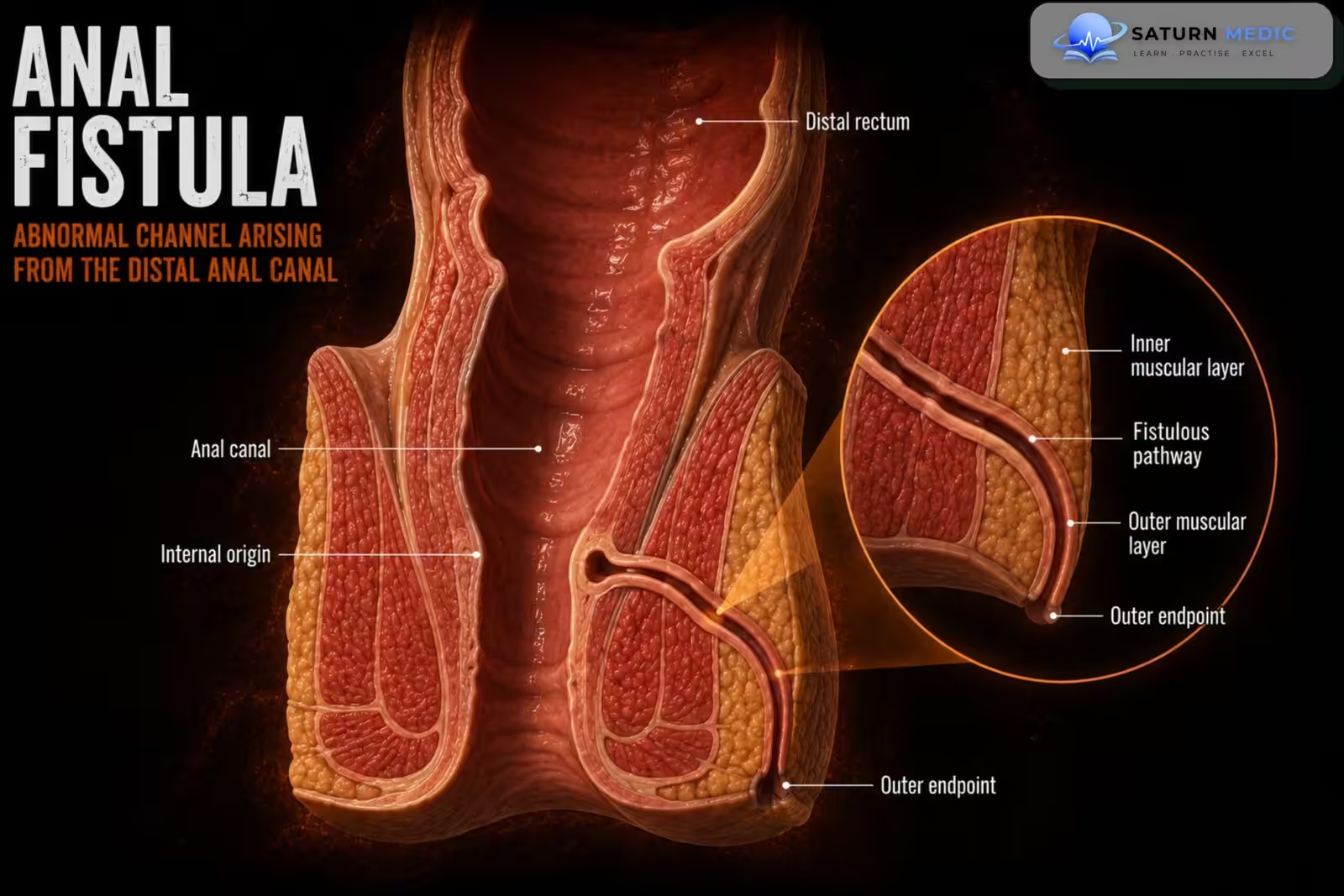
An anal fistula is an abnormal epithelial-lined tract connecting the anal canal to the
perianal skin, usually developing after a perianal abscess. It commonly causes
recurrent perianal discharge, pain, and swelling.
Also called
ICD-10
Specialty
Onset
Reviewed
-
OverviewOverview
-
Etiology & Risk FactorsEtiology & Risk Factors
-
PathophysiologyPathophysiology
-
Clinical PresentationClinical Presentation
-
History TakingHistory Taking
-
Physical ExaminationPhysical Examination
-
InvestigationsInvestigations
-
DiagnosisDiagnosis
-
ManagementManagement
-
ComplicationsComplications
-
PrognosisPrognosis
-
Key Points / Clinical PearlsKey Points / Clinical Pearls
Overview
Most anal fistulas result from cryptoglandular infection following a perianal abscess.
The tract may be simple or complex depending on its relationship to the anal sphincter.
Definitive treatment is usually surgical, aiming to eradicate the fistula while preserving
continence.
Etiology & Risk Factors
Etiology
Most anal fistulas develop following cryptoglandular infection of the anal glands.
Risk Factors
– Previous perianal abscess (most common)
– Crohn disease
– Diabetes mellitus
– Immunosuppression (HIV, chemotherapy)
– Tuberculosis
– Sexually transmitted infections
– Previous anorectal surgery
– Pelvic radiation
– Trauma
– Smoking
Pathophysiology
Obstruction of anal gland
↓
Cryptoglandular infection
↓
Perianal abscess
↓
Persistent communication with anal canal
↓
Formation of epithelialized fistula tract
↓
Chronic drainage and recurrent infection
Clinical Presentation
Common Symptoms
– Persistent or recurrent purulent discharge
– Perianal pain
– Recurrent swelling
– Perianal irritation or itching
– Bleeding
– Foul-smelling discharge
– Pain during defecation
Complex Disease
– Multiple external openings
– Recurrent abscesses
– Fever (if active infection)
– Symptoms of Crohn disease
History Taking
Ask about: Previous perianal abscess, Persistent or intermittent discharge, Pain or
swelling, Bleeding, Fever, Previous fistula surgery, History of Crohn disease, Diabetes
or immunosuppression, Stool incontinence, Duration of symptoms.
Physical Examination
General Examination
– Fever
– Signs of sepsis
– Nutritional status
Perianal Examination
Look for: External fistula opening, Purulent discharge, Scar from previous abscess,
Induration, Cellulitis, Multiple external openings
Digital Rectal Examination
– Assess sphincter tone
– Palpate internal opening or induration
– Evaluate tenderness
Anoscopy
– Identify the internal opening
– Exclude associated anorectal pathology
Investigations
Clinical Assessment
Many simple fistulas are diagnosed clinically through history and examination.
Laboratory Tests
– CBC (if infection suspected)
– CRP and ESR
– Blood glucose
– Investigations for Crohn disease when indicated
Imaging
Pelvic MRI (Gold Standard Imaging)
Indications: Complex fistula, Recurrent fistula, Multiple tracts, Crohn disease,
Preoperative mapping
Endoanal Ultrasound
– Defines fistula anatomy
– Assesses sphincter involvement
Examination Under Anesthesia (EUA)
– Gold standard for defining fistula anatomy
– Identifies internal opening
– Often combined with definitive surgical treatment
Colonoscopy
Indicated when: Suspected Crohn disease, Chronic diarrhea, Multiple or recurrent
fistulas, Associated gastrointestinal symptoms
Important Note
MRI is the preferred imaging modality for complex anal fistulas. Examination under
anesthesia remains the gold standard for accurately defining the fistula tract before
surgery.
Diagnosis
Diagnosis is based on: Characteristic history, Perianal examination, Identification of external opening, MRI for complex disease, Examination under anesthesia for surgical planning
Related Topics
Management
1. Control Active Infection
– Drain any associated abscess
– Antibiotics only if cellulitis, sepsis, or immunocompromised
2. Surgical Treatment (Definitive)
Simple Fistula
– Fistulotomy (first-line)
Complex Fistula
– Seton placement
– LIFT procedure
– Endorectal advancement flap
– Other sphincter-preserving procedures
3. Crohn Disease
– Biologic therapy
– Seton drainage when indicated
– Multidisciplinary management
4. Follow-Up
– Wound care
– Monitor healing
– Assess continence
– Detect recurrence
Important Note
Surgery is the definitive treatment. The choice of procedure depends on fistula
anatomy and the need to preserve anal sphincter function.
Complications
– Recurrent fistula
– Recurrent abscess
– Fecal incontinence
– Chronic pain
– Persistent drainage
– Delayed wound healing
Prognosis
– Excellent for simple fistulas treated with fistulotomy
– Complex fistulas have higher recurrence rates
– Crohn disease increases recurrence risk
– Early treatment improves outcomes and preserves continence
Key Points / Clinical Pearls
– Most anal fistulas develop after a perianal abscess.
– Persistent purulent drainage is the classic symptom.
– Diagnosis is often clinical.
– MRI is the best imaging test for complex fistulas.
– Examination under anesthesia is the gold standard for defining fistula anatomy.
– Fistulotomy is first-line for simple fistulas.
– Complex fistulas require sphincter-preserving procedures.
– Always evaluate recurrent or complex fistulas for Crohn disease.
- National Center for Biotechnology Information (NIH). Anorectal Fistula, StatPearls.
- American Society of Colon and Rectal Surgeons (ASCRS). Fistula-in-Ano: Clinical Practice Guidelines. 2022. Guideline Summary.
- Bakir QK, Noori IF, Noori AF. Accuracy Prediction of Goodsall's Rule for Anal Fistulas of Cryptoglandular Origin, Is It Still Standing? Ann Med Surg. 2024;86:2453-2457. PMC11060315.
- Parks AG, Gordon PH, Hardcastle JD. A Classification of Fistula-in-Ano. Br J Surg. 1976;63:1-12.
- MedlinePlus, National Library of Medicine (NIH). Anal Fistula: Medical Encyclopedia.