

Clinical Subject Page
Hepatic Encephalopathy (HE)
Hepatic Encephalopathy (HE) is a potentially reversible neuropsychiatric syndrome caused by brain
dysfunction in patients with liver disease, most commonly cirrhosis. It results from impaired hepatic
detoxification, with ammonia playing a central role.
ICD-10
Specialty
Onset
Reviewed
-
OverviewOverview
-
Etiology & Risk FactorsEtiology & Risk Factors
-
PathophysiologyPathophysiology
-
Clinical PresentationClinical Presentation
-
History TakingHistory Taking
-
Physical ExaminationPhysical Examination
-
InvestigationsInvestigations
-
DiagnosisDiagnosis
-
ManagementManagement
-
ComplicationsComplications
-
PrognosisPrognosis
-
Key Points / Clinical PearlsKey Points / Clinical Pearls
Overview
•Hepatic Encephalopathy (HE) is Brain dysfunction occurring in patients with liver disease or portosystemic shunting.
• Common in patients with cirrhosis.
• Severity ranges from subtle cognitive impairment to coma.
• Diagnosis is mainly clinical after excluding other causes of altered mental status.
• Management focuses on treating precipitating factors and reducing ammonia production.
Etiology & Risk Factors
-Underlying causes
• Liver cirrhosis
• Acute liver failure
• Portosystemic shunting
-Common precipitating factors
• Gastrointestinal bleeding
• Infection
• Constipation
Pathophysiology
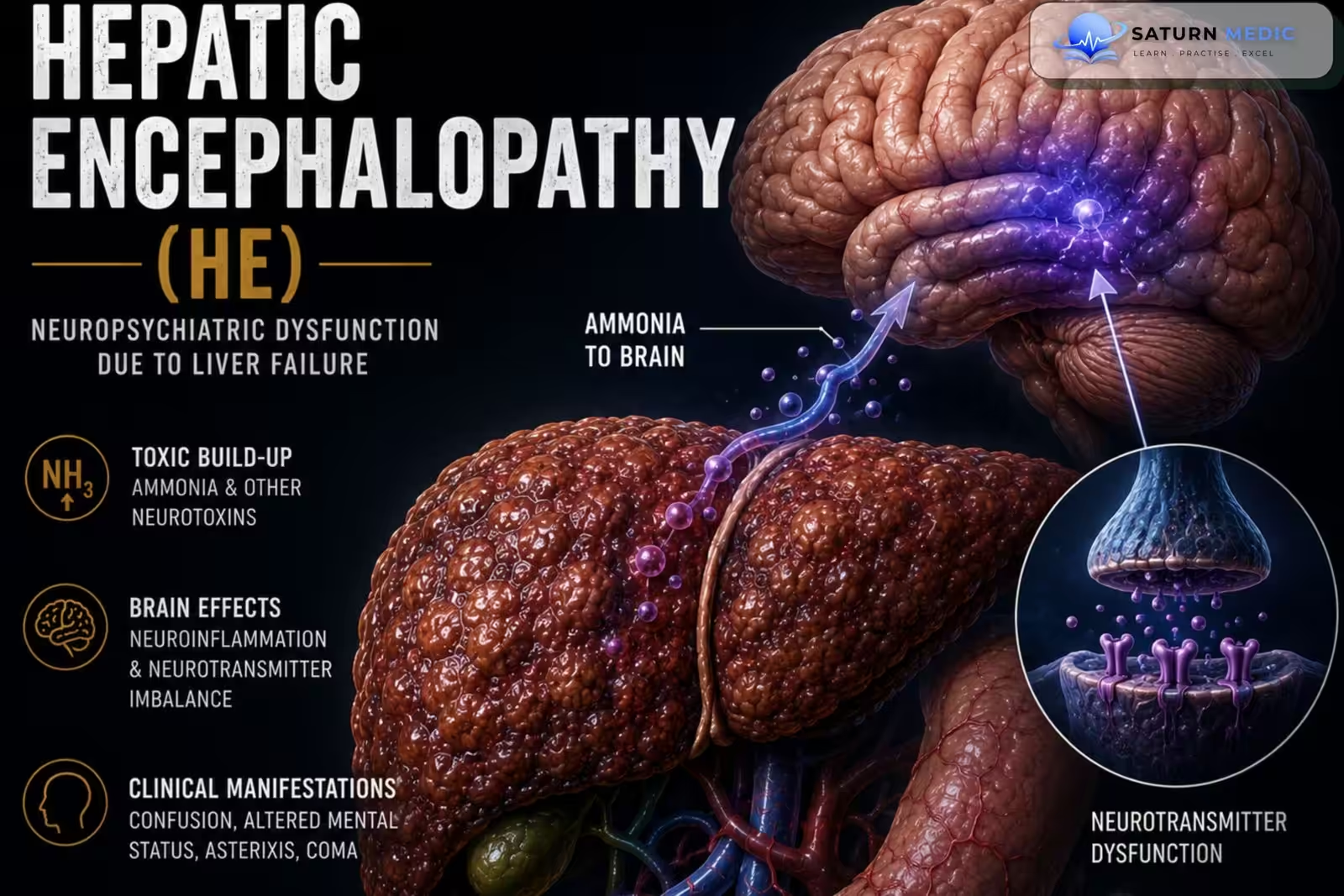
• Impaired liver function reduces ammonia detoxification.
• Ammonia and other neurotoxins accumulate in the circulation.
• These substances impair brain function, causing neurological and psychiatric manifestations.
• The exact mechanism is complex and not completely understood.
Clinical Presentation
• Confusion
• Personality or behavioral changes
• Impaired concentration
• Disorientation
• Asterixis (flapping tremor)
• Drowsiness
• Altered level of consciousness
• Coma (severe disease)
History Taking
-Ask about:
• Known liver disease or cirrhosis
• Previous episodes of hepatic encephalopathy
• Confusion or altered behavior
• Gastrointestinal bleeding
• Constipation
• Fever or symptoms of infection
• Alcohol use
• Medication history
• Recent changes in mental status
Physical Examination
• Assess mental status (orientation, Glasgow Coma Scale)
• Evaluate for asterixis
• General examination for chronic liver disease
• Assess for ascites
• Look for signs of infection
• Perform a complete neurological examination to exclude alternative causes
Investigations
1. Laboratory studies
• CBC
• Basic metabolic panel (BMP): Evaluate for hypoglycemia, Hyponatremia, Uremia, Ketoacidosis,
Hypercalcemia
• CRP
• WBC count
• Blood cultures
• Urinalysis and urine culture (to identify infection)
• Blood alcohol level (if intoxication is suspected)
Ammonia level
• A low or normal ammonia level may help rule out hepatic encephalopathy.
• Elevated ammonia levels are not diagnostic, and the degree of elevation does not correlate with
disease severity.
2. Imaging
• Chest X-ray (evaluate for infection)
• Abdominal ultrasound (assess for ascites and portal vein thrombosis)
• CT or MRI brain when another neurological cause is suspected or to exclude intracranial
hemorrhage
3. Psychometric testing
• Used to diagnose covert hepatic encephalopathy
• Usually performed by specialists
Diagnosis
-Diagnosis of Hepatic Encephalopathy (HE) is based on:
• Clinical features
• Exclusion of other causes of altered mental status
• Identification of precipitating factors
• Psychometric testing for covert hepatic encephalopathy
• Ammonia level may help rule out HE if normal but is not diagnostic
Related Topics
Management
1. Treat the precipitating factor of Hepatic Encephalopathy (HE)
Examples: Infection, Gastrointestinal bleeding, Constipation
2. Medical therapy
First-line
• Lactulose (nonabsorbable disaccharide laxative)
Additional therapy
• Rifaximin
• Added for recurrent or persistent hepatic encephalopathy
• Often used together with lactulose
3. Supportive care
• Monitor neurological status
• Correct metabolic abnormalities
• Treat underlying liver disease
4. Definitive treatment for Hepatic Encephalopathy (HE)
• Liver transplantation is the only curative therapy.
Complications
• Recurrent hepatic encephalopathy
• Coma
• Poor quality of life
• Progressive liver failure
• Death
Prognosis
• Many episodes improve with treatment of precipitating factors and ammonia-lowering therapy.
• Recurrence is common in patients with advanced cirrhosis.
• Prognosis depends largely on the severity of the underlying liver disease.
• Liver transplantation offers definitive treatment in appropriate candidates.
Key Points / Clinical Pearls
• Hepatic Encephalopathy (HE) is brain dysfunction due to liver disease.
• Ammonia plays a central role, but ammonia levels are not diagnostic.
• HE is primarily a clinical diagnosis of exclusion.
• Always identify and treat precipitating factors.
• Initial workup includes CBC, BMP, infection screen, and targeted imaging.
• Asterixis is a classic physical finding.
• Lactulose is first-line therapy.
• Rifaximin is added for recurrent or persistent HE.
• Liver transplantation is the only curative treatment.
- National Center for Biotechnology Information (NIH). Hepatic Encephalopathy, StatPearls.
- Vilstrup H, Amodio P, Bajaj J, et al. Hepatic Encephalopathy in Chronic Liver Disease: 2014 Practice Guideline by the American Association for the Study of Liver Diseases and the European Association for the Study of the Liver. Hepatology. 2014;60:715-735. Guideline PDF.
- European Association for the Study of the Liver. EASL Clinical Practice Guidelines on the Management of Hepatic Encephalopathy. J Hepatol. 2022;77:807-824. EASL Guideline.
- MedlinePlus, National Library of Medicine (NIH). Hepatic Encephalopathy: Medical Encyclopedia.
- Bajaj JS, Lauridsen MM. Inpatient Management of Hepatic Encephalopathy. Clin Liver Dis (Hoboken). PMC10833628.