

Clinical Subject Page
Spontaneous Bacterial Peritonitis (SBP)
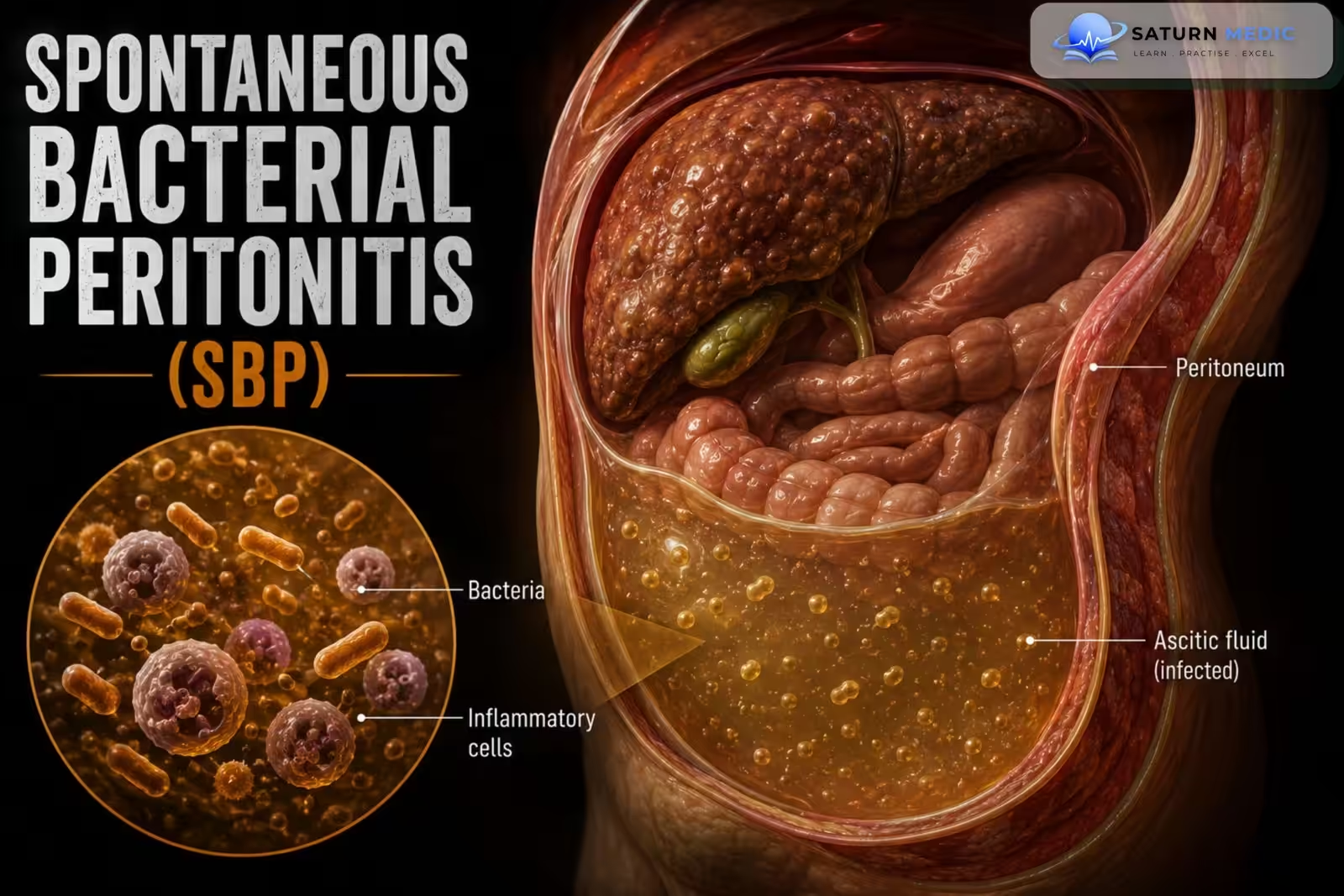
Spontaneous Bacterial Peritonitis (SBP) is an acute bacterial infection of ascitic fluid without an evident surgically treatable intra-abdominal source. It occurs most commonly in patients with decompensated liver cirrhosis and ascites and is a medical emergency requiring prompt antibiotic treatment
Also called
ICD-10
Specialty
Onset
Reviewed
-
OverviewOverview
-
Etiology & Risk FactorsEtiology & Risk Factors
-
PathophysiologyPathophysiology
-
Clinical PresentationClinical Presentation
-
History TakingHistory Taking
-
Physical ExaminationPhysical Examination
-
InvestigationsInvestigations
-
DiagnosisDiagnosis
-
ManagementManagement
-
ComplicationsComplications
-
PrognosisPrognosis
-
Key Points / Clinical PearlsKey Points / Clinical Pearls
Overview
Spontaneous Bacterial Peritonitis (SBP) develops when bacteria translocate from the intestine into ascitic fluid in patients with cirrhosis and portal hypertension. The infection occurs without gastrointestinal perforation or another intra-abdominal source. Early recognition is essential because SBP can rapidly progress to sepsis, renal failure, and death if left untreated.
Etiology & Risk Factors
Etiology
Spontaneous Bacterial Peritonitis (SBP) results from bacterial translocation from the intestinal lumen into ascitic fluid without an intra-abdominal perforation.
Common Causative Organisms
Escherichia coli (most common)
Klebsiella pneumoniae
Streptococcus species
Enterococcus species
Risk Factors
Liver cirrhosis
Ascites
Low ascitic protein (<1.5 g/dL)
Previous SBP
Gastrointestinal bleeding
Advanced liver disease (Child-Pugh C)
Renal dysfunction
Proton pump inhibitor use
Hospitalization
Pathophysiology
Liver cirrhosis → portal hypertension and ascites → increased intestinal permeability and bacterial overgrowth → bacterial translocation across the intestinal wall → bacteria enter mesenteric lymph nodes and bloodstream → bacteria seed the ascitic fluid → impaired immune defenses in ascitic fluid allow bacterial proliferation → spontaneous infection of ascitic fluid → systemic inflammatory response, sepsis, and possible hepatorenal syndrome.
Clinical Presentation
Symptoms
Fever
Abdominal pain or tenderness
Increasing abdominal distension
Nausea and vomiting
Altered mental status
Fatigue
Reduced appetite
Signs
Diffuse abdominal tenderness
Ascites
Fever
Hypotension
Tachycardia
Hepatic encephalopathy
Signs of sepsis in severe cases
History Taking
-Ask about:
- Fever or chills
- Abdominal pain
- Increasing abdominal distension
- Nausea or vomiting
- Confusion or drowsiness
- Recent gastrointestinal bleeding
- Previous SBP
- History of cirrhosis
- Alcohol use
- Viral hepatitis
- Current medications
- Previous antibiotic prophylaxis
Physical Examination
General Examination
Assess for:
Fever
Tachycardia
Hypotension
Altered mental status
Signs of sepsis
Abdominal Examination
Look for:
Ascites
Diffuse abdominal tenderness
Rebound tenderness (may be absent)
Abdominal distension
Reduced bowel sounds
Examine for signs of chronic liver disease:
Jaundice
Spider angiomas
Palmar erythema
Muscle wasting
Peripheral edema
Asterixis
Investigations
Diagnostic Paracentesis (Gold Standard)
Perform immediately in every patient with cirrhosis and ascites who is admitted to hospital or suspected of having SBP.
Ascitic fluid analysis:
Cell count and differential
PMN count
Gram stain (low sensitivity)
Ascitic fluid culture (inoculate into blood culture bottles at bedside)
Protein and albumin
Glucose and LDH if secondary peritonitis is suspected
Diagnostic Criterion
PMN count ≥250 cells/mm³ confirms SBP, regardless of culture results.
Blood Tests
Complete blood count
CRP
Liver function tests
Renal function and electrolytes
Coagulation profile (INR/PT)
Serum albumin
Blood cultures (before antibiotics if possible)
Imaging
Not required for diagnosis but may include:
Abdominal ultrasound (confirm ascites)
CT abdomen if secondary peritonitis or perforation is suspected
Diagnosis
-Diagnosis is based on:
- Cirrhosis with ascites
- Diagnostic paracentesis
- Ascitic fluid PMN count ≥250 cells/mm³
- Positive ascitic culture (supports diagnosis but is not required)
- Exclusion of a surgically treatable intra-abdominal source
Related Topics
Management
Management
-Initial Management
Hospital admission
Immediate diagnostic paracentesis
Start empirical IV antibiotics promptly
Supportive care
Monitor vital signs and urine output
-Antibiotic Therapy
First-line:
Third-generation cephalosporin
Cefotaxime
Ceftriaxone
-Alternative therapy:
Broad-spectrum antibiotics according to local resistance patterns for healthcare-associated infection or resistant organisms
-Albumin Therapy
Give intravenous albumin to reduce the risk of hepatorenal syndrome, especially in patients with renal dysfunction or severe disease.
-Supportive Care
Intravenous fluids if indicated
Correct electrolyte abnormalities
Treat hepatic encephalopathy
Manage acute kidney injury
Treat sepsis if present
Secondary Prophylaxis
After recovery:
Long-term oral antibiotic prophylaxis (e.g., norfloxacin or ciprofloxacin where appropriate according to local guidelines)
Optimize management of cirrhosis
Assess for liver transplantation in suitable patients
Complications
- Sepsis
- Septic shock
- Hepatorenal syndrome
- Acute kidney injury
- Hepatic encephalopathy
- Recurrent SBP
- Multi-organ failure
- Death
Prognosis
Spontaneous Bacterial Peritonitis (SBP) is associated with high morbidity and mortality if untreated. Early diagnosis and prompt treatment with antibiotics and albumin significantly improve survival. Despite successful treatment, recurrence is common, and many patients should be evaluated for liver transplantation.
Key Points / Clinical Pearls
- Spontaneous Bacterial Peritonitis (SBP) is an infection of ascitic fluid without an intra-abdominal perforation.
- It occurs mainly in patients with cirrhosis and ascites.
- Escherichia coli is the most common causative organism.
- Diagnostic paracentesis is the gold standard investigation.
- Ascitic fluid PMN ≥250 cells/mm³ is diagnostic.
- Do not delay antibiotic therapy after paracentesis.
- Third-generation cephalosporins are first-line treatment.
- Intravenous albumin reduces the risk of hepatorenal syndrome and mortality.
- Long-term antibiotic prophylaxis is recommended after an episode of SBP.
- Recurrent SBP indicates advanced liver disease and should prompt consideration of liver transplantation
- American Association for the Study of Liver Diseases (AASLD). Diagnosis, Evaluation and Management of Ascites, Spontaneous Bacterial Peritonitis and Hepatorenal Syndrome: Practice Guidance.
- Runyon BA, AASLD. Introduction to the Revised American Association for the Study of Liver Diseases Practice Guideline Management of Adult Patients With Ascites Due to Cirrhosis 2012. Hepatology. 2013;57:1651-1653.
- Numan L, Elkafrawy A, Kaddourah O, et al. Spontaneous Bacterial Peritonitis: We Are Still Behind. Cureus. 2020;12:e7711. PMC7233508.
- Conn HO. Spontaneous Bacterial Peritonitis: Variant Syndromes. South Med J. 1987;80:1343-1346. PMID: 3686133.
- MedlinePlus, National Library of Medicine (NIH). Peritonitis - Spontaneous Bacterial: Medical Encyclopedia.