

Clinical Subject Page
Prolactinoma
Prolactinoma is a benign pituitary adenoma that secretes excessive prolactin hormone, leading to
hyperprolactinemia. It is the most common type of functioning pituitary tumor and can cause
reproductive, sexual, and neurological symptoms.
Also called
Prolactin-Secreting Pituitary Adenoma
ICD-10
D35.2
Specialty
Endocrine
Onset
Chronic
Reviewed
August 2026
On This Page
-
OverviewOverview
-
Etiology & Risk FactorsEtiology & Risk Factors
-
PathophysiologyPathophysiology
-
Clinical PresentationClinical Presentation
-
History TakingHistory Taking
-
Physical ExaminationPhysical Examination
-
InvestigationsInvestigations
-
DiagnosisDiagnosis
-
ManagementManagement
-
ComplicationsComplications
-
PrognosisPrognosis
-
Key Points / Clinical PearlsKey Points / Clinical Pearls
Overview
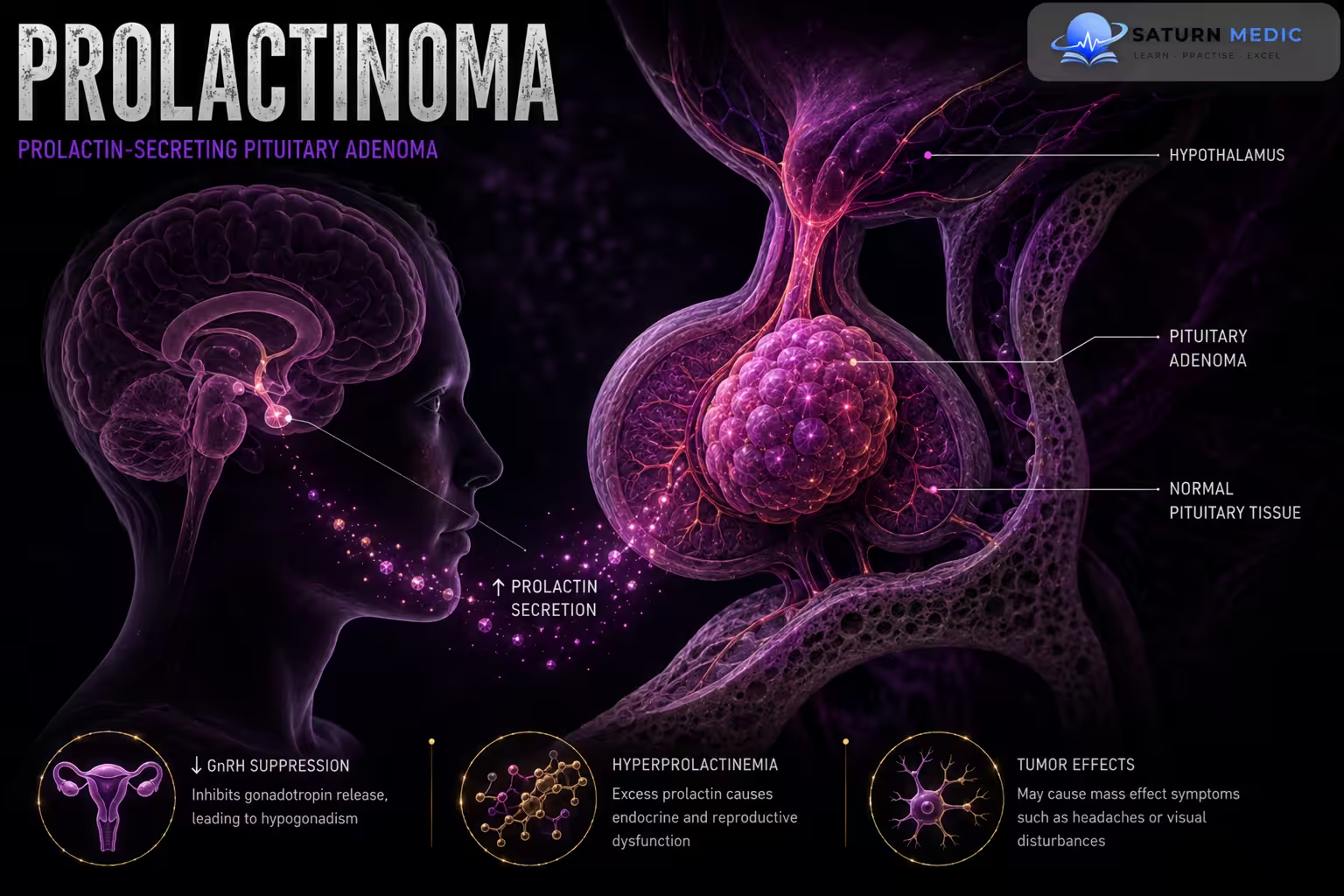
–Prolactinoma is caused by abnormal growth of prolactin-producing lactotroph cells in the anterior pituitary gland. Excess prolactin suppresses the hypothalamic-pituitary-gonadal axis, causing reduced sex hormone production and reproductive dysfunction.
–Clinical features depend on tumor size and prolactin level. Common presentations include galactorrhea, menstrual irregularities, infertility, and hypogonadism.
Etiology & Risk Factors
-Etiology:
•Prolactinoma develops due to uncontrolled proliferation of lactotroph cells in the anterior pituitary.
-The tumor causes:
•Increased prolactin secretion Suppression of gonadotropin-releasing hormone (GnRH)
•Reduced luteinizing hormone (LH) and follicle-stimulating hormone (FSH)
Reduced estrogen or testosterone production
-Types based on size:
•Microprolactinoma
Tumor size <10 mm
More common
Usually presents with hormonal symptoms
•Macroprolactinoma
Tumor size ≥10 mm
More likely to cause mass effect symptoms
-Inheritance
Most cases are sporadic.
-Risk Factors
Female sex (especially reproductive age)
Family history of pituitary tumors
Genetic endocrine tumor syndromes
Previous pituitary disorders
Pathophysiology
-Lactotroph cell mutation
→ Abnormal proliferation of pituitary lactotroph cells
→ Formation of prolactin-secreting pituitary adenoma
→ ↑ Prolactin secretion
→ ↑ Prolactin inhibits hypothalamic GnRH release
→ ↓ LH and FSH secretion
→ ↓ Estrogen/testosterone production
→ Reproductive dysfunction + infertility + sexual symptoms
-Large tumor
→ Compression of surrounding pituitary structures
→ Optic chiasm compression
→ Visual field defects + headaches
Clinical Presentation
-Symptoms:
-In Females:
•Menstrual irregularities
•Amenorrhea
•Infertility
•Galactorrhea
•Reduced libido
•Vaginal dryness
-In Males:
•Reduced libido
•Erectile dysfunction
•Infertility
•Gynecomastia (less common)
•Galactorrhea (rare)
-Symptoms of hypogonadism:
•Reduced bone density due to low sex hormones
-Signs:
•Galactorrhea
•Visual field defects
•Reduced secondary sexual characteristics
History Taking
-Ask about:
-Menstrual history
•Irregular periods
•Amenorrhea
•Pregnancy possibility
-Galactorrhea:
•Duration
•Nature
•Spontaneous or expressed
•Fertility problems
-Visual symptoms:
•Loss of peripheral vision
•Blurred vision
-Medication history:
•Antipsychotics
•Antidepressants
Physical Examination
-General Examination:
•Assess body habitus
•Look for signs of hormonal deficiency
•Assess secondary sexual characteristics
•Check for galactorrhea
-System-Specific Examination:
•Breast Examination
•Presence of galactorrhea
•Breast changes
-Neurological Examination:
•Visual field testing
•Cranial nerve examination
•Assessment of headaches
-Endocrine Examination:
Assess:
•Signs of hypogonadism
•Thyroid abnormalities
•Other pituitary hormone deficiencies
-Male Examination:
•Testicular size
•Signs of reduced androgen activity
Investigations
-Biochemistry / Specific Tests
•Serum Prolactin Level
-Main initial investigation.
•Findings:
Elevated prolactin level
Very high levels suggest prolactinoma, especially with compatible symptoms.
-Pregnancy Test
•Important in women of reproductive age.
-Thyroid Function Tests
•Especially TSH:
Hypothyroidism can cause elevated prolactin.
-Renal and Liver Function Tests
•May be assessed because impaired clearance can increase prolactin.
-Pituitary Hormone Assessment
•Evaluate for associated pituitary dysfunction:
LH and FSH
Estradiol/testosterone
Cortisol
Thyroid hormones
IGF-1
-Imaging
•Magnetic Resonance Imaging (MRI) of Pituitary
Investigation of choice.
Shows:
•Pituitary adenoma
•Tumor size
•Extension to surrounding structures
Diagnosis
-Diagnosis is established by:
1. Elevated serum prolactin level.
2. Exclusion of secondary causes:
Pregnancy
Medications
Hypothyroidism
Renal disease
3. Pituitary MRI demonstrating adenoma.
-Diagnostic findings:
•Increased prolactin
•Pituitary mass on MRI
•Symptoms of hyperprolactinemia or mass effect
Management
1. First-Line / Emergency Management
•Most cases are managed medically.
-Initial steps:
•Confirm diagnosis
•Exclude secondary causes
•Assess tumor size
•Evaluate visual fields in macroadenomas
-Emergency management may be required for:
•Visual deterioration
•Pituitary apoplexy
2. Definitive Treatment
Medical Therapy
•Dopamine agonists are the main treatment.
They:
•Reduce prolactin secretion
•Shrink tumor size
•Restore gonadal function
3. Medical Treatment
Cabergoline
•Preferred first-line therapy.
-Benefits:
•High effectiveness
•Long duration of action
•Good tumor shrinkage response
Bromocriptine
Alternative dopamine agonist.
-Used especially in:
•Pregnancy planning
•Patients unable to tolerate cabergoline
4. Surgical / Procedural Treatment
Transsphenoidal Surgery
Considered when:
•Medical therapy fails
•Patient cannot tolerate dopamine agonists
•Tumor causes persistent visual compromise despite treatment
Complications
- Hypogonadism
- Infertility
- Amenorrhea / oligomenorrhea in women.
- Erectile dysfunction and reduced libido in men.
- Galactorrhea —
- Reduced bone mineral density / osteoporosis —
- Tumor mass effect in large macroprolactinomas:
- Headache
- Visual field defects,
- bitemporal hemianopia
- Cranial nerve palsies
- Hypopituitarism
- Pituitary apoplexy
Prognosis
-Prolactinoma generally has an excellent prognosis with appropriate treatment.
Most patients respond well to dopamine agonists with:
Reduced prolactin levels
Tumor shrinkage
-Recovery of reproductive function Prognosis depends on:
Tumor size
Prolactin level
Response to medication
Presence of complications
Key Points / Clinical Pearls
- Prolactinoma is the most common functioning pituitary adenoma.
- It causes excessive prolactin secretion.
Increased prolactin suppresses GnRH, causing reduced LH and FSH. - Common symptoms include galactorrhea, infertility, and hypogonadism.
- Macroprolactinomas may cause headaches and visual field defects.
- Pregnancy and medications are important causes of high prolactin.
- Serum prolactin is the main diagnostic test.
- Pituitary MRI confirms tumor presence and size.
- Cabergoline is the preferred first-line treatment.
- Bromocriptine is an alternative dopamine agonist.
- Surgery is reserved for resistant or complicated cases.
- Melmed S, Casanueva FF, Hoffman AR, et al. Diagnosis and Treatment of Hyperprolactinemia: An Endocrine Society Clinical Practice Guideline. J Clin Endocrinol Metab. 2011;96(2):273-288. Journal of Clinical Endocrinology & Metabolism .
- Casanueva FF, Molitch ME, Schlechte JA, et al. Guidelines of the Pituitary Society for the Diagnosis and Management of Prolactinomas. Clin Endocrinol (Oxf). 2006;65(2):265-273.
- Melmed S, Bronstein MD, Chanson P, et al. A Consensus Statement on the Diagnosis and Treatment of Acromegaly Complications. Pituitary. 2013;16(3):294-302.
- Maiter D. Management of Dopamine Agonist-Resistant Prolactinoma. Neuroendocrinology. 2019;109(1):42-50.
- National Library of Medicine (NIH). Prolactinoma . StatPearls.