

Clinical Subject Page
Gestational Diabetes Mellitus (GDM)
Gestational Diabetes Mellitus (GDM) is diabetes first diagnosed during pregnancy that is not clearly overt pre-existing diabetes. It develops when pregnancy-related insulin resistance exceeds the mother’s ability to increase insulin secretion.
Also called
Pregnancy-related diabetes
ICD-10
O24.4
Specialty
Endocrine
Onset
Chronic
Reviewed
August 2026
On This Page
-
OverviewOverview
-
Etiology & Risk FactorsEtiology & Risk Factors
-
PathophysiologyPathophysiology
-
Clinical PresentationClinical Presentation
-
History TakingHistory Taking
-
Physical ExaminationPhysical Examination
-
InvestigationsInvestigations
-
DiagnosisDiagnosis
-
ManagementManagement
-
ComplicationsComplications
-
PrognosisPrognosis
-
Key Points / Clinical PearlsKey Points / Clinical Pearls
Overview
- Gestational Diabetes Mellitus (GDM) usually develops in the second or third trimester, when placental hormones increase maternal insulin resistance.
- Most women have no symptoms and are diagnosed through routine screening. Gestational Diabetes Mellitus (GDM) increases the risk of macrosomia, shoulder dystocia, preeclampsia, cesarean delivery, neonatal hypoglycemia, and future maternal Type 2 Diabetes Mellitus.
Etiology & Risk Factors
–Etiology:
Pregnancy causes progressive insulin resistance due to placental hormones, including:
- Human placental lactogen
- Placental growth hormone
- Progesterone
- Cortisol
- Estrogen
Normally, pancreatic beta cells compensate by increasing insulin secretion.
GDM develops when insulin secretion cannot adequately compensate for pregnancy-induced insulin resistance.
–Inheritance
GDM itself is not inherited in a simple Mendelian pattern.
Genetic susceptibility contributes to the risk, particularly when there is a family history of Type 2 Diabetes Mellitus.
–Risk Factors
- Previous Gestational Diabetes Mellitus (GDM)
- Previous infant with macrosomia
- Overweight or obesity
- Family history of Type 2 Diabetes Mellitus
- Previous unexplained stillbirth
- Polycystic ovary syndrome
- Maternal age associated with increased diabetes risk
Pathophysiology
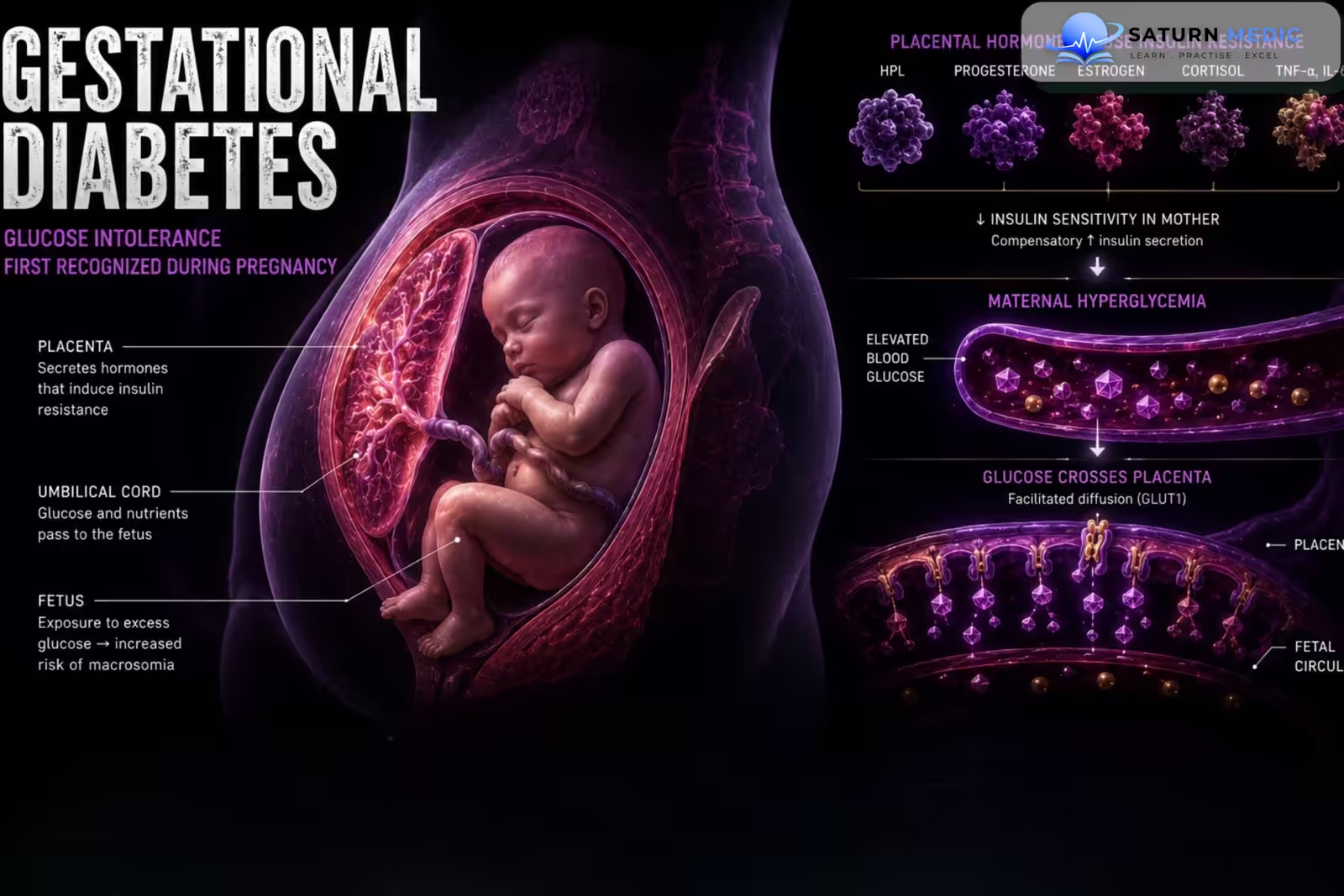
Pregnancy → increased placental hormones → progressive maternal insulin resistance → increased insulin requirement → inadequate pancreatic beta-cell compensation → maternal hyperglycemia → increased fetal glucose exposure → fetal hyperinsulinemia → excessive fetal growth and neonatal metabolic complications
Clinical Presentation
-Symptoms:
- Most women are asymptomatic.
- Possible symptoms include:
- Increased thirst
- Increased urination
- Fatigue
- Blurred vision
- Recurrent infections
- These symptoms are nonspecific and may overlap with normal pregnancy.
–Signs:
- Usually no specific physical signs.
- Possible findings include:
- Excessive maternal weight gain
- Obesity
- Hypertension
- Large-for-gestational-age fetus on ultrasound
History Taking
-Ask about:
- Previous Gestational Diabetes Mellitus (GDM)
- Previous macrosomic infant
- Previous pregnancy complications
- Family history of diabetes
- History of polycystic ovary syndrome
- Pre-pregnancy weight
- Weight gain during pregnancy
- Symptoms of hyperglycemia
- Previous abnormal glucose testing
Physical Examination
–General Examination:
- Weight
- Body mass index
- Blood pressure
- Weight gain during pregnancy
- General nutritional status
Assess for:
- Obesity
- Hypertension
- Dehydration when significant hyperglycemia is present
–System-Specific Examination
–Obstetric examination:
- Fundal height
- Fetal growth assessment
- Fetal heart rate
- Assessment for polyhydramnios when clinically suspected
–Fetal assessment:
- Growth assessment by ultrasound when clinically indicated
- Assessment for macrosomia or excessive fetal growth
Investigations
-Biochemistry / Specific Tests
- Oral Glucose Tolerance Test
-The 75-g oral glucose tolerance test (OGTT) is widely used for diagnosis.
Using International Association of Diabetes and Pregnancy Study Groups (IADPSG)/World Health Organization (WHO)-based criteria, GDM is diagnosed when one or more of the following plasma glucose values are met or exceeded:
- Fasting: 92 mg/dL (5.1 mmol/L)
- 1 hour: 180 mg/dL (10.0 mmol/L)
- 2 hours: 153 mg/dL (8.5 mmol/L)
-Plasma Glucose
Glucose measurements may be used for:
- Screening according to local protocols
- Diagnosis
- Monitoring treatment
–HbA1c
HbA1c is not generally the preferred test for diagnosing GDM, particularly because physiological changes in pregnancy affect its interpretation.
It may be useful in selected circumstances to assess possible pre-existing diabetes.
Diagnosis
Gestational Diabetes Mellitus (GDM) vis diagnosed when glucose intolerance meeting pregnancy-specific diagnostic criteria is first identified during pregnancy and overt pre-existing diabetes is not present.
Using the 75-g OGTT approach, one abnormal value is sufficient for diagnosis:
- Fasting ≥92 mg/dL
- 1-hour ≥180 mg/dL
- 2-hour ≥153 mg/dL
Overt diabetes first recognized during pregnancy should be classified separately using standard diabetes diagnostic criteria.
Management
1. First-Line / Emergency Management
Most women can initially be managed with:
- Medical nutrition therapy
- Appropriate physical activity
- Self-monitoring of blood glucose
- Education regarding glucose targets and pregnancy nutrition
Urgent management is required for:
- Severe hyperglycemia
- Diabetic ketoacidosis
- Hyperglycemic emergencies
- Significant maternal or fetal complications
2. Definitive Treatment
The primary goals are:
- Maintain pregnancy glucose within recommended targets
- Prevent excessive fetal growth
- Reduce maternal and neonatal complications
- Monitor fetal wellbeing
- Plan appropriate delivery and postpartum follow-up
3. Medical Treatment
-Insulin
Insulin is the preferred medication when lifestyle measures do not achieve adequate glycemic control.
Common approaches include:
- Basal insulin
- Mealtime insulin
- Basal-bolus regimens when required
Insulin does not cross the placenta in clinically significant amounts and can be titrated according to glucose monitoring.
-Metformin
Metformin is used in some guidelines and healthcare systems as an alternative or adjunct to insulin.
Its use should follow local pregnancy-diabetes guidelines and involve appropriate counseling.
-Other glucose-lowering medications
Many other non-insulin agents are not routinely recommended during pregnancy because of limited safety data.
Complications
-Maternal Complications
- Preeclampsia
- Gestational hypertension
- Increased risk of cesarean delivery
- Excessive maternal weight gain
-Fetal and Neonatal Complications
- Fetal macrosomia
- Large-for-gestational-age infant
- Shoulder dystocia
- Birth trauma
- Neonatal hypoglycemia
- Neonatal hyperbilirubinemia
- Respiratory distress
-Long-Term Complications
- Type 2 Diabetes Mellitus
- Cardiometabolic disease
Prognosis
The prognosis is generally good with appropriate diagnosis and glycemic control.
GDM usually resolves after delivery, but women with GDM have a substantially increased long-term risk of developing Type 2 Diabetes Mellitus.
Future risk is higher with:
- Recurrent GDM
- Obesity
- Higher pregnancy glucose levels
- Need for insulin during pregnancy
- Strong family history of diabetes
Key Points / Clinical Pearls
- Gestational Diabetes Mellitus (GDM) is diabetes first recognized during pregnancy that is not clearly pre-existing diabetes.
- It usually develops in the second or third trimester.
- Pregnancy causes increasing insulin resistance due to placental hormones.
- GDM occurs when pancreatic insulin secretion cannot adequately compensate.
- Most women with GDM are asymptomatic.
- Risk factors include previous GDM, obesity, family history of diabetes, previous macrosomia, and polycystic ovary syndrome.
- The 75-g oral glucose tolerance test (OGTT) is widely used for diagnosis.
- Using IADPSG/WHO-based criteria, one abnormal OGTT value can establish the diagnosis.
- Initial management includes nutrition therapy, appropriate physical activity, and glucose monitoring.
- Insulin is the preferred medication when lifestyle measures are insufficient.
- American Diabetes Association Professional Practice Committee. 15. Management of Diabetes in Pregnancy: Standards of Care in Diabetes—2026. Diabetes Care. 2026;49(Suppl 1). Diabetes Care .
- American College of Obstetricians and Gynecologists. Gestational Diabetes Mellitus: Practice Bulletin No. 190 . Obstet Gynecol. 2018;131(2):e49-e64.
- National Institute of Diabetes and Digestive and Kidney Diseases (NIDDK). Gestational Diabetes . National Institutes of Health.
- World Health Organization. Diagnostic Criteria and Classification of Hyperglycaemia First Detected in Pregnancy . WHO.
- International Association of Diabetes and Pregnancy Study Groups Consensus Panel. International Association of Diabetes and Pregnancy Study Groups Recommendations on the Diagnosis and Classification of Hyperglycemia in Pregnancy. Diabetes Care. 2010;33(3):676-682. Diabetes Care .
- McIntyre HD, Catalano P, Zhang C, Desoye G, Mathiesen ER, Damm P. Gestational diabetes mellitus. Nat Rev Dis Primers. 2019;5:47. Nature Reviews Disease Primers .