

Clinical Subject Page
Hyperosmolar Hyperglycemic State (HHS)
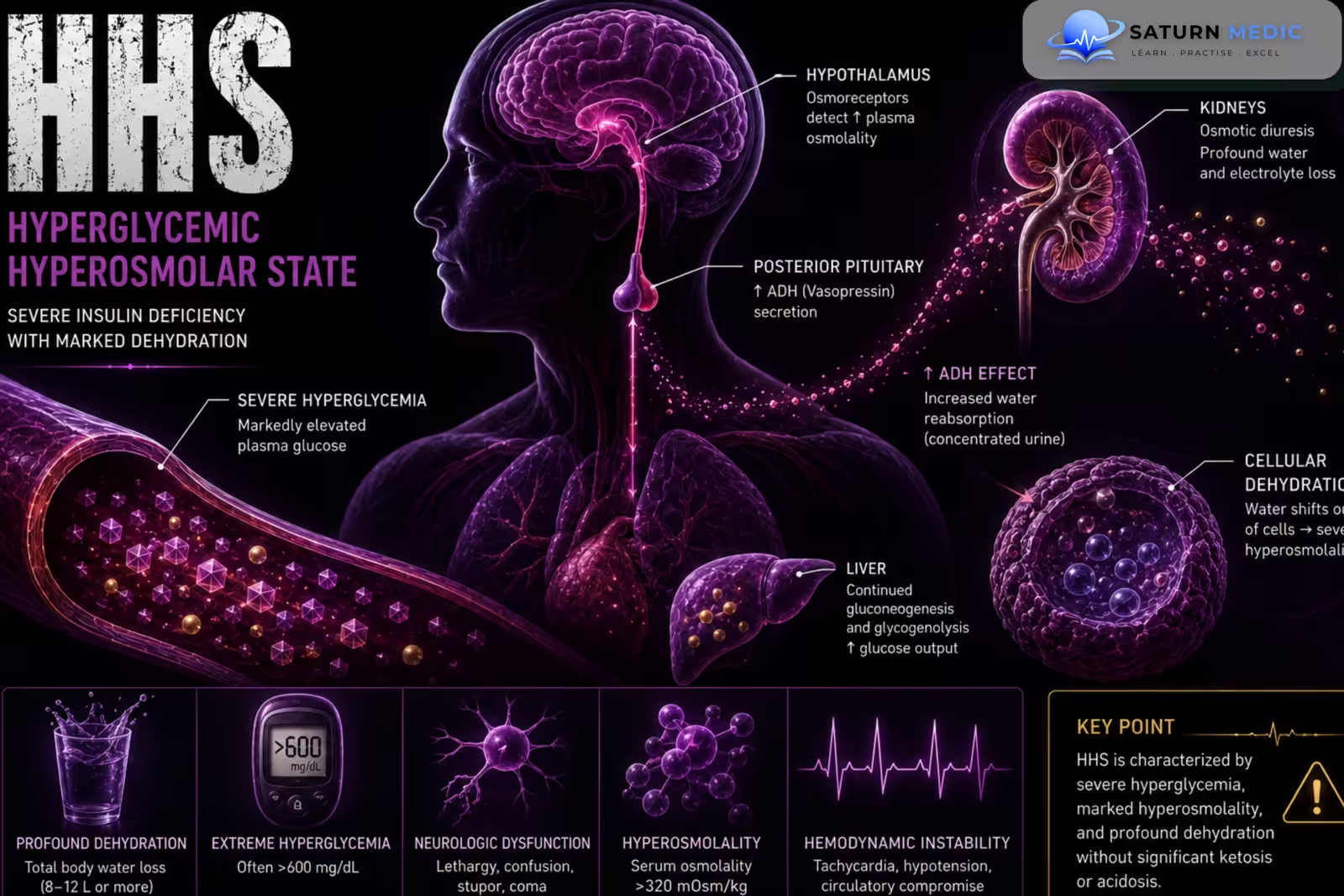
Hyperosmolar Hyperglycemic State (HHS) is a life-threatening acute complication of diabetes characterized by severe hyperglycemia, increased plasma osmolality, profound dehydration, and altered mental status, with little or no significant ketoacidosis.
Also called
Hyperosmolar non-ketotic state
ICD-10
E11
Specialty
Endocrine
Onset
Acute
Reviewed
August 2026
On This Page
-
OverviewOverview
-
Etiology & Risk FactorsEtiology & Risk Factors
-
PathophysiologyPathophysiology
-
Clinical PresentationClinical Presentation
-
History TakingHistory Taking
-
Physical ExaminationPhysical Examination
-
InvestigationsInvestigations
-
DiagnosisDiagnosis
-
ManagementManagement
-
ComplicationsComplications
-
PrognosisPrognosis
-
Key Points / Clinical PearlsKey Points / Clinical Pearls
Overview
- Hyperosmolar Hyperglycemic State (HHS) usually occurs in patients with Type 2 Diabetes Mellitus, particularly older adults.
- A relative deficiency of insulin causes severe hyperglycemia, while enough insulin is usually present to suppress substantial ketone production.
- Severe hyperglycemia causes osmotic diuresis → profound water and electrolyte loss → increased serum osmolality → neurological dysfunction.
Etiology & Risk Factors
–Etiology:
Hyperosmolar Hyperglycemic State (HHS) develops from:
- Severe insulin deficiency relative to metabolic needs
- Increased counter-regulatory hormones
- Severe hyperglycemia
- Osmotic diuresis
- Progressive dehydration
- Increased serum osmolality
–Common precipitating factors include:
- Infection
- Pneumonia
- Urinary tract infection
- Myocardial infarction
- Stroke
- Surgery
- Trauma
- Acute illness
–Risk Factors
- Type 2 Diabetes Mellitus
- Older age
- Inadequate access to fluids
- Reduced thirst sensation
- Cognitive impairment
- Limited mobility
- Infection
- Acute cardiovascular or cerebrovascular disease
- Poor adherence to diabetes treatment
- Dehydration
- Medications that promote hyperglycemia
- Chronic kidney disease
Pathophysiology
Relative insulin deficiency + increased counter-regulatory hormones → severe hyperglycemia → increased renal glucose excretion → osmotic diuresis → massive water and electrolyte loss → profound dehydration → increased serum osmolality → cellular dehydration → neurological dysfunction → altered consciousness/coma
Residual insulin activity → suppression of major lipolysis → limited ketone production → minimal or absent significant ketoacidosis
Clinical Presentation
-Symptoms
- Polyuria
- Polydipsia
- Severe thirst
- Weakness
- Fatigue
- Blurred vision
- Weight loss
- Dry mouth
- Headache
- Confusion
-Signs:
- Severe dehydration
- Dry mucous membranes
- Poor skin turgor
- Tachycardia
- Hypotension
- Weak peripheral pulses
- Altered mental status
- Neurological abnormalities
- Reduced urine output in severe dehydration
History Taking
-Ask about:
- Current diabetes medications
- Medication adherence
- Recent insulin or medication changes
- Blood glucose measurements
- Duration of hyperglycemic symptoms
- Polyuria
- Polydipsia
- Weight loss
- Reduced oral intake
- Fluid intake
- Vomiting or diarrhea
- Fever
- Cough
- Dysuria
Physical Examination
–General Examination
- Assess:
- Airway
- Breathing
- Circulation
- Level of consciousness
- Hydration status
- Temperature
- Heart rate
- Blood pressure
- Respiratory rate
Look for:
- Severe dehydration
- Dry mucous membranes
- Tachycardia
- Hypotension
- Altered consciousness
System-Specific Examination
–Cardiovascular:
- Tachycardia
- Hypotension
- Signs of hypovolemia
- Signs of myocardial infarction or heart failure
–Neurological:
- Confusion
- Reduced consciousness
- Seizures
- Focal neurological deficits
- Assessment for stroke
Investigations
-Complete Blood Count
May show:
- Hemoconcentration due to dehydration
- Leukocytosis due to physiological stress or infection
A raised White Blood Cell count alone does not prove infection.
-Biochemistry / Specific Tests
Essential investigations include:
- Plasma glucose
- Serum electrolytes
- Sodium
- Potassium
- Urea
- Creatinine
- Serum osmolality or calculated effective osmolality
- Serum or capillary β-hydroxybutyrate
- Venous blood gas
- Bicarbonate
- Anion gap
–Additional investigations:
- Urinalysis
- Urine ketones
- HbA1c
- Phosphate
- Lactate when indicated
Diagnosis
-Hyperosmolar Hyperglycemic State (HHS) is diagnosed by demonstrating:
- Severe hyperglycemia, typically ≥600 mg/dL (33.3 mmol/L)
- High effective serum osmolality, generally >300 mOsm/kg
- Severe dehydration
- Minimal ketonemia
- No significant ketoacidosis
- Altered mental status may be present, particularly in severe cases
Management
1. First-Line / Emergency Management
HHS is a medical emergency requiring hospital treatment.
Initial management:
- ABC assessment
- Intravenous fluid resuscitation
- Careful electrolyte assessment
- Potassium monitoring
- Insulin therapy after initial fluid assessment/resuscitation
- Frequent glucose and osmolality monitoring
- Identification and treatment of the precipitating cause
- Thrombosis-risk assessment
2. Definitive Treatment
The fundamental treatment is:
Careful fluid replacement + electrolyte correction + insulin + treatment of the precipitating cause.
Fluid replacement is particularly important because patients may have a very large water deficit.
3. Medical Treatment
-Intravenous Fluids
- Intravenous isotonic crystalloid is generally used initially.
- Fluid replacement should be individualized according to:
- Blood pressure
- Hydration status
- Serum sodium
- Renal function
- Cardiac function
- Age
-Insulin
- Intravenous insulin may be used after initial fluid replacement.
- Insulin lowers plasma glucose and suppresses hepatic glucose production.
- Glucose should not fall excessively rapidly.
-Potassium
Serum potassium should be monitored frequently.
Total body potassium is often depleted despite variable initial serum potassium levels.
Replacement is guided by:
- Serum potassium
- Renal function
Complications
- Severe dehydration
- Hypovolemic shock
- Acute kidney injury
- Electrolyte abnormalities
- Hypokalemia
- Hyperkalemia
- Cerebral edema
- Seizures
- Coma
- Death
Prognosis
Prognosis depends on:
- Age
- Degree of dehydration
- Severity of hyperosmolality
- Renal function
- Cardiovascular status
- Neurological impairment
- Presence and severity of infection
- Time to treatment
- Underlying precipitating illness
Early recognition and controlled correction of dehydration and hyperosmolality improve outcomes.
Key Points / Clinical Pearls
- Hyperosmolar Hyperglycemic State (HHS) is a life-threatening diabetic emergency.
- It occurs most commonly in Type 2 Diabetes Mellitus.
- HHS is characterized by severe hyperglycemia, hyperosmolality, and profound dehydration.
- Significant ketoacidosis is usually absent or mild.
- HHS often develops more gradually than DKA.
- Older adults are particularly vulnerable.
- Common triggers include infection, acute cardiovascular disease, stroke, and inadequate diabetes treatment.
- Neurological manifestations such as confusion, seizures, and coma are important features.
- Plasma glucose is typically ≥600 mg/dL (33.3 mmol/L).
- Effective serum osmolality is typically >300 mOsm/kg.
- Fluid replacement is the cornerstone of initial treatment.
- Umpierrez GE, Davis GM, ElSayed NA, et al. Hyperglycemic Crises in Adults With Diabetes: A Consensus Report. Diabetes Care. 2024;47(8):1257-1275. Diabetes Care .
- American Diabetes Association Professional Practice Committee. 16. Diabetes Care in the Hospital: Standards of Care in Diabetes—2026. Diabetes Care. 2026;49(Suppl 1). Diabetes Care .
- Kitabchi AE, Umpierrez GE, Miles JM, Fisher JN. Hyperglycemic Crises in Adult Patients With Diabetes. Diabetes Care. 2009;32(7):1335-1343. Diabetes Care .
- Pasquel FJ, Umpierrez GE. Hyperosmolar Hyperglycemic State: A Historic Review of the Clinical Presentation, Diagnosis, and Treatment. Diabetes Care. 2014;37(11):3124-3131. Diabetes Care .
- National Library of Medicine (NIH). Hyperosmolar Hyperglycemic State . StatPearls.