

Clinical Subject Page
Hypopituitarism
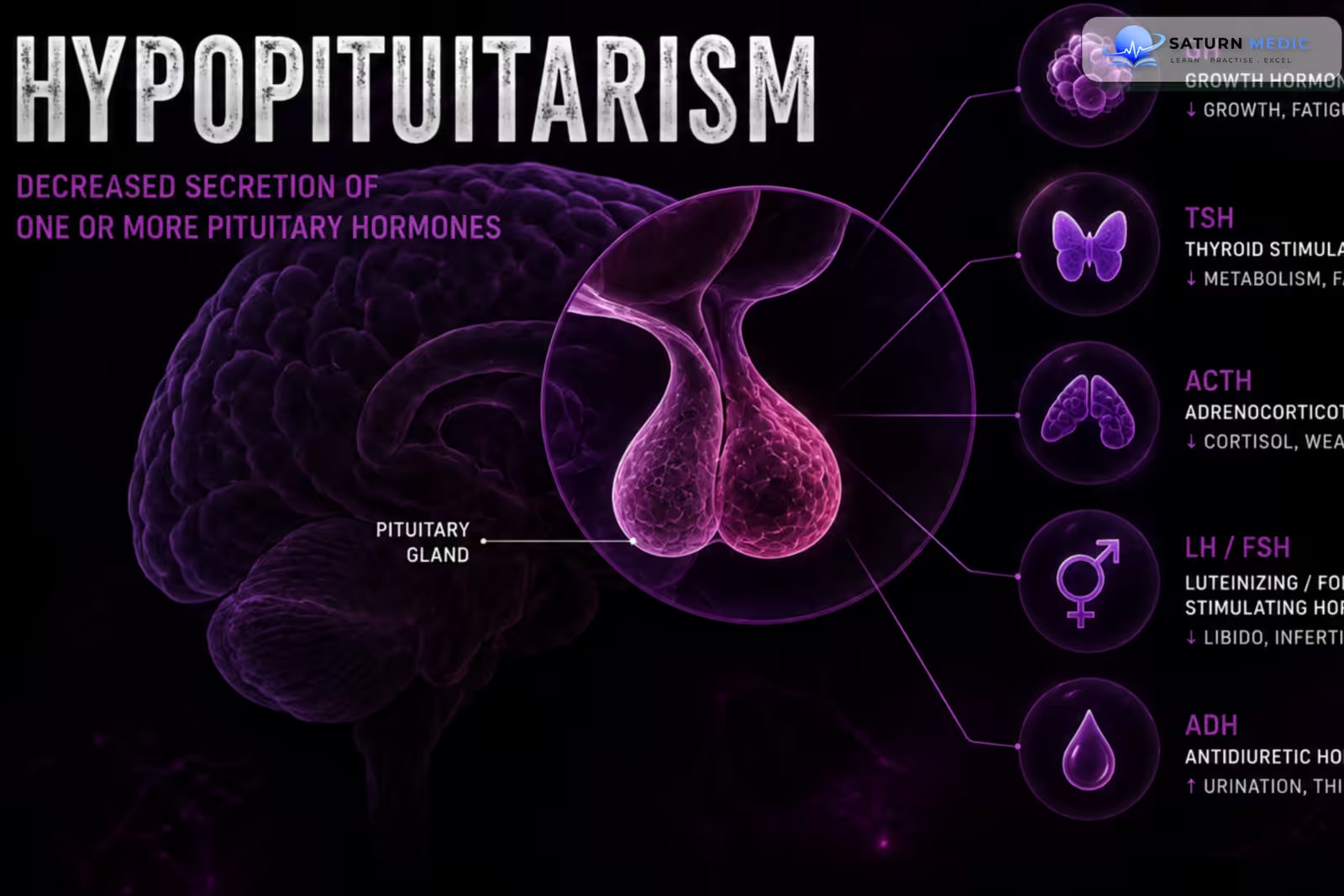
Hypopituitarism is a disorder in which the pituitary gland produces insufficient amounts of one or more pituitary hormones, resulting in deficiency of the hormones produced by the pituitary gland and impaired function of target endocrine organs.
Also called
Pituitary hormone deficiency
ICD-10
E23
Specialty
Endocrine
Onset
Chronic
Reviewed
August 2026
On This Page
-
OverviewOverview
-
Etiology & Risk FactorsEtiology & Risk Factors
-
PathophysiologyPathophysiology
-
Clinical PresentationClinical Presentation
-
History TakingHistory Taking
-
Physical ExaminationPhysical Examination
-
InvestigationsInvestigations
-
DiagnosisDiagnosis
-
ManagementManagement
-
ComplicationsComplications
-
PrognosisPrognosis
-
Key Points / Clinical PearlsKey Points / Clinical Pearls
Overview
–Hypopituitarism can involve one or several pituitary hormones.
-Deficiencies may include:
• Adrenocorticotropic hormone (ACTH)
• Thyroid-stimulating hormone (TSH)
• Growth hormone (GH)
• Luteinizing hormone (LH)
• Follicle-stimulating hormone (FSH)
• Posterior pituitary dysfunction may also cause vasopressin deficiency and Central Diabetes Insipidus.
• Clinical features depend on which hormones are deficient and whether the onset is acute or gradual
Etiology & Risk Factors
-Etiology:
• Hypopituitarism can result from damage to the hypothalamus, pituitary gland, or pituitary
stalk.
Pituitary Tumors
• Pituitary adenoma
• Craniopharyngioma
• Other sellar or parasellar tumors
Surgery or Radiation
• Pituitary surgery
• Cranial radiotherapy
Vascular Causes
• Pituitary apoplexy
• Sheehan syndrome
• Other ischemic pituitary
injury
• Traumatic brain injury
Inflammatory and Infiltrative Disorders
• Lymphocytic hypophysitis
• Sarcoidosis
-Risk Factors
• Pituitary tumors
• Previous pituitary surgery
• Cranial radiotherapy
• Head trauma
• Pituitary apoplexy
Pathophysiology
Hypothalamic/pituitary damage
→ ↓ Pituitary hormone secretion
→ ↓ Stimulation of target endocrine glands
→ ↓ Target-organ hormone production
→ Hormonal deficiency
→ Impaired metabolism, growth, reproduction, stress response, and water
balance
→ Clinical features of hypopituitarism
Examples:
↓ ACTH → ↓ Cortisol → Secondary adrenal insufficiency
↓ TSH → ↓ Thyroid hormone → Central hypothyroidism
↓ LH/FSH → ↓ Sex hormones → Hypogonadism + infertility
↓ GH → ↓ IGF-1 → Reduced growth in children / altered body composition in adults
Clinical Presentation
Symptoms
• Symptoms of Hypopituitarism vary according to the affected hormones.
-ACTH Deficiency
• Fatigue
• Weakness
• Weight loss
• Nausea
-TSH Deficiency
• Fatigue
• Cold intolerance
• Weight gain
-LH/FSH Deficiency
Females:
• Amenorrhea
• Irregular menstruation
• Infertility
• Reduced libido
Males:
• Reduced libido
• Erectile dysfunction
• Infertility
• Reduced muscle mass
-Growth Hormone Deficiency
Adults:
• Reduced energy
• Increased body fat
• Reduced muscle mass
• Reduced exercise capacity
Children:
• Short stature
• Growth failure
-Signs
• Pallor
• Low blood pressure
• Bradycardia
• Reduced body hair
• Reduced secondary sexual characteristics
History Taking
-Ask about:
• Fatigue and weakness
• Weight changes
• Nausea and vomiting
• Dizziness
• Hypotension symptoms
• Cold intolerance
• Menstrual history
• Libido
• Erectile function
• Fertility
• Changes in body hair
Physical Examination
-General Examination
• Measure blood pressure
• Check for postural hypotension
• Measure heart rate
• Assess weight and BMI
• Assess hydration
• Look for pallor
• Assess body hair
• Assess secondary sexual characteristics
-System-Specific Examination
-Neurological Examination
• Visual field assessment
• Cranial nerve examination
• Assessment for headache or neurological deficits
-Endocrine Examination
Look for:
• Central hypothyroidism
• Secondary adrenal insufficiency
• Hypogonadism
• Growth hormone deficiency
-Reproductive Examination
Assess:
• Secondary sexual characteristics
• Testicular size in males
• Menstrual abnormalities in females
Investigations
-Biochemistry / Specific Tests
Morning Serum Cortisol
• Important initial assessment for ACTH deficiency.
• Low cortisol suggests adrenal insufficiency and requires further evaluation.
-ACTH:
Primary adrenal insufficiency → high ACTH
Secondary adrenal insufficiency → low or inappropriately normal ACTH
-Thyroid Function Tests
Typical pattern:
• Low free T4
• Low or inappropriately normal TSH
• This indicates central hypothyroidism.
-LH and FSH
May be:
• Low or inappropriately normal
-Sex Hormones
-Females:
• Low estradiol
-Males:
• Low testosterone
IGF-1
• May be reduced in growth hormone deficiency
Imaging
Magnetic Resonance Imaging (MRI) of the Pituitary
•Investigation of choice.
May identify:
• Pituitary adenoma
• Craniopharyngioma
• Pituitary inflammation
• Pituitary atrophy
Diagnosis
Diagnosis of Hypopituitarism is established by:
1. Identifying symptoms suggestive of pituitary hormone deficiency.
2. Measuring pituitary and target-organ hormones.
3. Performing dynamic endocrine testing when required.
4. MRI of the pituitary to identify the underlying structural cause
Management
1. First-Line / Emergency Management of Hypopituitarism
If adrenal crisis or severe ACTH deficiency is suspected:
• Give immediate glucocorticoid replacement.
• Do not delay treatment while waiting for laboratory confirmation in a critically ill patient.
• Correct hypoglycemia and fluid/electrolyte abnormalities.
• Monitor blood pressure and clinical status.
2. Definitive Treatment
Treatment involves:
1. Hormone replacement.
2. Treatment of the underlying pituitary or hypothalamic disorder.
3. Long-term endocrine monitoring.
3. Medical Treatment
-Glucocorticoid Replacement
For ACTH deficiency:
• Hydrocortisone is commonly used.
• Other glucocorticoids may be used in selected patients.
-Thyroid Hormone Replacement
For central hypothyroidism:
• Levothyroxine
-Glucocorticoid deficiency should be excluded or treated before starting levothyroxine.
-Sex Hormone Replacement
Females:
• Estrogen replacement when appropriate
• Progesterone when indicated
-Males:
• Testosterone replacement when appropriate
-Growth Hormone Replacement
• May be considered in confirmed adult or pediatric growth hormone deficiency when
appropriate.
4. Surgical / Procedural Treatment
Surgery may be required for:
• Pituitary tumors
• Craniopharyngioma
• Lesions causing visual or neurological compression
Complications
• Hyponatremia
• Hypoglycemia
• Dyslipidemia
• Secondary adrenal insufficiency
• Central hypothyroidism
• Hypogonadism
• Growth hormone deficiency
• Osteoporosis
• Reduced quality of life
• Cardiovascular risk
Prognosis
• The prognosis of Hypopituitarism depends mainly on the underlying cause, the number of deficient hormones,
and the adequacy of hormone replacement.
• With appropriate lifelong hormone replacement and monitoring, many patients can maintain a good quality of life
Key Points / Clinical Pearls
• Hypopituitarism is deficiency of one or more pituitary hormones.
• It can result from pituitary, hypothalamic, or stalk disorders.
• Common causes of Hypopituitarism include pituitary tumors, surgery, radiation, trauma, and postpartum
pituitary injury.
• ACTH deficiency causes secondary adrenal insufficiency.
• TSH deficiency causes central hypothyroidism.
• LH/FSH deficiency causes hypogonadism and infertility.
• GH deficiency causes growth failure in children and altered body composition in adults.
• ACTH deficiency can cause life-threatening adrenal crisis.
• MRI of the pituitary helps identify the underlying cause
- American Diabetes Association Professional Practice Committee. 2. Diagnosis and Classification of Diabetes: Standards of Care in Diabetes—2026. Diabetes Care. 2026;49(Suppl 1). Diabetes Care .
- American Diabetes Association Professional Practice Committee. 14. Children and Adolescents: Standards of Care in Diabetes—2026. Diabetes Care. 2026;49(Suppl 1). Diabetes Care .
- Holt RIG, DeVries JH, Hess-Fischl A, et al. The management of type 1 diabetes in adults. A consensus report by the American Diabetes Association and the European Association for the Study of Diabetes. Diabetes Care. 2021;44(11):2589-2625. Diabetes Care .
- American Diabetes Association. Type 1 Diabetes . American Diabetes Association.
- National Institute of Diabetes and Digestive and Kidney Diseases (NIDDK). Type 1 Diabetes . National Institutes of Health.
- International Society for Pediatric and Adolescent Diabetes (ISPAD). ISPAD Clinical Practice Consensus Guidelines .