

Clinical Subject Page
Syndrome of Inappropriate Antidiuretic Hormone Secretion (SIADH)
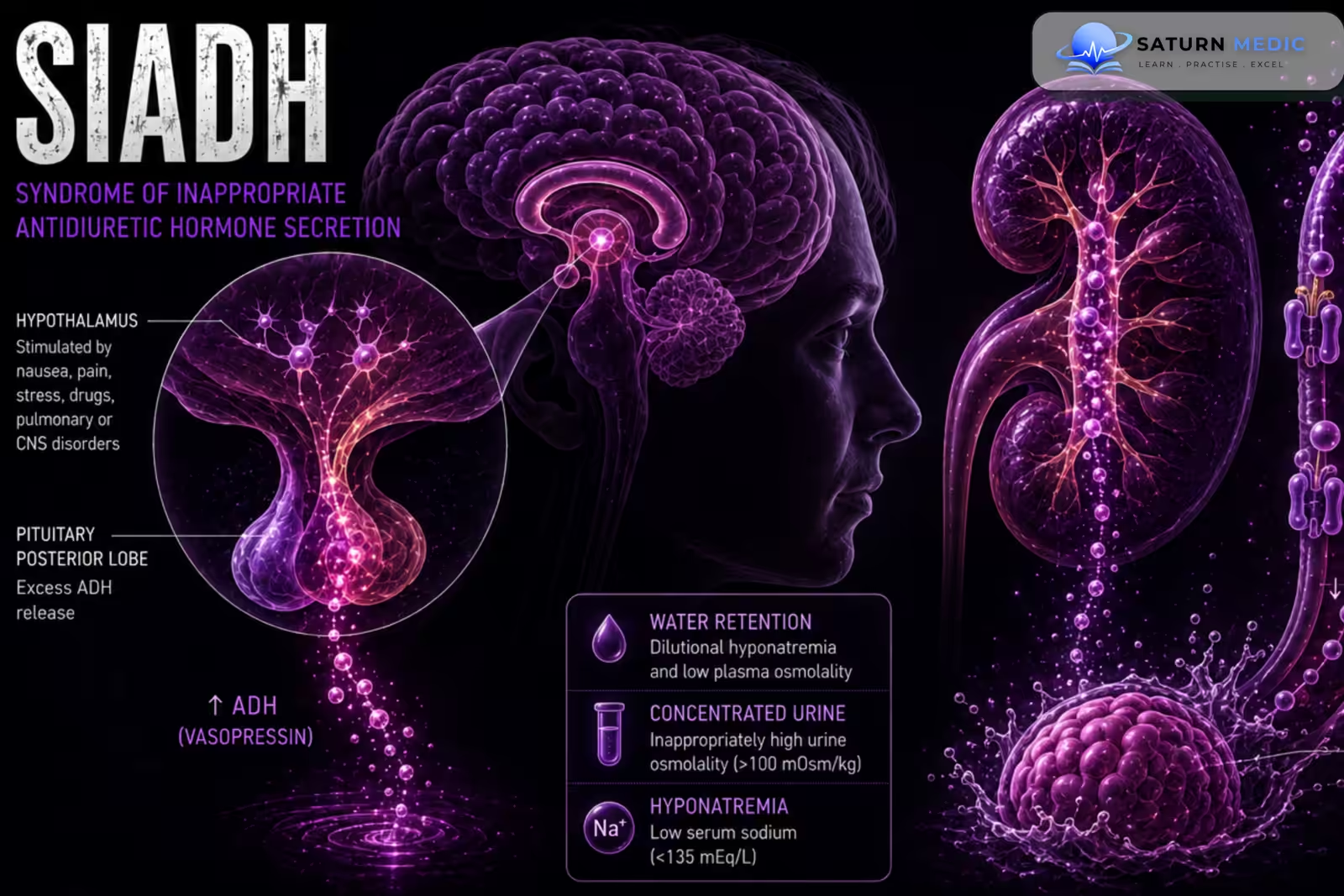
Syndrome of Inappropriate Antidiuretic Hormone Secretion (SIADH) is a disorder characterized by inappropriately increased antidiuretic hormone (ADH/vasopressin) activity, causing excessive water retention and dilutional hyponatremia despite the absence of an appropriate physiological stimulus for ADH secretion.
Also called
Schwartz-Bartter Syndrome
ICD-10
E22.2
Specialty
Endocrine
Onset
Chronic
Reviewed
August 2026
On This Page
-
OverviewOverview
-
Etiology & Risk FactorsEtiology & Risk Factors
-
PathophysiologyPathophysiology
-
Clinical PresentationClinical Presentation
-
History TakingHistory Taking
-
Physical ExaminationPhysical Examination
-
InvestigationsInvestigations
-
DiagnosisDiagnosis
-
ManagementManagement
-
ComplicationsComplications
-
PrognosisPrognosis
-
Key Points / Clinical PearlsKey Points / Clinical Pearls
Overview
• Syndrome of Inappropriate Antidiuretic Hormone Secretion (SIADH) causes excessive water reabsorption by the kidneys, resulting in euvolemic dilutional
hyponatremia and low serum osmolality. Urine remains inappropriately concentrated despite the low serum osmolality.
• Common causes include Central Nervous System disorders, pulmonary diseases, malignancies especially small-cell lung carcinoma and medications.
Etiology & Risk Factors
-Etiology:
• Syndrome of Inappropriate Antidiuretic Hormone Secretion (SIADH) occurs when ADH secretion or action is inappropriate for the body’s actual fluid status.
-Common Causes:
1.Malignancy
• Small-cell lung carcinoma
• Other cancers can rarely produce ectopic ADH
2. Central Nervous System Disorders
• Stroke
• Subarachnoid hemorrhage
• Meningitis
• Encephalitis
3. Pulmonary Disorders
• Tuberculosis
• Acute respiratory disease
4. Medications
Examples include:
• Selective serotonin reuptake inhibitors (SSRIs)
• Carbamazepine
• Oxcarbazepine
-Risk Factors For Syndrome of Inappropriate Antidiuretic Hormone Secretion (SIADH):
• Small-cell lung carcinoma
• Pulmonary disease
• Central nervous system disease
• Recent surgery
• Head trauma
• Certain medications
• Older age
Pathophysiology
-Inappropriate ADH secretion/action
→ ↑ ADH activity at renal collecting ducts
→ ↑ Aquaporin-2 water channels
→ ↑ Free-water reabsorption
→ ↑ Total body water
→ Dilution of serum sodium
→ Hyponatremia + ↓ Serum osmolality
→ Mild extracellular volume expansion
→ Secondary natriuresis
→ Near-normal clinical volume status
→ Euvolemic hyponatremia
Persistent ADH activity
→ Inappropriately concentrated urine despite low serum osmolality
Clinical Presentation
-Symptoms
• Nausea
• Headache
• Dizziness
• Difficulty concentrating
• Muscle cramps
• Irritability
• Confusion
• Vomiting
• Seizures
-Signs
• Clinically euvolemic state
• No significant peripheral edema
• No obvious dehydration
• Normal or near-normal blood pressure
• Neurological findings may occur with significant hyponatremia.
History Taking
-Ask about:
• Nausea and vomiting
• Headache
• Confusion
• Seizures
• Weakness
• Muscle cramps
• Changes in mental status
• Fluid intake
• Recent surgery
• Recent hospitalization
• Head trauma
• Stroke
• CNS infection
• Brain tumor
• Malignancy history
Physical Examination
-General Examination
• Assess mental status
• Measure blood pressure
• Assess hydration status
• Assess body weight
• Look for signs of fluid overload or dehydration
-Typical finding:
• Euvolemia
System-Specific Examination
-Neurological:
Assess for:
• Confusion
• Reduced consciousness
• Seizures
• Focal neurological deficits
-Respiratory:
-Look for an underlying pulmonary cause:
• Pneumonia
• Lung malignancy
• Other respiratory disease
-Endocrine:
Look for features suggesting:
• Adrenal insufficiency
• Hypothyroidism
Investigations
-Biochemistry / Specific Tests:
-Serum Sodium:
• Low
• Usually <135 mmol/L.
-Serum Osmolality
• Low
• Typically <275 mOsm/kg.
–Urine Osmolality
• Inappropriately high
• Usually >100 mOsm/kg despite low serum osmolality.
-Urine Sodium
Typically:
• > 30 mmol/L
• provided dietary intake and renal function are adequate.
-Renal Function
• Usually preserved
-Uric Acid May be Low
Diagnosis
-Syndrome of Inappropriate Antidiuretic Hormone Secretion (SIADH) is diagnosed when the patient has:
• Hyponatremia
• Low serum osmolality
• Inappropriately concentrated urine
• Urine sodium generally >30 mmol/L
• Clinical euvolemia
• Normal renal function
• No significant adrenal or thyroid dysfunction
Management
1. Definitive Treatment for Syndrome of Inappropriate Antidiuretic Hormone Secretion (SIADH):
-The most important definitive step is:
• Treat the underlying cause and remove the stimulus for inappropriate ADH secretion.
-Examples:
• Stop causative medication when appropriate
• Treat pulmonary infection
• Treat CNS disease
• Treat underlying malignancy
2. Medical Treatment:
-Fluid Restriction:
• First-line treatment for many stable patients.
Typical approach:
• Restrict free-water intake according to the severity and cause.
-Hypertonic Saline
Used for:
• Severe symptomatic hyponatremia
• Neurological manifestations
-Vasopressin Receptor Antagonists
Examples:
• Tolvaptan
• Conivaptan
• May be used in selected patients with persistent SIADH.
-Oral Urea
• May be used in chronic SIADH to increase renal water excretion.
3. Surgical / Procedural Treatment
• There is no direct surgical treatment for Syndrome of Inappropriate Antidiuretic Hormone Secretion (SIADH).
Surgery may be required to treat the underlying cause, such as:
• Resectable malignancy
• Brain tumor
Complications
• Severe hyponatremia
• Cerebral edema
• Confusion
• Seizures
• Coma
• Respiratory arrest
• Osmotic demyelination syndrome from overly rapid correction
• Hypernatremia from excessive correction
Prognosis
-Prognosis of Syndrome of Inappropriate Antidiuretic Hormone Secretion (SIADH) depends mainly on:
• Severity and rate of onset of hyponatremia
• Underlying cause
• Speed of diagnosis and treatment
• Response to treatment
Key Points / Clinical Pearls
• Syndrome of Inappropriate Antidiuretic Hormone Secretion causes inappropriate ADH activity and excessive free-water retention
• The classic finding is euvolemic hypotonic hyponatremia.
• Serum osmolality is low.
• Urine remains inappropriately concentrated.
• Urine sodium is usually elevated.
• Small-cell lung carcinoma is an important cause.
• CNS and pulmonary diseases can trigger SIADH.
• Medications such as SSRIs and carbamazepine can cause SIADH.
• Hypothyroidism and adrenal insufficiency should be excluded.
• Fluid restriction is a common first-line treatment.
• Severe symptomatic hyponatremia requires hypertonic saline.
• Long-term Syndrome of Inappropriate Antidiuretic
Hormone Secretion may require additional therapies such as oral urea or vasopressin receptor
antagonists.
- Verbalis JG, Goldsmith SR, Greenberg A, et al. Diagnosis, Evaluation, and Treatment of Hyponatremia: Expert Panel Recommendations. Am J Med. 2013;126(10 Suppl 1):S1-S42. American Journal of Medicine .
- Spasovski G, Vanholder R, Allolio B, et al. Clinical Practice Guideline on Diagnosis and Treatment of Hyponatraemia. Nephrol Dial Transplant. 2014;29(Suppl 2):i1-i39. Nephrology Dialysis Transplantation .
- Ellison DH, Berl T. The Syndrome of Inappropriate Antidiuresis. N Engl J Med. 2007;356(20):2064-2072. New England Journal of Medicine .
- Cuesta M, Garrahy A, Thompson CJ. SIAD: Practical Recommendations for Diagnosis and Management. J Clin Endocrinol Metab. 2022;107(3):e1237-e1250.
- National Library of Medicine (NIH). Syndrome of Inappropriate Antidiuretic Hormone Secretion . StatPearls.