

Clinical Subject Page
Congenital Adrenal Hyperplasia (CAH)
Cushing Syndrome is a clinical disorder caused by prolonged exposure to excessive glucocorticoids, either from exogenous corticosteroid therapy or endogenous overproduction of cortisol
Also called
21-Hydroxylase Deficiency
ICD-10
E25.0
Specialty
Endocrine
Onset
Chronic
Reviewed
August 2026
On This Page
-
OverviewOverview
-
Etiology & Risk FactorsEtiology & Risk Factors
-
PathophysiologyPathophysiology
-
Clinical PresentationClinical Presentation
-
History TakingHistory Taking
-
Physical ExaminationPhysical Examination
-
InvestigationsInvestigations
-
DiagnosisDiagnosis
-
ManagementManagement
-
ComplicationsComplications
-
PrognosisPrognosis
-
Key Points / Clinical PearlsKey Points / Clinical Pearls
Overview
–Congenital Adrenal Hyperplasia (CAH) results from impaired adrenal steroid production.
- Approximately 90–95% of CAH cases are caused by 21-hydroxylase deficiency.
–Depending on the severity of enzyme deficiency, patients may develop:
- Cortisol deficiency
- Aldosterone deficiency
- Androgen excess
- Salt-wasting adrenal crisis
- Virilization
- Precocious puberty
Etiology & Risk Factors
-Etiology:
–Congenital Adrenal Hyperplasia (CAH) is caused by inherited defects in enzymes involved in adrenal steroidogenesis.
-The most common defect is:
21-Hydroxylase Deficiency
Caused by pathogenic variants in the CYP21A2 gene.
-This leads to:
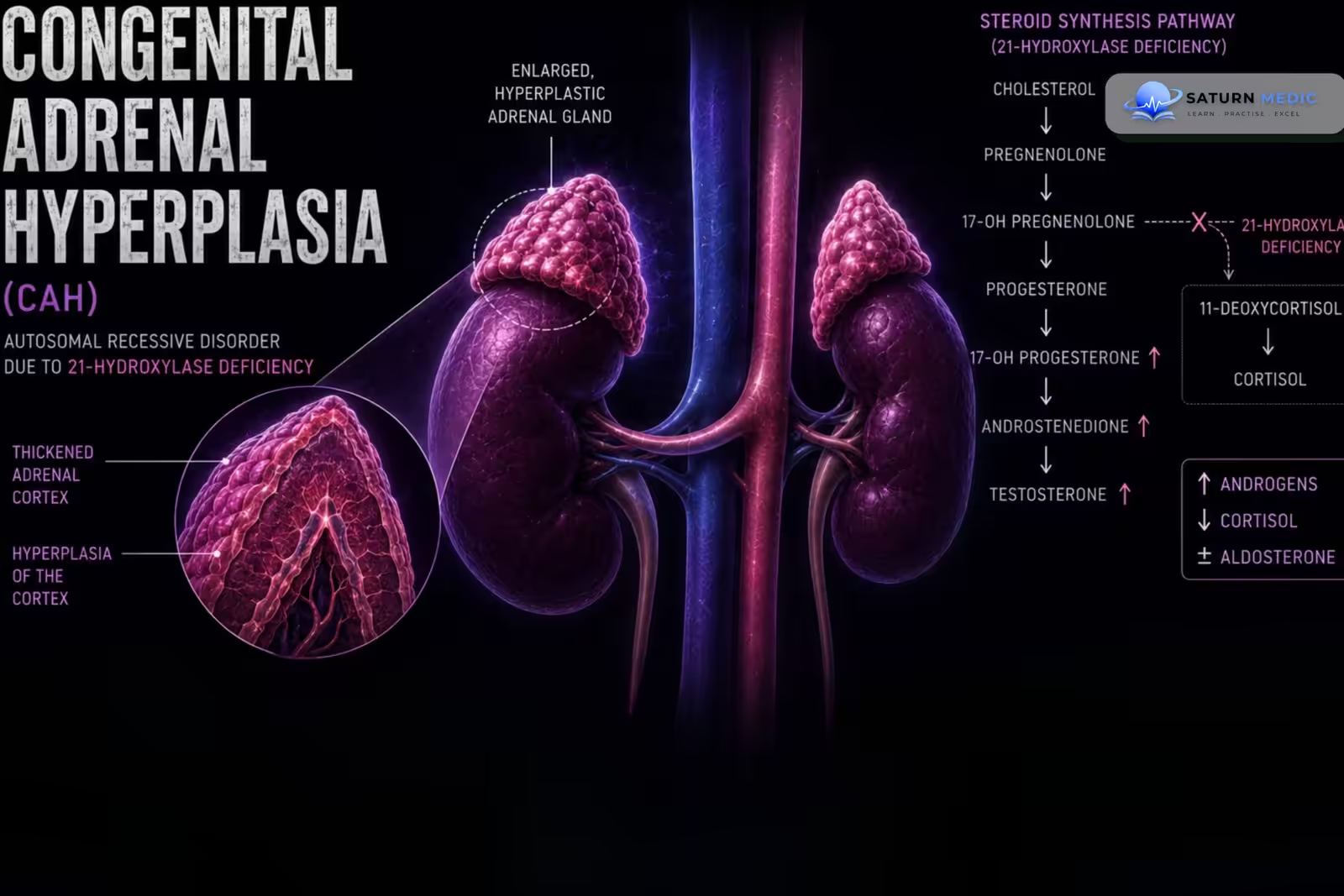
↓ cortisol synthesis → ↑ ACTH → adrenal hyperplasia → accumulation of steroid precursors → ↑ androgen production
-Other, less common forms include deficiencies of:
- 11β-hydroxylase
- 17α-hydroxylase/17,20-lyase
- 3β-hydroxysteroid dehydrogenase
-Risk Factors:
- Family history of Congenital Adrenal Hyperplasia (CAH)
- Previous child with Congenital Adrenal Hyperplasia (CAH)
- Parents who are carriers
- Consanguinity
Pathophysiology
-21-Hydroxylase Deficiency
21-hydroxylase deficiency → ↓ cortisol ± ↓ aldosterone → ↓ negative feedback → ↑ ACTH → adrenal hyperplasia → accumulation of steroid precursors → ↑ adrenal androgen production → virilization/precocious puberty
↓ aldosterone → ↓ renal sodium reabsorption → sodium loss + water loss → dehydration + hypotension → hyperkalemia → salt-wasting adrenal crisis
Clinical Presentation
-Symptoms:
–Classic Congenital Adrenal Hyperplasia (CAH)
- Poor feeding
- Vomiting
- Dehydration
- Weakness
- Salt craving
-Androgen Excess
- Early pubic hair
- Precocious puberty
- Hirsutism in females
- Infertility
–Nonclassic Congenital Adrenal Hyperplasia (CAH)
- Hirsutism
- Infertility
- Premature pubarche
-Signs:
- Central obesity
- Rounded “moon face”
- Facial plethora
- Dorsocervical fat accumulation (buffalo hump)
- Easy bruising
- Acne
- Hirsutism
History Taking
-Ask about:
- Family history of Congenital Adrenal Hyperplasia (CAH)
- Previous affected siblings
- Consanguinity
- Prenatal genetic testing
- Abnormal newborn screening
- Feeding difficulties
- Vomiting
- Weight loss
- Dehydration
- Salt craving
- Episodes of adrenal crisis
- Early pubic hair
- Rapid growth
- Acne
- Hirsutism
Physical Examination
-General Examination
- Height
- Weight
- Growth velocity
- Blood pressure
- Hydration status
-Look for:
- Dehydration
- Hypotension
- Poor growth or abnormal growth pattern
- Signs of androgen excess
-System-Specific Examination:
–Genital Examination
-In affected females:
- Clitoromegaly
- Labial fusion
- Virilization
-In males:
- Penile enlargement
- Testicular size
- Signs of precocious puberty
–Skin
- Acne
- Hirsutism
- Excess terminal hair
- Virilization
Investigations
-Biochemistry / Specific Tests
Important tests include:
- 17-hydroxyprogesterone (17-OHP)
- Serum cortisol
- ACTH
- Serum electrolytes
- Plasma renin activity or renin concentration
- Aldosterone
- Androgen levels
- Androstenedione
- Testosterone
-Typical Salt-Wasting CAH Findings
- ↓ cortisol
- ↑ ACTH
- ↑ 17-OHP
- ↑ adrenal androgens
- ↓ aldosterone
- ↑ renin
- Hyponatremia
- Hyperkalemia
- Possible hypoglycemia
-Special / Confirmatory Tests
17-Hydroxyprogesterone
Markedly elevated 17-OHP strongly suggests 21-hydroxylase deficiency
-Genetic Testing
CYP21A2 genetic testing can help confirm the diagnosis and is useful for:
- Genetic counseling
- Family studies
Diagnosis
-Diagnosis of Congenital Adrenal Hyperplasia (CAH) is based on :
↑ 17-hydroxyprogesterone + evidence of cortisol deficiency/androgen excess ± aldosterone deficiency → diagnosis of CAH
-Further assessment determines whether the patient has:
- Classic salt-wasting Congenital Adrenal Hyperplasia (CAH)
- Classic simple-virilizing Congenital Adrenal Hyperplasia (CAH)
- Nonclassic Congenital Adrenal Hyperplasia (CAH)
Management
1. First-Line / Emergency Management
-Adrenal Crisis
Immediate treatment includes:
- IV hydrocortisone
- Rapid IV isotonic fluid replacement
- Correction of hypoglycemia
- Correction of significant electrolyte abnormalities
- Treatment of the precipitating illness
Treatment should not be delayed while awaiting laboratory confirmation.
2. Definitive Treatment
Long-term treatment aims to:
- Replace deficient cortisol
- Replace mineralocorticoid when necessary
- Suppress excessive ACTH
- Reduce excessive androgen production
- Prevent adrenal crisis
- Support normal growth and puberty
3. Medical Treatment
Glucocorticoid Replacement
-Common options include:
- Hydrocortisone
- Prednisolone
- Dexamethasone in selected older patients
Hydrocortisone is commonly preferred in children because of its shorter duration of action and greater flexibility for physiological replacement.
-Mineralocorticoid Replacement
Fludrocortisone is used in patients with mineralocorticoid deficiency, particularly classic salt-wasting CAH.
Complications
- Adrenal crisis
- Severe dehydration
- Hypotension
- Hyperkalemia
- Hyponatremia
- Hypoglycemia
- Virilization
- Precocious puberty
- Advanced bone age
- Reduced final adult height
- Menstrual irregularities
Prognosis
-With early diagnosis and appropriate lifelong treatment, most Congenital Adrenal Hyperplasia (CAH) patients can lead healthy lives.
-Prognosis depends on:
- Severity of enzyme deficiency
- Early recognition
- Prevention of adrenal crisis
- Adequacy of hormone replacement
- Growth and pubertal control
Key Points / Clinical Pearls
- Congenital Adrenal Hyperplasia (CAH) is an inherited disorder of adrenal steroid synthesis.
- Most cases are caused by 21-hydroxylase deficiency.
- CAH is usually inherited in an autosomal recessive pattern.
- 21-hydroxylase deficiency causes ↓ cortisol ± ↓ aldosterone + ↑ adrenal androgens.
- Reduced cortisol causes ↑ ACTH → adrenal hyperplasia.
- Excess androgen production causes virilization and precocious puberty.
- Severe disease can cause salt wasting, dehydration, hyperkalemia, and adrenal crisis.
- 17-hydroxyprogesterone is the key biochemical marker for 21-hydroxylase deficiency.
- Newborn screening can identify affected infants before a potentially fatal adrenal crisis develops.
- Classic CAH includes salt-wasting and simple-virilizing forms.
- Speiser PW, Arlt W, Auchus RJ, et al. Congenital Adrenal Hyperplasia Due to Steroid 21-Hydroxylase Deficiency: An Endocrine Society Clinical Practice Guideline. J Clin Endocrinol Metab. 2018;103(11):4043-4088. Journal of Clinical Endocrinology & Metabolism .
- Speiser PW, White PC. Congenital Adrenal Hyperplasia. N Engl J Med. 2003;349(8):776-788. New England Journal of Medicine .
- Nimkarn S, Gangishetti PK, Yau M, New MI. 21-Hydroxylase-Deficient Congenital Adrenal Hyperplasia . GeneReviews. National Library of Medicine.
- Merke DP, Auchus RJ. Congenital Adrenal Hyperplasia Due to 21-Hydroxylase Deficiency. N Engl J Med. 2020;383(13):1248-1261. New England Journal of Medicine .
- National Library of Medicine (NIH). Congenital Adrenal Hyperplasia . MedlinePlus Genetics.