

Clinical Subject Page
Male Hypogonadism
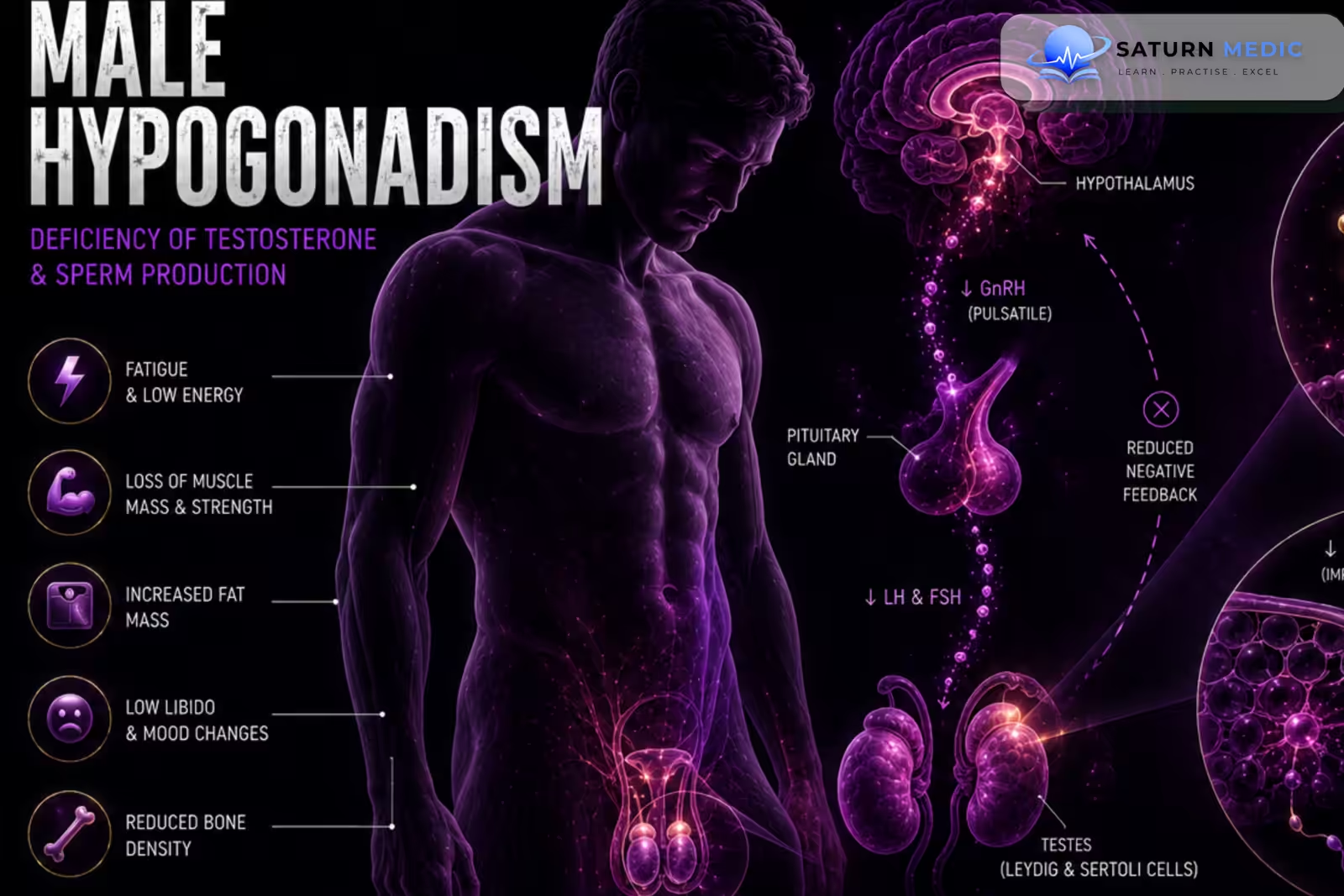
Male hypogonadism is a condition in which the testes produce insufficient testosterone, with or without impaired sperm production. It can result from disorders of the testes (primary hypogonadism) or the hypothalamic-pituitary axis (secondary hypogonadism)
Also called
Male Gonadal Failure
ICD-10
E29.1
Specialty
Endocrine
Onset
Chronic
Reviewed
August 2026
On This Page
-
OverviewOverview
-
Etiology & Risk FactorsEtiology & Risk Factors
-
PathophysiologyPathophysiology
-
Clinical PresentationClinical Presentation
-
History TakingHistory Taking
-
Physical ExaminationPhysical Examination
-
InvestigationsInvestigations
-
DiagnosisDiagnosis
-
ManagementManagement
-
ComplicationsComplications
-
PrognosisPrognosis
-
Key Points / Clinical PearlsKey Points / Clinical Pearls
Overview
-Male hypogonadism can affect:
- Sexual function
- Fertility
- Muscle mass
- Bone health
- Mood and energy
- Pubertal development
It is classified as:
-
- Primary hypogonadism: testicular failure → high LH/FSH
-
- Secondary hypogonadism: hypothalamic/pituitary dysfunction → low or inappropriately normal LH/FSH
Etiology & Risk Factors
Etiology:
-Primary Hypogonadism
Testicular dysfunction may result from:
- Klinefelter Syndrome
- Orchitis
- Chemotherapy or radiotherapy
- Testicular surgery
- Testicular failure
-Secondary Hypogonadism
Hypothalamic or pituitary dysfunction may result from:
- Pituitary tumors
- Obesity
- Hypothalamic or pituitary disorders
-Risk Factors
- Obesity
- Increasing age
- Testicular disease or injury
- Chemotherapy/radiotherapy
- Hyperprolactinemia
- Chronic opioid or glucocorticoid use
Pathophysiology
-Primary Hypogonadism
Testicular dysfunction → ↓ testosterone ± impaired spermatogenesis → loss of negative feedback → ↑ LH/FSH → androgen deficiency ± infertility
-Secondary Hypogonadism
Hypothalamic/pituitary dysfunction → ↓ GnRH/LH/FSH → ↓ testicular testosterone production → androgen deficiency ± impaired spermatogenesis
Clinical Presentation
-Symptoms:
- Reduced libido
- Erectile dysfunction
- Fatigue
- Reduced energy
- Depressed mood
- Reduced concentration
- Decreased muscle mass
- Increased body fat
- Infertility
-Signs:
- Reduced body hair
- Reduced muscle mass
- Increased body fat
- Small testes
- Gynecomastia
- Reduced bone density
- Decreased facial/body hair
History Taking
-Ask about:
- Libido
- Erectile function
- Morning erections
- Fertility and attempts to conceive
- Pubertal development
- Energy and fatigue
- Mood
- Muscle strength
- Changes in body composition
- Testicular size or pain
- Previous testicular injury
- Orchitis
- Testicular surgery
- Chemotherapy/radiotherapy
Physical Examination
-General Examination
- Height and weight
- BMI
- Body composition
- Blood pressure
-Look For:
- Reduced muscle mass
- Increased body fat
- Gynecomastia
System-Specific Examination
- Testicular size and consistency
- Penile development
- Body and facial hair
- Pubertal development
- Visual fields if pituitary disease is suspected
- Signs of osteoporosis when clinically indicated
Investigations
-Biochemistry / Specific Tests
Serum Testosterone
-
Measure morning total testosterone
-
If low, repeat on a separate morning to confirm persistent deficiency
-LH and FSH
-
High LH/FSH → primary hypogonadism
-
Low or inappropriately normal LH/FSH → secondary hypogonadism
-Additional Tests
Depending on the clinical picture:
-
Prolactin
-
SHBG and calculated free testosterone when total testosterone is difficult to interpret
-
Iron studies when pituitary disease is suspected
-
TSH when clinically indicated
-Semen Analysis
Important when infertility is the presenting problem.
-Imaging
Pituitary MRI
Indicated in selected patients with secondary hypogonadism, particularly when there is:
-
Markedly low testosterone
-
Elevated prolactin
-
Headache or visual symptoms
-
Other evidence of pituitary disease
Diagnosis
-Diagnosis of male hypogonadism is established by:
Compatible symptoms/signs + repeatedly low morning serum testosterone → measure LH/FSH → determine primary vs secondary hypogonadism → investigate the underlying cause
Management
1. Definitive Treatment for Male Hypogonadism
Treat the underlying cause whenever possible.
Testosterone replacement is considered in men with confirmed testosterone deficiency and appropriate symptoms, after evaluating contraindications and fertility goals.
-Available formulations include:
-
Transdermal testosterone
-
Intramuscular testosterone
-
Other approved testosterone formulations
Treatment can improve:
-
Libido
-
Sexual function
-
Muscle mass
-
Bone density
-
Energy in appropriately selected patients
-Fertility
Exogenous testosterone should not be used in men actively trying to conceive, because it suppresses LH/FSH and can markedly reduce sperm production.
-For secondary hypogonadism with fertility goals, specialist-directed gonadotropin therapy may be used.
2. Surgical / Procedural Treatment
Surgery may be required when hypogonadism is caused by:
-
Pituitary tumor
-
Testicular tumor
-
Other structural disease
3. Supportive Management
-
Weight management
-
Regular physical activity
-
Treatment of underlying disease
Complications
- Infertility
- Erectile dysfunction
- Reduced libido
- Loss of muscle mass
- Increased body fat
- Osteoporosis
- Fragility fractures
- Anemia
- Depression
- Reduced quality of life
- Delayed puberty in affected adolescents
Prognosis
–Prognosis of Male Hypogonadism is generally good when the underlying cause is identified and appropriately treated.
–Some causes are reversible, while permanent testicular or hypothalamic-pituitary disorders may require long-term treatment.
-Fertility outcomes depend mainly on the underlying cause and whether spermatogenesis can be restored.
Key Points / Clinical Pearls
- Male hypogonadism is inadequate testosterone production, with or without impaired sperm production.
- It is classified as primary or secondary hypogonadism.
- Primary hypogonadism is caused by testicular failure.
- Secondary hypogonadism results from hypothalamic or pituitary dysfunction.
- Common symptoms include low libido, erectile dysfunction, fatigue, and reduced muscle mass.
- Diagnosis requires symptoms/signs plus consistently low morning testosterone.
- A low testosterone result should generally be repeated in the morning.
- High LH/FSH → primary hypogonadism.
- Low/inappropriately normal LH/FSH → secondary hypogonadism.
- Prolactin should be checked when secondary hypogonadism is suspected.
- Pituitary MRI is indicated when clinical or biochemical findings suggest pituitary disease.
- Testosterone therapy improves symptoms in appropriately selected men with confirmed deficiency.
- American Diabetes Association Professional Practice Committee. 2. Diagnosis and Classification of Diabetes: Standards of Care in Diabetes—2026. Diabetes Care. 2026;49(Suppl 1). Diabetes Care .
- American Diabetes Association Professional Practice Committee. 14. Children and Adolescents: Standards of Care in Diabetes—2026. Diabetes Care. 2026;49(Suppl 1). Diabetes Care .
- Holt RIG, DeVries JH, Hess-Fischl A, et al. The management of type 1 diabetes in adults. A consensus report by the American Diabetes Association and the European Association for the Study of Diabetes. Diabetes Care. 2021;44(11):2589-2625. Diabetes Care .
- American Diabetes Association. Type 1 Diabetes . American Diabetes Association.
- National Institute of Diabetes and Digestive and Kidney Diseases (NIDDK). Type 1 Diabetes . National Institutes of Health.
- International Society for Pediatric and Adolescent Diabetes (ISPAD). ISPAD Clinical Practice Consensus Guidelines .