

Clinical Subject Page
Klinefelter Syndrome
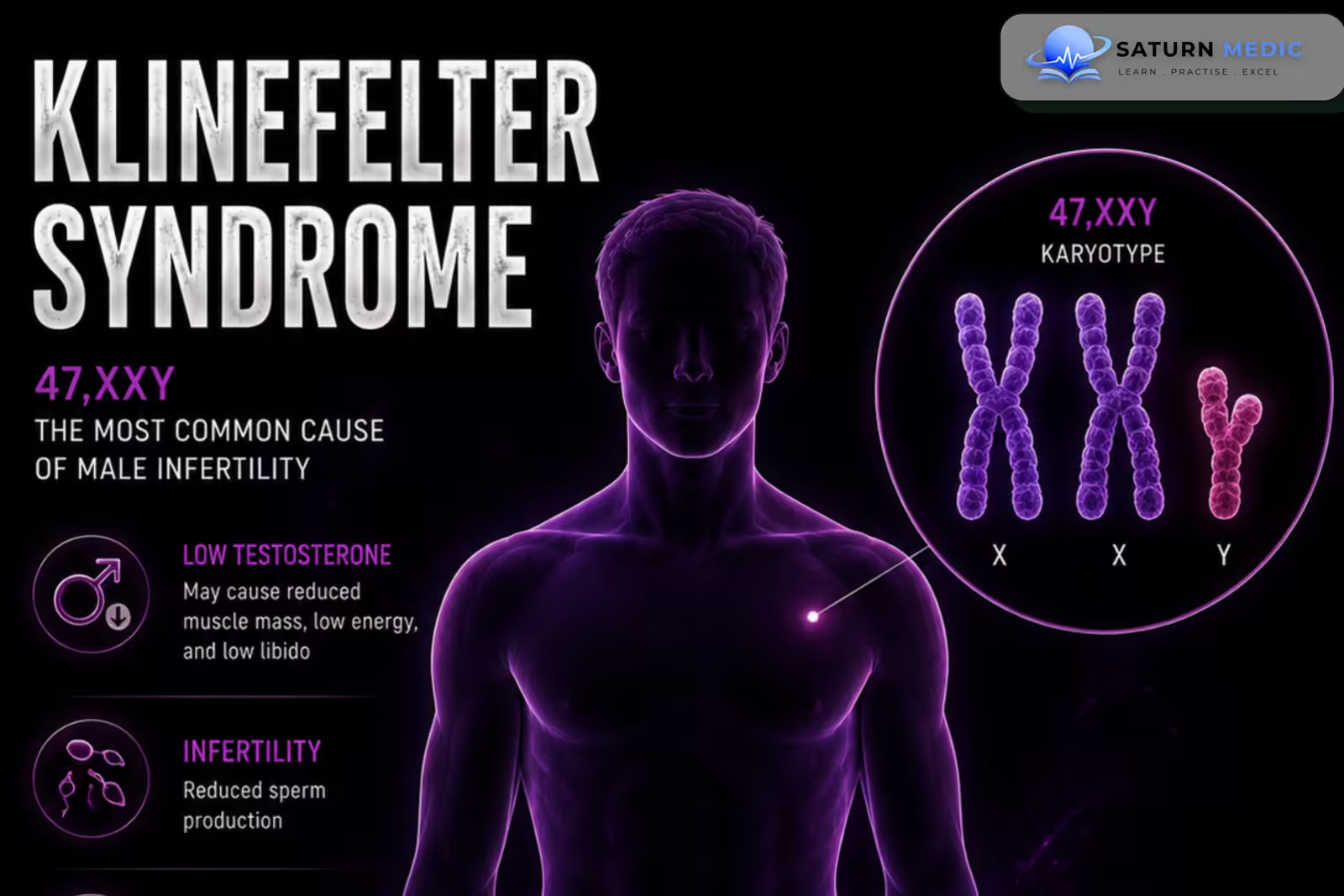
Klinefelter Syndrome is a chromosomal disorder affecting males, most commonly caused by an additional X chromosome (47,XXY). It leads to testicular dysfunction, low testosterone, and impaired sperm production
Also called
47,XXY Syndrome
ICD-10
Q98.4
Specialty
Endocrine
Onset
Chronic
Reviewed
August 2026
On This Page
-
OverviewOverview
-
Etiology & Risk FactorsEtiology & Risk Factors
-
PathophysiologyPathophysiology
-
Clinical PresentationClinical Presentation
-
History TakingHistory Taking
-
Physical ExaminationPhysical Examination
-
InvestigationsInvestigations
-
DiagnosisDiagnosis
-
ManagementManagement
-
ComplicationsComplications
-
PrognosisPrognosis
-
Key Points / Clinical PearlsKey Points / Clinical Pearls
Overview
-Klinefelter Syndrome is one of the most common chromosomal causes of male hypogonadism and infertility.
Typical features include:
- Small, firm testes
- Low testosterone
- Infertility
- Tall stature
- Reduced facial and body hair
- Gynecomastia
- Delayed or incomplete puberty
-Some patients have mild features and may not be diagnosed until adulthood, often during infertility evaluation.
Etiology & Risk Factors
Etiology:
-Klinefelter Syndrome results from the presence of one or more additional X chromosomes, most commonly:
47,XXY
The extra X chromosome causes abnormal testicular development → impaired testosterone production and spermatogenesis.
-Risk Factors
- Increased maternal age
- Increased paternal age
- Previous pregnancy with a sex-chromosome abnormality
Pathophysiology
Extra X chromosome → seminiferous tubule degeneration + Leydig cell dysfunction → impaired spermatogenesis + ↓ testosterone → loss of negative feedback → ↑ LH/FSH → hypergonadotropic hypogonadism → infertility + incomplete masculinization
Clinical Presentation
-Symptoms:
- Infertility
- Reduced libido
- Erectile dysfunction
- Fatigue
- Reduced muscle strength
- Delayed or incomplete puberty
- Difficulty concentrating or learning difficulties in some patients
-Signs:
- Tall stature
- Long legs
- Small, firm testes
- Sparse facial and body hair
- Reduced muscle mass
- Gynecomastia
- Reduced secondary sexual characteristics
History Taking
-Ask about:
- Pubertal development
- Fertility and attempts to conceive
- Libido
- Erectile function
- Testicular development
- Gynecomastia
- Body and facial hair
- Muscle strength
- Previous testosterone treatment
- Learning difficulties
Physical Examination
-General Examination
-
Height
-
Body proportions
-
BMI
-
Muscle mass
Look for:
-
Tall stature
-
Long limbs
-
Reduced muscle mass
-
Gynecomastia
System-Specific Examination
-
Testicular size and consistency
-
Penile development
-
Facial and body hair
-
Secondary sexual characteristics
-
Breast examination
Investigations
-Biochemistry / Specific Tests
-Hormonal Profile
Typical findings:
-
↓ Testosterone
-
↑ LH
-
↑ FSH
This indicates hypergonadotropic hypogonadism.
-Semen Analysis
Usually shows:
-
Azoospermia
-
Severe oligospermia in some mosaic or less severe cases
-Additional Tests
Depending on the presentation:
-
Estradiol
-
Prolactin
-
TSH
-
HbA1c
-
Lipid profile
-
Bone mineral assessment when indicated
Imaging
Imaging is not required to diagnose Klinefelter Syndrome.
Testicular ultrasound may be used when there is a specific testicular abnormality requiring evaluation.
-Special / Confirmatory Tests
Karyotyping
Karyotype confirms the diagnosis, most commonly showing:
47,XXY
Mosaic forms may also occur, such as:
46,XY/47,XXY
Diagnosis
-Diagnosis of Klinefelter Syndrome is established by:
Clinical features/infertility → low testosterone + high LH/FSH → karyotype demonstrating an additional X chromosome
Management
3. Medical Treatment
-Testosterone Replacement
Used for confirmed testosterone deficiency to improve:
-
Pubertal development
-
Libido
-
Muscle mass
-
Bone health
-
Energy
-
Secondary sexual characteristics
-Fertility Treatment
Exogenous testosterone should not be started solely for infertility, because it suppresses spermatogenesis.
Selected patients may undergo:
-
Testicular sperm extraction
-
Intracytoplasmic sperm injection (ICSI)
Fertility treatment should be assessed by a reproductive specialist.
2. Surgical / Procedural Treatment
-Gynecomastia
Persistent or severe gynecomastia may be treated surgically when appropriate.
-Fertility Procedures
Testicular sperm retrieval may be considered in selected patients.
3. Supportive Management
-
Fertility counseling
-
Bone health monitoring
-
Weight management
-
Physical activity
Complications
- Infertility
- Hypogonadism
- Erectile dysfunction
- Gynecomastia
- Osteoporosis
- Metabolic syndrome
- Type 2 Diabetes Mellitus
- Dyslipidemia
- Obesity
- Cardiovascular disease
Prognosis
–Klinefelter Syndrome is a lifelong condition, but appropriate treatment can significantly improve quality of life, sexual function, muscle mass, and bone health.
–Infertility is common, although assisted reproductive techniques can allow biological fatherhood in selected patients
Key Points / Clinical Pearls
- Klinefelter Syndrome is a chromosomal disorder affecting males.
- The classic karyotype is 47,XXY.
- It is an important cause of male hypogonadism and infertility.
- The extra X chromosome causes testicular dysfunction.
- Typical findings include small firm testes, tall stature, gynecomastia, and reduced body hair.
- Patients usually have low testosterone with high LH and FSH.
- This pattern represents hypergonadotropic hypogonadism.
- Karyotyping confirms the diagnosis.
- Infertility is often the presenting complaint in adults.
- Semen analysis commonly shows azoospermia or severe oligospermia.
- Testosterone replacement is used for confirmed testosterone deficiency.
- Testosterone therapy suppresses spermatogenesis, so fertility goals must be assessed first.
- Groth KA, Skakkebæk A, Høst C, Gravholt CH, Bojesen A. Klinefelter Syndrome—A Clinical Update. J Clin Endocrinol Metab. 2013;98(1):20-30. Journal of Clinical Endocrinology & Metabolism .
- Zitzmann M, Aksglaede L, Corona G, et al. European Academy of Andrology Guidelines on Klinefelter Syndrome: Endorsing Organization: European Society of Endocrinology. Andrology. 2021;9(1):145-167. Andrology .
- Lanfranco F, Kamischke A, Zitzmann M, Nieschlag E. Klinefelter's Syndrome. Lancet. 2004;364(9430):273-283. The Lancet .
- Davis SM, Rogol AD, Ross JL. Testis Development and Function in Boys With Klinefelter Syndrome. Horm Res Paediatr. 2016;85(5):309-317.
- National Library of Medicine (NIH). Klinefelter Syndrome . StatPearls.
- National Library of Medicine (NIH). Klinefelter Syndrome . GeneReviews.