

Clinical Subject Page
Hashimoto's Thyroiditis
Hashimoto’s Thyroiditis is a chronic autoimmune disease of the thyroid gland in which immune-mediated destruction of thyroid tissue progressively reduces thyroid hormone production, commonly causing primary hypothyroidism
Also called
Hashimoto's Thyroiditis
ICD-10
E06.3
Specialty
Endocrine
Onset
Chronic
Reviewed
August 2026
On This Page
-
OverviewOverview
-
Etiology & Risk FactorsEtiology & Risk Factors
-
PathophysiologyPathophysiology
-
Clinical PresentationClinical Presentation
-
History TakingHistory Taking
-
Physical ExaminationPhysical Examination
-
InvestigationsInvestigations
-
DiagnosisDiagnosis
-
ManagementManagement
-
ComplicationsComplications
-
PrognosisPrognosis
-
Key Points / Clinical PearlsKey Points / Clinical Pearls
Overview
–Hashimoto’s Thyroiditis is the most common cause of primary hypothyroidism in iodine-sufficient
regions.
-It is characterized by autoimmune destruction of thyroid follicular cells and the presence of thyroid autoantibodies. Patients may initially be euthyroid, but progressive thyroid destruction commonly leads to hypothyroidism
Etiology & Risk Factors
-Etiology
–Hashimoto’s Thyroiditis results from an abnormal autoimmune response against thyroid tissue.
-The immune system produces antibodies and activates lymphocytes that progressively damage thyroid follicular cells.
-The main autoantibodies are:
• Thyroid peroxidase antibodies (TPO antibodies)
• Thyroglobulin antibodies (Tg antibodies)
-Risk Factors:
• Female sex
• Increasing age
• Family history of autoimmune thyroid disease
• Personal or family history of autoimmune diseases
• Genetic susceptibility
• Pregnancy and the postpartum period
• Certain environmental factors
Pathophysiology
-Genetic susceptibility + environmental factors
→ Loss of immune tolerance to thyroid antigens
→ Activation of autoreactive T lymphocytes
→ B-cell activation → production of TPO and Tg antibodies
→ Lymphocytic infiltration of thyroid
→ Progressive destruction of thyroid follicular cells
→ ↓ Thyroid hormone production
→ ↓ Negative feedback to pituitary
→ ↑ TSH
→ Primary hypothyroidism
-Chronic inflammation
→ Thyroid fibrosis and follicular destruction
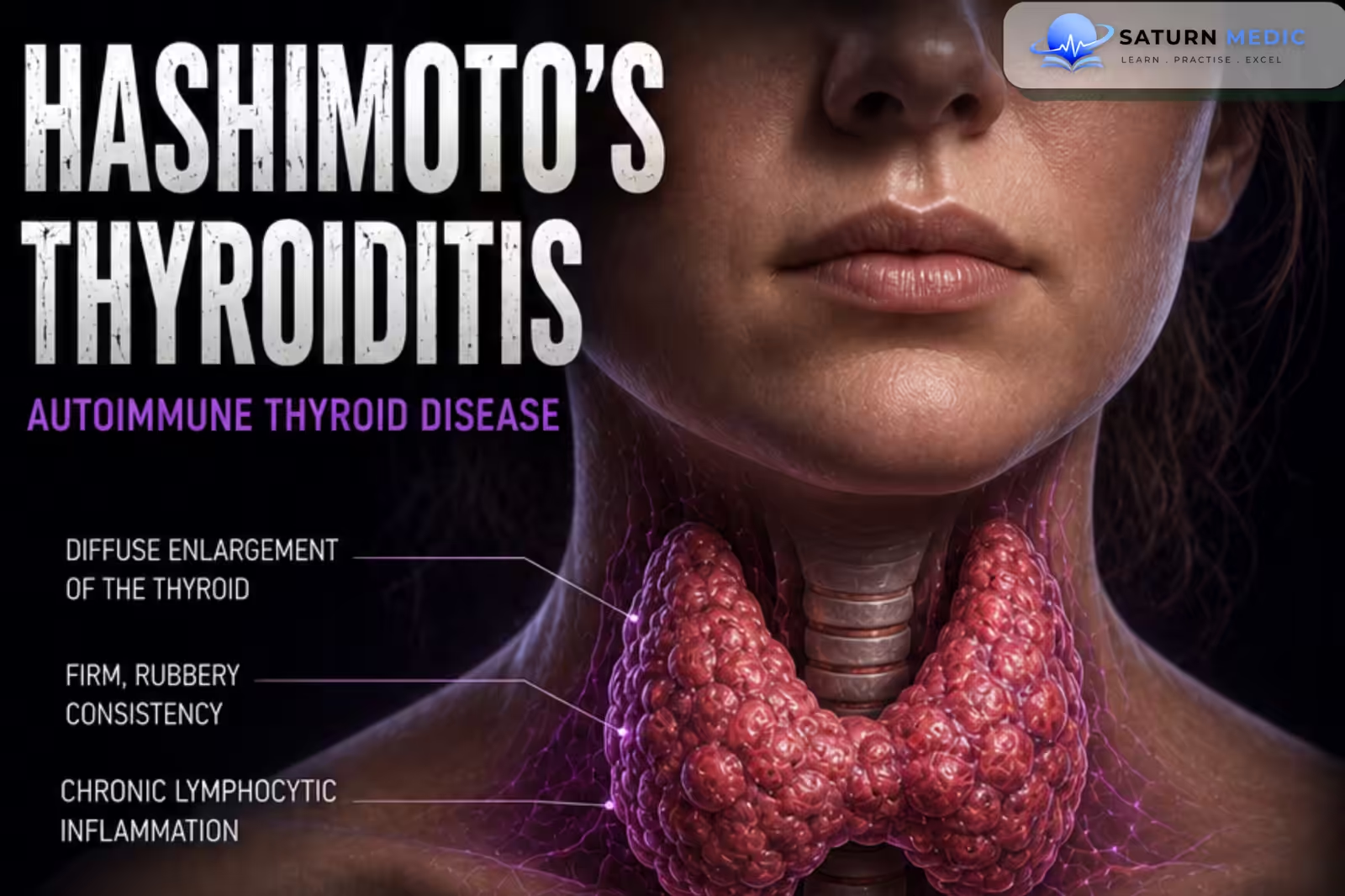
→ Firm, irregular thyroid enlargement initially
→ Possible thyroid atrophy in advanced disease
Clinical Presentation
-Symptoms:
- • Fatigue
• Weight gain
• Cold intolerance
• Constipation
• Dry skin
• Hair loss
• Muscle aches
• Muscle weakness
• Reduced exercise tolerance
• Excessive sleepiness
-Signs:
• Bradycardia
• Dry, coarse skin
• Brittle hair
• Hair thinning
• Periorbital puffiness
• Facial puffiness
• Non-pitting edema
• Delayed relaxation of deep tendon reflexes
• Goiter
History Taking
-Ask about:
• Fatigue and reduced energy
• Weight changes
• Cold intolerance
• Constipation
• Dry skin
• Hair loss
• Menstrual changes
• Infertility
• Mood changes
• Cognitive difficulties
• Muscle aches or weakness
Physical Examination
-General Examination
• Measure weight and BMI
• Assess heart rate and blood pressure
• Assess temperature
• Look for dry or coarse skin
• Look for facial or periorbital puffiness
• Assess for non-pitting edema
• Assess mental status and general appearance
-System-Specific Examination:
-Thyroid examination:
• Inspect for goiter
• Palpate the thyroid
• Hashimoto’s thyroiditis may produce a firm, irregular, or rubbery thyroid
• Assess for thyroid nodules
• Assess for cervical lymphadenopathy
Investigations
-Thyroid-Stimulating Hormone (TSH):
• Elevated in primary hypothyroidism.
Free Thyroxine (Free T4)
• Low in overt hypothyroidism.
• May remain normal in subclinical hypothyroidism.
-Thyroid Peroxidase Antibodies (TPO Antibodies):
• Frequently positive.
• Strongly support autoimmune thyroiditis.
-Thyroglobulin Antibodies (Tg Antibodies)
• May also be positive.
• Can support the diagnosis when TPO antibodies are negative but autoimmune thyroiditis remains
suspected.
-Imaging
-Thyroid Ultrasound
Not routinely required when the diagnosis is clear from clinical assessment and laboratory testing.
It may be useful when:
• Thyroid nodules are present
• There is significant goiter
• The thyroid examination is suspicious
Diagnosis
-Hashimoto’s Thyroiditis is diagnosed using a combination of:
• Clinical features of hypothyroidism
• Elevated TSH
• Low free T4 in overt hypothyroidism
• Positive TPO antibodies
• Positive Tg antibodies in some patients
Management
1. First-Line / Emergency Management
Stable Hypothyroidism
-
Assess thyroid function.
-
Start levothyroxine when indicated.
-Myxedema Coma
-
Intravenous thyroid hormone
-
Intravenous corticosteroids until adrenal insufficiency is excluded
-
Supportive care
-
Treat the precipitating cause
-
Monitor cardiovascular, respiratory, and metabolic status
2. Definitive Treatment
-
Levothyroxine replacement therapy: definitive treatment for clinically significant hypothyroidism.
3. Medical Treatment
-
Levothyroxine (T4): treatment of overt hypothyroidism, appropriate subclinical hypothyroidism, and hypothyroidism during pregnancy.
-
Adjust dose according to TSH and clinical response.
-
Start with lower doses in older adults or patients with significant cardiovascular disease.
-
Pregnancy: increase and monitor levothyroxine requirements as needed.
4. Surgical / Procedural Treatment
Surgery is not routinely indicated.
Consider thyroidectomy for:
-
Suspicious thyroid malignancy
-
Large compressive goiter
-
Significant airway or swallowing symptoms
5. Supportive Management
-
Regular TSH monitoring
-
Ensure correct levothyroxine use
-
Review medications/supplements affecting absorption
Complications
• Permanent hypothyroidism
• Goiter
• Myxedema
• Myxedema coma
• Hyperlipidemia
• Cardiovascular disease
• Infertility
• Menstrual abnormalities
• Pregnancy complications
Prognosis
-The prognosis is generally excellent with appropriate thyroid hormone replacement.
–Most patients who develop hypothyroidism require lifelong levothyroxine therapy. Regular monitoring allows the dose to be adjusted and prevents complications from both under-treatment
and over-treatment
Key Points / Clinical Pearls
• Hashimoto’s Thyroiditis is a chronic autoimmune disease of the thyroid.
• It is a major cause of primary hypothyroidism.
• Autoimmune destruction targets thyroid follicular cells.
• TPO antibodies are the most useful antibody marker.
• Tg antibodies may also be present.
• Hashimoto’s Thyroiditis may initially occur while thyroid function is normal.
• Overt primary hypothyroidism typically causes ↑ TSH + ↓ free T4.
• Subclinical hypothyroidism causes ↑ TSH + normal free T4.
• The thyroid may be firm, rubbery, and enlarged early in the disease.
- Caturegli P, De Remigis A, Rose NR. Hashimoto Thyroiditis: Clinical and Diagnostic Criteria. Autoimmun Rev. 2014;13(4-5):391-397. PubMed .
- Ragusa F, Fallahi P, Elia G, et al. Hashimotos' Thyroiditis: Epidemiology, Pathogenesis, Clinic and Therapy. Best Pract Res Clin Endocrinol Metab. 2019;33(6):101367. PubMed .
- Hennessey JV, Espaillat R. Current Evidence for the Diagnosis and Treatment of Hypothyroidism. Med Clin North Am. 2015;99(1):41-58.
- Jonklaas J, Bianco AC, Bauer AJ, et al. Guidelines for the Treatment of Hypothyroidism: Prepared by the American Thyroid Association Task Force on Thyroid Hormone Replacement. Thyroid. 2014;24(12):1670-1751. Thyroid .
- National Institute of Diabetes and Digestive and Kidney Diseases (NIDDK). Hashimoto's Disease . National Institutes of Health.
- National Library of Medicine (NIH). Hashimoto Thyroiditis . StatPearls.