

Clinical Subject Page
Autosomal Dominant Polycystic Kidney Disease (ADPKD)
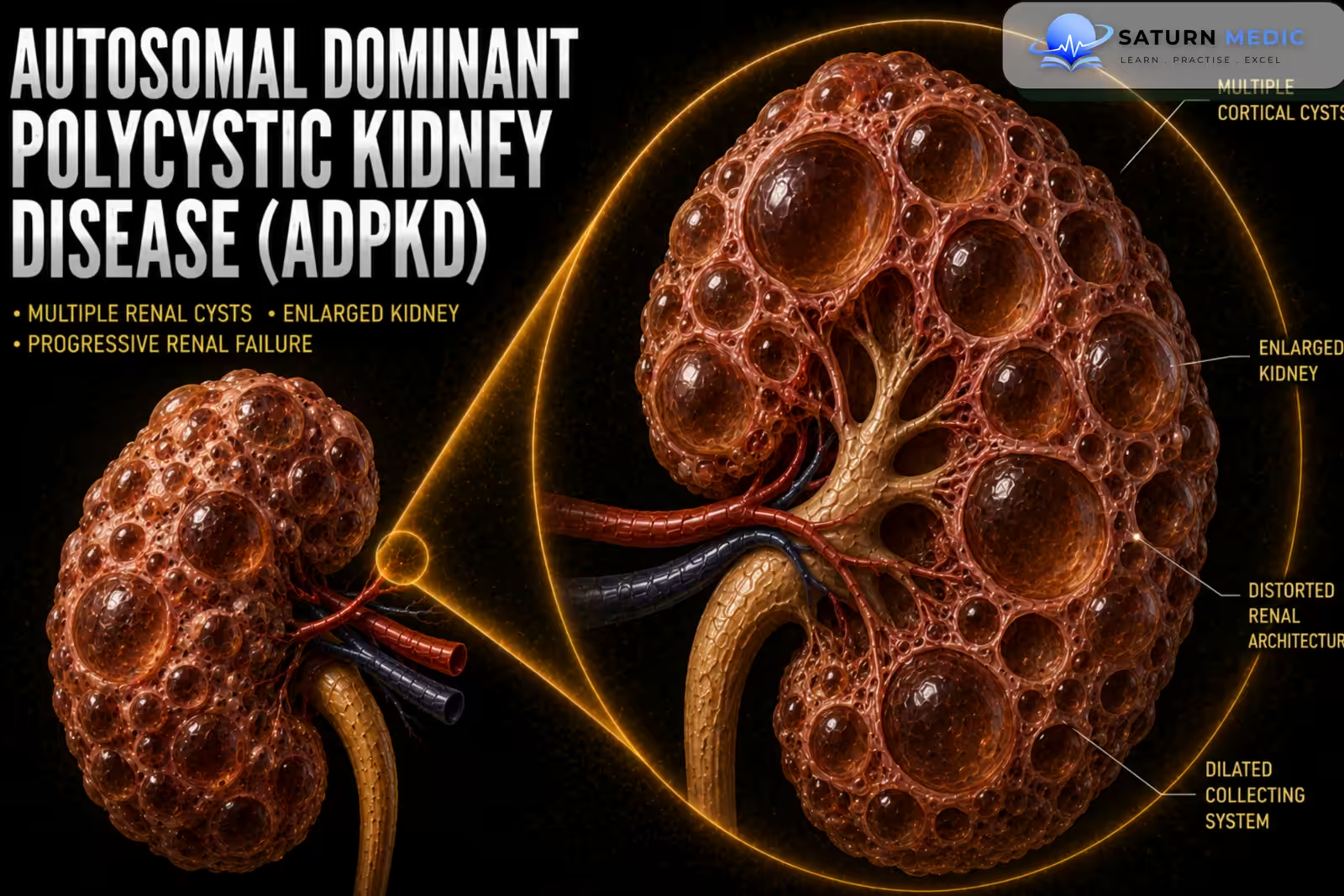
Autosomal Dominant Polycystic Kidney Disease (ADPKD) is an inherited multisystem disorder characterized by progressive development of multiple renal cysts, leading to enlarged kidneys, hypertension, and progressive loss of kidney function. It can eventually cause Chronic Kidney Disease (CKD) and kidney failure
Also called
ICD-10
Specialty
Onset
Reviewed
-
OverviewOverview
-
Etiology & Risk FactorsEtiology & Risk Factors
-
PathophysiologyPathophysiology
-
Clinical PresentationClinical Presentation
-
History TakingHistory Taking
-
Physical ExaminationPhysical Examination
-
InvestigationsInvestigations
-
DiagnosisDiagnosis
-
ManagementManagement
-
ComplicationsComplications
-
PrognosisPrognosis
-
Key Points / Clinical PearlsKey Points / Clinical Pearls
Overview
-Autosomal Dominant Polycystic Kidney Disease (ADPKD) is caused mainly by pathogenic variants in:
- PKD1
- PKD2
–Progressive cyst formation causes enlargement and destruction of normal renal tissue.
-Important manifestations include:
- Bilateral renal cysts
- Enlarged kidneys
- Hypertension
- Hematuria
- Kidney stones
- Recurrent urinary tract infections
- Progressive Chronic Kidney Disease (CKD)
-It is also associated with extrarenal manifestations, particularly hepatic cysts and intracranial aneurysms.
Etiology & Risk Factors
–Autosomal Dominant Polycystic Kidney Disease (ADPKD) results from pathogenic variants affecting polycystin proteins, primarily due to mutations in PKD1 or PKD2.
-These abnormalities cause dysregulated tubular epithelial cell growth and cyst formation
-Risk Factors
- Affected first-degree relative
- PKD1 pathogenic variant
- PKD2 pathogenic variant
- Early-onset hypertension
- Increasing kidney volume
Pathophysiology
PKD1/PKD2 pathogenic variant → abnormal polycystin function → abnormal tubular epithelial proliferation and fluid secretion → progressive renal cyst formation → enlarged kidneys and nephron compression → declining GFR → Chronic Kidney Disease (CKD) → kidney failure
Clinical Presentation
-Symptoms:
- Flank or abdominal pain
- Hematuria
- Recurrent urinary tract infections
- Renal colic from kidney stones
- Headache related to hypertension
- Early satiety from enlarged kidneys
- Symptoms of progressive kidney dysfunction
-Signs:
- Hypertension
- Enlarged palpable kidneys
- Abdominal or flank tenderness
- Peripheral edema in advanced disease
History Taking
-Ask about:
- Family history of ADPKD
- Hypertension
- Hematuria
- Flank or abdominal pain
- Recurrent urinary tract infections
- Kidney stones
- Previous kidney disease
- Symptoms of kidney failure
- History of intracranial aneurysm or subarachnoid hemorrhage in the family
- Cardiovascular history
Physical Examination
-General Examination
- Blood pressure
- Abdominal distension
- Peripheral edema
- General signs of advanced CKD
-System-Specific Examination:
- Palpation for enlarged kidneys
- Abdominal tenderness
- Cardiovascular examination for hypertension
- Neurological examination when symptoms suggest intracranial complications
Investigations
-Biochemistry / Specific Tests
- Serum creatinine and eGFR
- Urinalysis
- Urine ACR or protein-to-creatinine ratio
- Serum electrolytes
- Genetic testing when clinically indicated
-Imaging
Renal ultrasound is usually the initial imaging investigation.
It can demonstrate:
- Multiple bilateral renal cysts
- Enlarged kidneys
- Progressive cyst burden
MRI or CT may be used when more detailed assessment of kidney volume or cyst complications is required.
-Special / Confirmatory Tests
Genetic testing can confirm a pathogenic PKD1 or PKD2 variant when the diagnosis is uncertain, particularly in younger patients or potential kidney donors.
Screening for intracranial aneurysm with MRA or CTA is considered in selected high-risk patients, particularly those with a strong family history or previous aneurysm.
Diagnosis
-Diagnosis of Autosomal Dominant Polycystic Kidney Disease (ADPKD) is based on:
- Compatible renal imaging findings
- Family history
- Age-specific diagnostic criteria
-Typical findings include bilateral multiple renal cysts, often with enlarged kidneys.
Management
1. First-Line / Emergency Management
There is no routine emergency treatment.
Urgent management may be required for:
-
Severe hypertension
-
Infected cysts
-
Significant hematuria
-
Obstructing kidney stones
-
Acute kidney injury
2. Definitive Treatment
There is currently no treatment that eliminates the underlying genetic defect.
Management aims to:
-
Control hypertension
-
Slow cyst and kidney growth
-
Preserve kidney function
-
Treat complications
-
Plan kidney replacement therapy when required
Tolvaptan may be used in selected adults at risk of rapidly progressive disease.
3. Medical Treatment
-
ACE inhibitors or ARBs — preferred for hypertension
-
Tolvaptan — selected patients with rapidly progressive ADPKD
-
Appropriate analgesia for pain
-
Antibiotics for cyst or urinary infections
-
Standard treatment for cardiovascular risk factors
-
Treatment of CKD complications when present
4. Surgical / Procedural Treatment
-
Cyst aspiration or sclerotherapy in selected symptomatic cysts
-
Surgical intervention for severe complications when indicated
-
Kidney transplantation for kidney failure
-
Dialysis when kidney replacement therapy is required
5. Supportive Management
-
Strict blood pressure control
-
Adequate hydration
-
Sodium restriction
-
Avoid nephrotoxic medications
-
Management of cardiovascular risk factors
Complications
- Hypertension
- Chronic Kidney Disease (CKD)
- Kidney failure
- Hematuria
- Nephrolithiasis
- Cyst infection
- Hepatic cysts
- Intracranial aneurysm
- Subarachnoid hemorrhage
- Cardiovascular disease
Prognosis
–Autosomal Dominant Polycystic Kidney Disease (ADPKD) is progressive, but the rate of progression varies. PKD1-associated disease generally progresses faster than PKD2-associated disease.
–Larger kidney volume, early hypertension, significant proteinuria, and declining eGFR are associated with faster progression to kidney failure.
Key Points / Clinical Pearls
- Autosomal Dominant Polycystic Kidney Disease (ADPKD) is an inherited multisystem cystic kidney disorder.
- PKD1 and PKD2 are the major causative genes.
- Multiple bilateral renal cysts progressively enlarge the kidneys.
- Hypertension is a common early manifestation.
- Flank pain, hematuria, urinary infections, and kidney stones may occur.
- Renal ultrasound is usually the first-line diagnostic investigation.
- Genetic testing is useful in selected patients.
- ADPKD commonly causes progressive Chronic Kidney Disease (CKD).
- Hepatic cysts are a common extrarenal manifestation.
- Intracranial aneurysms are an important but less common complication.
- Intracranial aneurysm screening is targeted to selected high-risk patients.
- ACE inhibitors or ARBs are commonly used for blood pressure control.
- Chapman AB, Devuyst O, Eckardt KU, et al. Autosomal-Dominant Polycystic Kidney Disease (ADPKD): Executive Summary From a KDIGO Controversies Conference. Kidney Int. 2015;88(1):17-27. KDIGO .
- KDIGO 2025 Clinical Practice Guideline for the Evaluation, Management, and Treatment of Autosomal Dominant Polycystic Kidney Disease. Kidney Int. 2025. KDIGO .
- Torres VE, Harris PC, Pirson Y. Autosomal Dominant Polycystic Kidney Disease. Lancet. 2007;369(9569):1287-1301. The Lancet .
- Torres VE, Chapman AB, Devuyst O, et al. Tolvaptan in Patients with Autosomal Dominant Polycystic Kidney Disease. N Engl J Med. 2012;367(25):2407-2418. New England Journal of Medicine .
- National Institute of Diabetes and Digestive and Kidney Diseases (NIDDK). Autosomal Dominant Polycystic Kidney Disease . National Institutes of Health.
- National Library of Medicine (NIH). Polycystic Kidney Disease, Autosomal Dominant . GeneReviews.