

Clinical Subject Page
Hemolytic Uremic Syndrome (HUS)
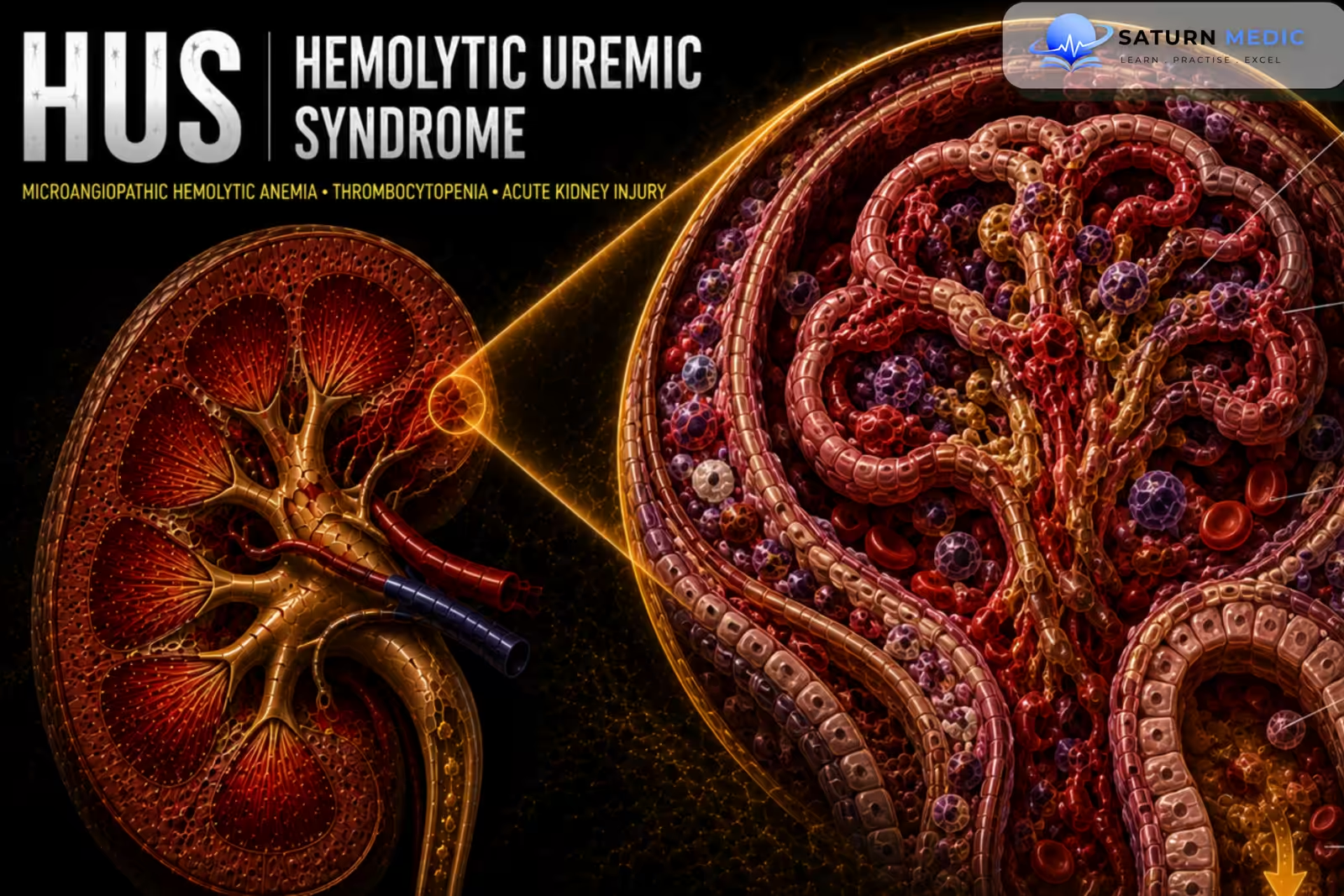
Hemolytic Uremic Syndrome (HUS) is a thrombotic microangiopathy characterized by the triad of microangiopathic hemolytic anemia, thrombocytopenia, and Acute Kidney Injury (AKI). It most commonly occurs after Shiga toxin-producing bacterial infection, particularly in children
ICD-10
Specialty
Onset
Reviewed
-
OverviewOverview
-
Etiology & Risk FactorsEtiology & Risk Factors
-
PathophysiologyPathophysiology
-
Clinical PresentationClinical Presentation
-
History TakingHistory Taking
-
Physical ExaminationPhysical Examination
-
InvestigationsInvestigations
-
DiagnosisDiagnosis
-
ManagementManagement
-
ComplicationsComplications
-
PrognosisPrognosis
-
Key Points / Clinical PearlsKey Points / Clinical Pearls
Overview
-Hemolytic Uremic Syndrome (HUS) is a systemic thrombotic microangiopathy causing endothelial injury and formation of small-vessel thrombi.
-The major forms of Hemolytic Uremic Syndrome (HUS) are:
- Shiga toxin-associated HUS: usually follows diarrheal illness caused by Shiga toxin-producing E. coli or Shigella.
- Atypical HUS (aHUS): usually results from dysregulation of the alternative complement pathway and may be triggered by infection, pregnancy, medications, or other stressors.
The kidneys are particularly affected, resulting in Acute Kidney Injury (AKI).
Etiology & Risk Factors
-Etiology
–Shiga Toxin-Associated Hemolytic Uremic Syndrome (HUS)
Usually follows infection with:
- Shiga toxin-producing Escherichia coli (E. coli)
- Shigella dysenteriae
Shiga toxin causes endothelial injury, particularly in the renal microvasculature.
-Atypical Hemolytic Uremic Syndrome (HUS)
Results from uncontrolled activation of the alternative complement pathway, usually due to genetic or acquired complement abnormalities.
-Risk Factors:
- Recent bloody diarrhea
- Shiga toxin-producing bacterial infection
- Young children
- Complement pathway abnormalities
- Pregnancy or postpartum state
- Certain medications
- Previous episode of aHUS
Pathophysiology
Shiga toxin or complement dysregulation → endothelial injury → platelet activation and microvascular thrombosis → red blood cell fragmentation → microangiopathic hemolytic anemia + thrombocytopenia → renal microvascular injury → reduced GFR → Acute Kidney Injury (AKI)
Clinical Presentation
-Symptoms:
- loody diarrhea, particularly in typical HUS
- Abdominal pain
- Nausea and vomiting
- Fatigue
- Pallor
- Reduced urine output
- Dark urine
- Headache
- Confusion in severe disease
-Signs:
- Pallor
- Petechiae or bruising
- Oliguria
- Edema
- Hypertension
- Signs of dehydration following diarrheal illness
History Taking
-Ask about:
- Recent diarrhea, especially bloody diarrhea
- Abdominal pain and vomiting
- Recent food exposure or outbreaks
- Reduced urine output
- Dark urine
- Fatigue and pallor
- Bleeding or bruising
- Neurological symptoms
- Recent infections
- Medication history
- Pregnancy or postpartum status
Physical Examination
-General Examination
- Pallor
- Blood pressure
- Hydration status
- Edema
- Petechiae or bruising
-System-Specific Examination:
- Abdominal tenderness
- Assessment of urine output
- Neurological examination for encephalopathy or seizures
- Cardiopulmonary examination for fluid overload
Investigations
-Complete Blood Count
Essential for diagnosis:
Low platelet count
Anemia
-Peripheral Blood Film
Important finding:
Schistocytes
-Biochemistry / Specific Tests
Serum creatinine and eGFR
Serum urea
Serum electrolytes
Serum potassium
Serum bicarbonate
LDH — elevated
Haptoglobin — reduced
Indirect bilirubin — elevated
Reticulocyte count — elevated
Direct antiglobulin test — usually negative
Urinalysis
Urine protein assessment
-Specific microbiological testing:
Stool culture
Shiga toxin testing or molecular assay when appropriate
-Imaging
Not routinely required for diagnosis.
Renal ultrasound may be used when assessing kidney size, obstruction, or other complications.
-Special / Confirmatory Tests
Shiga toxin testing for suspected infection-associated HUS
Complement studies in suspected atypical HUS
Genetic testing for complement pathway abnormalities when appropriate
ADAMTS13 activity should be urgently assessed when thrombotic thrombocytopenic purpura (TTP) is a significant differential diagnosis.
Diagnosis
-Diagnosis of Hemolytic Uremic Syndrome (HUS) is based on the characteristic combination of:
Microangiopathic hemolytic anemia + thrombocytopenia + Acute Kidney Injury (AKI)
-Supportive findings include:
- Schistocytes
- Elevated LDH
- Low haptoglobin
- Increased indirect bilirubin
- Increased creatinine
- Proteinuria or hematuria
Management
1. First-Line / Emergency Management
Urgent hospital admission
Careful fluid and electrolyte management
Treat severe hyperkalemia
Manage severe hypertension
Treat pulmonary edema
Initiate dialysis when indicated
Monitor neurological and cardiovascular complications
2. Definitive Treatment
Shiga Toxin-Associated HUS
Treatment is primarily supportive:
Maintain appropriate fluid and electrolyte balance
Manage Acute Kidney Injury (AKI)
Dialysis when required
Manage hypertension and complications
-Atypical HUS
Complement inhibition with eculizumab or ravulizumab is the key disease-specific treatment when aHUS is diagnosed or strongly suspected.
3. Medical Treatment
Careful IV fluid management according to volume status
Antihypertensive therapy
Red blood cell transfusion when clinically indicated
Dialysis for severe kidney failure or standard indications
Eculizumab or ravulizumab for appropriate patients with aHUS
Routine platelet transfusion is generally avoided unless there is significant bleeding or an invasive procedure requiring it.
4. Surgical / Procedural Treatment
No routine surgical treatment.
Renal replacement therapy may be required for severe Acute Kidney Injury (AKI).
5. Supportive Management
Strict fluid balance
Monitor urine output
Frequent electrolyte monitoring
Monitor platelet count and hemolysis markers
Control blood pressure
Avoid nephrotoxic medications
Complications
- Severe Acute Kidney Injury (AKI)
- Kidney failure
- Hyperkalemia
- Metabolic acidosis
- Hypertension
- Fluid overload
- Pulmonary edema
- Neurological complications
- Seizures
- Encephalopathy
- Thrombosis
- Pancreatitis
Prognosis
Most children with Shiga toxin-associated Hemolytic Uremic Syndrome (HUS) recover with appropriate supportive care, although severe cases may require temporary dialysis. A proportion develop persistent hypertension, proteinuria, or Chronic Kidney Disease (CKD). Atypical HUS has a higher risk of recurrence and progressive kidney failure without appropriate complement-targeted treatment.
Key Points / Clinical Pearls
- Hemolytic Uremic Syndrome (HUS) is a thrombotic microangiopathy.
- The classic triad is microangiopathic hemolytic anemia, thrombocytopenia, and Acute Kidney Injury (AKI).
- Shiga toxin-producing E. coli is the most common cause of typical HUS.
- HUS often follows a diarrheal illness, particularly bloody diarrhea.
- Shiga toxin causes endothelial injury and microvascular thrombosis.
- Schistocytes are an important peripheral blood film finding.
- LDH is elevated and haptoglobin is typically reduced.
- Stool testing can identify Shiga toxin-producing organisms.
- ADAMTS13 testing helps distinguish HUS from TTP.
- Atypical HUS results from dysregulation of the alternative complement pathway.
- Severe cases may develop hyperkalemia, metabolic acidosis, hypertension, and fluid overload.
- Supportive treatment is the mainstay for Shiga toxin-associated HUS.
- Dialysis may be required for severe Acute Kidney Injury (AKI).
- George JN, Nester CM. Syndromes of Thrombotic Microangiopathy. N Engl J Med. 2014;371(7):654-666. New England Journal of Medicine .
- Brocklebank V, Wood KM, Kavanagh D. Thrombotic Microangiopathy and the Kidney. Clin J Am Soc Nephrol. 2018;13(2):300-317. Clinical Journal of the American Society of Nephrology .
- Goodship THJ, Cook HT, Fakhouri F, et al. Atypical Hemolytic Uremic Syndrome and C3 Glomerulopathy: Conclusions From a Kidney Disease: Improving Global Outcomes (KDIGO) Controversies Conference. Kidney Int. 2017;91(3):539-551. Kidney International .
- Fakhouri F, Zuber J, Frémeaux-Bacchi V, Loirat C. Haemolytic Uraemic Syndrome. Lancet. 2017;390(10095):681-696. The Lancet .
- National Institute of Diabetes and Digestive and Kidney Diseases (NIDDK). Hemolytic Uremic Syndrome (HUS) . National Institutes of Health.
- National Library of Medicine (NIH). Hemolytic Uremic Syndrome . StatPearls.