

Clinical Subject Page
Cardiogenic Shock
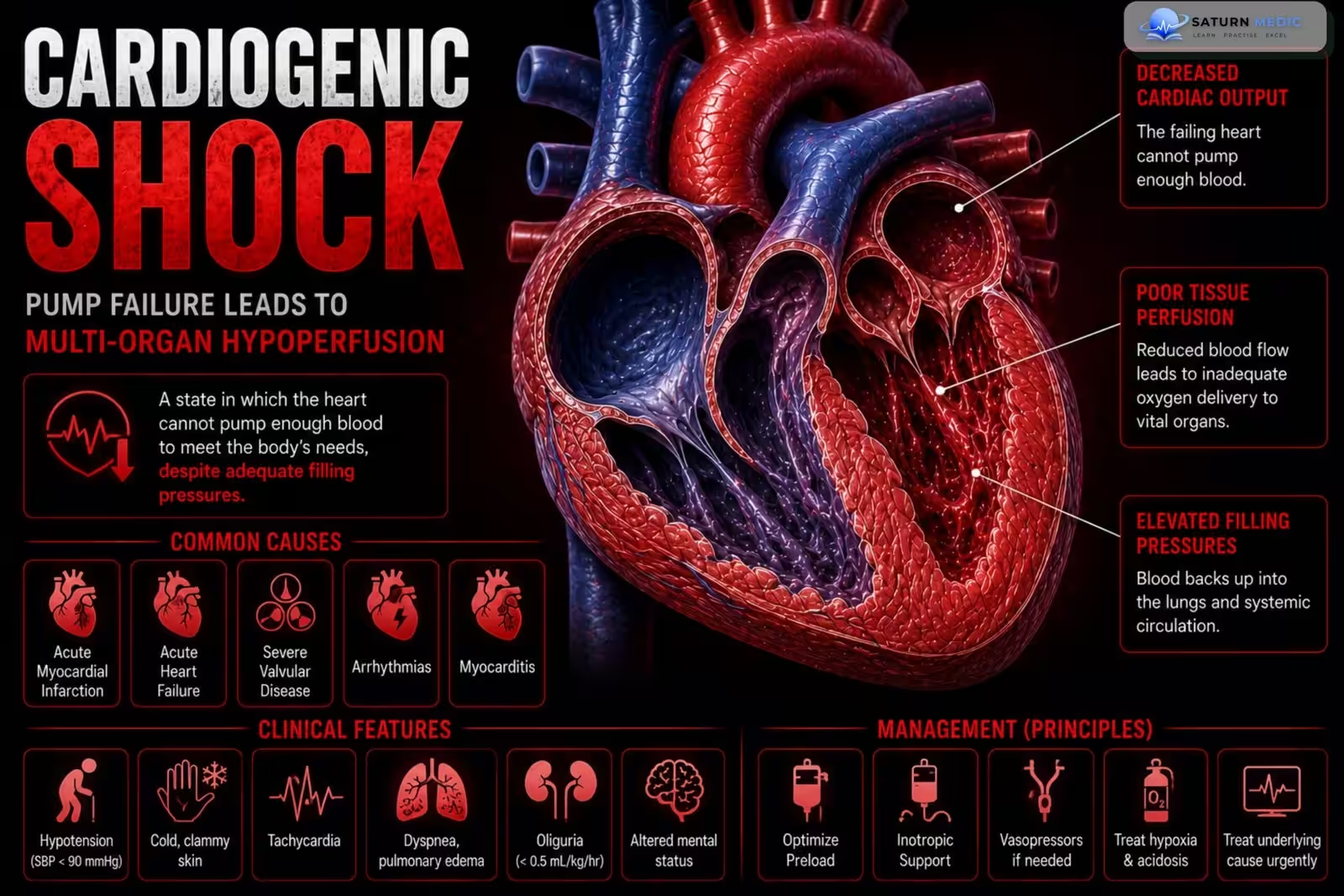
Cardiogenic shock is a life-threatening state of inadequate tissue perfusion caused by severe cardiac pump failure, resulting in reduced cardiac output despite adequate intravascular volume.
Also called
ICD-10
Specialty
Onset
Reviewed
-
OverviewOverview
-
Etiology & Risk FactorsEtiology & Risk Factors
-
PathophysiologyPathophysiology
-
Clinical PresentationClinical Presentation
-
History TakingHistory Taking
-
Physical ExaminationPhysical Examination
-
InvestigationsInvestigations
-
DiagnosisDiagnosis
-
ManagementManagement
-
ComplicationsComplications
-
PrognosisPrognosis
-
Key Points / Clinical PearlsKey Points / Clinical Pearls
Overview
Cardiogenic shock is a form of shock caused by failure of the heart to pump effectively, resulting in decreased cardiac output (CO), hypotension, and inadequate tissue perfusion. Pulmonary congestion and edema commonly occur because of increased pulmonary hydrostatic pressure.
Etiology & Risk Factors
The most common cause is myocardial infarction (MI).
Other causes include:
- Arrhythmias
- Heart failure
- Cardiomyopathy
- Myocarditis
- Mechanical complications:
- Ventricular septal defect
- Ventricular rupture
- Severe valvular disease:
- Severe aortic regurgitation
- Severe mitral regurgitation
- Blunt cardiac trauma
- Certain drugs (e.g., beta blockers, calcium channel blockers)
Pathophysiology
Underlying cardiac dysfunction leads to:
- ↓ Cardiac contractility and/or ↓ stroke volume
- ↓ Cardiac output
Systemic effects:
- ↓ Blood pressure
- Catecholamine release → vasoconstriction and increased myocardial oxygen demand
- Activation of the renin-angiotensin-aldosterone system → further vasoconstriction and sodium/water retention
- Blood shunting to vital organs → inadequate peripheral organ perfusion
Pulmonary effects:
- Increased pulmonary hydrostatic pressure
- Pulmonary edema
Clinical Presentation
Symptoms
Severe chest pain (if MI)
Dyspnea
Fatigue
Dizziness
Altered mental status
Oliguria
Signs
Hypotension
Cold, clammy skin
Tachycardia
Pulmonary edema
Cyanosis
Peripheral vasoconstriction
History Taking
Key Questions
Sudden chest pain?
Shortness of breath?
Previous heart attack?
History of heart failure?
Palpitations?
Syncope?
Recent myocarditis?
Known valvular disease?
Red Flags
Persistent hypotension
Altered consciousness
Chest pain
Pulmonary edema
Reduced urine output
Physical Examination
General
Pale, cold, clammy patient
Distressed appearance
Vital Signs
Hypotension (SBP <90 mmHg)
Tachycardia
Tachypnea
Low oxygen saturation
Cardiovascular
Weak, thready pulse
Elevated jugular venous pressure
S3 gallop
New systolic murmur (mechanical complications)
Cool extremities
Respiratory
Bibasal crackles
Pulmonary edema
Peripheral
Delayed capillary refill
Cyanosis
Reduced urine output
Investigations
Laboratory
CBC
Electrolytes
Renal & liver function
Troponin
BNP/NT-proBNP
Arterial blood gas
Serum lactate
Coagulation profile
ECG
Acute MI changes
Arrhythmias
Imaging
Echocardiography (first-line)
Chest X-ray
Coronary angiography (if ACS suspected)
Hemodynamic Monitoring
Arterial line
Central venous access
Pulmonary artery catheter (selected patients)
Diagnosis
Diagnosis is based on:
- Clinical evidence of shock
- SBP <90 mmHg (or need for vasopressors)
- Signs of end-organ hypoperfusion
- Elevated lactate
- Echocardiographic evidence of severe cardiac dysfunction
- Identification of the underlying cardiac cause
Management
Initial Stabilization
Airway and oxygenation
Continuous cardiac monitoring
IV access
Treat reversible causes
Medications
Vasopressors (Norepinephrine first-line)
Inotropes (Dobutamine)
Diuretics (if pulmonary congestion and adequate BP)
Antiplatelet and anticoagulation (ACS)
Vasodilators only if hemodynamically stable
Definitive Treatment
Urgent PCI or CABG for acute MI
Surgical repair of mechanical complications
Treat arrhythmias
Valve intervention if indicated
Mechanical Circulatory Support
Intra-aortic balloon pump (selected patients)
Impella
VA-ECMO
Complications
- Multi-organ failure
- Acute kidney injury
- Pulmonary edema
- Life-threatening arrhythmias
- Cardiac arrest
- Death
Prognosis
- Cardiogenic shock has a high mortality despite treatment.
- Early diagnosis and rapid revascularization significantly improve survival.
- Prognosis depends on the underlying cause and response to therapy.
Key Points / Clinical Pearls
- Cardiogenic Shock is a life-threatening condition in which primary cardiac dysfunction causes inadequate cardiac output and end-organ hypoperfusion.
- Acute myocardial infarction (AMI) is a major cause, but severe heart failure, myocarditis, cardiomyopathy, acute valvular disease, arrhythmias, and mechanical cardiac complications can also cause it.
- Typical features include hypotension, cold extremities, altered mental status, oliguria, and elevated lactate indicating poor tissue perfusion.
- Cardiogenic shock may occur with preserved blood pressure initially; evidence of end-organ hypoperfusion is more important than hypotension alone.
- Common symptoms include dyspnea, chest pain, weakness, confusion, and reduced urine output.
- Examination may show tachycardia, hypotension, cool clammy skin, delayed capillary refill, raised JVP, pulmonary crackles, and oliguria.
- Echocardiography is an important early investigation to assess ventricular function, mechanical complications, valvular disease, and alternative causes of shock.
- Important investigations include ECG, troponin, lactate, arterial/venous blood gas, renal function, electrolytes, liver function, and blood counts.
- Urgent coronary angiography and revascularization are fundamental in cardiogenic shock caused by acute myocardial infarction.
- Kosaraju A, Pendela VS, Hai O. National Center for Biotechnology Information (NIH). Cardiogenic Shock, StatPearls.
- Naidu SS, Baran DA, Jentzer JC, et al. SCAI SHOCK Stage Classification Expert Consensus Update: A Review and Incorporation of Validation Studies. J Am Coll Cardiol. 2022;79:933-946. doi: 10.1016/j.jacc.2022.01.018.
- National Center for Biotechnology Information (NIH). Shock, StatPearls.
- National Heart, Lung, and Blood Institute (NIH). Cardiogenic Shock: Health Topic.
- National Center for Biotechnology Information (NIH). Shock Resuscitation, StatPearls.