

Clinical Subject Page
Eisenmenger Syndrome
ICD-10
Specialty
Onset
Reviewed
On This Page
-
OverviewOverview
-
Etiology & Risk FactorsEtiology & Risk Factors
-
PathophysiologyPathophysiology
-
Clinical PresentationClinical Presentation
-
History TakingHistory Taking
-
InvestigationsInvestigations
-
DiagnosisDiagnosis
-
ManagementManagement
-
ComplicationsComplications
-
PrognosisPrognosis
-
Key Points / Clinical PearlsKey Points / Clinical Pearls
Overview
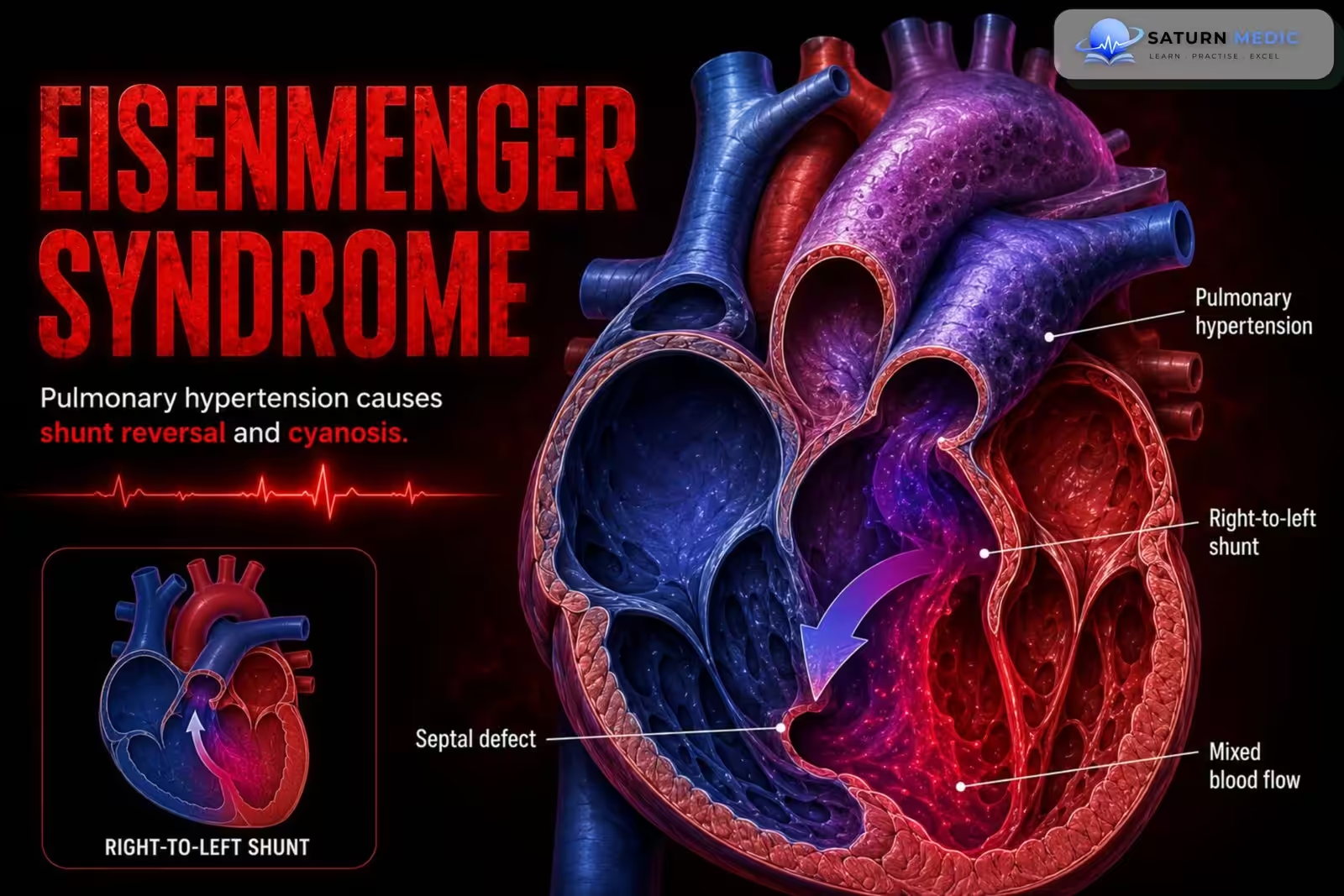
Eisenmenger Syndrome is A severe complication of acyanotic congenital heart disease (ACHD) in which a long-standing lef t-to-right shunt reverses because of pulmonary hypertension, resulting in cyanotic heart disease.
Usually develops during the late stages of congenital heart disease but may occur at any age.
Etiology & Risk Factors
- -Complete atrioventricular septal defect (AVSD)
– Persistent truncus arteriosus
– Atrial septal defect (ASD)
– Ventricular septal defect (VSD)
– Patent ductus arteriosus (PDA)
Pathophysiology
- Long-standing left-to-right shunt in Eisenmenger Syndrome causes prolonged pulmonary hypertension. Pulmonary hypertension results in:
– Reactive pulmonary vasoconstriction.
– Permanent remodeling of pulmonary vessels.
– Irreversible pulmonary hypertension.
Progressive pulmonary hypertension causes:
– Right ventricular hypertrophy.
– Increased right ventricular pressure.
Right ventricular pressure eventually exceeds left ventricular pressure. Shunt reverses to right-to-left.
Deoxygenated blood enters the systemic circulation causing:
– Cyanosis.
– Digital clubbing.
– Polycythemia.
Clinical Presentation
- – Central cyanosis.
– Differential cyanosis involving the lower extremities (especially in PDA).
– Digital clubbing.
– Dyspnea.
– Chest pain.
– Clinical features of heart failure. Hematologic Features- Bleeding tendency:
– Epistaxis.
– Easy bruising.
– Hemoptysis.
– Due to thrombocytopenia.
– Increased risk of thrombotic events due to hyperviscosity.
History Taking
Assess for:
– Previous congenital heart disease.
– Progressive cyanosis.
– Dyspnea.
– Exercise intolerance.
– Chest pain.
– Symptoms of heart failure.
– Bleeding episodes.
– Symptoms suggestive of thrombosis.
– Pregnancy status and counseling needs in women of childbearing age.
Investigations
-
Echocardiography
Used to assess:
– Underlying congenital heart defect.
– Direction of the shunt.
– Right ventricular pressure.
– Pulmonary artery pressure.
Cardiac Catheterization
Used for:
– Measuring pulmonary and intracardiac pressures.
– Assessing shunt severity.
– Evaluating other causes contributing to right-to-left shunting. ECG
– Detects arrhythmias such as atrial fibrillation. Laboratory Studies
Complete blood count (CBC):
– Elevated hemoglobin.
– Elevated hematocrit.
– Thrombocytopenia. Basic metabolic panel (BMP):
– Elevated creatinine.- Elevated blood urea nitrogen (BUN).
Iron studies:
– Evaluate for iron deficiency secondary to erythrocytosis.
Diagnosis
-
Diagnosis is based on:
– Clinical evidence of cyanosis in a patient with congenital heart disease.
– Echocardiography demonstrating shunt reversal and pulmonary hypertension.
Supportive investigations:
– Cardiac catheterization.
– ECG.
– CBC.
– BMP.
– Iron studies.
Management
- Management should be directed by:
– A pulmonary hypertension specialist.
– A pediatric cardiologist or adult congenital heart disease specialist.
Medical Management:
– Counsel patients to exercise cautiously.
– Cardiopulmonary exercise testing when appropriate.
– Assess and treat complications:
– Arrhythmias.
– Kidney disease.
– Iron deficiency.
– Pulmonary hypertension therapy:
– Bosentan.
– Consider phosphodiesterase-5 inhibitors:
– Sildenafil.
– Tadalafil.
Pregnancy Counseling:
– Maternal mortality is approximately 30–50%.
– Fetal loss or morbidity is approximately 30%.
– Offer:
– Contraception counseling.
– Elective termination of pregnancy when appropriate.
Advanced Therapy:
– Heart transplantation and/or lung transplantation with correction of the underlying congenital heart disease (rare).
Complications
- Cyanotic heart disease.
Right ventricular hypertrophy.
Heart failure.
Arrhythmias.
Kidney disease.
Secondary erythrocytosis.
Iron deficiency.
Hyperviscosity.
Thrombotic events.
Bleeding tendency.
Differential cyanosis.
Prognosis
- – Eisenmenger syndrome represents irreversible pulmonary vascular disease.
– Prognosis depends on:
– Severity of pulmonary hypertension.
– Underlying congenital heart disease.
– Development of complications.
– Heart and/or lung transplantation may be considered in selected patients but is limited by donor a vailability and poor overall prognosis.
Key Points / Clinical Pearls
- – Eisenmenger syndrome develops from a long-standing left-to-right shunt that reverses to a right-t o-left shunt.
– Common underlying defects:
– ASD.
– VSD.
– PDA.
– AVSD.
– Persistent truncus arteriosus.
– Hallmark features:
– Cyanosis.
– Digital clubbing.
– Secondary erythrocytosis.
– Differential cyanosis is classically associated with PDA.
– Echocardiography is the primary imaging modality.
– Cardiac catheterization is important for hemodynamic assessment.
– Pulmonary hypertension is treated with bosentan, with possible addition of sildenafil or tadalafil.
– Pregnancy carries a very high maternal mortality risk and requires specialized counseling.
- Basit H, Wallen TJ, Sergent BN. National Center for Biotechnology Information (NIH). Eisenmenger Syndrome, StatPearls.
- 2025 ACC/AHA/HRS/ISACHD/SCAI Guideline for the Management of Adults With Congenital Heart Disease. Circulation. 2025. doi: 10.1161/CIR.0000000000001402.
- Update on Eisenmenger Syndrome: Review of Pathophysiology and Recent Progress in Risk Assessment and Management. 2024. PMC11658362.
- National Center for Biotechnology Information (NIH). Pulmonary Hypertension, StatPearls.
- MedlinePlus, National Library of Medicine (NIH). Eisenmenger Syndrome: Medical Encyclopedia.