

Clinical Subject Page
Hypertensive Crisis
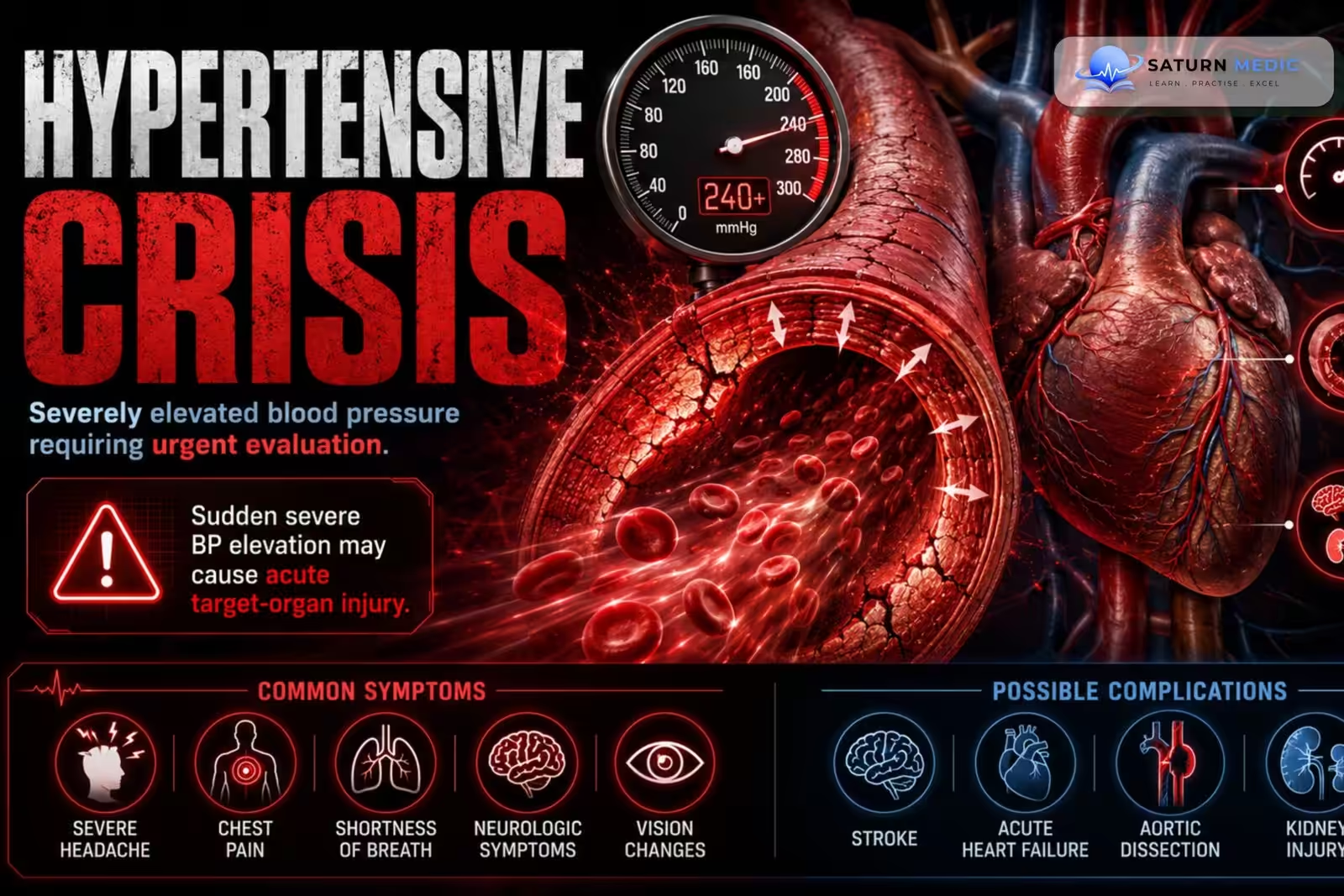
Hypertensive crisis is a severe elevation in blood pressure that requires immediate medical evaluation because it may lead to acute target-organ damage.
Specialty
Cardiology
Onset
Acute
Reviewed
July 2026
On This Page
-
OverviewOverview
-
Etiology & Risk FactorsEtiology & Risk Factors
-
PathophysiologyPathophysiology
-
Clinical PresentationClinical Presentation
-
History TakingHistory Taking
-
Physical ExaminationPhysical Examination
-
InvestigationsInvestigations
-
DiagnosisDiagnosis
-
ManagementManagement
-
ComplicationsComplications
-
PrognosisPrognosis
-
Key Points / Clinical PearlsKey Points / Clinical Pearls
Overview
Hypertensive crisis is classified into:
- Hypertensive emergency → Severe hypertension with acute target-organ damage
- Hypertensive urgency → Severe hypertension without acute target-organ damage
Common organs affected include:
- Brain
- Heart
- Kidneys
- Eyes
- Aorta
Prompt recognition is essential to prevent permanent organ injury or death.
Etiology & Risk Factors
Common Causes For Hypertensive Crisis
- Poorly controlled chronic hypertension
- Nonadherence to antihypertensive medications
- Acute kidney injury or chronic kidney disease
- Acute glomerulonephritis
- Preeclampsia or eclampsia
- Sympathomimetic drugs (e.g., cocaine, amphetamines)
- Monoamine oxidase inhibitor (MAOI) interactions
- Pheochromocytoma
- Aortic dissection
- Severe pain or anxiety (may contribute)
Risk Factors For Hypertensive Crisis
- Long-standing hypertension
- Chronic kidney disease
- Diabetes mellitus
- Cardiovascular disease
- Obesity
- Smoking
- Older age
- Medication noncompliance
- Illicit drug use
Important Note
Medication nonadherence is one of the most common precipitating factors for hypertensive crisis.
Pathophysiology
Severe elevation in blood pressure
⬇
Failure of vascular autoregulation
⬇
Endothelial injury
⬇
Increased vascular permeability
⬇
Activation of coagulation and inflammation
⬇
Tissue ischemia
⬇
Acute target-organ damage
⬇
Brain, heart, kidneys, retina, or aortic injuryKey Concept
Target-organ damage results from failure of autoregulation and endothelial injury rather than the blood pressure value alone.
Clinical Presentation
Symptoms
- Severe headache
- Blurred vision
- Chest pain
- Dyspnea
- Neurological deficits
- Confusion
- Dizziness
- Nausea or vomiting
Signs
- Markedly elevated blood pressure
- Retinal hemorrhages or papilledema
- Pulmonary edema
- Altered mental status
- Focal neurological deficits
Features Suggesting Hypertensive Emergency
- Acute ischemic stroke
- Intracerebral hemorrhage
- Acute heart failure
- Acute coronary syndrome
- Acute kidney injury
- Aortic dissection
- Hypertensive encephalopathy
- Eclampsia
History Taking
Ask about:
- Previous history of hypertension?
- Current blood pressure medications?
- Missed medication doses?
- Severe headache?
- Chest pain?
- Shortness of breath?
- Visual changes?
- Weakness or numbness?
- Confusion?
- Reduced urine output?
- Pregnancy?
Physical Examination
General Examination
Look for:
- Blood pressure in both arms
- Heart rate
- Respiratory rate
- Oxygen saturation
Neurological Examination
Look for:
- Altered consciousness
- Focal neurological deficits
- Seizures
Cardiovascular Examination
Look for:
- Signs of heart failure
- New cardiac murmurs
- Unequal pulses (suggesting aortic dissection)
Eye Examination
Look for:
- Retinal hemorrhages
- Cotton-wool spots
- Papilledema
Investigations
Initial Tests
- ECG
- CBC
- Electrolytes
- Renal function tests
- Urinalysis
- Cardiac troponin
- Chest X-ray
Additional Investigations (When Indicated)
- CT brain
- CT angiography (suspected aortic dissection)
- Echocardiography
- Fundoscopy
- Arterial blood gas
- Pregnancy test (when appropriate)
Diagnosis
1. Severe Blood Pressure Elevation
Usually:
- Systolic BP ≥180 mmHg and/or Diastolic BP ≥120 mmHg
2. Assessment for Acute Target-Organ Damage
Determine whether the patient has:
- Hypertensive emergency → Acute organ damage present
- Hypertensive urgency → No acute organ damage
Related Topics
Management
Main Goals
- Identify hypertensive emergency
- Prevent further organ damage
- Lower blood pressure safely
- Treat the underlying cause
Hypertensive Emergency
- Admit to ICU or high-dependency unit
- Continuous blood pressure monitoring
- Intravenous antihypertensive medications
- Treat the underlying condition
Common IV Medications
- Nicardipine
- Clevidipine
- Labetalol
- Esmolol
- Nitroglycerin (selected patients)
- Sodium nitroprusside (selected patients)
Hypertensive Urgency
- Oral antihypertensive medications
- Reinstitute or adjust long-term therapy
- Close outpatient follow-up
Blood Pressure Reduction
In most hypertensive emergencies:
- Reduce mean arterial pressure by no more than approximately 20–25% during the first hour, then lower blood pressure gradually over the next 24–48 hours, unless a specific condition requires a different strategy (e.g., aortic dissection).
Complications
- Stroke
- Hypertensive encephalopathy
- Acute heart failure
- Acute coronary syndrome
- Acute kidney injury
- Aortic dissection
- Retinopathy
- Seizures
- Death
Prognosis
- Prognosis depends on:
- Speed of diagnosis
- Presence of target-organ damage
- Underlying cause
- Appropriate blood pressure control
- Hypertensive urgency generally has an excellent prognosis with appropriate outpatient management.
- Untreated hypertensive emergency has a high risk of permanent organ damage and death.
- Long-term blood pressure control reduces the risk of recurrence.
Key Points / Clinical Pearls
- Hypertensive crisis includes hypertensive emergency and hypertensive urgency.
- Acute target-organ damage defines hypertensive emergency.
- Blood pressure level alone does not distinguish emergency from urgency.
- Medication nonadherence is a common precipitating factor.
- Always evaluate the brain, heart, kidneys, eyes, and aorta for acute injury.
- Intravenous antihypertensive therapy is required for hypertensive emergencies.
- Hypertensive urgency is usually managed with oral medications and close follow-up.
- Avoid rapid, excessive blood pressure reduction unless indicated for specific conditions (e.g., aortic dissection).
- The initial blood pressure reduction in most emergencies should be gradual to prevent organ ischemia.
- Long-term blood pressure control is essential to prevent recurrence.
- Ahmed I, Alley WD, Chauhan S, et al. National Center for Biotechnology Information (NIH). Hypertensive Crisis, StatPearls.
- National Center for Biotechnology Information (NIH). Hypertensive Emergency, StatPearls.
- National Center for Biotechnology Information (NIH). Hypertensive Urgency, StatPearls.
- Whelton PK, Carey RM, Aronow WS, et al. 2017 ACC/AHA/AAPA/ABC/ACPM/AGS/APhA/ASH/ASPC/NMA/PCNA Guideline for the Prevention, Detection, Evaluation, and Management of High Blood Pressure in Adults. J Am Coll Cardiol. 2018;71:e127-e248. PMID: 29146535.
- Clinical Outcomes in Hypertensive Emergency: A Systematic Review and Meta-Analysis. J Am Heart Assoc. doi: 10.1161/JAHA.122.029355.