

Clinical Subject Page
Restrictive Cardiomyopathy (RCMP)
ICD-10
Specialty
Onset
Reviewed
-
OverviewOverview
-
Etiology & Risk FactorsEtiology & Risk Factors
-
PathophysiologyPathophysiology
-
Clinical PresentationClinical Presentation
-
History TakingHistory Taking
-
InvestigationsInvestigations
-
DiagnosisDiagnosis
-
ManagementManagement
-
ComplicationsComplications
-
PrognosisPrognosis
-
Key Points / Clinical PearlsKey Points / Clinical Pearls
Overview
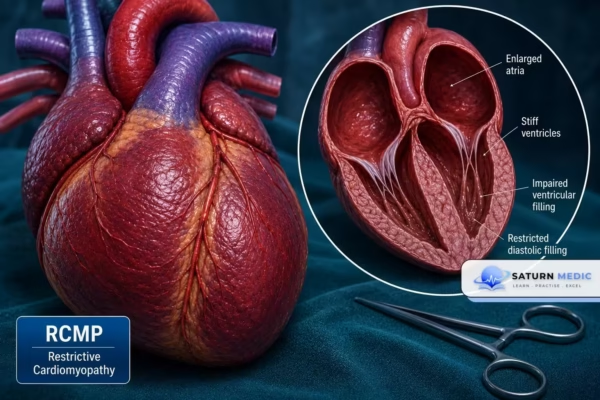
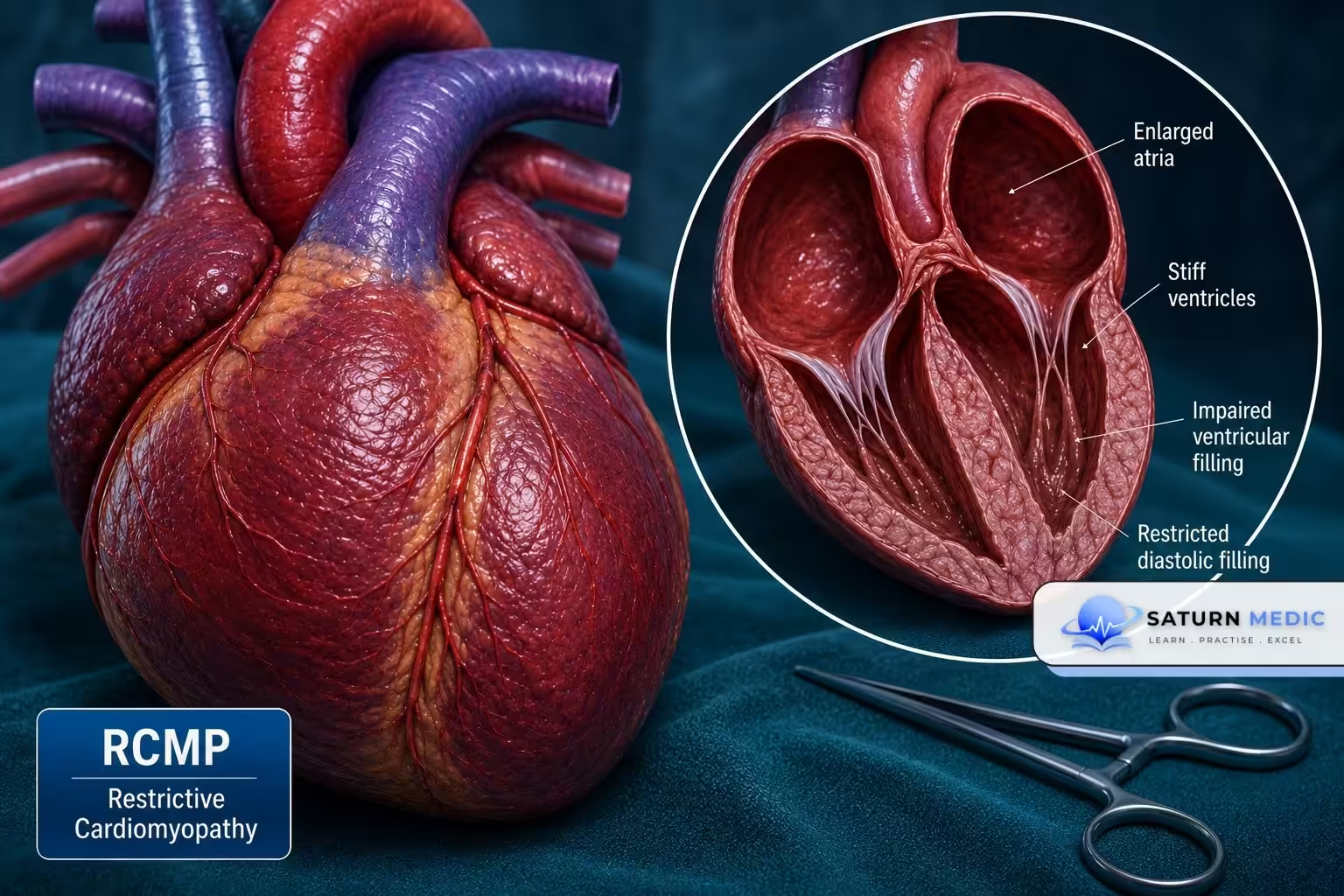
Restrictive cardiomyopathy (RCMP) is a myocardial disease characterized by impaired ventricular filling due to increased ventricular stiffness, while systolic function is usually preserved in the early stages.
Etiology & Risk Factors
Etiology of Restrictive Cardiomyopathy :
- Idiopathic
- Cardiac amyloidosis (most common)
- Sarcoidosis
- Hemochromatosis
- Endomyocardial fibrosis
- Radiation-induced heart disease
- Fabry disease
- Storage diseases
Risk Factors for Restrictive Cardiomyopathy :
- Older age
- Family history of cardiomyopathy
- Amyloidosis
- Hemochromatosis
- Autoimmune disease
- Prior chest radiation
- Infiltrative or storage disorders
Pathophysiology
Infiltrative / Fibrotic myocardial disease
↓
↑ Ventricular stiffness
↓
Impaired ventricular relaxation
↓
↓ Ventricular filling (Diastolic dysfunction)
↓
↑ Filling pressures
↓
Biatrial enlargement
↓
Pulmonary congestion + Right-sided heart failure
Clinical Presentation
Symptoms of Restrictive Cardiomyopathy :
- Progressive exertional dyspnea
- Fatigue
- Peripheral edema
- Ascites
- Orthopnea
- Palpitations
- Syncope (occasionally)
Signs of Restrictive Cardiomyopathy :
- Elevated JVP
- Peripheral edema
- Hepatomegaly
- Ascites
- S4 heart sound
- Kussmaul sign
- Pleural effusions
History Taking
Key Questions of Restrictive Cardiomyopathy :
- Progressive dyspnea?
- Leg swelling?
- Orthopnea or PND?
- Palpitations?
- Syncope?
- Family history of cardiomyopathy?
- History of amyloidosis or hemochromatosis?
- Previous chest radiation?
- Autoimmune disease?
Red Flags for Restrictive Cardiomyopathy :
- Syncope
- Rapidly progressive heart failure
- Ventricular arrhythmias
- Signs of systemic amyloidosis
Investigations
Laboratory
- CBC
- Renal & liver function
- BNP/NT-proBNP
- Troponin
- Iron studies
- Serum/urine protein electrophoresis
- Serum free light chains
ECG
- Low-voltage QRS (amyloidosis)
- Atrial fibrillation
- Conduction abnormalities
- Nonspecific ST-T changes
Imaging
- Chest X-ray
- Echocardiography (first-line)
- Normal or small ventricles
- Biatrial enlargement
- Preserved EF
- Severe diastolic dysfunction
- Cardiac MRI
- Infiltrative disease
- Myocardial fibrosis
Additional Tests
- Endomyocardial biopsy (selected cases)
- Genetic testing
- Nuclear imaging for cardiac amyloidosis
Diagnosis
Diagnosis is based on:
- Clinical features of heart failure
- Echocardiographic evidence of restrictive filling
- Cardiac MRI findings
- Identification of the underlying cause
- Endomyocardial biopsy when indicated
Management
General Measures
- Sodium restriction
- Fluid restriction (if congested)
- Treat the underlying cause
Medications
- Loop diuretics (symptom relief)
- Mineralocorticoid receptor antagonists (selected patients)
- Anticoagulation for atrial fibrillation
- Disease-specific therapy (e.g., tafamidis for ATTR amyloidosis, chemotherapy for AL amyloidosis)
Advanced Therapy
- Pacemaker (if conduction disease)
- Heart transplantation (selected patients)
Complications
- Chronic heart failure
- Atrial fibrillation
- Ventricular arrhythmias
- Thromboembolism
- Pulmonary hypertension
- Sudden cardiac death
Prognosis
- Depends on the underlying cause.
- Cardiac amyloidosis generally has the poorest prognosis.
- Early diagnosis and disease-specific therapy improve outcomes.
- Advanced disease may require heart transplantation.
Key Points / Clinical Pearls
- RCMP primarily causes diastolic dysfunction with preserved EF.
- Amyloidosis is the most common infiltrative cause.
- Biatrial enlargement is a classic echocardiographic finding.
- Cardiac MRI helps identify infiltrative myocardial disease.
- Treatment focuses on managing the underlying cause and relieving congestion.
- Differentiate RCMP from constrictive pericarditis, as management differs significantly.
- Brown KN, Pendela VS, Ahmed I, Diaz RR. National Center for Biotechnology Information (NIH). Restrictive Cardiomyopathy, StatPearls.
- Shams P, Ahmed I. National Center for Biotechnology Information (NIH). Cardiac Amyloidosis, StatPearls.
- Kittleson MM, Ruberg FL, Ambardekar AV, et al. 2023 ACC Expert Consensus Decision Pathway on Comprehensive Multidisciplinary Care for the Patient With Cardiac Amyloidosis. J Am Coll Cardiol. 2023;81:1076-1126. PMID: 36697326.
- Jain A, Zahra F. National Center for Biotechnology Information (NIH). Transthyretin Amyloid Cardiomyopathy (ATTR-CM), StatPearls.
- MedlinePlus, National Library of Medicine (NIH). Restrictive Cardiomyopathy: Medical Encyclopedia.