

Clinical Subject Page
Systemic Hypertension
ICD-10
Specialty
Onset
Reviewed
-
OverviewOverview
-
Etiology & Risk FactorsEtiology & Risk Factors
-
PathophysiologyPathophysiology
-
Clinical PresentationClinical Presentation
-
History TakingHistory Taking
-
Grades of HypertensionGrades of Hypertension
-
InvestigationsInvestigations
-
DiagnosisDiagnosis
-
Management (Drug of Choice)Management (Drug of Choice)
-
ComplicationsComplications
-
PrognosisPrognosis
-
Key Points / Clinical PearlsKey Points / Clinical Pearls
Overview
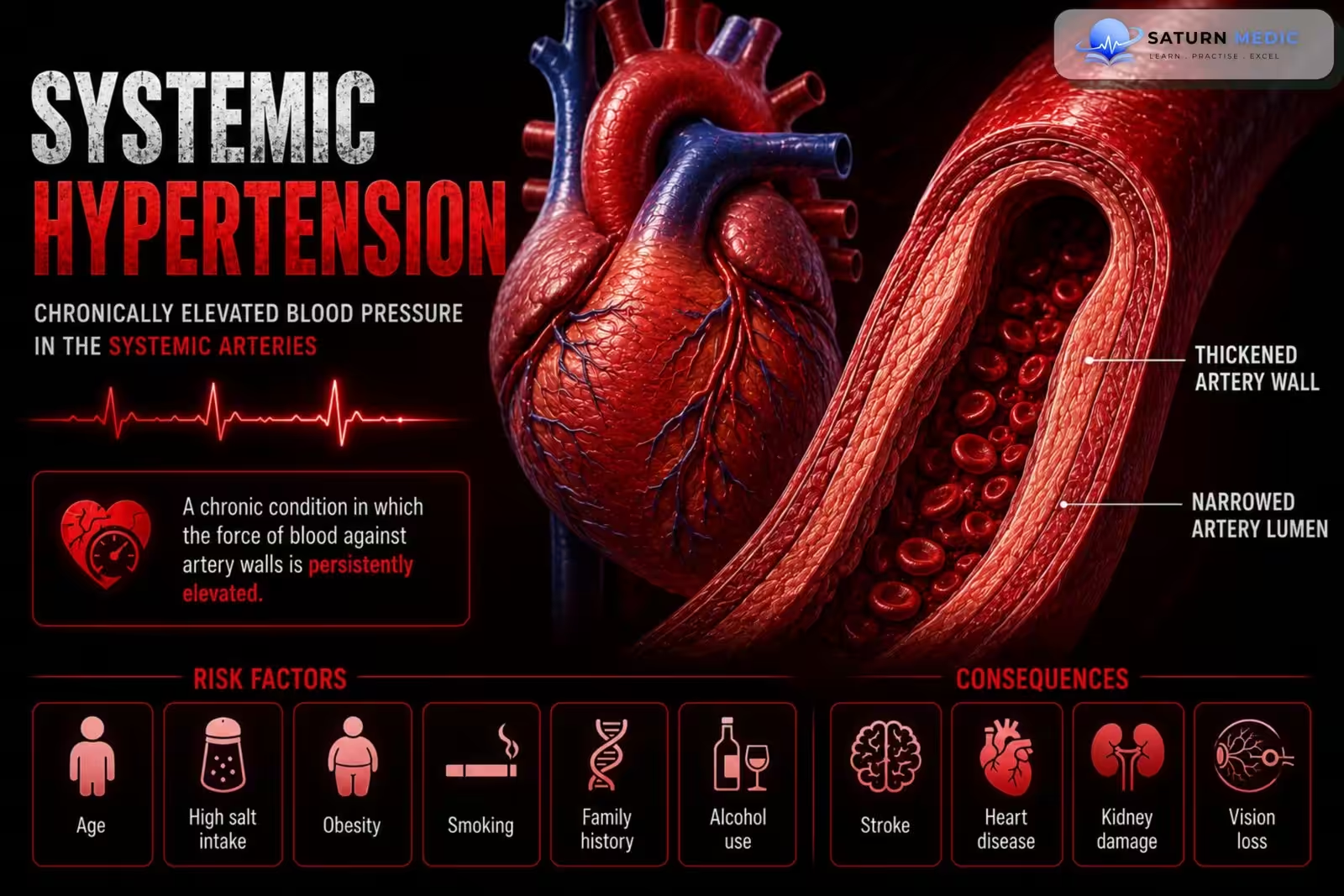
Systemic hypertension (HTN) is a chronic condition characterized by persistently elevated systemic arterial blood pressure, increasing the risk of cardiovascular, cerebrovascular, renal, and vascular disease.
Etiology & Risk Factors
Etiology
Primary (Essential) hypertension (90–95%) : Idiopathic
Secondary hypertension
Chronic kidney disease
Renovascular disease
Primary hyperaldosteronism
Pheochromocytoma
Cushing syndrome
Obstructive sleep apnea
Thyroid disorders
Coarctation of the aorta
Medications (NSAIDs, steroids, oral contraceptives)
Risk Factors For Systemic Hypertension
Increasing age
Family history
Obesity
High-sodium diet
Physical inactivity
Smoking
Diabetes mellitus
Chronic kidney disease
Excess alcohol intake
Dyslipidemia
Pathophysiology
Systemic hypertension occurs when systemic vascular resistance (SVR) remains chronically elevated, causing persistently high arterial blood pressure.
Mechanism
- Genetic and environmental factors activate the:
- Sympathetic nervous system (SNS)
- Renin–Angiotensin–Aldosterone System (RAAS)
- This causes:
- Vasoconstriction → ↑ systemic vascular resistance
- Sodium and water retention → ↑ blood volume
- ↑ Cardiac output (especially early in the disease)
- Over time:
- Blood vessels become thickened and less elastic (vascular remodeling)
- Peripheral resistance increases further
- The left ventricle works harder, leading to left ventricular hypertrophy (LVH)’
-Simple Flow
Risk factors → SNS & RAAS activation → Vasoconstriction + Na⁺/water retention → ↑ Blood volume + ↑ SVR → Persistent hypertension → Vascular remodeling + LV hypertrophy → Target-organ damage
Clinical Presentation
Symptoms
Often asymptomatic
Headache (usually severe HTN)
Dizziness
Blurred vision
Palpitations
Chest pain
Dyspnea
Fatigue
Signs
Elevated blood pressure
Hypertensive retinopathy
Left ventricular hypertrophy
S4 heart sound
Carotid or abdominal bruits (secondary causes)
History Taking
- Duration of high blood pressure?
- Home BP readings?
- Current antihypertensive medications?
- Medication adherence?
- Chest pain or dyspnea?
- Headache or visual changes?
- Neurological symptoms?
- Kidney disease?
- Diabetes?
- Alcohol, smoking, or illicit drug use?
- Family history of hypertension or cardiovascular disease?
Red Flags for Systemic Hypertension
- BP ≥180/120 mmHg
- Chest pain
- Acute neurological deficits
- Severe headache with vision changes
- Pulmonary edema
- Syncope
Grades of Systemic Hypertension
Hypertension · Grades / Classification
| Category | ESC/ESH (SBP/DBP mmHg) | ACC/AHA (SBP/DBP mmHg) |
|---|---|---|
| Optimal / Normal | <120/80 | <120/80 |
| Elevated / Normal | 120–129/80–84 | 120–129/<80 |
| High-Normal | 130–139/85–89 | — (folded into Stage 1) |
| Grade 1 / Stage 1 HTN | 140–159/90–99 | 130–139/80–89 |
| Grade 2 / Stage 2 HTN | 160–179/100–109 | ≥140/≥90 |
| Grade 3 HTN (Severe) | ≥180/≥110 | — (no separate grade 3 tier) |
| Isolated Systolic HTN | SBP ≥140 with DBP <90 | SBP ≥130 with DBP <80 |
| Hypertensive Crisis | SBP >180 and/or DBP >120 — emergency (end-organ damage) vs urgency (no end-organ damage) | |
Investigations
Laboratory
CBC
Electrolytes
Serum creatinine & eGFR
Urinalysis
Urine albumin/creatinine ratio
Fasting glucose or HbA1c
Lipid profile
TSH (if indicated)
ECG
Left ventricular hypertrophy
Ischemic changes
Arrhythmias
Imaging
Echocardiography (LVH, heart failure)
Renal ultrasound (if secondary cause suspected)
Additional Tests for Systemic Hypertension
Ambulatory Blood Pressure Monitoring (ABPM)
Home Blood Pressure Monitoring (HBPM)
Plasma aldosterone/renin ratio (if primary aldosteronism suspected)
Renal artery imaging (if renovascular disease suspected)
Diagnosis
Diagnosis of Systemic Hypertension is based on:
- Repeated elevated office BP measurements
- Confirmation with ABPM or HBPM when appropriate
- Assessment for target-organ damage
- Evaluation for secondary causes of Systemic Hypertension in selected patients
Management (Drug of Choice)
Systemic Hypertension · Comorbidity-Based Drug of Choice
| HTN + Condition | Drug of Choice | Rationale / Notes |
|---|---|---|
| Diabetes Mellitus (any age, esp. <50 yrs) | ACEi (or ARB) | Renoprotective — reduces intraglomerular pressure and proteinuria, slows diabetic nephropathy progression. |
| Age <55 yrs, non-Black | ACEi (or ARB) | Renin-dependent hypertension more likely in younger patients — better response to RAAS blockade. |
| Age ≥55 yrs or Black patients (any age) | CCB (e.g. amlodipine) | Lower-renin physiology — better response to calcium channel blockade than RAAS agents per NICE/JNC guidance. |
| Chronic Kidney Disease (with proteinuria) | ACEi (or ARB) | Reduces proteinuria and slows CKD progression. Monitor K+ and creatinine after initiation. |
| Heart Failure with Reduced EF | ACEi/ARB + Beta-blocker + MRA | Guideline-directed medical therapy improves mortality; thiazides/loop diuretics for volume control as needed. |
| Post-Myocardial Infarction / CAD | Beta-blocker + ACEi | Beta-blockers reduce myocardial oxygen demand and arrhythmia risk; ACEi aids post-MI remodeling. |
| Angina (stable) | Beta-blocker or CCB | Both reduce myocardial oxygen demand; avoid non-dihydropyridine CCB with beta-blocker (bradycardia/AV block risk). |
| Atrial Fibrillation (rate control) | Beta-blocker or non-DHP CCB | Rate-controlling agents that also address BP; avoid non-DHP CCB if reduced EF. |
| Pregnancy | Labetalol, Nifedipine, Methyldopa | ACEi/ARB and direct renin inhibitors are contraindicated (teratogenic, fetal renal injury). |
| Gout / Hyperuricaemia | CCB or ARB (losartan) | Avoid thiazide diuretics — raise serum uric acid and can precipitate gout flares. Losartan has mild uricosuric effect. |
| Benign Prostatic Hyperplasia | Alpha-blocker (e.g. doxazosin) | Improves both BP and urinary symptoms; not first-line for BP alone, but useful add-on/dual-purpose agent. |
| Asthma / COPD | CCB or ACEi/ARB | Avoid non-selective beta-blockers (bronchospasm risk); cardioselective beta-blockers may be used cautiously if compelling indication. |
| Osteoporosis | Thiazide diuretic | Thiazides reduce urinary calcium excretion, modestly increasing bone mineral density — favourable secondary effect. |
| Migraine prophylaxis needed | Beta-blocker (propranolol) | Dual benefit — effective for both BP control and migraine prevention. |
| Essential Tremor | Beta-blocker (propranolol) | Non-selective beta-blockade reduces tremor amplitude in addition to BP control. |
| Hyperthyroidism / Thyrotoxicosis | Beta-blocker | Controls adrenergic symptoms (tachycardia, tremor) and BP simultaneously while definitive treatment is arranged. |
| Aortic Aneurysm / Marfan syndrome | Beta-blocker | Reduces aortic wall shear stress and rate of aneurysm growth/dissection risk. |
| Resistant Hypertension (on 3 drugs) | Add Spironolactone | 4th-line add-on of choice if K+ ≤4.5 mmol/L; alpha- or beta-blocker if K+ >4.5 mmol/L. |
Complications
- Left ventricular hypertrophy
- Heart failure
- Coronary artery disease
- Myocardial infarction
- Stroke/TIA
- Chronic kidney disease
- Hypertensive retinopathy
- Peripheral arterial disease
- Aortic aneurysm/dissection
Prognosis
- prognosis of Systemic Hypertension is Excellent with early diagnosis and BP control
- Poorly controlled hypertension markedly increases cardiovascular and renal morbidity and mortality
- Long-term treatment significantly reduces the risk of stroke, MI, heart failure, and death
Key Points / Clinical Pearls
- Systemic Hypertension is persistently elevated systemic arterial blood pressure and is a major modifiable risk factor for cardiovascular and renal disease.
- In the 2025 AHA/ACC guideline, hypertension is classified as Stage 1: 130–139 mmHg systolic or 80–89 mmHg diastolic and Stage 2: ≥140 mmHg systolic or ≥90 mmHg diastolic.
- The 2024 ESC guideline continues to define hypertension as office BP ≥140/90 mmHg, while introducing elevated BP as 120–139/70–89 mmHg.
- Most patients are asymptomatic, which is why hypertension is often called a “silent” disease.
- Persistent hypertension increases the risk of stroke, coronary artery disease, heart failure, atrial fibrillation, chronic kidney disease, and cognitive decline.
- Diagnosis should be based on properly measured and repeated blood-pressure readings, with home or ambulatory monitoring useful for confirming hypertension and identifying white-coat or masked hypertension.
- Important risk factors include age, obesity, high sodium intake, physical inactivity, alcohol excess, family history, diabetes, and chronic kidney disease.
- Lifestyle modification is fundamental: weight control, a heart-healthy/DASH-style diet, reduced sodium intake, appropriate potassium intake, regular physical activity, stress management, and limiting alcohol.
- The 2025 AHA/ACC treatment goal is generally <130/80 mmHg for adults, with individualization for certain populations.
- Iqbal AM, Jamal SF. National Center for Biotechnology Information (NIH). Essential Hypertension, StatPearls.
- Whelton PK, Carey RM, Aronow WS, et al. 2017 ACC/AHA/AAPA/ABC/ACPM/AGS/APhA/ASH/ASPC/NMA/PCNA Guideline for the Prevention, Detection, Evaluation, and Management of High Blood Pressure in Adults. Hypertension. 2018;71:e13-e115. PMID: 29133356.
- Mancia G, Kreutz R, Brunström M, et al. 2023 ESH Guidelines for the Management of Arterial Hypertension. J Hypertens. 2023;41:1874-2071. PMID: 37345492.
- Hegde S, Ahmed I, Aeddula NR. National Center for Biotechnology Information (NIH). Secondary Hypertension, StatPearls.
- Shams P, Tackling G, Borhade MB. National Center for Biotechnology Information (NIH). Hypertensive Heart Disease, StatPearls.