

Clinical Subject Page
Acromegaly
Acromegaly is a chronic endocrine disorder caused by excess secretion of growth hormone (GH) after closure of
the epiphyseal growth plates, leading to increased production of insulin-like growth factor-1 (IGF-1) and abnormal
enlargement of bones and soft tissues.
Also called
ICD-10
Specialty
Onset
Reviewed
-
OverviewOverview
-
Etiology & Risk FactorsEtiology & Risk Factors
-
PathophysiologyPathophysiology
-
Clinical PresentationClinical Presentation
-
History TakingHistory Taking
-
Physical ExaminationPhysical Examination
-
InvestigationsInvestigations
-
DiagnosisDiagnosis
-
ManagementManagement
-
ComplicationsComplications
-
PrognosisPrognosis
-
Key Points / Clinical PearlsKey Points / Clinical Pearls
Overview
- Acromegaly is usually caused by a growth hormone–secreting pituitary adenoma. Because it develops slowly,
- physical changes may occur gradually over many years. Common features include enlarged hands and feet, facial
changes, excessive sweating, headaches, and metabolic complications such as diabetes mellitus.
Etiology & Risk Factors
-Etiology
-The main cause of Acromegaly is:
Growth Hormone-Secreting Pituitary Adenoma
• Benign tumor of anterior pituitary somatotroph cells.
• Produces excessive growth hormone (GH).
• GH stimulates the liver and other tissues to produce IGF-1.
• IGF-1 causes growth of bones and soft tissues.
Rare causes include:
• Ectopic secretion of growth hormone–releasing hormone (GHRH)
• Ectopic GH production from non-pituitary tumors
-Inheritance
• Most cases are sporadic.
Rare genetic causes include:
• Multiple Endocrine Neoplasia type 1 (MEN 1)
-Risk Factors
• Family history of pituitary tumors
• Genetic endocrine tumor syndromes
• Previous history of pituitary disease
• Middle adulthood (commonly diagnosed between 30–50 years)
Pathophysiology
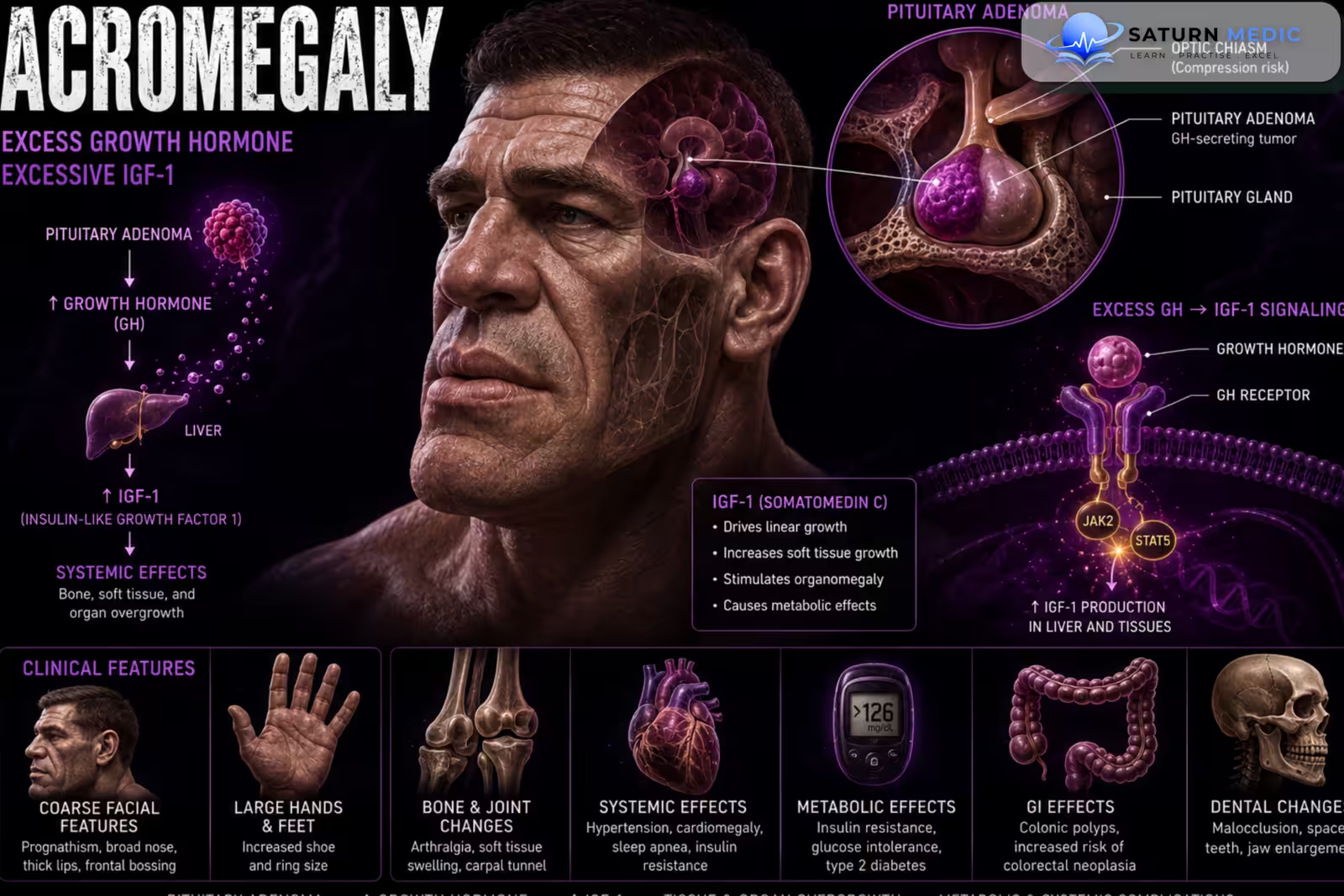
Pituitary somatotroph adenoma
→ ↑ Growth hormone (GH) secretion
→ GH stimulates liver and tissues
→ ↑ Insulin-like growth factor-1 (IGF-1) production
→ ↑ Bone and soft tissue growth after epiphyseal closure
→ Enlargement of hands, feet, jaw, and facial features
→ Organ enlargement + metabolic dysfunction
→ Cardiovascular complications + diabetes mellitus + sleep apnea
Clinical Presentation
-Symptoms:
• Gradual enlargement of hands and feet
• Increase in shoe or ring size
• Headaches
• Excessive sweating
• Joint pain
• Snoring
• Sleep disturbance
• Visual problems
• Menstrual irregularities
• Reduced libido
-Signs:
Characteristic physical changes:
• Enlarged hands and feet
• Coarse facial features
• Prominent jaw (prognathism)
• Enlarged nose
• Increased spacing between teeth
• Enlarged tongue (macroglossia)
• Deepened voice
-Other findings:
• Hypertension
• Carpal tunnel syndrome
Untreated Acromegaly may lead to:
• Cardiomyopathy
• Heart failure
• Severe hypertension
• Diabetes mellitus
History Taking
-Ask about:
• Changes in shoe or ring size
• Facial appearance changes noticed by patient or family
• Headaches
• Visual symptoms:
• Loss of peripheral vision
• Blurred vision
• Excessive sweating
• Joint pain
• Muscle weakness
• Snoring and daytime sleepiness
Physical Examination
-General Examination
• Measure height and weight
• Assess body habitus
• Check blood pressure
• Look for characteristic facial changes
• Assess skin thickness and sweating
-System-Specific Examination:
-Head and Face:
• Coarse facial features
• Enlarged nose
• Thick lips
• Prominent jaw
• Increased ring size
• Increased shoe size
-Neurological Examination:
• Visual field testing for bitemporal hemianopia
• Assessment of headaches or cranial nerve abnormalities
-Cardiovascular Examination:
• Hypertension
• Signs of cardiomyopathy or heart failure
-Musculoskeletal Examination:
• Joint tenderness
• Reduced mobility
Investigations
-Biochemistry / Specific Tests
Serum Insulin-Like Growth Factor-1 (IGF-1)
Initial screening test.
Findings:
• Elevated IGF-1 level supports diagnosis.
Growth Hormone (GH)
-Measurement:
Random GH levels are unreliable because GH secretion is pulsatile.
Oral Glucose Tolerance Test (OGTT)
Confirmatory test.
Normal response:
• Glucose suppresses GH secretion.
Acromegaly:
• Failure of GH suppression after glucose administration.
-Glucose Metabolism Assessment
May show:
• Impaired glucose tolerance
• Diabetes mellitus
Other Hormonal Tests
Assess pituitary function:
• Prolactin
• Thyroid function tests
• Cortisol assessment
• Gonadal hormones
Imaging
Magnetic Resonance Imaging (MRI) of Pituitary
Investigation of choice after biochemical confirmation.
Findings:
• Pituitary adenoma
• Tumor size assessment
Diagnosis
-Diagnosis is established by:
1. Elevated age-adjusted IGF-1 level.
2. Failure of GH suppression during oral glucose tolerance testing.
3. Pituitary MRI to identify the source.
Management
1. First-Line / Emergency Management
Acromegaly is usually not an emergency.
Initial management includes:
• Confirm biochemical diagnosis.
• Perform pituitary imaging.
• Assess tumor size and complications.
• Refer to endocrinology and neurosurgical teams.
2. Definitive Treatment
Transsphenoidal Pituitary Surgery
First-line treatment for most patients with a resectable pituitary adenoma.
Goals:
• Remove tumor
• Reduce GH secretion
• Normalize IGF-1 levels
3. Medical Treatment
Somatostatin Analogues
Examples:
• Octreotide
• Lanreotide
Effects:
• Reduce GH secretion
• Lower IGF-1 levels
GH Receptor Antagonist
Example:
• Pegvisomant
Effect:
• Blocks GH action at tissues.
• Reduces IGF-1 production.
Dopamine Agonists
Example:
• Cabergoline
May be used in selected patients, especially with mild disease or mixed hormone-secreting tumors.
4. Surgical / Procedural Treatment
Transsphenoidal Surgery
Performed through the nasal route to remove pituitary adenomas.
Radiotherapy
Complications
-Cardiovascular
• Hypertension
• Cardiomyopathy
• Heart failure
-Metabolic
• Insulin resistance
• Diabetes mellitus
-Respiratory
• Obstructive sleep apnea
Neurological
• Headaches
• Carpal tunnel syndrome
-Musculoskeletal
• Osteoarthritis
• Joint pain
Prognosis
Without treatment, Acromegaly is associated with increased morbidity and mortality, mainly due to cardiovascular
complications.
With early diagnosis and effective treatment, prognosis improves significantly.
Key Points / Clinical Pearls
• Acromegaly is caused by excessive growth hormone secretion after epiphyseal closure.
• The most common cause is a GH-secreting pituitary adenoma.
• Excess GH increases IGF-1 production.
• Common features include enlarged hands, feet, jaw, and facial changes.
• Symptoms develop slowly and may be missed for years.
• IGF-1 is the best initial screening test.
• Failure of GH suppression during OGTT confirms diagnosis.
• Pituitary MRI identifies the tumor source.
• Transsphenoidal surgery is the main definitive treatment.
• Somatostatin analogues reduce GH secretion.
- Katznelson L, Laws ER Jr, Melmed S, et al. Acromegaly: An Endocrine Society Clinical Practice Guideline. J Clin Endocrinol Metab. 2014;99(11):3933-3951. Journal of Clinical Endocrinology & Metabolism .
- Giustina A, Barkan A, Casanueva FF, et al. Criteria for Cure of Acromegaly: A Consensus Statement. J Clin Endocrinol Metab. 2000;85(2):526-529.
- Melmed S, Bronstein MD, Chanson P, et al. A Consensus on the Diagnosis and Treatment of Acromegaly Complications. Pituitary. 2013;16(3):294-302.
- Colao A, Grasso LFS, Giustina A, Melmed S, Chanson P, Pereira AM. Acromegaly. Nat Rev Dis Primers. 2019;5:20. Nature Reviews Disease Primers .
- National Institute of Diabetes and Digestive and Kidney Diseases (NIDDK). Acromegaly . National Institutes of Health.