

Clinical Subject Page
Adrenal Crisis
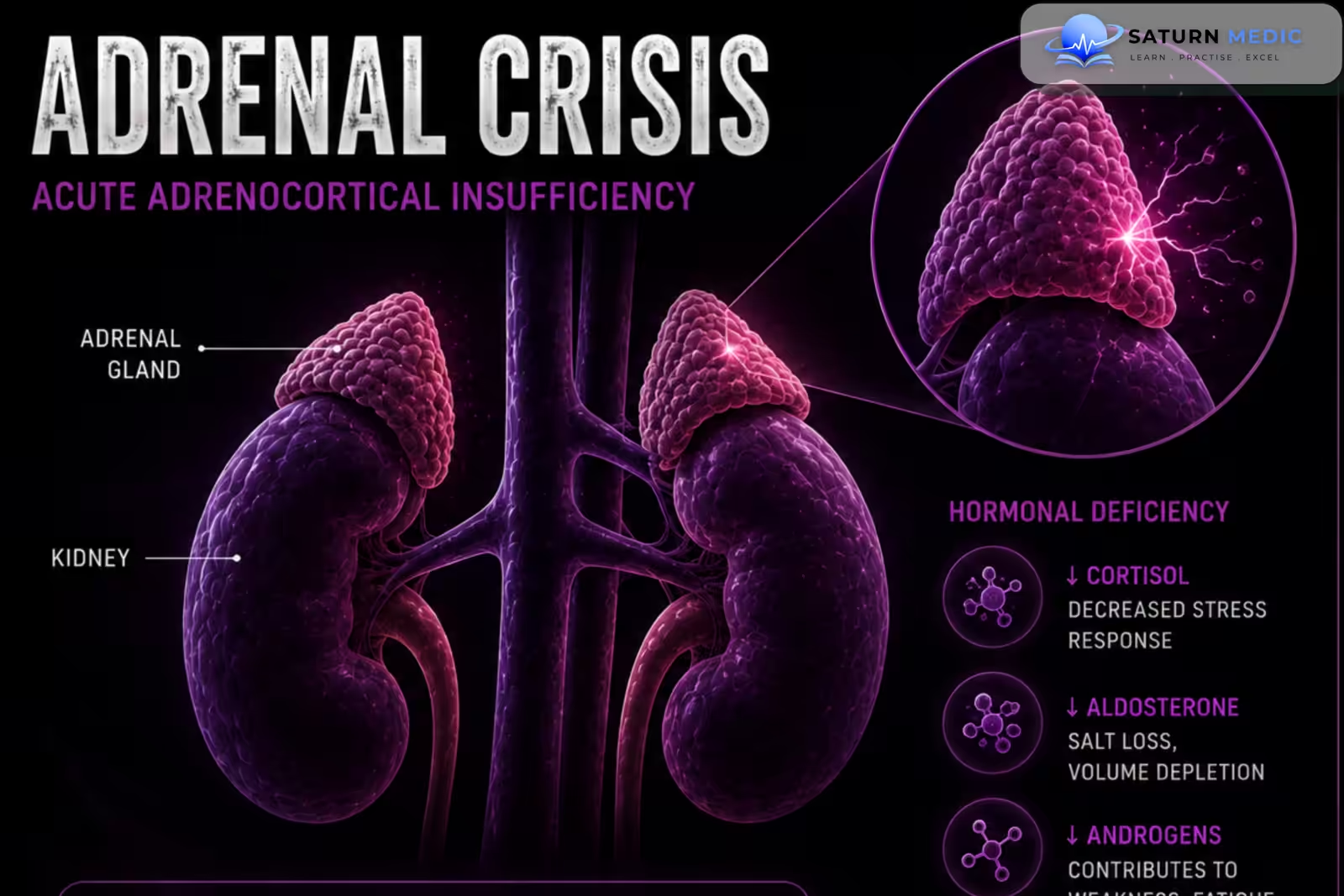
Adrenal Crisis is a life-threatening emergency caused by severe deficiency of cortisol, with or without mineralocorticoid deficiency. It results in hypotension, volume depletion, electrolyte abnormalities, hypoglycemia, and potentially shock and death if untreated.
Also called
ICD-10
Specialty
Onset
Reviewed
-
OverviewOverview
-
Etiology & Risk FactorsEtiology & Risk Factors
-
PathophysiologyPathophysiology
-
Clinical PresentationClinical Presentation
-
History TakingHistory Taking
-
Physical ExaminationPhysical Examination
-
InvestigationsInvestigations
-
DiagnosisDiagnosis
-
ManagementManagement
-
ComplicationsComplications
-
PrognosisPrognosis
-
Key Points / Clinical PearlsKey Points / Clinical Pearls
Overview
–Adrenal crisis occurs when the body cannot produce enough cortisol to meet an acute physiological demand.
-It may occur in:
- Known primary adrenal insufficiency
- Secondary or tertiary adrenal insufficiency
- Patients receiving long-term glucocorticoids who develop adrenal suppression
-Common triggers include:
- Infection
- Vomiting or diarrhea
- Surgery
- Trauma
- Severe physiological stress
Etiology & Risk Factors
–Etiology:
- Adrenal crisis occurs when cortisol availability is insufficient during physiological stress.
-Primary Adrenal Insufficiency
There is destruction or dysfunction of the adrenal cortex causing:
- ↓ Cortisol
- ↓ Aldosterone
-Causes include:
- Autoimmune adrenalitis
- Adrenal hemorrhage
- Congenital adrenal hyperplasia
-Secondary/Tertiary Adrenal Insufficiency
There is inadequate ACTH or CRH stimulation resulting in:
- ↓ Cortisol
- Usually preserved aldosterone production
-Causes include:
- Pituitary disease
- Long-term glucocorticoid therapy
- Abrupt glucocorticoid withdrawal
-Risk Factors
- Long-term glucocorticoid therapy
- Abrupt glucocorticoid withdrawal
- Severe infection
- Persistent vomiting or diarrhea
Pathophysiology
Acute physiological stress → inadequate cortisol response → loss of vascular responsiveness to catecholamines → vasodilation + hypotension → reduced tissue perfusion → shock
-In primary adrenal insufficiency:
↓ Aldosterone → renal sodium loss → water loss → dehydration → ↓ circulating volume → hypotension
↓ Cortisol → impaired gluconeogenesis → hypoglycemia
↓ Aldosterone → ↓ potassium excretion → hyperkalemia
Severe cortisol deficiency + volume depletion → circulatory collapse → adrenal crisis
Clinical Presentation
-Symptoms:
- Severe weakness
- Fatigue
- Dizziness
- Nausea
- Vomiting
- Abdominal pain
- Diarrhea
-Signs:
- Hypotension
- Postural hypotension
- Tachycardia
- Dehydration
- Weakness
History Taking
-Ask about:
- Known adrenal insufficiency
- Previous adrenal crisis
- Congenital adrenal hyperplasia
- Glucocorticoid therapy
- Duration and dose of glucocorticoids
- Recent steroid dose reduction or withdrawal
- Recent infection
- Fever
- Vomiting
- Diarrhea
- Severe physical or emotional stress
Physical Examination
-General Examination
- Airway
- Breathing
- Circulation
- Level of consciousness
- Blood pressure
- Heart rate
- Respiratory rate
- Temperature
- Oxygen saturation
-Look for:
- Hypotension
- Tachycardia
- Dehydration
- Pallor
- Weakness
-System-Specific Examination:
–Cardiovascular:
- Hypotension
- Tachycardia
- Signs of shock
- Poor peripheral perfusion
–Neurological:
- Confusion
- Reduced consciousness
- Seizures in severe hypoglycemia or electrolyte disturbance
Investigations
-Biochemistry / Specific Tests
-Common findings include:
- Hyponatremia
- Hyperkalemia, particularly in primary adrenal insufficiency
- Hypoglycemia
- Increased urea
- Increased creatinine from volume depletion
- Possible metabolic acidosis
-Serum Cortisol
Obtain an urgent cortisol level if possible before steroid administration, but treatment must not be delayed.
-ACTH
Can help distinguish:
- Primary adrenal insufficiency → high ACTH
- Secondary/tertiary adrenal insufficiency → low or inappropriately normal ACTH
-Special / Confirmatory Tests
After the patient is stabilized, an ACTH stimulation test may be used to confirm adrenal insufficiency when the diagnosis remains uncertain.
Diagnosis
-Diagnosis is based on :
-Adrenal crisis is primarily a clinical diagnosis.
-Suspect it in a patient with:
- Acute illness/stressor + hypotension or shock + symptoms of cortisol deficiency ± electrolyte abnormalities
Management
1. First-Line / Emergency Management
Immediate Treatment
-Do not wait for laboratory confirmation:
- Hydrocortisone 100 mg IV or IM immediately
- Rapid IV administration of 0.9% saline
- Correct hypoglycemia with IV glucose when present
- Continuous monitoring of blood pressure, heart rate, glucose, and electrolytes
- Identify and treat the precipitating cause
After the initial dose, hydrocortisone is continued with repeated dosing or continuous IV infusion according to the clinical situation.
-Treat the Trigger
-Look for and treat:
- Infection
- Surgery-related stress
- Abrupt steroid withdrawal
2. Definitive Treatment
Once the crisis is controlled:
- Determine the underlying cause
- Establish appropriate long-term glucocorticoid replacement
- Add mineralocorticoid replacement in primary adrenal insufficiency
- Educate the patient regarding stress dosing
3. Medical Treatment
-Hydrocortisone
First-line glucocorticoid for acute adrenal crisis.
-IV Fluids
0.9% saline is used for volume resuscitation.
-Glucose
Administer when hypoglycemia is present.
-Fludrocortisone
Required for long-term mineralocorticoid replacement in primary adrenal insufficiency
Complications
- Hypovolemic shock
- Severe hypotension
- Acute kidney injury
- Hypoglycemia
- Hyperkalemia
- Hyponatremia
- Metabolic disturbances
- Cardiac arrhythmias
Prognosis
-With rapid recognition and immediate glucocorticoid and fluid replacement, most adrenal crises can be successfully treated.
–Delayed diagnosis or treatment can result in:
- Refractory shock
- Multiorgan failure
- Coma
- Death
-Long-term prognosis depends mainly on the underlying adrenal disorder and the patient’s ability to maintain appropriate hormone replacement and stress dosing.
Key Points / Clinical Pearls
- Adrenal Crisis is a life-threatening emergency caused by severe cortisol deficiency.
- It can occur in primary, secondary, or tertiary adrenal insufficiency.
- Common triggers include infection, surgery, trauma, vomiting, and abrupt glucocorticoid withdrawal.
- Typical features include hypotension, weakness, vomiting, abdominal pain, and dehydration.
- Important laboratory abnormalities include hyponatremia, hyperkalemia, and hypoglycemia.
- Hyperkalemia is particularly associated with primary adrenal insufficiency because of aldosterone deficiency.
- Adrenal crisis can occur in patients with Congenital Adrenal Hyperplasia (CAH).
- Hydrocortisone must be given immediately when adrenal crisis is suspected.
- Do not wait for cortisol or ACTH results before starting treatment.
- Bornstein SR, Allolio B, Arlt W, et al. Diagnosis and Treatment of Primary Adrenal Insufficiency: An Endocrine Society Clinical Practice Guideline. J Clin Endocrinol Metab. 2016;101(2):364-389. Journal of Clinical Endocrinology & Metabolism .
- Husebye ES, Pearce SH, Krone NP, Kämpe O. Adrenal Insufficiency. Lancet. 2021;397(10274):613-629. The Lancet .
- Rushworth RL, Torpy DJ, Falhammar H. Adrenal Crisis. N Engl J Med. 2019;381(9):852-861. New England Journal of Medicine .
- Society for Endocrinology. Emergency Guidance: Adrenal Crisis . Endocrine Emergency Guidance.
- National Institute of Diabetes and Digestive and Kidney Diseases (NIDDK). Addison's Disease . National Institutes of Health.
- National Library of Medicine (NIH). Adrenal Crisis . StatPearls.