

Clinical Subject Page
Conn Syndrome
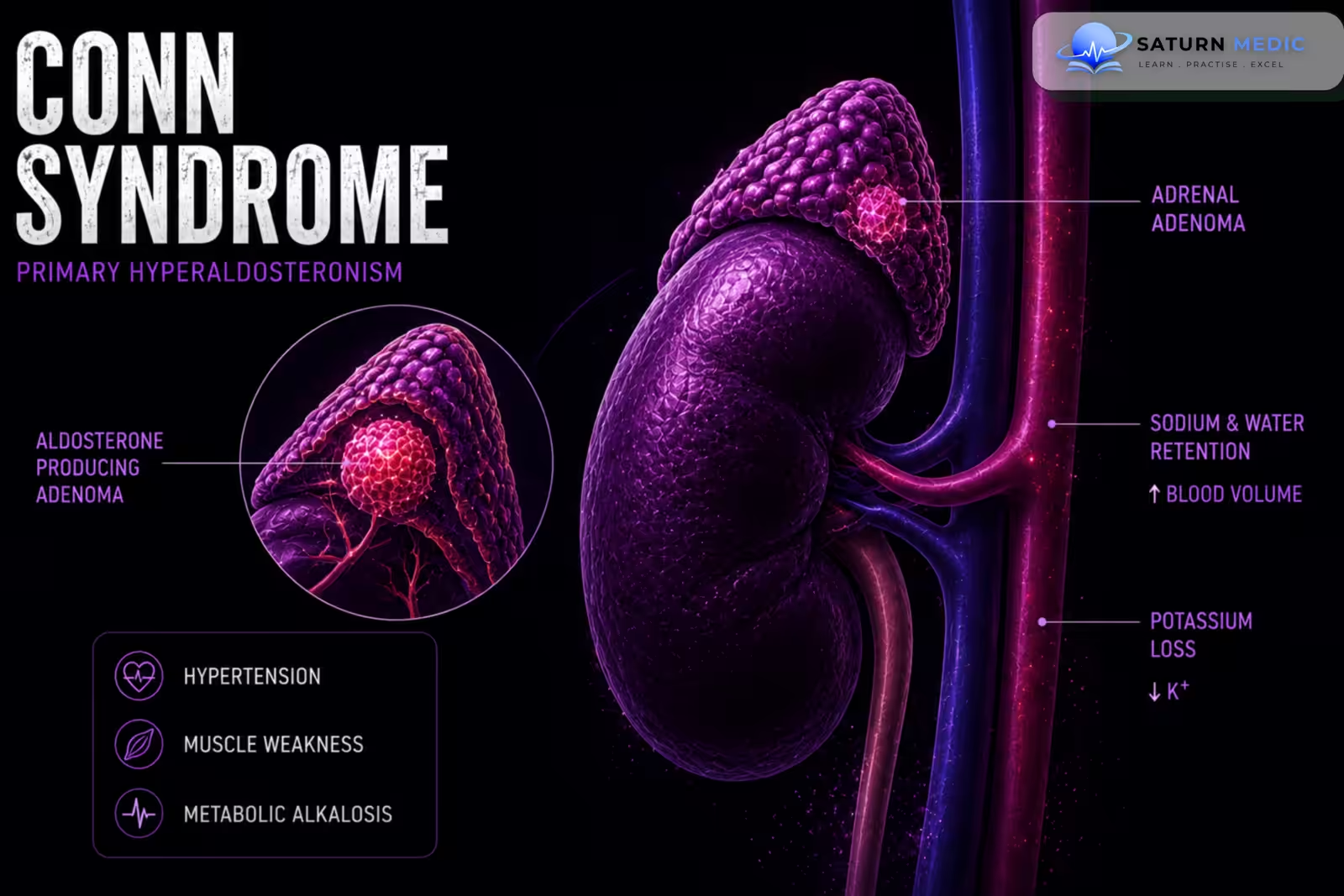
Conn Syndrome is primary hyperaldosteronism, a disorder caused by excessive, autonomous production of aldosterone from the adrenal cortex. It leads to sodium retention, potassium loss, and hypertension.
Also called
ICD-10
Specialty
Onset
Reviewed
-
OverviewOverview
-
Etiology & Risk FactorsEtiology & Risk Factors
-
PathophysiologyPathophysiology
-
Clinical PresentationClinical Presentation
-
History TakingHistory Taking
-
Physical ExaminationPhysical Examination
-
InvestigationsInvestigations
-
DiagnosisDiagnosis
-
ManagementManagement
-
ComplicationsComplications
-
PrognosisPrognosis
-
Key Points / Clinical PearlsKey Points / Clinical Pearls
Overview
-Conn Syndrome is an important and potentially treatable cause of secondary hypertension.
-The two major causes of Conn Syndrome are:
- Bilateral adrenal hyperplasia
- Unilateral aldosterone-producing adrenal adenoma
–Excess aldosterone causes sodium and water retention → hypertension, while promoting potassium and hydrogen ion excretion → hypokalemia and metabolic alkalosis.
Etiology & Risk Factors
The major causes include:
-Bilateral Adrenal Hyperplasia
- Usually causes bilateral aldosterone overproduction.
- It is an important cause of primary aldosteronism.
-Aldosterone Producing Adrenal Adenoma
- Usually unilateral.
- Historically known as the classic cause of Conn Syndrome.
-Risk Factors
- Resistant hypertension
- Severe hypertension
- Hypertension at a young age
- Hypokalemia
- Adrenal incidentaloma
- Family history of primary aldosteronism
Pathophysiology
Autonomous aldosterone secretion → increased renal sodium reabsorption → increased water retention → increased extracellular fluid volume → hypertension
Excess aldosterone → increased potassium and hydrogen ion secretion → hypokalemia + metabolic alkalosis
Volume expansion → suppression of renin secretion → low plasma renin → high aldosterone-to-renin ratio
Clinical Presentation
-Symptoms:
- Many patients are asymptomatic and are diagnosed during evaluation of hypertension.
-Possible symptoms include:
- Headache
- Muscle weakness
- Muscle cramps
- Fatigue
- Palpitations
- Excessive thirst
- Frequent urination
-Signs:
- Hypertension
- Resistant hypertension
- Hypokalemia
- Muscle weakness
- Cardiac arrhythmias in severe hypokalemia
History Taking
-Ask about:
- Duration of hypertension
- Blood pressure readings
- Resistant hypertension
- Current antihypertensive medications
- Number of medications required for blood-pressure control
- Previous hypokalemia
- Muscle weakness
- Muscle cramps
- Palpitations
- Polyuria
- Polydipsia
- Nocturia
- Headaches
Physical Examination
–General Examination
- Blood pressure
- Heart rate
- Body mass index
- Assessment of volume status
Look for:
- Persistent hypertension
- Severe hypertension
- Signs of cardiovascular complications
-System-Specific Examination:
-Cardiovascular
Assess for:
- Hypertension
- Arrhythmias
- Signs of heart failure
- Evidence of hypertensive cardiovascular disease
-Neuromuscular
Assess for:
- Muscle weakness
- Reduced muscle strength
- Abnormal reflexes in severe hypokalemia
Investigations
-Biochemistry / Specific Tests
- Typical findings may include:
- Low plasma renin
- High plasma aldosterone
- Increased aldosterone-to-renin ratio
- Hypokalemia
- Metabolic alkalosis
-Aldosterone-to-Renin Ratio
- The aldosterone-to-renin ratio (ARR) is the main screening test for Conn Syndrome.
- A positive screen generally requires:
- Inappropriately elevated aldosterone
- Suppressed renin
- Elevated ARR
- Exact cutoff values vary according to the assay and laboratory.
–Imaging
Adrenal CT
Used after biochemical diagnosis to assess:
- Adrenal adenoma
- Adrenal nodules
- Adrenal hyperplasia
- Adrenal carcinoma
Diagnosis
-Primary aldosteronism (Conn Syndrome) is suspected when there is:
- Inappropriately high aldosterone + suppressed renin → elevated aldosterone-to-renin ratio
The diagnosis is confirmed according to the clinical context and appropriate confirmatory testing.
Management
1. Definitive Treatment
Treatment depends on whether aldosterone excess is unilateral or bilateral.
-Unilateral Disease
Laparoscopic adrenalectomy is generally the preferred definitive treatment in suitable surgical candidates.
-Bilateral Disease
Usually treated medically with a mineralocorticoid receptor antagonist.
2. Medical Treatment
Mineralocorticoid Receptor Antagonists
-Spironolactone
- Commonly used
- Effective in reducing aldosterone-mediated effects
- Can cause gynecomastia and sexual adverse effects
–Eplerenone
- More selective for the mineralocorticoid receptor
- Often better tolerated regarding sex-hormone-related adverse effects
- May require twice-daily dosing
-Potassium Replacement
Used when hypokalemia is present, particularly while definitive treatment is being established
-Antihypertensive Therapy
Additional antihypertensive agents may be required depending on blood-pressure control.
Complications
- Resistant hypertension
- Hypokalemia
- Metabolic alkalosis
- Cardiac arrhythmias
- Left ventricular hypertrophy
- Heart failure
- Coronary artery disease
- Stroke
- Chronic kidney disease
- Increased cardiovascular risk
Prognosis
The prognosis is generally excellent when primary aldosteronism is recognized and appropriately treated.
-Treatment can substantially improve:
- Blood pressure
- Potassium levels
- Cardiovascular risk
- Renal outcomes
Key Points / Clinical Pearls
- Conn Syndrome is primary hyperaldosteronism.
- It is caused by autonomous aldosterone secretion from the adrenal glands.
- Major causes are bilateral adrenal hyperplasia and aldosterone-producing adrenal adenoma.
- Excess aldosterone causes sodium retention and potassium loss.
- Classic laboratory findings are high aldosterone, suppressed renin, hypokalemia, and metabolic alkalosis.
- Normal potassium does not exclude primary aldosteronism.
- Consider it in resistant or severe hypertension.
- The aldosterone-to-renin ratio (ARR) is the main screening test.
- Antihypertensive medications can interfere with interpretation of the ARR.
- Adrenal CT is used after biochemical evaluation but cannot reliably distinguish unilateral from bilateral disease.
- Adrenal venous sampling may be required before surgery to establish lateralization.
- Unilateral disease can often be treated definitively with laparoscopic adrenalectomy.
- Bilateral disease is generally treated with spironolactone or eplerenone.
- Funder JW, Carey RM, Mantero F, et al. The Management of Primary Aldosteronism: Case Detection, Diagnosis, and Treatment: An Endocrine Society Clinical Practice Guideline. J Clin Endocrinol Metab. 2016;101(5):1889-1916. Journal of Clinical Endocrinology & Metabolism .
- Williams TA, Reincke M. Management of Endocrine Disease: Diagnosis and Management of Primary Aldosteronism: The Endocrine Society Guideline. Eur J Endocrinol. 2018;179(1):R19-R29. European Journal of Endocrinology .
- Monticone S, Burrello J, Tizzani D, et al. Prevalence and Clinical Manifestations of Primary Aldosteronism Encountered in Primary Care Practice. J Am Coll Cardiol. 2017;69(14):1811-1820.
- Vaidya A, Mulatero P, Baudrand R, Adler GK. The Expanding Spectrum of Primary Aldosteronism: Implications for Diagnosis, Pathogenesis, and Treatment. Endocr Rev. 2018;39(6):1057-1088.
- National Library of Medicine (NIH). Hyperaldosteronism . StatPearls.
- National Institute of Diabetes and Digestive and Kidney Diseases (NIDDK). Primary Aldosteronism . National Institutes of Health.