

Clinical Subject Page
Polyendocrine Metabolic Ovarian Syndrome (PMOS)
Polyendocrine Metabolic Ovarian Syndrome (PMOS) is a chronic endocrine-metabolic disorder characterized by ovarian dysfunction, androgen excess, and metabolic abnormalities, commonly presenting with irregular ovulation, hyperandrogenism, and insulin resistance.
Also called
ICD-10
Specialty
Onset
Reviewed
-
OverviewOverview
-
Etiology & Risk FactorsEtiology & Risk Factors
-
PathophysiologyPathophysiology
-
Clinical PresentationClinical Presentation
-
History TakingHistory Taking
-
Physical ExaminationPhysical Examination
-
InvestigationsInvestigations
-
DiagnosisDiagnosis
-
ManagementManagement
-
ComplicationsComplications
-
PrognosisPrognosis
-
Key Points / Clinical PearlsKey Points / Clinical Pearls
Overview
–Polyendocrine Metabolic Ovarian Syndrome (PMOS) is one of the most common endocrine disorders affecting women of reproductive age.
-The main clinical features are:
- Ovulatory dysfunction
- Hyperandrogenism
- Polycystic ovarian morphology
-Metabolic abnormalities are also common, particularly:
- Insulin resistance
- Obesity
- Dyslipidemia
- Increased risk of Type 2 Diabetes Mellitus
Not every patient has ovarian cysts, and polycystic ovarian morphology is not required for diagnosis.
Etiology & Risk Factors
Etiology:
The exact cause is multifactorial and involves:
- Genetic susceptibility
- Insulin resistance and compensatory hyperinsulinemia
- Increased ovarian androgen production
- Abnormal hypothalamic-pituitary-ovarian signaling
-Risk Factors:
- Family history of Polyendocrine Metabolic Ovarian Syndrome (PMOS) /PCOS
- Obesity
- Insulin resistance
- Type 2 Diabetes Mellitus
- Sedentary lifestyle
Pathophysiology
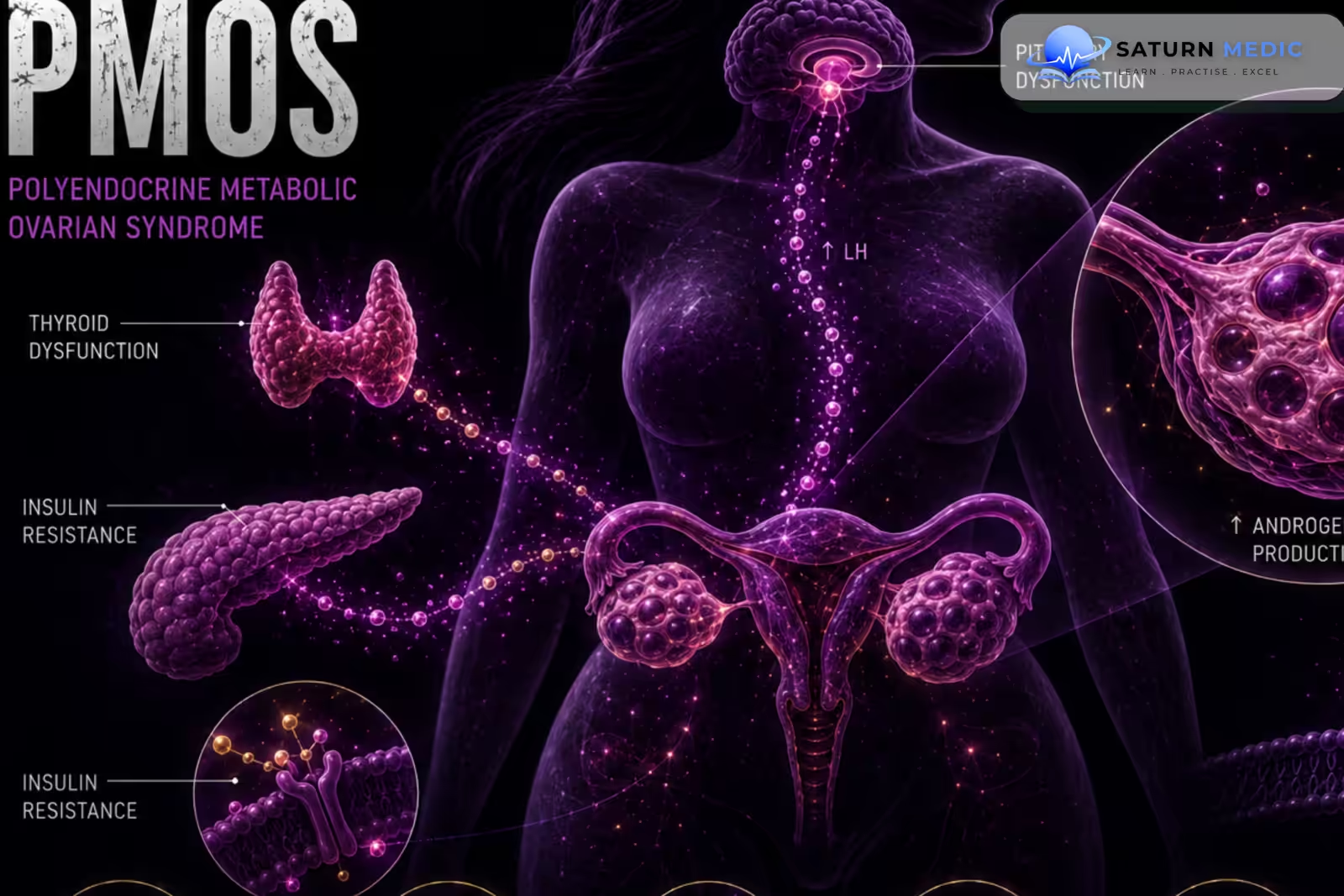
Genetic/environmental factors → insulin resistance + abnormal ovarian/adrenal androgen production → hyperandrogenism → impaired follicular development + anovulation → irregular menstruation + infertility
Insulin resistance → hyperinsulinemia → increased ovarian androgen production + reduced hepatic SHBG → ↑ free androgens → hirsutism/acne
Clinical Presentation
-Symptoms:
- Irregular menstrual cycles
- Oligomenorrhea
- Amenorrhea
- Infertility
- Hirsutism
- Acne
- Weight gain
- Difficulty losing weight
- Hair thinning
- Symptoms of insulin resistance
-Signs:
- Hirsutism
- Acne
- Androgenic alopecia
- Obesity, particularly central obesity
- Acanthosis nigricans
- Irregular menstrual pattern
History Taking
-Ask about:
- Polyuria
- Polydipsia
- Polyphagia
- Weight loss
- Fatigue
- Blurred vision
- Nocturia
- Recurrent infections
- Symptoms of DKA
- Previous episodes of hyperglycemia or DKA
- Insulin use and adherence
- Insulin dose and administration technique
- Blood glucose monitoring
- Continuous glucose monitoring, if used
- Episodes of hypoglycemia
- Dietary habits
Physical Examination
-General Examination
- BMI
- Waist circumference
- Blood pressure
-Look For:
- Obesity
- Hirsutism
- Acne
- Acanthosis nigricans
- Androgenic alopecia
System-Specific Examination:
–Assess for clinical evidence of:
- Hyperandrogenism
- Insulin resistance
- Other endocrine disorders when suspected
Investigations
-Complete Blood Count
Not routinely required for diagnosis.
-Peripheral Blood Film
Not indicated for diagnosis.
-Biochemistry / Specific Tests
Androgen Assessment
Total testosterone
Free testosterone or calculated free testosterone
SHBG when appropriate
DHEA-S when adrenal androgen excess is suspected
Metabolic Assessment
Fasting glucose
75-g oral glucose tolerance test (OGTT)
HbA1c when appropriate
Lipid profile
-Other Tests
Depending on presentation:
TSH
Prolactin
17-hydroxyprogesterone
Pregnancy test
-Imaging
Pelvic Ultrasound
May demonstrate polycystic ovarian morphology.
However, ultrasound is not required in every patient if the diagnosis can already be established clinically and biochemically.
-Special / Confirmatory Tests
There is no single confirmatory test for Polyendocrine Metabolic Ovarian Syndrome (PMOS).
Diagnosis is based on established clinical criteria after excluding alternative causes.
Diagnosis
-In adults, Polyendocrine Metabolic Ovarian Syndrome (PMOS) is diagnosed when at least 2 of the following 3 features are present, after excluding other causes:
- Ovulatory dysfunction
- Clinical or biochemical hyperandrogenism
- Polycystic ovarian morphology on ultrasound
-Ovarian cysts are not required for diagnosis.
Management
1. First-Line / Emergency Management
There is no routine emergency treatment.
Management depends on the patient’s main problem:
Menstrual irregularity
Hyperandrogenism
Infertility
Obesity
Insulin resistance/metabolic risk
2. Definitive Treatment
There is no single curative treatment.
Management is individualized according to reproductive and metabolic goals.
3. Medical Treatment
-Combined Oral Contraceptive Pills
First-line pharmacological treatment for many patients with:
Menstrual irregularity
Hirsutism
Acne
–Metformin
Useful particularly in patients with:
Type 2 Diabetes Mellitus
Prediabetes
Significant metabolic risk
Insulin resistance
-Antiandrogens
Spironolactone may be used for persistent hirsutism when appropriate contraception is provided.
-Infertility
Letrozole is generally the preferred first-line pharmacological treatment for ovulation induction in women with PMOS/PCOS-related anovulatory infertility.
4. Surgical / Procedural Treatment
Laparoscopic ovarian surgery/drilling may be considered in selected patients with anovulatory infertility when medical ovulation induction is unsuccessful.
5. Supportive Management
Weight management
Regular physical activity
Healthy diet
Cardiometabolic risk assessment
Management of dyslipidemia and hypertension
Complications
- Infertility
- Endometrial hyperplasia
- Endometrial cancer
- Type 2 Diabetes Mellitus
- Prediabetes
- Dyslipidemia
- Hypertension
- Obesity
- Cardiometabolic disease
- Obstructive sleep apnea
- Depression and anxiety
Prognosis
–Polyendocrine Metabolic Ovarian Syndrome (PMOS) is a chronic condition with variable clinical expression.
–Symptoms can be effectively managed, and fertility can often be achieved with appropriate treatment.
-Long-term outcomes depend mainly on:
- Metabolic risk
- Weight
- Insulin resistance
- Duration of anovulation
- Adequacy of treatment and follow-up
Key Points / Clinical Pearls
- Polyendocrine Metabolic Ovarian Syndrome (PMOS) is the updated terminology for Polycystic Ovary Syndrome (PCOS).
- It is a common endocrine-metabolic disorder affecting reproductive-age women.
- The main features are ovulatory dysfunction, hyperandrogenism, and polycystic ovarian morphology.
- Ovarian cysts are not required for diagnosis.
- Diagnosis requires 2 of 3 diagnostic features after exclusion of other causes.
- Common symptoms include irregular periods, hirsutism, acne, and infertility.
- Insulin resistance and hyperinsulinemia contribute to androgen excess.
- Obesity and metabolic abnormalities are common but not required for diagnosis.
- Screen for glucose abnormalities and cardiovascular risk factors.
- Pelvic ultrasound may demonstrate polycystic ovarian morphology but is not always necessary.
- Combined oral contraceptives are commonly used for menstrual irregularity and hyperandrogenism.
- Letrozole is the preferred first-line ovulation-induction drug for infertility related to anovulation.
- Metformin is particularly useful when metabolic abnormalities or diabetes/prediabetes are present.
- Teede HJ, Khomami MB, Morman R, et al. Polyendocrine metabolic ovarian syndrome, the new name for polycystic ovary syndrome: a multistep global consensus process. Lancet. 2026;407(10545):2329-2339. PubMed .
- Teede HJ, Tay CT, Laven JJE, et al. Recommendations from the 2023 International Evidence-based Guideline for the Assessment and Management of Polycystic Ovary Syndrome. J Clin Endocrinol Metab. 2023;108(10):2447-2468. Journal of Clinical Endocrinology & Metabolism .
- Monash Centre for Health Research and Implementation. International Evidence-based Guideline for the Assessment and Management of Polyendocrine Metabolic Ovarian Syndrome (PMOS) .
- Azziz R, Carmina E, Chen Z, et al. Polycystic Ovary Syndrome. Nat Rev Dis Primers. 2016;2:16057. Nature Reviews Disease Primers .
- National Institute of Child Health and Human Development (NIH). About Polyendocrine Metabolic Ovarian Syndrome (PMOS) . National Institutes of Health.
- National Library of Medicine (NIH). Polyendocrine Metabolic Ovarian Syndrome (PMOS) . StatPearls.