

Clinical Subject Page
Thyroid Cancer
Thyroid cancer is a malignant tumor arising from the thyroid gland. Most thyroid cancers are differentiated cancers with a generally favorable prognosis, while anaplastic thyroid cancer is rare but highly aggressive
Also called
ICD-10
Specialty
Onset
Reviewed
-
OverviewOverview
-
Etiology & Risk FactorsEtiology & Risk Factors
-
PathophysiologyPathophysiology
-
Clinical PresentationClinical Presentation
-
History TakingHistory Taking
-
Physical ExaminationPhysical Examination
-
InvestigationsInvestigations
-
DiagnosisDiagnosis
-
ManagementManagement
-
ComplicationsComplications
-
PrognosisPrognosis
-
Key Points / Clinical PearlsKey Points / Clinical Pearls
Overview
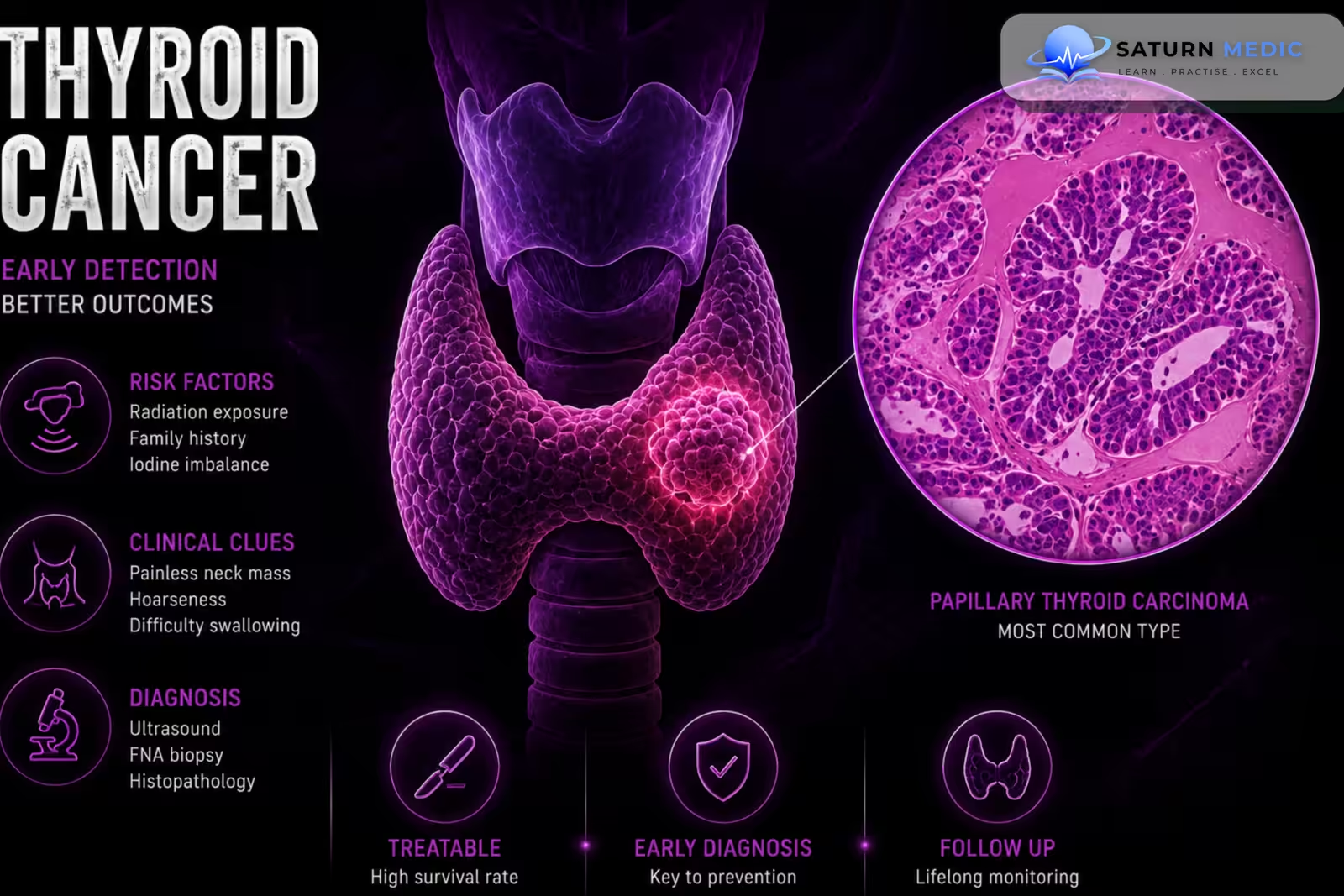
–Thyroid cancer commonly presents as a painless thyroid nodule or neck mass.
-The major types are:
- Papillary thyroid carcinoma — most common
- Follicular thyroid carcinoma
- Medullary thyroid carcinoma
- Anaplastic thyroid carcinoma
–Papillary and follicular cancers are generally differentiated and have a good prognosis, while medullary and anaplastic cancers require different management.
Etiology & Risk Factors
-Etiology:
Thyroid cancer develops from genetic mutations causing uncontrolled growth of thyroid cells.
-Important molecular abnormalities vary by type:
- Papillary → BRAF, RET/PTC
- Follicular → RAS, PAX8-PPARγ
- Medullary → RET
- Anaplastic → multiple genetic alterations, often including TP53
-Risk Factors
- Previous neck radiation exposure
- Family history of thyroid cancer
- Genetic syndromes, particularly for medullary thyroid carcinoma
- Increasing age
- Long-standing thyroid nodules
Pathophysiology
Genetic mutation → abnormal thyroid cell proliferation → thyroid nodule/tumor formation → local invasion ± lymphatic or hematogenous spread → regional or distant metastasis
Clinical Presentation
-Symptoms:
- Painless thyroid nodule
- Neck swelling
- Neck discomfort
- Difficulty swallowing
- Difficulty breathing
- Hoarseness
- Enlarged cervical lymph nodes
-Signs:
- Firm thyroid nodule
- Irregular thyroid mass
- Cervical lymphadenopathy
- Reduced vocal cord movement in advanced disease
- Fixed thyroid mass in locally invasive disease
History Taking
-Ask about:
- Duration and growth of the thyroid mass
- Neck pain
- Dysphagia
- Dyspnea
- Hoarseness
- Previous neck radiation
- Previous thyroid disease
- Family history of thyroid cancer
- Family history of endocrine tumors
Physical Examination
-General Examination
- Neck inspection
- Thyroid palpation
- Cervical lymph node examination
- Voice assessment
-System-Specific Examination:
- Thyroid nodule characteristics
- Cervical lymphadenopathy
- Tracheal deviation
- Vocal cord dysfunction when suspected
- Signs of local invasion
Investigations
Thyroid Function Tests
TSH
Free T4 when indicated
Most thyroid cancers occur in patients who are euthyroid.
-Serum Calcitonin
Important when medullary thyroid carcinoma is suspected.
-Thyroglobulin
Primarily used for follow-up after treatment of differentiated thyroid cancer, not as the initial diagnostic test for a thyroid nodule.
-Imaging
Thyroid Ultrasound
First-line imaging.
Assess:
Nodule composition
Echogenicity
Margins
Calcifications
Shape
-CT/MRI
Used when:
Advanced local disease is suspected
Retrosternal extension is suspected
Airway or mediastinal involvement needs assessment
-Radioactive Iodine Scan
May be used in selected patients with low TSH to determine whether a nodule is hyperfunctioning.
-Special / Confirmatory Tests
Fine-Needle Aspiration (FNA)
Ultrasound-guided FNA is the key diagnostic test for suspicious thyroid nodules.
-Cytology is reported using the Bethesda System.
Diagnosis
-Diagnosis is established by:
Thyroid nodule → TSH + thyroid ultrasound → FNA of suspicious nodule → Bethesda cytology → molecular testing/staging when indicated
-The exact diagnosis depends on histology:
- Papillary thyroid carcinoma
- Follicular thyroid carcinoma
- Medullary thyroid carcinoma
- Anaplastic thyroid carcinoma
Management
1. First-Line / Emergency Management
Airway compromise / rapidly progressive anaplastic thyroid cancer
Secure the airway.
Urgent multidisciplinary assessment.
Rapid staging.
Start definitive cancer treatment.
2. Definitive Treatment
-Differentiated Thyroid Cancer
Thyroid lobectomy or total thyroidectomy depending on tumor risk.
Radioactive iodine when indicated.
-Medullary Thyroid Carcinoma
Total thyroidectomy + lymph-node management when indicated.
-Anaplastic Thyroid Carcinoma
Surgery if resectable.
External-beam radiotherapy.
Targeted/systemic therapy when appropriate.
3. Medical Treatment
Levothyroxine: thyroid hormone replacement and TSH suppression when indicated.
RET-targeted therapy: for appropriate RET-altered tumors.
BRAF/MEK-targeted therapy: for selected BRAF-mutated disease.
4. Surgical / Procedural Treatment
Thyroid lobectomy.
Total thyroidectomy.
Central/lateral neck lymph-node dissection when indicated.
Surgery for selected metastatic disease.
5. Supportive Management
Thyroid hormone replacement when required.
Calcium monitoring after thyroidectomy.
Neck ultrasound surveillance.
Thyroglobulin monitoring after differentiated thyroid cancer treatment.
Complications
- Cervical lymph-node metastasis
- Local invasion
- Recurrent laryngeal nerve injury
- Vocal cord paralysis
- Airway obstruction
- Dysphagia
- Distant metastases
- Hypocalcemia after thyroidectomy
- Hypothyroidism after thyroidectomy
- Cancer recurrence
Prognosis
-Prognosis varies significantly by cancer type.
- Papillary and follicular thyroid cancers: generally excellent prognosis, especially when localized.
- Medullary thyroid carcinoma: variable prognosis depending on stage and metastatic disease.
- Anaplastic thyroid carcinoma: poor prognosis because of rapid growth and aggressive local invasion.
-Important prognostic factors include age, tumor type, tumor size, local invasion, lymph-node involvement, distant metastases, and molecular characteristics.
Key Points / Clinical Pearls
- Thyroid cancer is a malignant tumor arising from thyroid tissue.
- Papillary thyroid carcinoma is the most common type.
- Other major types are follicular, medullary, and anaplastic thyroid carcinoma.
- Most patients present with a painless thyroid nodule.
- Most patients with thyroid cancer are euthyroid.
- Thyroid ultrasound is the first-line imaging investigation.
- Suspicious nodules are evaluated with ultrasound-guided FNA.
- FNA cytology is classified using the Bethesda System.
- Papillary carcinoma commonly spreads through lymphatics to cervical lymph nodes.
- Follicular carcinoma more commonly spreads hematogenously to bone and lungs.
- Medullary thyroid carcinoma arises from parafollicular C cells and produces calcitonin.
- Haugen BR, Alexander EK, Bible KC, et al. 2015 American Thyroid Association Management Guidelines for Adult Patients with Thyroid Nodules and Differentiated Thyroid Cancer. Thyroid. 2016;26(1):1-133. Thyroid .
- Tuttle RM, Haugen B, Perrier ND. Updated American Joint Committee on Cancer/TNM Staging System for Differentiated and Anaplastic Thyroid Cancer. Thyroid. 2017;27(6):751-756. Thyroid .
- Durante C, Hegedüs L, Naumann JA, et al. A 2023 European Thyroid Association Clinical Practice Guideline for the Management of Patients with Differentiated Thyroid Cancer. Eur Thyroid J. 2023;12(5):e230067. European Thyroid Journal .
- Filetti S, Durante C, Hartl D, et al. Thyroid Cancer: ESMO Clinical Practice Guidelines for Diagnosis, Treatment and Follow-up. Ann Oncol. 2019;30(12):1856-1883. Annals of Oncology .
- National Cancer Institute (NIH). Thyroid Cancer . National Institutes of Health.
- National Library of Medicine (NIH). Thyroid Cancer . StatPearls.