

Clinical Subject Page
Turner Syndrome
Turner Syndrome is a chromosomal disorder affecting females, caused by complete or partial absence of one X chromosome. It commonly causes short stature, ovarian insufficiency, and characteristic physical features.
Also called
ICD-10
Specialty
Onset
Reviewed
-
OverviewOverview
-
Etiology & Risk FactorsEtiology & Risk Factors
-
PathophysiologyPathophysiology
-
Clinical PresentationClinical Presentation
-
History TakingHistory Taking
-
Physical ExaminationPhysical Examination
-
InvestigationsInvestigations
-
DiagnosisDiagnosis
-
ManagementManagement
-
ComplicationsComplications
-
PrognosisPrognosis
-
Key Points / Clinical PearlsKey Points / Clinical Pearls
Overview
–Turner Syndrome is a chromosomal condition affecting females and may involve multiple organ systems.
-The main clinical features are:
- Short stature
- Gonadal dysgenesis
- Primary ovarian insufficiency
- Delayed or absent puberty
- Infertility
- Characteristic physical features
-Important associated conditions include:
- Congenital heart disease
- Renal abnormalities
- Hearing problems
- Thyroid disease
Etiology & Risk Factors
-Etiology:
Turner Syndrome results from complete or partial loss of one X chromosome.
-Common chromosomal patterns include:
- 45,X
- Mosaic Turner Syndrome
- Structural abnormalities of the X chromosome
-Loss of X-chromosome material causes impaired development of the ovaries and other affected tissues.
-Risk Factors
- No major modifiable risk factors are established.
- Most cases result from random chromosomal abnormalities.
Pathophysiology
Loss of all or part of one X chromosome → impaired ovarian development → gonadal dysgenesis → ↓ estrogen production → delayed/absent puberty + infertility
Loss of X-chromosome genes → abnormal growth and development → short stature + characteristic physical features + cardiovascular/renal abnormalities
Clinical Presentation
-Symptoms:
- Short stature
- Delayed puberty
- Primary amenorrhea
- Infertility
- Reduced breast development
- Fatigue
- Hearing difficulties
-Signs:
- Short stature
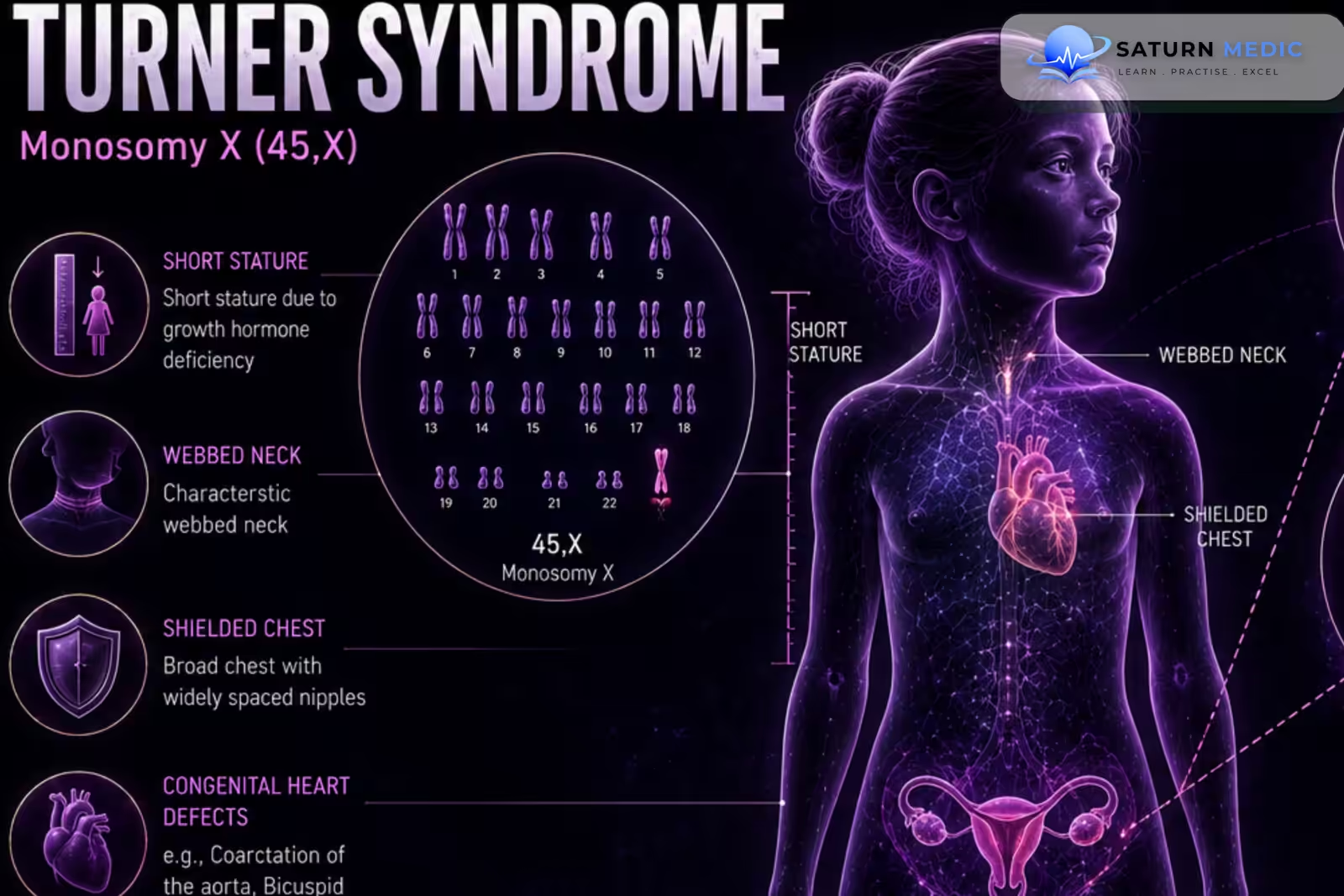
- Webbed neck
- Low posterior hairline
- Broad chest
- Widely spaced nipples
- Cubitus valgus
- Lymphedema of hands and feet, particularly in infancy
- Short fourth metacarpals
- Gonadal dysgenesis
History Taking
-Ask about:
- Growth pattern
- Height compared with peers and family
- Delayed puberty
- Breast development
- Menstruation
- Fertility
- Hearing problems
- Recurrent ear infections
- Cardiac symptoms
- Hypertension
- Thyroid symptoms
- Renal problems
Physical Examination
-General Examination
- Height
- Weight
- Growth velocity
- Blood pressure
-Look For:
- Short stature
- Webbed neck
- Broad chest
- Low hairline
- Widely spaced nipples
- Lymphedema
System-Specific Examination
- Cardiac examination for murmurs and congenital heart disease
- Pubertal assessment
- External genital examination
- Thyroid examination
- Hearing assessment when indicated
Investigations
-Karyotype
Karyotyping confirms the chromosomal diagnosis.
-Gonadal Function
Typical findings include:
Low estradiol
High FSH
High LH
This indicates hypergonadotropic hypogonadism.
-Additional Screening
Assess for associated conditions:
TSH and thyroid function
Liver function
Glucose/HbA1c
Lipid profile
Renal function when indicated
-Imaging
Echocardiography
Recommended to evaluate:
Bicuspid aortic valve
Coarctation of the aorta
- Aortic abnormalities
-Cardiac MRI/CT
May be used for detailed assessment of the aorta and congenital cardiovascular abnormalities.
-Renal Ultrasound
Used to identify:
Horseshoe kidney
Renal malformations
Other structural abnormalities
-Bone Density
DEXA scanning may be used to assess bone mineral density, particularly with prolonged estrogen deficiency.
Diagnosis
-Diagnosis of Turner Syndrome is established by:
Clinical features suggestive of Turner Syndrome → karyotype demonstrating complete or partial X-chromosome loss → assess cardiac, renal, endocrine, hearing, and bone complications
Management
1. Definitive Treatment
There is no cure for the chromosomal abnormality.
Management focuses on:
Promoting normal growth
Inducing puberty
Replacing estrogen
Managing associated conditions
Monitoring long-term complications
2. Medical Treatment
-Growth Hormone
Recombinant growth hormone may be started during childhood to improve final adult height.
-Estrogen Replacement
Used to:
Initiate puberty
Develop secondary sexual characteristics
Maintain bone health
Progesterone is added after adequate estrogen exposure when a uterus is present to provide endometrial protection.
-Management of Associated Conditions
Treat:
Hypertension
Hypothyroidism
Diabetes
Dyslipidemia
Osteoporosis
Hearing problems
3. Surgical / Procedural Treatment
May be required for:
Coarctation of the aorta
Significant cardiac abnormalities
Other structural abnormalities
4. Supportive Management
Regular growth monitoring
Cardiovascular surveillance
Renal assessment
Thyroid screening
Complications
- Short stature
- Primary ovarian insufficiency
- Infertility
- Delayed puberty
- Osteoporosis
- Bicuspid aortic valve
- Coarctation of the aorta
- Aortic dilation/dissection
- Hypertension
- Renal abnormalities
Prognosis
-With appropriate monitoring and treatment, many individuals with Turner Syndrome have a good quality of life.
-Prognosis of turner Syndrome is mainly affected by:
- Cardiovascular disease
- Aortic abnormalities
- Hypertension
- Renal disease
- Metabolic complications
Key Points / Clinical Pearls
- Turner Syndrome is a chromosomal disorder affecting females.
- It results from complete or partial loss of one X chromosome.
- The classic karyotype is 45,X.
- Short stature and ovarian insufficiency are the major clinical features.
- Common findings include webbed neck, broad chest, low hairline, and widely spaced nipples.
- Ovarian failure causes low estrogen with high FSH and LH.
- Patients commonly have delayed puberty, primary amenorrhea, and infertility.
- Karyotyping confirms the diagnosis.
- Turner Syndrome can be mosaic, resulting in milder or variable features.
- Growth hormone can improve final adult height when started appropriately in childhood.
- Estrogen replacement is used to induce and maintain puberty.
- Gravholt CH, Andersen NH, Conway GS, et al. Clinical Practice Guidelines for the Care of Girls and Women With Turner Syndrome: Proceedings From the 2016 Cincinnati International Turner Syndrome Meeting. Eur J Endocrinol. 2017;177(3):G1-G70. European Journal of Endocrinology .
- Gravholt CH, Viuff MH, Brun S, Stochholm K, Andersen NH. Turner Syndrome: Mechanisms and Management. Nat Rev Endocrinol. 2022;18:510-526. Nature Reviews Endocrinology .
- Gravholt CH, Andersen NH, Christin-Maitre S, et al. Clinical Practice Guidelines for the Care of Girls and Women With Turner Syndrome: 2023 Aarhus International Turner Syndrome Meeting. Eur J Endocrinol. 2024;190(6):G53-G89. European Journal of Endocrinology .
- National Institute of Child Health and Human Development (NIH). Turner Syndrome . National Institutes of Health.
- National Library of Medicine (NIH). Turner Syndrome . GeneReviews.