

Clinical Subject Page
Acute Kidney Injury (AKI)
Acute Kidney Injury (AKI) is a sudden decline in kidney function occurring over hours to days, resulting in the accumulation of waste products, electrolyte abnormalities, acid-base disturbances, and fluid imbalance
Also called
ICD-10
Specialty
Onset
Reviewed
-
OverviewOverview
-
Etiology & Risk FactorsEtiology & Risk Factors
-
PathophysiologyPathophysiology
-
Clinical PresentationClinical Presentation
-
History TakingHistory Taking
-
Physical ExaminationPhysical Examination
-
InvestigationsInvestigations
-
DiagnosisDiagnosis
-
ManagementManagement
-
ComplicationsComplications
-
PrognosisPrognosis
-
Key Points / Clinical PearlsKey Points / Clinical Pearls
Overview
–Acute Kidney Injury (AKI) is characterized by a rapid reduction in glomerular filtration rate (GFR). It is broadly classified into:
- Prerenal AKI — reduced renal perfusion
- Intrinsic renal AKI — direct damage to the kidney
- Postrenal AKI — urinary tract obstruction
–Acute Kidney Injury (AKI) is clinically important because severe or untreated disease can cause hyperkalemia, pulmonary edema, metabolic acidosis, uremia, and death
Etiology & Risk Factors
-Etiology
–Prerenal
Reduced renal blood flow due to:
- Hypovolemia or hemorrhage
- Sepsis
- Heart failure
- Cirrhosis
- Reduced effective circulating volume
-Intrinsic Renal
Direct kidney injury, including:
- Acute tubular necrosis (ATN)
- Acute glomerulonephritis
- Acute interstitial nephritis
- Vascular injury
-Postrenal
Obstruction to urinary outflow, including:
- Benign prostatic hyperplasia
- Urinary tract stones
- Pelvic or abdominal malignancy
- Bilateral ureteric obstruction
-Risk Factors:
- Chronic kidney disease
- Older age
- Sepsis or shock
- Major surgery or trauma
- Nephrotoxic medications or contrast exposure
Pathophysiology
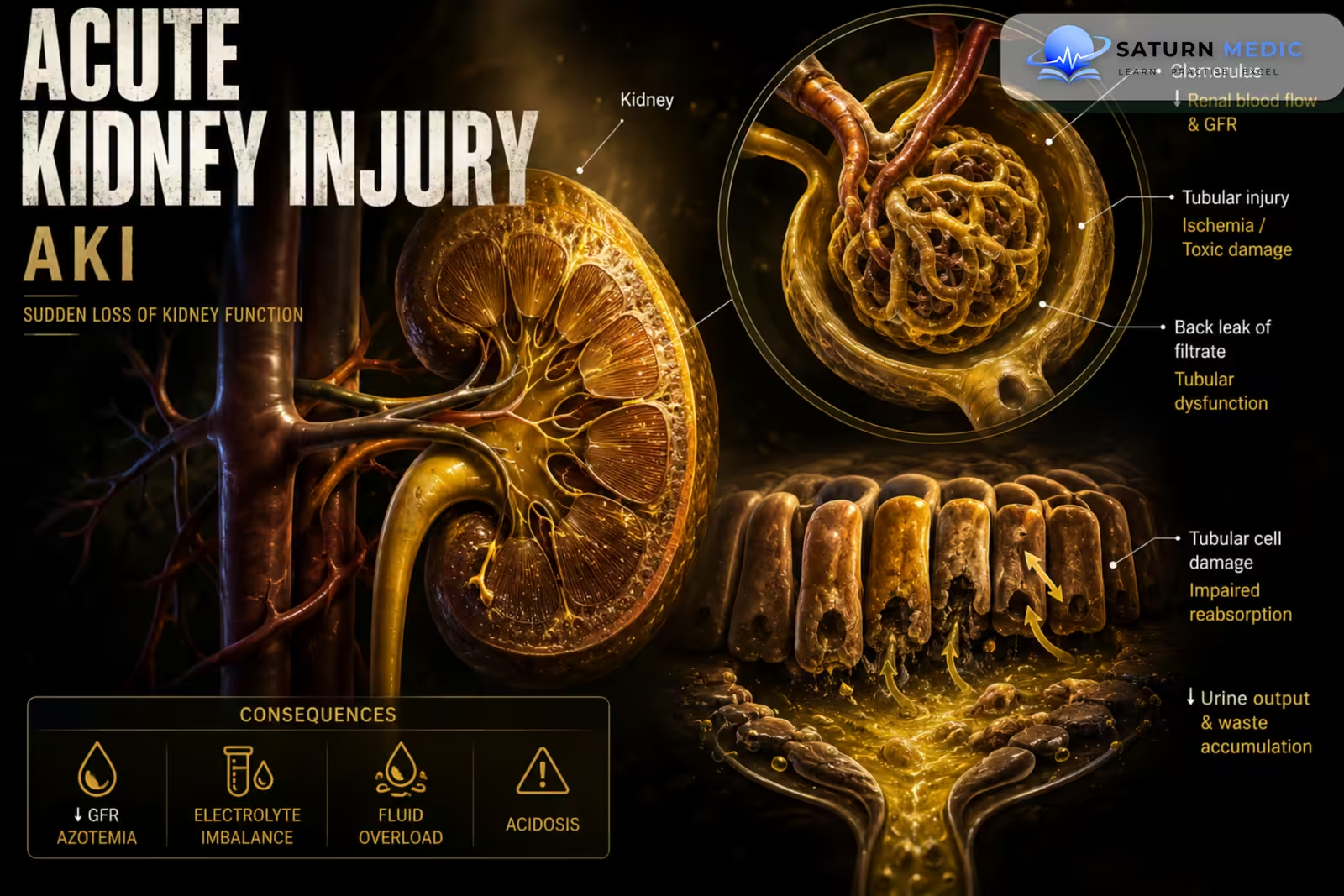
Reduced renal perfusion / direct renal injury / urinary obstruction → reduced GFR → impaired excretion of creatinine, urea, potassium, and water → azotemia + electrolyte and acid-base disturbances + fluid retention → systemic complications
Clinical Presentation
-Symptoms:
- Reduced urine output
- Fatigue and weakness
- Nausea and vomiting
- Reduced appetite
- Shortness of breath due to fluid overload
- Confusion in severe uremia
-Signs:
- Oliguria or anuria
- Hypotension or signs of shock
- Dehydration
- Peripheral edema
- Raised jugular venous pressure
- Pulmonary crackles due to fluid overload
History Taking
-Ask about:
- When did urine output decrease?
- Recent vomiting, diarrhea, bleeding, or poor fluid intake?
- Recent hypotension, shock, sepsis, or surgery?
- History of heart failure or liver disease?
- Recent exposure to contrast media?
- Current medications, especially NSAIDs, ACE inhibitors, ARBs, diuretics, and nephrotoxic drugs?
- Previous kidney disease or Chronic Kidney Disease (CKD)?
- Flank pain, renal colic, or difficulty passing urine?
Physical Examination
-General Examination
- Assess blood pressure and hemodynamic status
- Assess volume status
- Look for dehydration or fluid overload
- Measure urine output
-System-Specific Examination:
- Pulmonary crackles suggesting pulmonary edema
- Bladder distension suggesting urinary retention
- Peripheral edema
- Signs of the underlying cause, such as sepsis or heart failure
Investigations
-Complete Blood Count
CBC is useful when investigating possible causes or complications such as infection, bleeding, anemia, or thrombotic microangiopathy.
-Peripheral Blood Film
Not routinely indicated.
It may be useful when hemolysis or thrombotic microangiopathy is suspected.
-Biochemistry / Specific Tests:
-
Serum creatinine — assess and monitor kidney function
-
Serum urea — supportive marker of reduced renal function
-
Serum electrolytes, especially potassium
-
Bicarbonate — assess metabolic acidosis
-
Urinalysis — detect blood, protein, or other abnormalities
-
Urine microscopy — identify casts or cells suggesting intrinsic renal disease
-
Urine protein assessment when glomerular disease is suspected
-Imaging
-
Renal ultrasound — assess kidney size, hydronephrosis, and urinary tract obstruction
-
Bladder scan — assess urinary retention when suspected
-Special / Confirmatory Tests
Further tests depend on the suspected cause:
-
Autoimmune serology for suspected glomerulonephritis or vasculitis
-
Creatine kinase for suspected rhabdomyolysis
-
Kidney biopsy when intrinsic renal disease remains unclear and histological diagnosis will affect management
Diagnosis
–Acute Kidney Injury (AKI) is diagnosed using KDIGO criteria. The diagnosis is made by any of the following:
- Increase in serum creatinine by ≥0.3 mg/dL (≥26.5 µmol/L) within 48 hours
- Increase in serum creatinine to ≥1.5 times baseline within 7 days
- Urine output <0.5 mL/kg/hour for 6 hours
-After confirming Acute Kidney Injury (AKI), determine whether the cause is prerenal, intrinsic renal, or postrenal through clinical assessment, urine studies, medication review, and appropriate imaging.
Management
1. First-Line / Emergency Management:
-
Assess airway, breathing, and circulation when critically ill
-
Treat shock and restore appropriate renal perfusion
-
Stop or avoid nephrotoxic medications
-
Correct severe hyperkalemia urgently
-
Treat pulmonary edema and severe fluid overload
-
Relieve urinary tract obstruction promptly
-
Monitor urine output and serial serum creatinine
2. Definitive Treatment
Treat the underlying cause:
-
Prerenal AKI → correct hypovolemia and restore renal perfusion
-
Sepsis-associated AKI → treat sepsis and optimize hemodynamics
-
Acute tubular necrosis → supportive management and treatment of the precipitating cause
-
Glomerulonephritis or vasculitis → cause-specific immunosuppressive treatment
-
Postrenal AKI → relieve the obstruction
3. Medical Treatment
-
Intravenous fluids for appropriate hypovolemia
-
Vasopressors when required for shock after adequate fluid assessment
-
Treatment for hyperkalemia when present
-
Diuretics for clinically significant fluid overload, not to reverse kidney injury
-
Cause-specific medications when indicated
4. Surgical / Procedural Treatment
Procedures may be required to relieve obstruction:
-
Urinary catheterization
-
Ureteric stenting
-
Percutaneous nephrostomy
Kidney replacement therapy may be required in severe Acute Kidney Injury (AKI).
5. Supportive Management
-
Monitor fluid balance and urine output
-
Monitor creatinine, potassium, and acid-base status
-
Adjust medication doses according to kidney function
-
Avoid nephrotoxic agents where possible
Complications
- yperkalemia
- Metabolic acidosis
- Pulmonary edema
- Uremia
- Uremic encephalopathy
- Uremic pericarditis
- Hypertension
- Infection
- Chronic kidney disease
- End-stage kidney disease
- Death
Prognosis
-The prognosis of Acute Kidney Injury (AKI) depends on the underlying cause, severity and duration of kidney injury, baseline kidney function, and associated illnesses.
–Prerenal AKI may be reversible if treated early, while severe intrinsic renal injury can result in Chronic Kidney Disease (CKD) or long-term kidney failure.
Key Points / Clinical Pearls
- Acute Kidney Injury (AKI) is a rapid decline in kidney function.
- The three major categories are prerenal, intrinsic renal, and postrenal AKI.
- Oliguria is common but normal urine output does not exclude Acute Kidney Injury (AKI).
- Serum creatinine and urine output are central to diagnosis.
- KDIGO criteria are commonly used to diagnose Acute Kidney Injury (AKI).
- An increase in creatinine of ≥0.3 mg/dL within 48 hours meets a diagnostic criterion.
- Hyperkalemia is a potentially life-threatening complication.
- Always review medications for possible nephrotoxins.
- Assess volume status carefully before giving intravenous fluids.
- Renal ultrasound is important when urinary obstruction is suspected.
- Treat the underlying cause and correct reversible factors early.
- Kidney Disease: Improving Global Outcomes (KDIGO) Acute Kidney Injury Work Group. KDIGO Clinical Practice Guideline for Acute Kidney Injury. Kidney Int Suppl. 2012;2(1):1-138. KDIGO .
- Kellum JA, Lameire N, Aspelin P, et al. Kidney Disease: Improving Global Outcomes (KDIGO) Acute Kidney Injury Work Group. KDIGO Clinical Practice Guideline for Acute Kidney Injury. Kidney Int Suppl. 2012;2:1-138. KDIGO Guideline .
- Hoste EAJ, Clermont G, Kersten A, et al. RIFLE Criteria for Acute Kidney Injury Are Associated With Hospital Mortality. Crit Care. 2006;10(3):R73. Critical Care .
- Makris K, Spanou L. Acute Kidney Injury: Definition, Pathophysiology and Clinical Phenotypes. Clin Biochem Rev. 2016;37(2):85-98. PubMed .
- National Institute of Diabetes and Digestive and Kidney Diseases (NIDDK). Acute Kidney Injury (AKI) . National Institutes of Health.
- National Library of Medicine (NIH). Acute Kidney Injury . StatPearls.