

Clinical Subject Page
Acute Tubular Necrosis (ATN)
Acute Tubular Necrosis (ATN) is a common cause of Acute Kidney Injury (AKI) caused by injury to renal tubular epithelial cells, usually from ischemia or nephrotoxic substances. It leads to an acute decline in kidney function and is often reversible with appropriate management
Also called
ICD-10
Specialty
Onset
Reviewed
-
OverviewOverview
-
Etiology & Risk FactorsEtiology & Risk Factors
-
PathophysiologyPathophysiology
-
Clinical PresentationClinical Presentation
-
History TakingHistory Taking
-
Physical ExaminationPhysical Examination
-
InvestigationsInvestigations
-
DiagnosisDiagnosis
-
ManagementManagement
-
ComplicationsComplications
-
PrognosisPrognosis
-
Key Points / Clinical PearlsKey Points / Clinical Pearls
Overview
-Acute Tubular Necrosis (ATN) is characterized by acute tubular epithelial injury with impaired renal reabsorption and filtration.
-The two major causes are:
- Ischemic ATN — severe or prolonged reduction in renal perfusion
- Nephrotoxic ATN — direct tubular injury from medications, toxins, or endogenous substances
It is one of the most common causes of intrinsic Acute Kidney Injury (AKI).
Etiology & Risk Factors
-Etiology
–Ischemic Causes
- Severe hypotension
- Septic shock
- Major blood loss
- Prolonged surgery
- Severe dehydration
-Nephrotoxic Causes
- Aminoglycosides
- Radiographic contrast agents
- Cisplatin
- Amphotericin B
- Myoglobin from rhabdomyolysis
- Hemoglobin from massive hemolysis
-Risk Factors:
- Sepsis
- Prolonged hypotension
- Major surgery
- Severe dehydration
- Exposure to nephrotoxic medications or substances
Pathophysiology
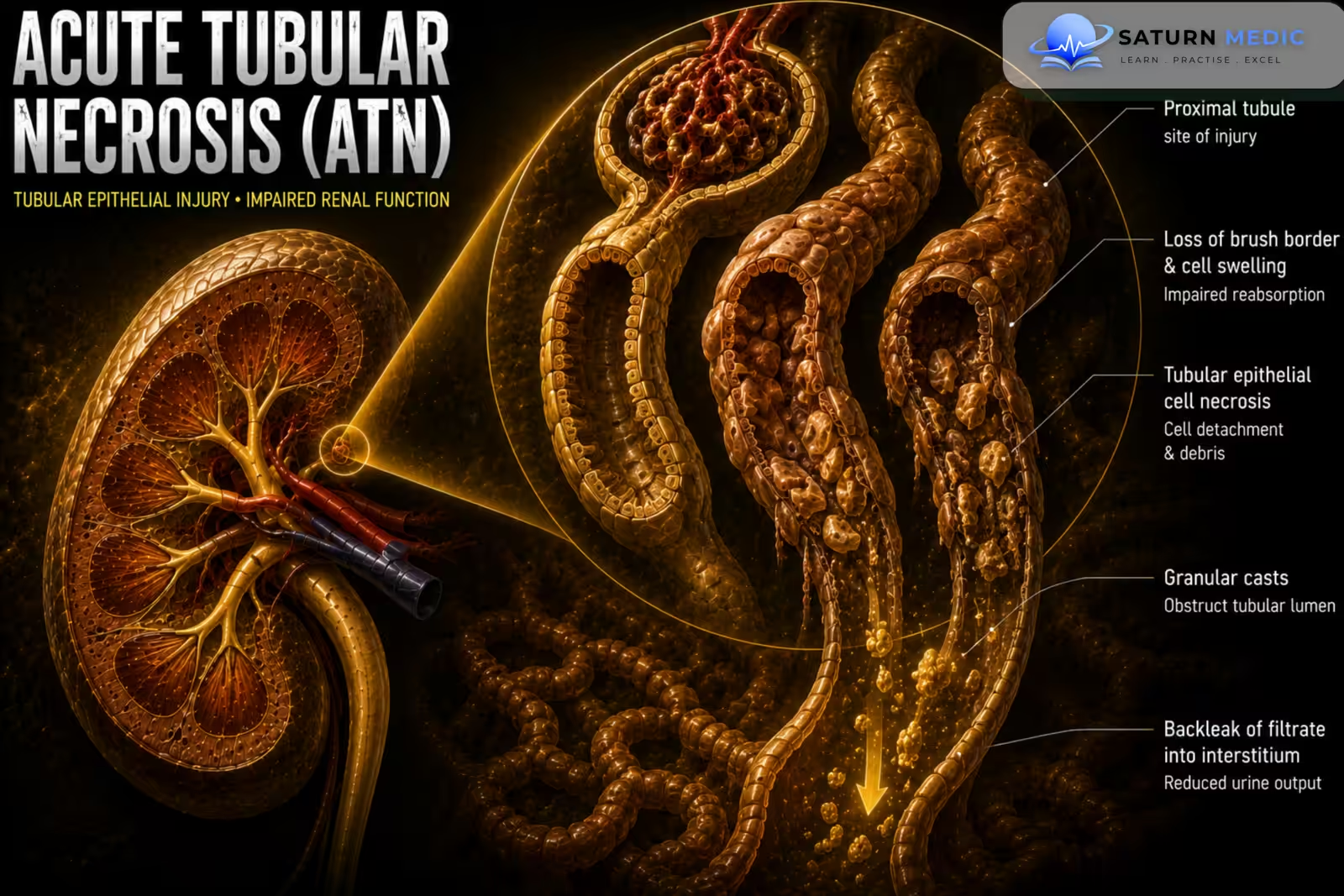
Ischemic or nephrotoxic insult → tubular epithelial injury → loss of tubular cell integrity → impaired reabsorption + tubular obstruction → reduced GFR → Acute Kidney Injury (AKI) → oliguria and accumulation of metabolic waste
Clinical Presentation
-Symptoms:
- Reduced urine output
- Fatigue
- Nausea
- Vomiting
- Weakness
- Edema
- Dyspnea from fluid overload
-Signs:
- Oliguria
- Peripheral edema
- Fluid overload
- Hypertension or hypotension depending on the underlying cause
- Signs of the precipitating illness
History Taking
-Ask about:
- Recent hypotension or shock
- Sepsis or severe infection
- Major surgery
- Trauma or blood loss
- Dehydration
- Recent nephrotoxic medication exposure
- Recent contrast administration
- Rhabdomyolysis or prolonged muscle injury
- Hemolysis
- Baseline kidney function
Physical Examination
-General Examination
- Blood pressure
- Volume status
- Peripheral edema
- Signs of dehydration
- Signs of sepsis or shock
-System-Specific Examination:
- Cardiovascular examination for perfusion and fluid overload
- Respiratory examination for pulmonary edema
- Assessment for the underlying cause of ATN
Investigations
-Biochemistry / Specific Tests
- Serum creatinine
- Serum urea
- Serum potassium
- Serum sodium
- Serum bicarbonate
- Serum phosphate
- Urinalysis
- Urine microscopy
- Urine sodium and fractional excretion indices when clinically useful
Typical urine findings include:
- Granular “muddy brown” casts
- Renal tubular epithelial cells
- Mild to moderate proteinuria
Fractional excretion of sodium (FENa) may support ATN but should not be interpreted in isolation, particularly in patients receiving diuretics or with other complex clinical conditions.
-Imaging
Renal ultrasound is primarily used to exclude urinary obstruction when indicated.
There are no specific imaging findings that confirm ATN.
-Special / Confirmatory Tests
Kidney biopsy is not routinely required.
It may be considered when the diagnosis is uncertain or another intrinsic renal disease is suspected.
Diagnosis
-Diagnosis of Acute Tubular Necrosis (ATN) is primarily clinical.
Suspect Acute Tubular Necrosis (ATN) in a patient with:
- Acute rise in serum creatinine
- Recent ischemic or nephrotoxic insult
- Features of intrinsic kidney injury
- Urine microscopy showing granular casts
Management
1. First-Line / Emergency Management
-
Identify and correct the precipitating cause
-
Restore adequate renal perfusion in hypovolemic patients
-
Treat sepsis promptly
-
Correct severe hyperkalemia
-
Treat severe metabolic acidosis
2. Definitive Treatment
There is no specific drug that reverses ATN.
Management focuses on:
-
Removing the underlying insult
-
Supporting renal function until recovery
3. Medical Treatment
-
Intravenous fluids when volume depleted
-
Appropriate antibiotics for sepsis or infection
-
Electrolyte correction
-
Diuretics for clinically significant fluid overload when appropriate
-
Avoidance of further nephrotoxins
Diuretics do not accelerate renal recovery and should not be used routinely simply to increase urine output.
4. Surgical / Procedural Treatment
No routine surgical treatment.
Dialysis may be required for:
-
Refractory hyperkalemia
-
Severe metabolic acidosis
-
Pulmonary edema or refractory fluid overload
-
Severe uremic complications
-
Certain severe toxin exposures
5. Supportive Management
-
Strict fluid balance
-
Daily weight monitoring
-
Serial creatinine and electrolyte measurements
Complications
- Hyperkalemia
- Metabolic acidosis
- Fluid overload
- Pulmonary edema
- Uremia
- Electrolyte disturbances
- Prolonged Acute Kidney Injury (AKI)
Prognosis
–Acute Tubular Necrosis (ATN) is often reversible if the underlying cause is corrected and further kidney injury is prevented
–Recovery may take days to weeks, and some patients develop persistent kidney dysfunction or Chronic Kidney Disease (CKD), particularly after severe or prolonged injury.
Key Points / Clinical Pearls
- Acute Tubular Necrosis (ATN) is a major cause of intrinsic Acute Kidney Injury (AKI).
- Ischemia and nephrotoxins are the two major causes.
- Sepsis and prolonged hypotension are common triggers.
- Aminoglycosides and other nephrotoxins can cause tubular injury.
- Rhabdomyolysis can cause ATN through myoglobin toxicity.
- ATN may be oliguric or non-oliguric.
- Serum creatinine rises as kidney function deteriorates.
- Urine microscopy may show muddy brown granular casts.
- FENa can support the diagnosis but has important limitations.
- Renal ultrasound is mainly used to exclude obstruction.
- Kidney Disease: Improving Global Outcomes (KDIGO) Acute Kidney Injury Work Group. KDIGO Clinical Practice Guideline for Acute Kidney Injury. Kidney Int Suppl. 2012;2(1):1-138. KDIGO .
- Makris K, Spanou L. Acute Kidney Injury: Definition, Pathophysiology and Clinical Phenotypes. Clin Biochem Rev. 2016;37(2):85-98. PubMed .
- Bellomo R, Kellum JA, Ronco C. Acute Kidney Injury. Lancet. 2012;380(9843):756-766. The Lancet .
- Perazella MA, Coca SG, Kanbay M, Brewster UC, Parikh CR. Diagnostic Value of Urine Microscopy for Differential Diagnosis of Acute Kidney Injury in Hospitalized Patients. Clin J Am Soc Nephrol. 2008;3(6):1615-1619. Clinical Journal of the American Society of Nephrology .
- National Institute of Diabetes and Digestive and Kidney Diseases (NIDDK). Acute Kidney Injury (AKI) . National Institutes of Health.
- National Library of Medicine (NIH). Acute Tubular Necrosis . StatPearls.