

Clinical Subject Page
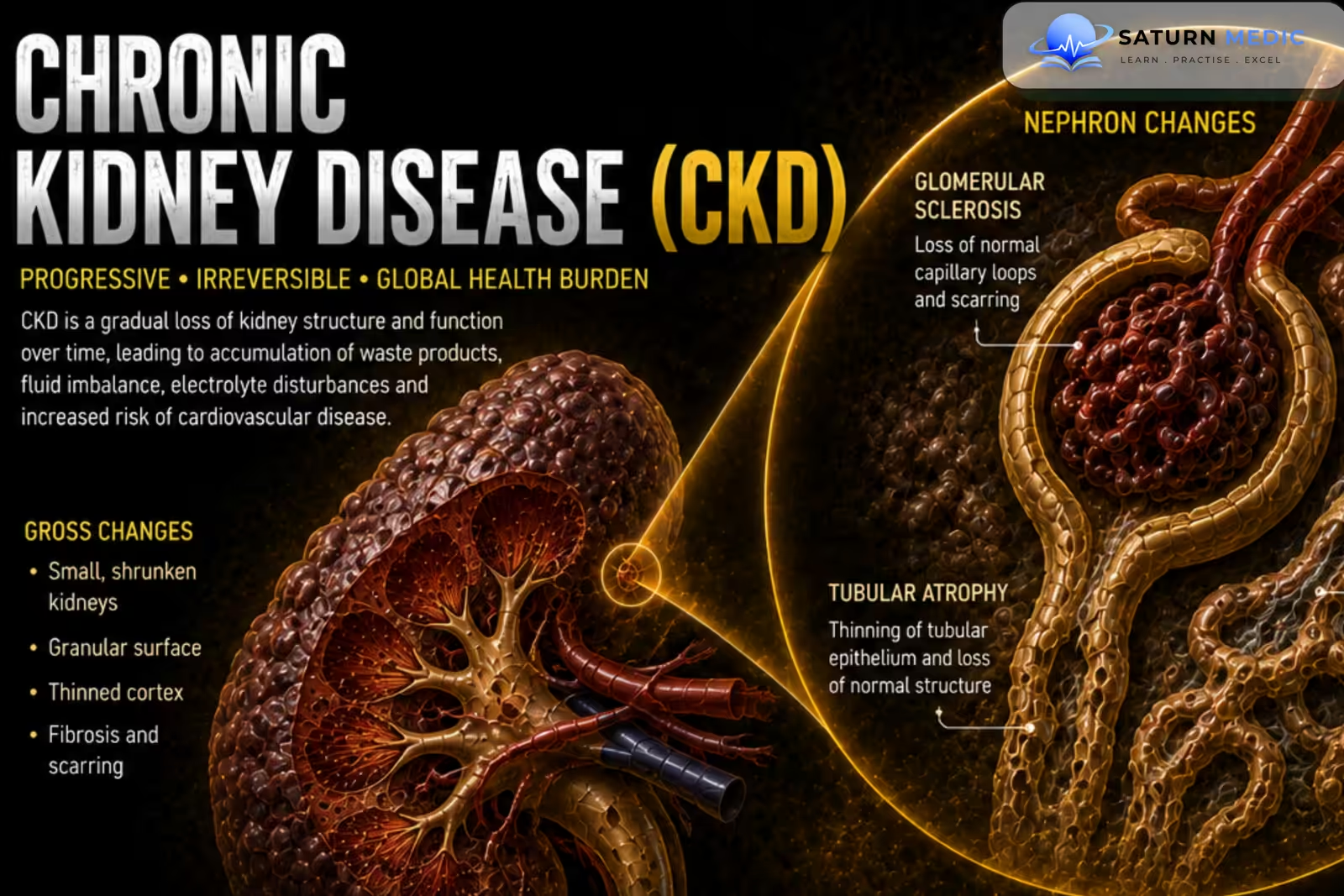
Chronic Kidney Disease (CKD)
Nephrotic Syndrome is a clinical syndrome caused by increased glomerular permeability to proteins, resulting in heavy proteinuria, hypoalbuminemia, edema, and hyperlipidemia
Also called
ICD-10
Specialty
Onset
Reviewed
-
OverviewOverview
-
Etiology & Risk FactorsEtiology & Risk Factors
-
PathophysiologyPathophysiology
-
Clinical PresentationClinical Presentation
-
History TakingHistory Taking
-
Physical ExaminationPhysical Examination
-
InvestigationsInvestigations
-
DiagnosisDiagnosis
-
ManagementManagement
-
ComplicationsComplications
-
PrognosisPrognosis
-
Key Points / Clinical PearlsKey Points / Clinical Pearls
Overview
–Chronic Kidney Disease (CKD) is defined by abnormalities of kidney structure or function that persist for >3 months and have implications for health.
-It is classified mainly according to estimated glomerular filtration rate (eGFR) and albuminuria.
-The major causes are:
- Diabetes mellitus
- Hypertension
- Glomerular diseases
- Polycystic kidney disease
- Chronic tubulointerstitial diseases
–Advanced Chronic Kidney Disease (CKD) can progress to kidney failure requiring dialysis or kidney transplantation.
Etiology & Risk Factors
-Etiology
–The most common causes include:
- Diabetes mellitus
- Hypertension
- Chronic glomerular diseases
- Polycystic kidney disease
- Chronic tubulointerstitial disease
- Obstructive uropathy
- Recurrent or severe kidney injury
-Risk Factors:
- Diabetes mellitus
- Hypertension
- Cardiovascular disease
- Family history of kidney disease
- Older age
- Previous acute kidney injury
Pathophysiology
Underlying kidney disease → nephron loss → compensatory hyperfiltration in remaining nephrons → glomerular hypertension and progressive damage → declining GFR → accumulation of metabolic waste → complications of Chronic Kidney Disease (CKD) → kidney failure
Clinical Presentation
-Symptoms:
- Fatigue
- Weakness
- Loss of appetite
- Nausea
- Pruritus
- Nocturia
- Peripheral edema
- Dyspnea
- Sleep disturbances
-Signs:
- Hypertension
- Peripheral edema
- Pallor due to anemia
- Uremic features in advanced disease
- Reduced muscle mass
- Signs of the underlying cause
History Taking
-Ask about:
- Diabetes and hypertension
- Previous kidney disease or acute kidney injury
- Urinary symptoms
- Hematuria or frothy urine
- Edema and changes in urine output
- Recurrent urinary tract infections
- Kidney stones or urinary obstruction
- Family history of kidney disease
- Cardiovascular disease
- Use of nephrotoxic medications, especially NSAIDs
Physical Examination
-General Examination
- Blood pressure
- Pallor
- Peripheral edema
- Signs of fluid overload
- Nutritional status
-System-Specific Examination:
- Cardiovascular examination for hypertension and fluid overload
- Fundoscopic examination when indicated for hypertensive or diabetic disease
- Abdominal examination for enlarged kidneys or masses
- Neurological examination for advanced uremia
Investigations
-Biochemistry / Specific Tests
Serum creatinine
eGFR
Serum urea
Serum electrolytes, particularly potassium
Serum bicarbonate
Calcium and phosphate
Serum albumin
Urinalysis
Urine albumin-to-creatinine ratio (ACR)
-Imaging
Renal ultrasound may assess:
Kidney size
Renal structure
Obstruction
Cysts
Chronic structural changes
-Special / Confirmatory Tests
eGFR for assessment of kidney function
Urine ACR for albuminuria
Autoimmune, serological, or genetic testing when clinically indicated
Kidney biopsy when the underlying renal disease requires histological confirmation
Diagnosis
The diagnosis is made when kidney structural or functional abnormalities persist for >3 months.
-Key diagnostic findings include:
- eGFR <60 mL/min/1.73 m² for ≥3 months, or
- Persistent markers of kidney damage, particularly albuminuria, for ≥3 months.
-Assessment should include:
Serum creatinine/eGFR + urine ACR + urinalysis + evaluation of the underlying cause.
-CKD is staged according to eGFR:
- G1: ≥90
- G2: 60–89
- G3a: 45–59
- G3b: 30–44
- G4: 15–29
- G5: <15 mL/min/1.73 m²
Management
1. Definitive Treatment
Treat the underlying cause
Control blood pressure
Control diabetes
Reduce albuminuria and slow kidney disease progression
Avoid nephrotoxic medications
Manage cardiovascular risk factors
Prepare for kidney replacement therapy in advanced disease
2. Medical Treatment
ACE inhibitors or ARBs — particularly in patients with albuminuria
SGLT2 inhibitors — appropriate patients with CKD, including many patients with diabetes and selected patients without diabetes
Statins — cardiovascular risk reduction when indicated
Diuretics — management of edema and fluid overload
Erythropoiesis-stimulating agents — selected patients with CKD-associated anemia
Phosphate-lowering therapy — when clinically indicated
Sodium bicarbonate — selected patients with persistent metabolic acidosis
3. Surgical / Procedural Treatment
Dialysis for kidney failure when clinically indicated
Kidney transplantation for suitable patients with kidney failure
4. Supportive Management
Dietary sodium restriction
Appropriate dietary protein intake
Avoid NSAIDs and other nephrotoxins
Monitor blood pressure
Monitor eGFR and urine ACR
Monitor potassium and acid-base status
Complications
- Kidney failure
- Hyperkalemia
- Metabolic acidosis
- Anemia
- Mineral and bone disorder
- Secondary hyperparathyroidism
- Fluid overload
- Hypertension
- Cardiovascular disease
- Uremic encephalopathy
- Uremic pericarditis
- Increased infection risk
Prognosis
-The prognosis varies according to the cause, eGFR, degree of albuminuria, rate of progression, cardiovascular disease, and control of risk factors.
–Early detection and appropriate treatment can significantly slow progression to kidney failure.
Key Points / Clinical Pearls
- Chronic Kidney Disease (CKD) is kidney abnormality lasting more than 3 months.
- Diabetes mellitus and hypertension are the most common causes.
- Early Chronic Kidney Disease (CKD) is often asymptomatic.
- eGFR is essential for assessing kidney function.
- Urine albumin-to-creatinine ratio (ACR) is essential for detecting and quantifying albuminuria.
- eGFR <60 mL/min/1.73 m² for ≥3 months indicates CKD.
- CKD is classified into G1–G5 according to eGFR.
- Albuminuria provides additional prognostic information.
- ACE inhibitors or ARBs are important in albuminuric CKD.
- SGLT2 inhibitors can slow CKD progression in appropriate patients.
- Blood pressure and diabetes control are central to management.
- Kidney Disease: Improving Global Outcomes (KDIGO) CKD Work Group. KDIGO 2024 Clinical Practice Guideline for the Evaluation and Management of Chronic Kidney Disease. Kidney Int. 2024;105(4S):S117-S314. KDIGO .
- Stevens PE, Levin A. Evaluation and Management of Chronic Kidney Disease: Synopsis of the Kidney Disease: Improving Global Outcomes 2012 Clinical Practice Guideline. Ann Intern Med. 2013;158(11):825-830. Annals of Internal Medicine .
- Gansevoort RT, Matsushita K, van der Velde M, et al. Lower Estimated GFR and Higher Albuminuria Are Associated With Adverse Kidney Outcomes Independent of Each Other. Kidney Int. 2011;79(12):1331-1340.
- Webster AC, Nagler EV, Morton RL, Masson P. Chronic Kidney Disease. Lancet. 2017;389(10075):1238-1252. The Lancet .
- National Kidney Foundation. Chronic Kidney Disease (CKD) .
- National Institute of Diabetes and Digestive and Kidney Diseases (NIDDK). Chronic Kidney Disease . National Institutes of Health.