

Clinical Subject Page
IgA Nephropathy
IgA Nephropathy is a glomerular disease caused by deposition of immunoglobulin A (IgA) in the kidney glomeruli. It commonly presents with recurrent hematuria and can gradually progress to Chronic Kidney Disease (CKD)
Also called
ICD-10
Specialty
Onset
Reviewed
-
OverviewOverview
-
Etiology & Risk FactorsEtiology & Risk Factors
-
PathophysiologyPathophysiology
-
Clinical PresentationClinical Presentation
-
History TakingHistory Taking
-
Physical ExaminationPhysical Examination
-
InvestigationsInvestigations
-
DiagnosisDiagnosis
-
ManagementManagement
-
ComplicationsComplications
-
PrognosisPrognosis
-
Key Points / Clinical PearlsKey Points / Clinical Pearls
Overview
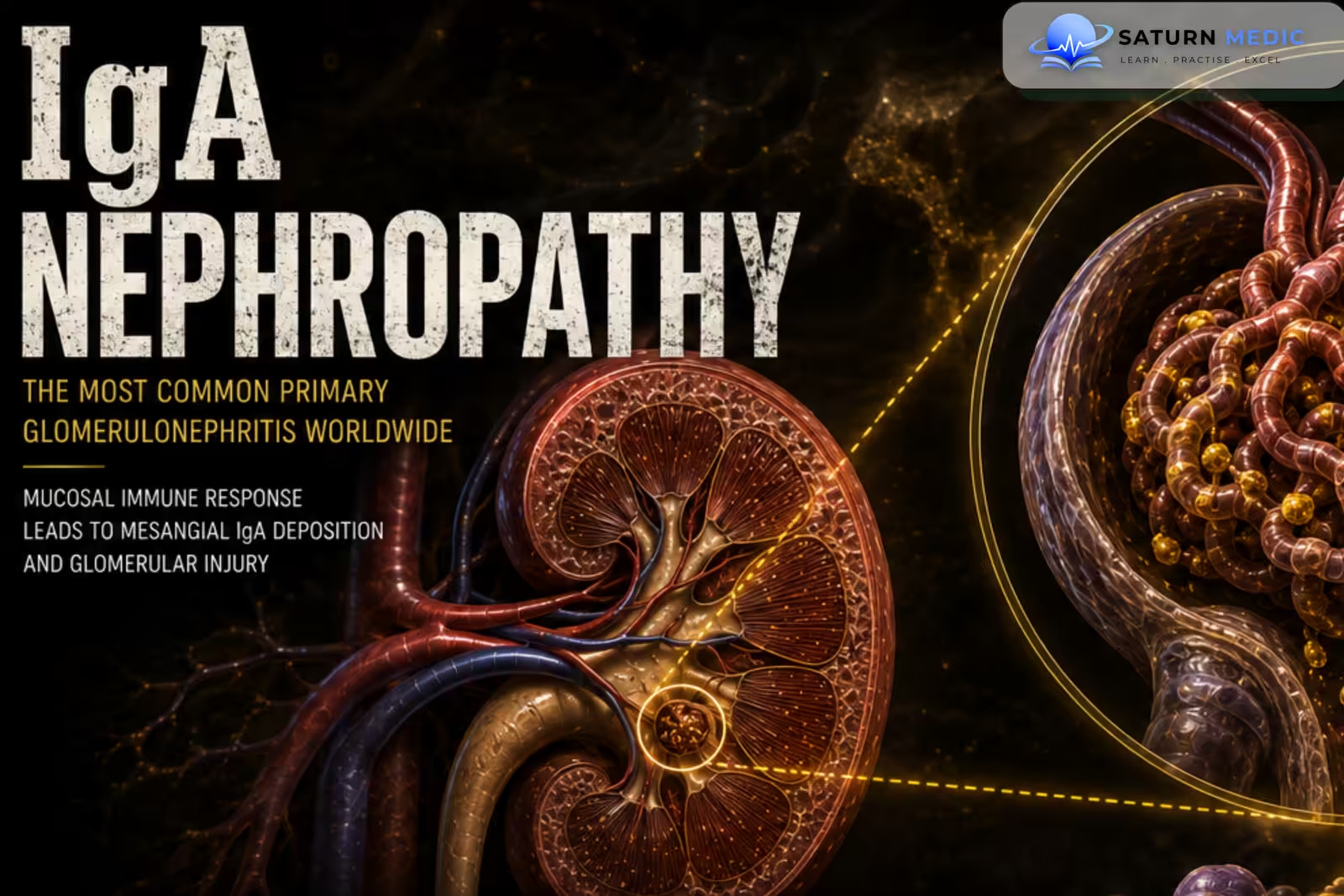
-IgA Nephropathy is the most common primary glomerulonephritis worldwide. It is characterized by deposition of galactose-deficient IgA1-containing immune complexes in the glomerular mesangium.
-Clinical presentation varies from isolated microscopic hematuria to progressive Chronic Kidney Disease (CKD).
Etiology & Risk Factors
-Etiology
–The exact cause is multifactorial and involves abnormal IgA1 production and immune complex formation.
-Important associations include:
- Mucosal infections
- Liver disease
- Inflammatory bowel disease
- Celiac disease
- Other immune-mediated disorders
-Risk Factors:
- Family history of IgA nephropathy
- Recurrent mucosal infections
- Certain genetic susceptibility
- Chronic liver disease
- Inflammatory bowel disease
Pathophysiology
Abnormal production of galactose-deficient IgA1 → autoantibody formation → circulating immune complex formation → mesangial IgA deposition → mesangial inflammation and proliferation → glomerular injury → hematuria and proteinuria → progressive Chronic Kidney Disease (CKD)
Clinical Presentation
-Symptoms:
- Recurrent visible hematuria
- Persistent microscopic hematuria
- Frothy urine due to proteinuria
- Mild peripheral edema
- Fatigue
-Signs:
- Hypertension
- Peripheral edema
- Reduced kidney function in progressive disease
History Taking
-Ask about:
- Recurrent visible or microscopic hematuria
- Timing of hematuria in relation to respiratory or gastrointestinal infections
- Frothy urine
- Edema
- Hypertension
- Previous kidney disease
- Family history of kidney disease
- Liver disease
- Gastrointestinal symptoms
- Features of inflammatory or autoimmune disease
Physical Examination
-General Examination
- Blood pressure
- Peripheral edema
- Signs of fluid retention
-System-Specific Examination:
- Assessment for signs of liver disease
- Examination for features of systemic inflammatory disease
- Cardiovascular assessment for hypertension
Investigations
-Biochemistry / Specific Tests
-
Urinalysis and urine microscopy
-
Urine protein-to-creatinine ratio or urine albumin-to-creatinine ratio
-
Serum creatinine and eGFR
-
Serum albumin when significant proteinuria is present
–Additional tests may be used to exclude secondary causes or alternative glomerular diseases.
–Imaging
Renal ultrasound may assess kidney size and structure but does not confirm IgA nephropathy.
-Special / Confirmatory Tests
Kidney biopsy is the definitive diagnostic test.
The characteristic finding is:
-
Predominant mesangial IgA deposition on immunofluorescence
-Histological scoring may help assess prognosis.
Diagnosis
–Diagnosis is suspected in patients with:
- Recurrent visible or persistent microscopic hematuria
- Proteinuria
- Possible decline in kidney function
Definitive diagnosis requires a kidney biopsy demonstrating predominant mesangial IgA deposition.
Management
1. First-Line / Emergency Management
There is no routine emergency treatment.
Urgent treatment is required if rapidly progressive glomerulonephritis, severe hypertension, acute kidney injury, or severe fluid overload develops.
2. Definitive Treatment
There is no single curative treatment for primary IgA nephropathy.
Management focuses on:
-
Reducing proteinuria
-
Controlling blood pressure
-
Slowing progression of Chronic Kidney Disease (CKD)
-
Treating secondary causes when present
3. Medical Treatment
-
ACE inhibitors or ARBs for proteinuria and blood pressure control
-
SGLT2 inhibitors in appropriate patients with persistent proteinuria and Chronic Kidney Disease (CKD)
-
Glucocorticoid-based therapy in carefully selected high-risk patients
-
Targeted-release budesonide in appropriate patients
-
Immunosuppressive therapy for selected rapidly progressive or severe disease
4. Surgical / Procedural Treatment
No routine surgical treatment.
Kidney replacement therapy may be required if kidney failure develops.
5. Supportive Management
-
Sodium restriction
-
Blood pressure control
-
Smoking cessation
-
Weight management
-
Avoid nephrotoxic medications
Complications
- Persistent hematuria
- Progressive proteinuria
- Nephrotic syndrome
- Hypertension
- Acute kidney injury
- Rapidly progressive glomerulonephritis
- Chronic Kidney Disease (CKD)
- Kidney failure
- Recurrence after kidney transplantation
Prognosis
The prognosis is variable. Persistent significant proteinuria, hypertension, reduced eGFR, and progressive histological damage are associated with a higher risk of progression to kidney failure.
Key Points / Clinical Pearls
- IgA Nephropathy is the most common primary glomerulonephritis worldwide.
- It is caused by mesangial deposition of IgA-containing immune complexes.
- Recurrent hematuria is a classic presentation.
- Hematuria may occur during or shortly after an upper respiratory infection.
- Persistent microscopic hematuria may be the only finding.
- Proteinuria is an important predictor of disease progression.
- Serum IgA levels cannot confirm the diagnosis.
- Kidney biopsy is the definitive diagnostic test.
- Predominant mesangial IgA deposition is the characteristic biopsy finding.
- Blood pressure control and proteinuria reduction are the foundation of management.
- ACE inhibitors or ARBs are commonly used in proteinuric disease.
- SGLT2 inhibitors may benefit appropriate patients with Chronic Kidney Disease (CKD).
- Immunosuppressive therapy is reserved for selected high-risk patients.
- Kidney Disease: Improving Global Outcomes (KDIGO) Glomerular Diseases Work Group. KDIGO 2025 Clinical Practice Guideline for the Management of IgA Nephropathy and IgA Vasculitis. Kidney Int. 2025;108(3S):S1-S179. KDIGO .
- Kidney Disease: Improving Global Outcomes (KDIGO) Glomerular Diseases Work Group. KDIGO 2021 Clinical Practice Guideline for the Management of Glomerular Diseases. Kidney Int. 2021;100(4S):S1-S276. KDIGO .
- Rodrigues JC, Haas M, Reich HN. IgA Nephropathy. Clin J Am Soc Nephrol. 2017;12(4):677-686. Clinical Journal of the American Society of Nephrology .
- Barratt J, Rovin BH, Cattran D, et al. IgA Nephropathy: Update on Disease Pathogenesis and Treatment. Kidney Int. 2020;98(2):S1-S10.
- National Institute of Diabetes and Digestive and Kidney Diseases (NIDDK). IgA Nephropathy . National Institutes of Health.
- National Library of Medicine (NIH). IgA Nephropathy . StatPearls.