

Clinical Subject Page
Minimal Change Disease (MCD)
Minimal Change Disease (MCD) is a glomerular disorder characterized by podocyte injury causing heavy proteinuria and nephrotic syndrome. It is the most common cause of nephrotic syndrome in children and usually responds well to corticosteroid therapy
Also called
Lipoid nephrosis
ICD-10
N02.8
Specialty
Nephrology
Onset
Chronic
Reviewed
August 2026
On This Page
-
OverviewOverview
-
Etiology & Risk FactorsEtiology & Risk Factors
-
PathophysiologyPathophysiology
-
Clinical PresentationClinical Presentation
-
History TakingHistory Taking
-
Physical ExaminationPhysical Examination
-
InvestigationsInvestigations
-
DiagnosisDiagnosis
-
ManagementManagement
-
ComplicationsComplications
-
PrognosisPrognosis
-
Key Points / Clinical PearlsKey Points / Clinical Pearls
Overview
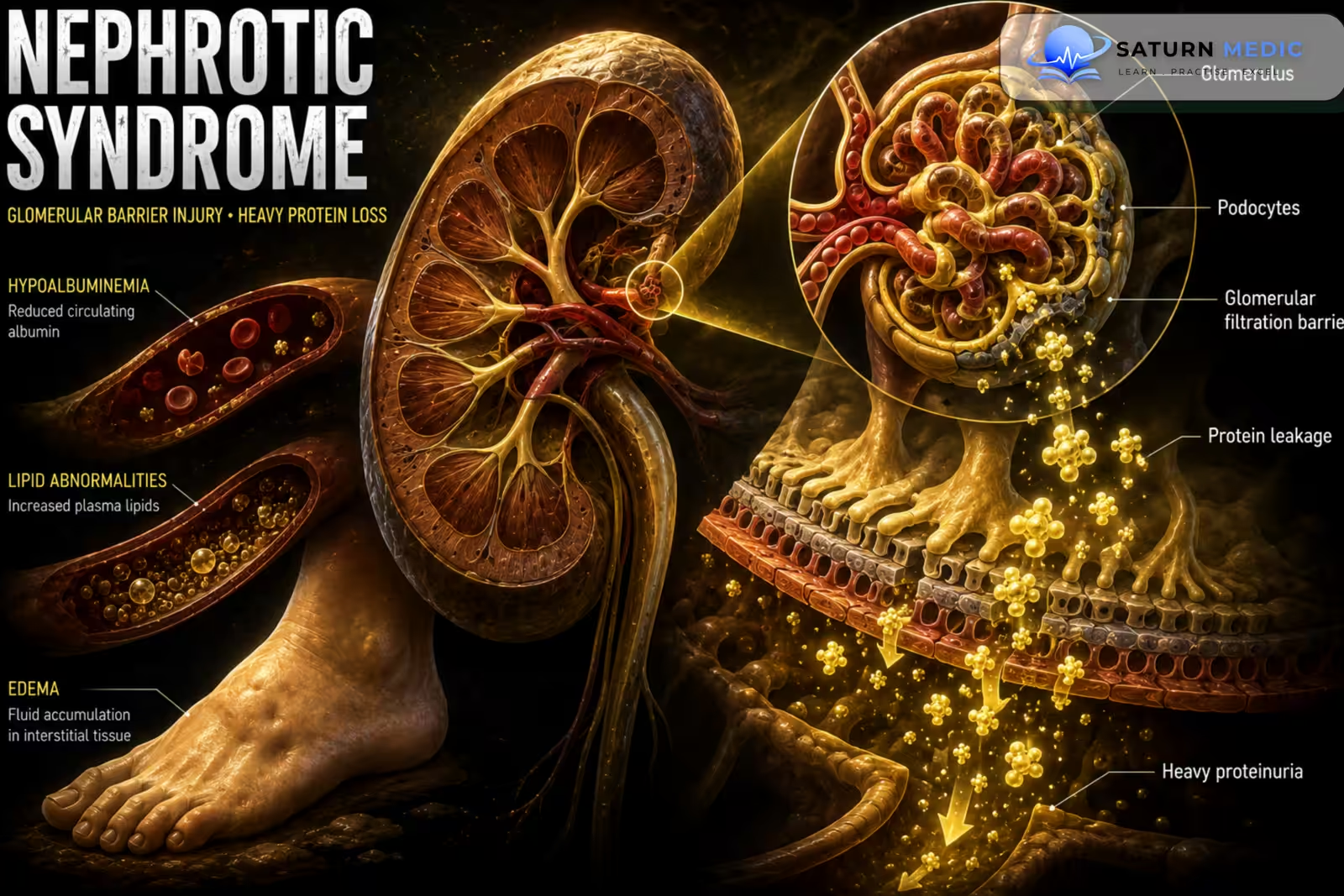
–Minimal Change Disease (MCD) causes increased glomerular permeability due to podocyte dysfunction.
-Typical features include:
- Heavy proteinuria
- Hypoalbuminemia
- Generalized edema
- Hyperlipidemia
-The glomeruli usually appear normal on light microscopy, while electron microscopy demonstrates diffuse podocyte foot process effacement.
Etiology & Risk Factors
-Etiology
Most cases are idiopathic and are thought to involve immune dysregulation causing podocyte injury.
Secondary Minimal Change Disease (MCD) may occur with:
- Hodgkin lymphoma
- NSAID use
- Certain infections
- Immune stimulation
-Risk Factors:
- Childhood
- Hodgkin lymphoma
- NSAID use
- Recent infection or immune stimulation
- Previous episodes of MCD
Pathophysiology
Immune dysregulation → podocyte injury → diffuse foot process effacement → increased glomerular permeability → heavy proteinuria → hypoalbuminemia → reduced plasma oncotic pressure → generalized edema → nephrotic syndrome
Clinical Presentation
-Symptoms:
- Periorbital edema
- Peripheral edema
- Generalized swelling
- Foamy urine
- Weight gain
- Reduced urine output
- Abdominal distension from ascites
-Signs:
- Periorbital edema
- Pitting peripheral edema
- Ascites
- Pleural effusion in severe disease
- Weight gain

History Taking
-Ask about:
- Onset and progression of edema
- Foamy urine
- Reduced urine output
- Recent infection
- Recent immunization
- NSAID use
- Previous nephrotic syndrome
- Hodgkin lymphoma symptoms
- Thrombotic symptoms
- Symptoms of infection
Physical Examination
-General Examination
- Blood pressure
- Weight
- Periorbital edema
- Peripheral edema
- Volume status
-System-Specific Examination:
- Abdomen for ascites
- Respiratory system for pleural effusion
- Assessment for thrombosis or infection.
Investigations
-Biochemistry / Specific Tests
-
Urinalysis
-
Urine protein-to-creatinine ratio or albumin-to-creatinine ratio
-
Serum albumin
-
Serum creatinine and eGFR
-
Serum electrolytes
-
Lipid profile
-Typical findings include:
-
Heavy proteinuria
-
Hypoalbuminemia
-
Hyperlipidemia
-
Usually preserved kidney function
-Imaging
Not routinely required for diagnosis.
Renal ultrasound may be performed when another renal abnormality is suspected.
-Special / Confirmatory Tests
Kidney biopsy is usually unnecessary in children with a typical presentation and steroid-responsive nephrotic syndrome.
When performed:
-
Light microscopy: normal or minimal glomerular abnormalities
-
Immunofluorescence: usually negative
-
Electron microscopy: diffuse podocyte foot process effacement
Diagnosis
-Diagnosis of Minimal Change Disease (MCD) is based on the clinical features of nephrotic syndrome:
Heavy proteinuria + hypoalbuminemia + edema ± hyperlipidemia
-In children with a typical presentation, MCD is often diagnosed clinically and supported by a rapid response to corticosteroids.
-In adults or patients with atypical features, kidney biopsy is generally required to establish the diagnosis and exclude other glomerular diseases.
Management
1. Definitive Treatment
Corticosteroids are the first-line treatment for most patients with Minimal Change Disease (MCD).
The majority of children achieve complete remission with treatment.
2. Medical Treatment
-
Corticosteroids — first-line therapy
-
Diuretics — for significant edema
-
Albumin infusion — selected patients with severe hypoalbuminemia and intravascular volume depletion
-
ACE inhibitors or ARBs — selected patients with persistent proteinuria
-
Steroid-sparing therapy — for frequently relapsing or steroid-dependent disease
Possible steroid-sparing agents include:
-
Rituximab
-
Calcineurin inhibitors
-
Cyclophosphamide
-
Mycophenolate
3. Surgical / Procedural Treatment
No routine surgical treatment.
Kidney biopsy may be required for diagnosis in adults or atypical cases.
4. Supportive Management
-
Sodium restriction
-
Appropriate fluid management
-
Daily weight monitoring
-
Monitor urine protein
-
Monitor serum albumin and kidney function
-
Prevent and treat infections
Complications
- Acute Kidney Injury (AKI)
- Hypovolemia
- Severe edema
- Ascites
- Pleural effusion
- Infection
- Thromboembolism
- Hyperlipidemia
- Relapse
- Steroid-related adverse effects
- Chronic Kidney Disease (CKD)
Prognosis
The prognosis of Minimal Change Disease (MCD) is generally excellent, particularly in children. Most patients achieve complete remission with corticosteroid therapy. Relapses are common, but progression to Chronic Kidney Disease (CKD) or kidney failure is uncommon in uncomplicated, treatment-responsive disease.
Key Points / Clinical Pearls
- Minimal Change Disease (MCD) is a common cause of nephrotic syndrome.
- It is the most common cause of nephrotic syndrome in children.
- Most cases are idiopathic.
- Hodgkin lymphoma and NSAIDs are important secondary associations.
- Heavy proteinuria, hypoalbuminemia, and edema are characteristic.
- Hyperlipidemia commonly occurs.
- Kidney function is usually preserved.
- Light microscopy is usually normal.
- Immunofluorescence is typically negative.
- Electron microscopy shows diffuse podocyte foot process effacement.
- Kidney biopsy is usually unnecessary in children with a typical presentation.
- Adults and patients with atypical features often require biopsy.
- Corticosteroids are the first-line treatment.
- Kidney Disease: Improving Global Outcomes (KDIGO) Glomerular Diseases Work Group. KDIGO 2021 Clinical Practice Guideline for the Management of Glomerular Diseases. Kidney Int. 2021;100(4S):S1-S276. KDIGO .
- Vivarelli M, Massella L, Ruggiero B, Emma F. Minimal Change Disease. Clin J Am Soc Nephrol. 2017;12(2):332-345. Clinical Journal of the American Society of Nephrology .
- Waldman M, Crew RJ, Valeri A, et al. Adult Minimal-Change Disease: Clinical Characteristics, Treatment, and Outcomes. Clin J Am Soc Nephrol. 2007;2(3):445-453. Clinical Journal of the American Society of Nephrology .
- Kopp JB, Anders HJ, Susztak K, et al. Podocytopathies. Nat Rev Dis Primers. 2020;6(1):68. Nature Reviews Disease Primers .
- National Institute of Diabetes and Digestive and Kidney Diseases (NIDDK). Nephrotic Syndrome . National Institutes of Health.
- National Library of Medicine (NIH). Minimal Change Disease . StatPearls.