

Clinical Subject Page
Rapidly Progressive Glomerulonephritis (RPGN)
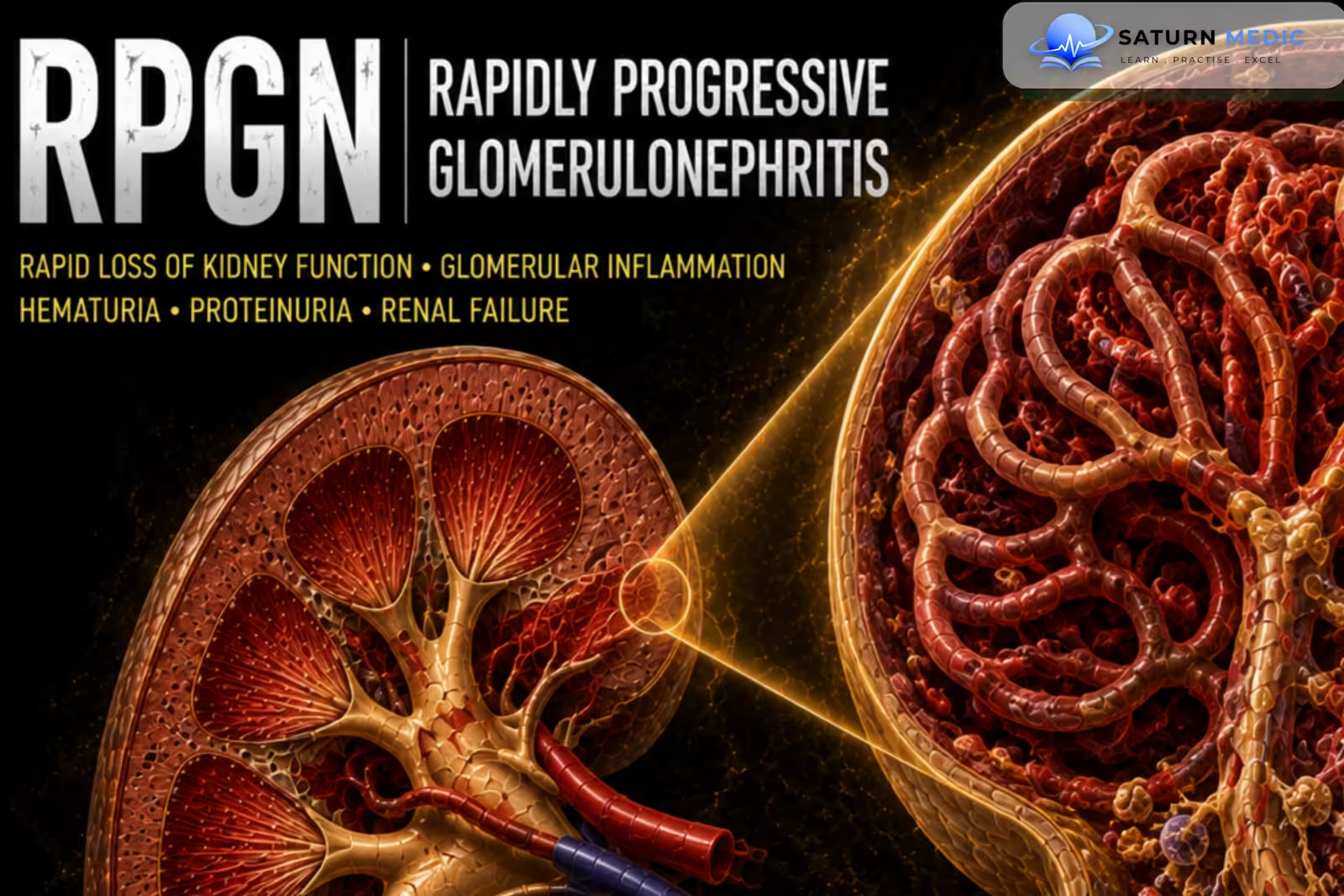
Rapidly Progressive Glomerulonephritis (RPGN) is a severe clinical syndrome characterized by rapid loss of kidney function over days to weeks due to severe glomerular inflammation. It is commonly associated with crescent formation on kidney biopsy and can rapidly progress to kidney failure without urgent treatment
Also called
ICD-10
Specialty
Onset
Reviewed
-
OverviewOverview
-
Etiology & Risk FactorsEtiology & Risk Factors
-
PathophysiologyPathophysiology
-
Clinical PresentationClinical Presentation
-
History TakingHistory Taking
-
Physical ExaminationPhysical Examination
-
InvestigationsInvestigations
-
DiagnosisDiagnosis
-
ManagementManagement
-
ComplicationsComplications
-
PrognosisPrognosis
-
Key Points / Clinical PearlsKey Points / Clinical Pearls
Overview
-Rapidly Progressive Glomerulonephritis (RPGN) is not a single disease but a syndrome caused by severe glomerular injury.
-The three major types are:
- Type I: Anti-glomerular basement membrane (anti-GBM) disease
- Type II: Immune complex-mediated disease
- Type III: Pauci–immune disease, usually associated with antineutrophil cytoplasmic antibodies (ANCA)
-It typically presents with rapidly worsening kidney function, hematuria, proteinuria, and features of nephritic syndrome.
Etiology & Risk Factors
-Etiology
-Rapidly Progressive Glomerulonephritis (RPGN) is caused by severe glomerular injury due to:
- Anti-GBM antibodies — Type I
- Immune complex deposition — Type II
- ANCA-associated small-vessel vasculitis — Type III
-Risk Factors:
- Autoimmune disease
- ANCA-associated vasculitis
- Systemic lupus erythematosus
- Recent or ongoing infection causing immune complex disease
- Anti-GBM disease
Pathophysiology
Severe immune-mediated glomerular injury → disruption of the glomerular capillary wall → leakage of fibrin and inflammatory mediators into Bowman’s space → crescent formation → rapid destruction of glomeruli → rapid fall in GFR → acute kidney injury → kidney failure
Clinical Presentation
-Symptoms:
- Reduced urine output
- Dark or cola-colored urine
- Hematuria
- Fatigue
- Nausea and vomiting
- Dyspnea
- Peripheral edema
-Signs:
- Hypertension
- Peripheral edema
- Signs of fluid overload
- Features of systemic vasculitis or autoimmune disease
History Taking
-Ask about:
- Duration and rate of decline in urine output
- Gross or microscopic hematuria
- Frothy urine
- Recent infection
- Fever or weight loss
- Skin rash or purpura
- Joint pain
- Sinus or nasal symptoms
- Cough or hemoptysis
- Dyspnea
- Previous autoimmune disease
- Previous kidney disease
Physical Examination
-General Examination
- Blood pressure
- Peripheral edema
- Signs of fluid overload
- Pallor when clinically relevant
-System-Specific Examination:
- Skin for purpura or rash
- Respiratory system for pulmonary hemorrhage or edema
- ENT examination for features of granulomatosis with polyangiitis
- Joints and other systems for systemic vasculitis
Investigations
-Complete Blood Count
Relevant for assessing:
-
Anemia
-
Infection
-
Eosinophilia when an alternative diagnosis is suspected
Biochemistry / Specific Tests
-
Serum creatinine and eGFR
-
Serum urea
-
Serum potassium
-
Serum bicarbonate
-
Urinalysis
-
Urine microscopy for dysmorphic red cells and red cell casts
-
Urine protein quantification
Cause-specific tests:
-
ANCA
-
Anti-GBM antibodies
-
Complement levels
-
Antinuclear antibodies and anti-double-stranded DNA when lupus is suspected
-
Infection-related testing when indicated
-Imaging
Renal ultrasound is useful to assess kidney size and exclude urinary obstruction.
-Chest imaging is indicated when pulmonary hemorrhage or pulmonary involvement is suspected.
-Special / Confirmatory Tests
Kidney biopsy is the definitive investigation when clinically feasible and should not be unnecessarily delayed.
Typical findings include:
-
Crescent formation involving glomeruli
-
Linear immunoglobulin deposition in anti-GBM disease
-
Granular immune deposits in immune complex disease
-
Minimal or absent immune deposits in pauci-immune disease
Diagnosis
Rapidly Progressive Glomerulonephritis (RPGN) should be suspected in a patient with:
- Rapid decline in kidney function over days to weeks
- Hematuria
- Active urinary sediment, especially red cell casts
- Variable proteinuria
- Features of nephritic syndrome
Management
1. First-Line / Emergency Management
Rapidly Progressive Glomerulonephritis (RPGN) requires urgent nephrology management.
Immediate management may include:
-
High-dose glucocorticoids when severe immune-mediated disease is strongly suspected
-
Urgent treatment of hyperkalemia
-
Management of pulmonary edema and fluid overload
-
Correction of severe metabolic acidosis
-
Dialysis when indicated
2. Definitive Treatment
Treatment depends on the underlying cause:
-
ANCA-associated disease: glucocorticoids plus rituximab or cyclophosphamide
-
Anti-GBM disease: glucocorticoids plus cyclophosphamide and plasma exchange
-
Immune complex disease: treat the underlying disease, with immunosuppression when appropriate
3. Medical Treatment
-
High-dose glucocorticoids
-
Rituximab for appropriate ANCA-associated disease
-
Cyclophosphamide for severe immune-mediated disease
-
Cause-specific immunosuppressive therapy
-
Antihypertensive treatment
-
Diuretics for fluid overload when appropriate
4. Surgical / Procedural Treatment
No routine surgical treatment.
Important procedures may include:
-
Plasma exchange for anti-GBM disease and selected severe conditions
-
Dialysis for severe kidney failure or refractory complications
5. Supportive Management
-
Close monitoring of kidney function
-
Monitoring potassium and acid-base status
-
Fluid balance management
-
Avoid nephrotoxic medications
Complications
- Acute kidney injury
- Kidney failure
- Severe hyperkalemia
- Metabolic acidosis
- Pulmonary edema
- Pulmonary hemorrhage
- Uremia
- Chronic Kidney Disease (CKD)
- End-Stage Renal Disease (ESRD)
Prognosis
-The prognosis of Rapidly Progressive Glomerulonephritis (RPGN) depends on the underlying cause, severity at presentation, degree of crescent formation, baseline kidney function, and speed of treatment.
-Early diagnosis and urgent treatment can preserve kidney function, whereas delayed treatment may result in irreversible kidney failure.
Key Points / Clinical Pearls
- Rapidly Progressive Glomerulonephritis (RPGN) is a severe syndrome causing rapid kidney function loss.
- It is a nephrological emergency.
- Crescent formation is a characteristic pathological finding.
- The three major types are anti-GBM, immune complex-mediated, and pauci-immune.
- Hematuria and red cell casts are important findings.
- ANCA testing is important for suspected pauci-immune disease.
- Anti-GBM antibody testing is essential when anti-GBM disease is suspected.
- Kidney biopsy is a key diagnostic investigation.
- Treatment depends on the underlying cause.
- High-dose glucocorticoids are commonly used in severe immune-mediated disease.
- Rituximab or cyclophosphamide may be required for ANCA-associated disease.
- Anti-GBM disease usually requires plasma exchange with immunosuppressive therapy.
- Kidney Disease: Improving Global Outcomes (KDIGO) Glomerular Diseases Work Group. KDIGO 2021 Clinical Practice Guideline for the Management of Glomerular Diseases. Kidney Int. 2021;100(4S):S1-S276. KDIGO .
- Kidney Disease: Improving Global Outcomes (KDIGO) Work Group. KDIGO 2024 Clinical Practice Guideline for the Evaluation and Management of Chronic Kidney Disease. Kidney Int. 2024;105(4S):S117-S314. KDIGO .
- Jennette JC, Nachman PH. ANCA Glomerulonephritis and Vasculitis. Clin J Am Soc Nephrol. 2017;12(4):601-611. Clinical Journal of the American Society of Nephrology .
- Kallenberg CGM. Rapidly Progressive Glomerulonephritis. Clin Kidney J. 2009;2(4):223-229. Clinical Kidney Journal .
- National Institute of Diabetes and Digestive and Kidney Diseases (NIDDK). Glomerular Diseases . National Institutes of Health.
- National Library of Medicine (NIH). Rapidly Progressive Glomerulonephritis . StatPearls.