

Clinical Subject Page
Renal Artery Stenosis
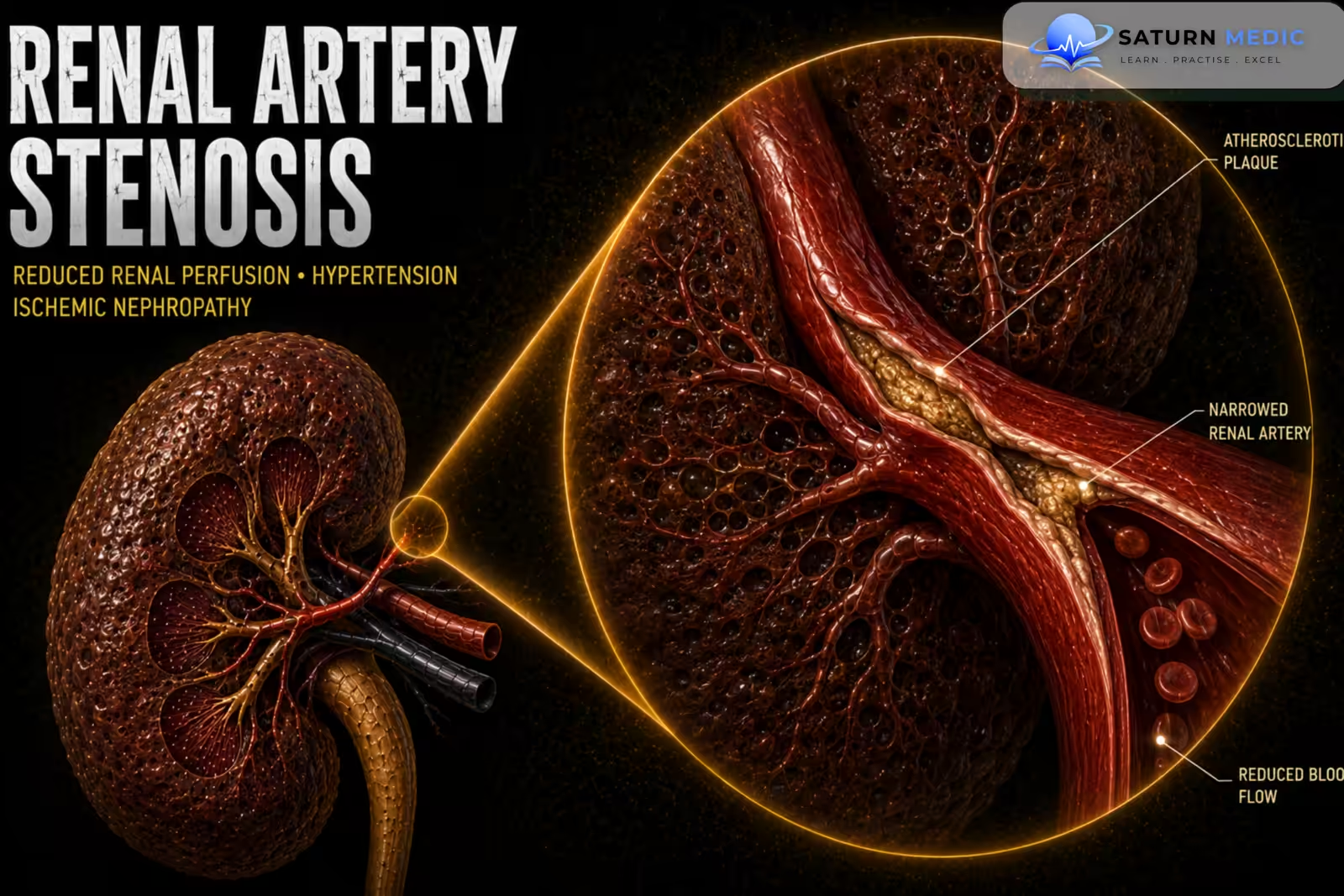
Renal Artery Stenosis is narrowing of one or both renal arteries, reducing blood flow to the kidneys. It can cause renovascular hypertension and, in severe or bilateral disease, progressive kidney dysfunction
Also called
ICD-10
Specialty
Onset
Reviewed
-
OverviewOverview
-
Etiology & Risk FactorsEtiology & Risk Factors
-
PathophysiologyPathophysiology
-
Clinical PresentationClinical Presentation
-
History TakingHistory Taking
-
Physical ExaminationPhysical Examination
-
InvestigationsInvestigations
-
DiagnosisDiagnosis
-
ManagementManagement
-
ComplicationsComplications
-
PrognosisPrognosis
-
Key Points / Clinical PearlsKey Points / Clinical Pearls
Overview
-Renal Artery Stenosis is most commonly caused by:
- Atherosclerosis — the most common cause, especially in older adults
- Fibromuscular dysplasia (FMD) — an important cause in younger patients, particularly women
-Reduced renal perfusion activates the renin-angiotensin-aldosterone system (RAAS), leading to hypertension.
-Severe bilateral disease or stenosis in a solitary functioning kidney can cause significant kidney dysfunction.
Etiology & Risk Factors
-The major causes are:
- Atherosclerotic renal artery disease
- Fibromuscular dysplasia
Less common causes include vasculitis, arterial dissection, thrombosis, and external compression.
-Risk Factors
- Older age
- Atherosclerotic cardiovascular disease
- Smoking
- Diabetes mellitus
- Hyperlipidemia
- Female sex and younger age for fibromuscular dysplasia
Pathophysiology
Renal artery narrowing → reduced renal perfusion → renin release → RAAS activation → vasoconstriction + sodium/water retention → hypertension → progressive renal vascular and parenchymal injury
Clinical Presentation
-Symptoms:
Many patients are asymptomatic apart from hypertension.
Possible symptoms include:
- Headache related to severe hypertension
- Fatigue
- Dyspnea from fluid overload
- Recurrent episodes of pulmonary edema
-Signs:
- Resistant hypertension
- Abdominal or flank bruit
- Reduced kidney function
- Asymmetric kidney size in some patients
History Taking
-Ask about:
- Duration and severity of hypertension
- Resistant hypertension
- Sudden onset or worsening of hypertension
- Previous cardiovascular or peripheral arterial disease
- Smoking
- Diabetes and hyperlipidemia
- Episodes of flash pulmonary edema
- Previous decline in kidney function
- Medication history
- Recent ACE inhibitor or ARB initiation
Physical Examination
-General Examination
- Blood pressure in both arms when appropriate
- Signs of severe hypertension
- Volume status
-System-Specific Examination:
- Abdominal bruit
- Peripheral pulses
- Evidence of atherosclerotic vascular disease
- Cardiac examination for hypertensive or ischemic disease
Investigations
-Biochemistry / Specific Tests
-
Urinalysis
-
Urine protein-to-creatinine ratio or 24-hour urine protein
-
Serum creatinine and eGFR
-
Serum albumin
-
Lipid profile
-Imaging
Duplex Doppler ultrasonography is commonly used as a non-invasive initial imaging test.
Other options include:
- CT angiography (CTA)
- Magnetic resonance angiography (MRA)
-Special / Confirmatory Tests
Renal angiography is the definitive anatomical test and is generally reserved for patients in whom revascularization is being considered
Diagnosis
–Diagnosis of Renal Artery Stenosis is suspected in patients with:
- Resistant or abrupt-onset hypertension
- Unexplained deterioration in kidney function
- Recurrent flash pulmonary edema
- Abdominal bruit
- Atherosclerotic disease or features suggesting fibromuscular dysplasia
Management
1. Definitive Treatment
For most patients, especially those with atherosclerotic disease:
- Optimal medical therapy
- Blood pressure control
- Cardiovascular risk reduction
Revascularization may be considered in selected patients with:
- Recurrent flash pulmonary edema
- Refractory hypertension
- Progressive kidney dysfunction associated with significant renal artery stenosis
- Bilateral severe stenosis or stenosis of a solitary functioning kidney
2. Medical Treatment
-
- ACE inhibitors or ARBs — particularly useful for hypertension, with careful monitoring of kidney function and potassium
- Calcium channel blockers
- Diuretics when indicated
- Statins for atherosclerotic disease
- Antiplatelet therapy when indicated for atherosclerotic cardiovascular disease
- Smoking cessation
3. Surgical / Procedural Treatment
- Percutaneous angioplasty — particularly important for selected patients with fibromuscular dysplasia
- Renal artery stenting — selected patients, particularly certain atherosclerotic lesions
- Surgical revascularization — rarely required
4. Supportive Management
-
- Blood pressure monitoring
- Sodium restriction
- Smoking cessation
- Lipid management
- Diabetes control
Complications
- Resistant hypertension
- Acute kidney injury
- Chronic Kidney Disease (CKD)
- Kidney failure
- Flash pulmonary edema
- Cardiovascular disease
- Hypertensive emergencies
- Renal infarction
Prognosis
–Prognosis depends on the severity and cause of the stenosis, degree of kidney damage, blood pressure control, and associated cardiovascular disease.
-Many patients with atheroscleroticrenal artery stenosis can be managed successfully with medical therapy, while selected high-risk patients may benefit from revascularization.
Key Points / Clinical Pearls
- Renal Artery Stenosis is narrowing of one or both renal arteries.
- Atherosclerosis is the most common cause.
- Fibromuscular dysplasia is an important cause in younger patients.
- Reduced renal perfusion activates the RAAS.
- RAAS activation causes renovascular hypertension.
- Resistant or abrupt-onset hypertension should raise suspicion.
- Recurrent flash pulmonary edema is an important high-risk presentation.
- An abdominal bruit may be present but is not diagnostic.
- Duplex Doppler ultrasound is a common initial imaging test.
- CTA and MRA provide detailed vascular imaging.
- Renal angiography is generally performed when intervention is being considered.
- ACE inhibitors or ARBs can be used with careful monitoring.
- Tummala S, Criner JA, Shah P, et al. Renal Artery Stenosis: An Updated Review. Curr Cardiol Rep. 2020;22(10):1-10.
- Anderson JL, Halperin JL, Albert NM, et al. Management of Patients With Peripheral Artery Disease: Executive Summary of the 2016 AHA/ACC Guideline. Circulation. 2016;135:e686-e725. Circulation .
- Cooper CJ, Murphy TP, Cutlip DE, et al. Stenting and Medical Therapy for Atherosclerotic Renal-Artery Stenosis. N Engl J Med. 2014;370:13-22. New England Journal of Medicine .
- Wheatley K, Ives N, Gray R, et al. Revascularization Versus Medical Therapy for Renal-Artery Stenosis. N Engl J Med. 2009;361:1953-1962. New England Journal of Medicine .
- National Kidney Foundation. Renal Artery Stenosis .
- National Library of Medicine (NIH). Renal Artery Stenosis . StatPearls.