

Clinical Subject Page
Renal Tubular Acidosis (RTA)
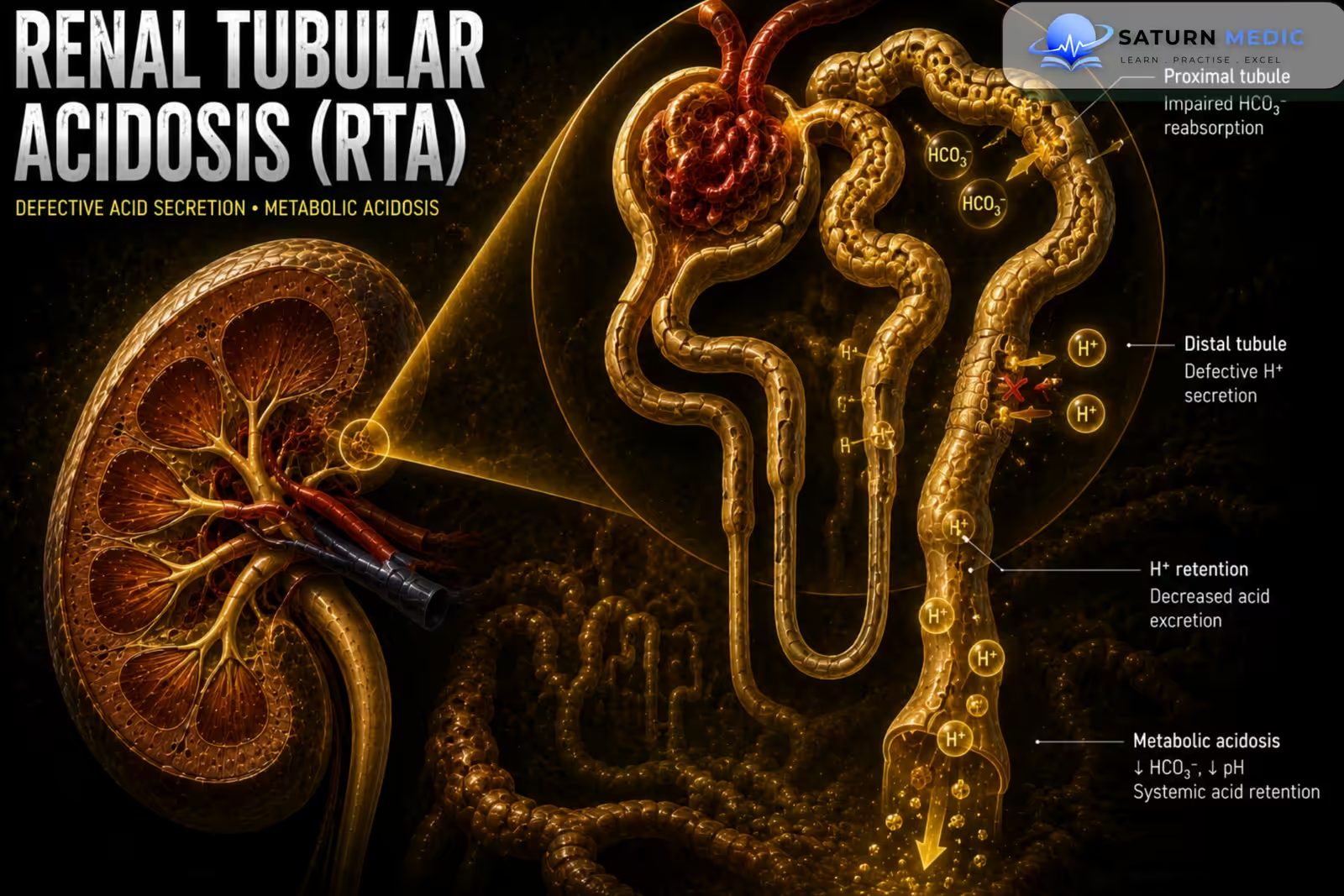
Renal Tubular Acidosis (RTA) is a group of disorders in which the kidneys fail to appropriately excrete acid or conserve bicarbonate, resulting in normal-anion-gap metabolic acidosis despite relatively preserved glomerular filtration
Also called
ICD-10
Specialty
Onset
Reviewed
-
OverviewOverview
-
Etiology & Risk FactorsEtiology & Risk Factors
-
PathophysiologyPathophysiology
-
Clinical PresentationClinical Presentation
-
History TakingHistory Taking
-
Physical ExaminationPhysical Examination
-
InvestigationsInvestigations
-
DiagnosisDiagnosis
-
ManagementManagement
-
ComplicationsComplications
-
PrognosisPrognosis
-
Key Points / Clinical PearlsKey Points / Clinical Pearls
Overview
-Renal Tubular Acidosis (RTA) results from dysfunction of the renal tubules rather than primary glomerular failure.
-The main types are:
- Type 1 (Distal RTA): impaired hydrogen ion secretion
- Type 2 (Proximal RTA): impaired bicarbonate reabsorption
- Type 4 RTA: impaired ammonium excretion, usually associated with hypoaldosteronism or aldosterone resistance
–Type 1 and Type 2 RTA are typically associated with hypokalemia, while Type 4 RTA typically causes hyperkalemia
Etiology & Risk Factors
-Etiology
–Type 1 — Distal RTA:
- Autoimmune diseases, especially Sjögren syndrome
- Certain medications
- Chronic tubulointerstitial disease
- Inherited tubular disorders
–Type 2 — Proximal RTA:
- Fanconi syndrome
- Multiple myeloma
- Certain medications
- Inherited disorders
–Type 4 RTA:
- Diabetic kidney disease
- Hypoaldosteronism
- ACE inhibitors or ARBs
- Potassium-sparing medications
- Chronic kidney disease
-Risk Factors:
- Autoimmune disease
- Diabetes mellitus
- Chronic kidney disease
- Multiple myeloma
- Nephrotoxic medications
- Tubulointerstitial kidney disease
Pathophysiology
Tubular dysfunction → impaired acid excretion or bicarbonate reabsorption → reduced serum bicarbonate → normal-anion-gap metabolic acidosis → compensatory respiratory hyperventilation → electrolyte abnormalities
-Type-specific:
Type 1 → impaired H⁺ secretion → urine pH >5.5 → hypokalemia
Type 2 → impaired HCO₃⁻ reabsorption → bicarbonate wasting → hypokalemia
Type 4 → reduced aldosterone effect → impaired NH₄⁺ excretion → hyperkalemia
Clinical Presentation
-Symptoms:
- Fatigue
- Weakness
- Nausea
- Vomiting
- Increased respiratory effort
- Muscle weakness or cramps
- Polyuria or polydipsia in some patients
-Signs:
- Tachypnea or deep breathing
- Muscle weakness
- Growth failure in children
- Signs of underlying systemic disease
History Taking
-Ask about:
- Symptoms of metabolic acidosis
- Muscle weakness or cramps
- Polyuria and polydipsia
- Recurrent kidney stones
- Bone pain or fractures
- Growth and development in children
- Diabetes mellitus
- Autoimmune disease
- Chronic kidney disease
- Medication history
Physical Examination
-General Examination
- Respiratory rate and pattern
- Blood pressure
- Hydration status
- Growth parameters in children
-System-Specific Examination:
- Muscle strength
- Bone tenderness or deformity
- Signs of autoimmune disease
- Examination for complications of the underlying disorder
Investigations
-Biochemistry / Specific Tests
- Serum electrolytes
- Serum bicarbonate
- Serum potassium
- Serum chloride
- Arterial or venous blood gas
- Serum creatinine and eGFR
- Anion gap
- UrinepH
- Urine electrolytes
- Urine anion gap when assessment of ammonium excretion is needed
–Additional tests may be used to exclude secondary causes or alternative glomerular diseases.
–Imaging
Renal ultrasound or CT may be used when nephrolithiasis or nephrocalcinosis is suspected.
-Special / Confirmatory Tests
Diagnosis depends on demonstrating:
- Normal-anion-gap metabolic acidosis
- Inappropriately high urinary pH or impaired urinary acidification depending on the RTA type
- Appropriate electrolyte pattern
Specialized acid-loading tests may be used when distal RTA remains uncertain.
Diagnosis
-Suspect Renal Tubular Acidosis (RTA) in a patient with:
-Normal-anion-gap metabolic acidosis + relatively preserved kidney function + inappropriate renal acid handling.
-Key distinctions:
- Type 1: urine pH remains >5.5 despite systemic acidosis
- Type 2: urine pH can fall <5.5 once serum bicarbonate is sufficiently reduced
- Type 4: hyperkalemia with impaired ammonium excretion
Management
1. Definitive Treatment
Treat the underlying cause
Correct chronic metabolic acidosis
Correct potassium abnormalities
Prevent complications such as stones and bone disease
2. Medical Treatment
Alkali therapy with sodium bicarbonate or potassium citrate
Potassium replacement in hypokalemic RTA
Fludrocortisone in selected patients with hypoaldosteronism and appropriate blood pressure/volume status
Diuretics or other targeted therapy in selected Type 4 RTA cases
3. Surgical / Procedural Treatment
No routine surgical treatment.
4. Supportive Management
Monitor serum bicarbonate
Monitor potassium
Maintain adequate hydration
Prevent kidney stones
Complications
- Hypokalemia
- Hyperkalemia
- Severe metabolic acidosis
- Nephrolithiasis
- Nephrocalcinosis
- Bone disease
- Growth retardation
- Muscle weakness
- Cardiac arrhythmias
- Chronic Kidney Disease (CKD)
Prognosis
- Renal Tubular Acidosis (RTA) causes metabolic acidosis due to impaired renal tubular acid handling.
- RTA typically produces a normal-anion-gap metabolic acidosis.
- Type 1 is distal RTA.
- Type 2 is proximal RTA.
- Type 4 RTA is associated with hyperkalemia.
- Types 1 and 2 commonly cause hypokalemia.
- Distal RTA causes persistently alkaline urine despite systemic acidosis.
- Distal RTA increases the risk of nephrolithiasis and nephrocalcinosis.
- Proximal RTA may occur as part of Fanconi syndrome.
- Type 4 RTA is commonly associated with diabetes and hypoaldosteronism.
- Serum bicarbonate and potassium are key investigations.
Key Points / Clinical Pearls
- Renal Tubular Acidosis (RTA) causes metabolic acidosis due to impaired renal tubular acid handling.
- RTA typically produces a normal-anion-gap metabolic acidosis.
- Type 1 is distal RTA.
- Type 2 is proximal RTA.
- Type 4 RTA is associated with hyperkalemia.
- Types 1 and 2 commonly cause hypokalemia.
- Distal RTA causes persistently alkaline urine despite systemic acidosis.
- Distal RTA increases the risk of nephrolithiasis and nephrocalcinosis.
- Proximal RTA may occur as part of Fanconi syndrome.
- Type 4 RTA is commonly associated with diabetes and hypoaldosteronism.
- Serum bicarbonate and potassium are key investigations.
- Urine pH helps distinguish RTA subtypes.
- Rodríguez Soriano J. Renal Tubular Acidosis: The Clinical Entity. J Am Soc Nephrol. 2002;13(8):2160-2170. Journal of the American Society of Nephrology .
- Karet FE. Mechanisms in the Pathogenesis of Distal Renal Tubular Acidosis. J Am Soc Nephrol. 2002;13(8):2178-2184. Journal of the American Society of Nephrology .
- National Kidney Foundation. Renal Tubular Acidosis .
- National Library of Medicine (NIH). Renal Tubular Acidosis . StatPearls.
- National Library of Medicine (NIH). Renal Tubular Acidosis . MedlinePlus / National Institutes of Health.